



Child Independence Age: A Parent's Practical Guide
You're probably living this question already.
Your child reaches for the milk, wants to buckle their own shoes, insists on washing their hands alone, or says, “I do it.” Part of you feels proud. Another part of you thinks, Are they ready, or am I supposed to help more? That tension sits at the center of the child independence age question for many families.
What makes this hard is that independence doesn't arrive all at once. It shows up in tiny daily moments. Putting toys away. Walking to the bathroom alone at night. Choosing between two shirts. Telling another child, “I don't like that.” Waiting for a turn without falling apart. Each of those is a different kind of independence.
As educators, we learn quickly that the primary question isn't “What age should my child be independent?” The better question is, “What kind of independence is my child ready to practice safely today?” When we ask it that way, we stop chasing a perfect age and start building a home where your child can try, practice, and grow.
That matters because independence is not only a skill. It's also a feeling. A child who hears “yes, you can try” in safe, supported ways begins to believe, “I'm capable.”
Why "What Age" Is the Wrong Question
Parents often want one clean answer. At what age should a child dress themselves? Stay in their room at bedtime? Pour water? Walk somewhere without holding your hand?
The trouble is that child independence age isn't a single milestone. Child-development guidance from the California Department of Education explains that independence is built through stage-specific autonomy, and readiness should be judged by developmental stage rather than birthday alone. In plain language, age helps, but it doesn't tell the whole story.
A child can be very independent in one area and still need lots of support in another. You may have a preschooler who can clean up beautifully but melts down when plans change. Or a school-age child who can manage morning routines but still struggles with conflict at the playground. That doesn't mean anything is wrong. It means independence grows unevenly.
Readiness matters more than the calendar
What we're looking for is a pattern of skills:
- Body control: Can your child physically do the task?
- Understanding: Do they know the steps?
- Judgment: Can they notice when something feels unsafe or too hard?
- Emotional regulation: Can they tolerate small frustration without completely falling apart?
If one of those pieces is missing, the task may still be possible, but it needs more support.
Practical rule: Give independence in small pieces, not all at once.
This shift helps parents relax. You don't need to prove your child is “ahead.” You don't need to force independence because someone else's child is doing more. You need a safe match between your child, the task, and the environment.
That's why a “yes” environment matters so much. When the room, routine, and tools fit your child's size and ability, independence becomes more natural and less stressful for both of you.
Understanding the Five Arenas of Independence
When parents hear “independence,” they often picture one thing, usually doing tasks alone. But real independence is wider than that. I find it more helpful to think in five arenas.

Self-care and mobility
Self-care is what most of us notice first. Eating, dressing, toileting, handwashing, brushing teeth, putting on shoes, and helping with simple household routines all live here. A toddler may start by using a spoon clumsily or pulling off socks. A preschooler may dress with some help, carry their plate to the sink, or wipe a small spill. A school-age child can usually manage more of the full routine with reminders instead of hands-on help.
Mobility is about moving through spaces safely. That includes climbing onto a chair, getting into bed, carrying an item from one room to another, navigating stairs, or moving around the home with confidence. For younger children, mobility independence often means using the environment well. Can they reach what they need? Can they get down safely? Can they access the bathroom, books, or toys without constant rescue?
Cognitive and emotional independence
Cognitive independence is easy to miss because it's quieter. This is your child planning, remembering, choosing, and solving simple problems. It can look like noticing that a cup is too full, figuring out where puzzle pieces go, or deciding to get a sweater because they feel cold. If you want more ideas for what thinking skills tend to emerge over time, this overview of practical life skills for children is a useful companion because it connects everyday responsibilities with growing competence.
Emotional independence doesn't mean a child manages feelings alone. It means they slowly learn to recognize feelings, recover from disappointment, and use support instead of becoming overwhelmed by every frustration. A young child may need your calm body and voice. Later, they may start using words, a breathing strategy, or a familiar routine before asking for help.
Social independence
Social independence is your child functioning with other people without needing you to direct every interaction. That can begin with taking turns beside another child, then grow into joining play, speaking up, waiting, negotiating, and respecting boundaries.
A child doesn't need to be outgoing to be socially independent. A quiet child can still be very capable socially. What matters is whether they can participate, communicate, and recover from small bumps in social life.
Here's a simple way to picture it:
| Arena | Early signs | More developed signs |
|---|---|---|
| Self-care | tries to feed or dress self | completes more routine steps alone |
| Mobility | explores familiar spaces | moves safely and confidently through home routines |
| Cognitive | imitates simple steps | plans, remembers, and solves small problems |
| Emotional | seeks comfort appropriately | tolerates frustration and uses coping tools |
| Social | plays near others | handles turn-taking, simple boundaries, and peer problem-solving |
Independence often grows fastest when children can repeat the same useful task every day.
That's why ordinary home routines matter more than flashy activities. Breakfast, getting dressed, cleanup, bath, bedtime, and helping in the kitchen give children repeated chances to practice capability.
How to Spot the Signs of Readiness
Most parents don't need a perfect chart. You need help noticing what your child is already showing you.

A common shift happens around ages 4 to 6, when children are often ready for structured independence like dressing themselves or setting the table, and guidance recommends introducing one responsibility at a time to build confidence without creating stress, as described in this article on children becoming independent. That doesn't mean every child will do the same task at the same moment. It means this is often a rich window for practice.
What readiness looks like in real life
Look for these signals over time, not just once:
- They initiate the task. Your child starts trying before you offer help.
- They resist too much assistance. “Me do it” can be a useful clue.
- They can follow a short sequence. For example, shoes on, then coat, then backpack.
- They tolerate mistakes. They may get frustrated, but they don't give up immediately.
- They communicate needs clearly. They can say “help me with this part” instead of dissolving into distress.
If you're unsure whether the challenge is about independence, attention, or thinking skills, it can help to review broad cognitive development milestones and compare them with your child's day-to-day behavior. You may also find it helpful to look at Ocodile's own article on childhood development milestones and think about which abilities are showing up consistently at home.
A good test for the next step
Ask yourself three questions:
- Can my child do most of this task physically?
- Have they shown interest more than once?
- Can I make the environment simpler so success is likely?
If the answer is yes to all three, you probably have a green light for practice.
Don't confuse speed with readiness. A child who can do a task slowly is often more ready than a child who can do it quickly only with heavy prompting.
That's why observation matters. Readiness isn't about perfection. It's about whether your child can participate meaningfully, learn from repetition, and stay safe with a manageable amount of support.
Why Every Child's Timeline Is Different
Comparison sneaks in fast. One child pours their own water at preschool. Another still wants help with every zipper. One happily runs ahead on the playground. Another hangs back and studies the scene first.
Those differences are normal because independence doesn't grow in a vacuum. It grows inside a particular child, in a particular family, in a particular place.
Temperament, environment, and family culture
A cautious child may need more repetition before trying something new. An adventurous child may leap before they've thought enough about the risk. Neither temperament is better. They need different kinds of adult support.
Environment matters too. A child living in a small, organized apartment may learn where everything belongs and move confidently through routines. A child in a busier or less accessible setup may need more reminders and more physical help. Even simple changes, like lower hooks or a reachable cup shelf, can change what independence looks like.
Family culture shapes expectations as well. Some families place high value on early contribution to household tasks. Others prioritize togetherness and shared routines for longer. Children absorb those values.
Law and social norms also shape the answer
The child independence age question becomes even more complicated when we look beyond development. There is a documented gap between what children may be capable of and what adults permit. One analysis summarized in Children Are Ready for Independence Much Younger Than They're Legally Allowed It notes that most children have the physical, cognitive, and social-emotional skills needed to walk to school on their own by age 6 or 7, while legal norms can range widely, with some places allowing unsupervised status at 7 and others setting thresholds as high as 12.
That tells us something important. “Old enough” is not just a developmental fact. It's also a social rule shaped by local law, neighborhood expectations, and adult perceptions of risk.
Here's where parents often get stuck:
- They confuse legal permission with personal readiness
- They compare children across very different environments
- They assume a late timeline means a child is behind
- They overlook how much support the environment provides
Your child's path will reflect all of those factors. So when you think about independence, try to parent the child in front of you, inside the conditions of your family life, rather than chasing a universal standard that doesn't exist.
Designing Your Home for Safe Independence
If we want children to do more for themselves, the home has to stop saying “no” all day.
That doesn't mean removing every boundary. It means creating places where your child can act safely without needing constant rescue, correction, or reminders.

What a yes environment really means
A yes environment is a setup where your child can access appropriate choices, use real routines, and practice useful skills with a low chance of harm. Instead of saying “Don't touch that” ten times, you arrange the room so the safe and helpful things are the easiest things to reach.
That might look like:
- Low storage: Books, puzzles, and a few toy choices on shelves your child can reach
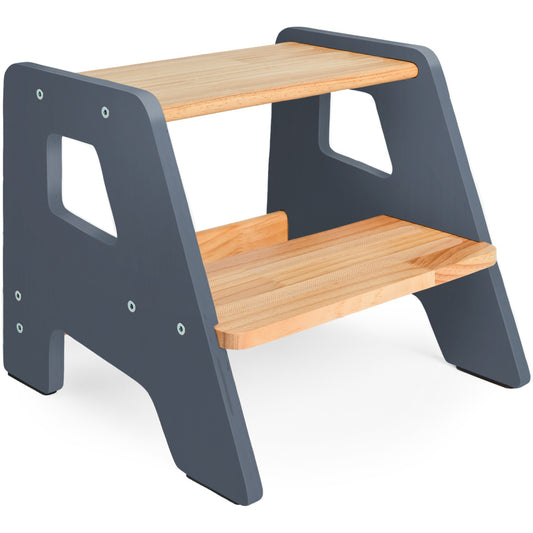
- Bathroom access: A stable step stool by the sink, hand towel at child height, and soap they can operate
- Simple dressing area: Hooks, baskets, and a place for shoes so your child can participate in getting dressed
- Snack station: Limited, parent-approved choices in reachable containers
- Cleanup tools: A small broom, cloth, or laundry basket sized for small hands
Before making any changes, it helps to review your home from your child's height and safety perspective. This guide on how to childproof your home can help you think through the difference between genuine hazards and areas where your child needs more practice.
Match the tool to the task
Children become more independent when the tool fits their body. A sink that's too high, a shelf that's too deep, or a chair that wobbles will block independence.
A few practical examples:
| Daily task | Common obstacle | Better setup |
|---|---|---|
| Handwashing | can't reach sink safely | stable step stool and reachable towel |
| Helping cook | counter is too high | supervised standing platform or safe elevated access |
| Choosing books | storage is too tall | forward-facing low shelf |
| Getting into bed | bed is high and adult-sized | low sleeping setup that allows climbing in and out safely |
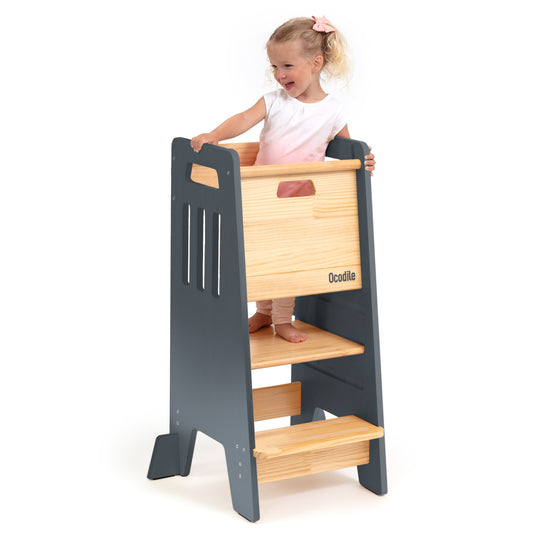
One option some families use is a standing tower, which gives toddlers a stable way to join countertop activities with supervision. Ocodile makes children's furniture such as standing towers, floor beds, and step stools intended for that kind of home access.
Change less, observe more
A “yes” space doesn't need to be expensive or perfectly styled. It needs to be clear.
Start with one hotspot in your home, usually the bathroom, kitchen, or entryway. Then watch what happens for a week. Does your child use the setup independently? Do they seem calmer? Are there still points where they need too much adult intervention?
This short video gives a helpful visual for thinking about how the environment supports safe participation at home.
A good environment reduces unnecessary struggle. It doesn't eliminate effort, but it removes barriers that have nothing to do with learning.
When parents create a home that says “yes” more often, children usually stop fighting so hard for control. They don't need to grab at forbidden spaces as often because they have real, appropriate ways to participate.
The Developmental Need for Independence
Safety matters. Of course it does. But children also pay a price when adults block too many opportunities for autonomy.

When a child rarely gets to try, choose, struggle, recover, and succeed, they don't just miss a practical skill. They may also miss chances to build judgment, confidence, and coping ability.
What the decline in independence tells us
A synthesis discussed by the Activity Alliance reports a striking drop in children's independent mobility. In England, 86% of primary school children traveled home alone in 1971, compared with 25% by 2013. The same source also notes a recent UK-based dataset in which only 17.7% of children 11 and under walk or cycle home without adult supervision.
Those numbers don't tell us that all children should be unsupervised more often. They do tell us that the cultural space for child independence has narrowed sharply.
Why small freedoms matter
Children build resilience through manageable responsibility. Not overwhelming responsibility. Not neglect. Manageable responsibility.
That can mean:
- Solving ordinary problems: finding the missing shoe, wiping the spill, asking for help from a teacher
- Experiencing low-stakes frustration: trying again after a zipper sticks or blocks fall down
- Learning cause and effect: if I forget my water bottle, I feel the inconvenience
- Growing confidence: “I've done hard things before, and I can try again”
If you want a helpful framework for the adult role here, Ocodile's article on what scaffolding means in child development explains the balance many families need. We support, then gradually step back.
Children don't become confident first and independent second. Very often, confidence grows because they've had repeated chances to act independently.
That's the heart of it. Independence is not a luxury extra. It's part of healthy development.
When to Seek Professional Support
Most variation in independence is normal. Some children are slower to warm up, more sensitive, or more dependent in one area than another. That alone isn't a reason to panic.
What deserves closer attention is a pattern that feels stuck, intense, or far outside your child's usual growth. If your child shows persistent distress around everyday separation, avoids nearly all self-care participation, or seems unable to engage with age-expected routines even with support, it's worth talking with a professional.
Signs that deserve a conversation
Consider reaching out if you notice:
- Ongoing extreme distress: separation or everyday transitions remain unusually hard over time
- Very limited interest in participation: your child consistently resists all attempts to try basic routines
- Loss of skills: abilities they once had seem to disappear without an obvious reason
- Big sensory or motor barriers: clothing, feeding, toileting, or movement tasks seem much harder than expected
- Family stress is rising: daily independence struggles are affecting school, sleep, or relationships at home
Your first stop is often your pediatrician. Depending on what you're seeing, they may suggest an occupational therapist, child psychologist, developmental specialist, or another provider. If your child does well with movement-based confidence building, some families also explore structured activities that support focus, body awareness, and self-control, such as this guide to children's BJJ benefits.
One more reason to take early foundations seriously. Independence doesn't stop in childhood. U.S. data discussed by the Census Bureau's adulthood milestone report show that only 45% of adults ages 18 to 34 describe themselves as completely financially independent from their parents. We can't control the whole future, but we can help children build the habits of capability early.
If you ask for support, you haven't failed. You've noticed your child carefully, and you're responding.
A simple, safe home setup can make everyday independence easier for both you and your child. If you're exploring child-sized tools like standing towers, floor beds, or step stools, Ocodile offers furniture designed to help young children participate more safely in daily routines.