



Childrens Craft Storage: Organize for Creative Play
The scene usually looks the same. One child is asking for tape, another has left the glue uncapped, paper scraps are stuck to the table, and the markers you bought last month already seem to be missing their lids. Half-finished crowns, bead strings, coloring sheets, pom-poms, and safety scissors are spread across the room, and by the time cleanup starts, nobody remembers what goes where.
That mess frustrates parents because it turns a good activity into extra work. But the answer isn't to hide every supply in a closet and bring things out only on special occasions. Kids need access to creative materials if you want art time to feel natural, frequent, and self-directed.
Good childrens craft storage does more than make a room look better. It helps a child choose an activity, use materials responsibly, clean up with less resistance, and feel capable in their own space.
From Craft-astrophe to Creative Calm
A lot of families don't have a dedicated art room. Crafts happen at the dining table, on the kitchen island, or in the corner of a playroom that also holds books, toys, and laundry waiting to be folded. That's why craft clutter gets out of hand so quickly. Supplies drift into every part of the house unless they have a clear home and a setup a child can use.

Parents often try one of two extremes. They either leave everything out, which creates visual and physical chaos, or they pack everything away so thoroughly that children stop using it. Neither approach works for long. The first overwhelms everyone. The second kills momentum.
What works is a middle path. Keep the safe, high-use supplies visible and reachable. Store the messy, sharp, or supervised items separately. That simple shift changes craft time from constant parent management to a space a child can participate in confidently.
Why storage matters beyond tidiness
The bigger change behind this topic is happening in homes everywhere. The global kids storage furniture market reached USD 14.65 billion in 2024 and is projected to grow at a 22.4% CAGR, reflecting how families are creating organized, multifunctional spaces that support children's independence, especially in smaller homes, according to Grand View Research's kids storage furniture market report.
That trend makes sense on the ground. Families aren't buying storage just to hide clutter. They're trying to make one room serve many purposes without making the home feel chaotic.
Practical rule: If a child can't see it, reach it, and return it without help, the system is organized for the adult, not the child.
What calm actually looks like
A calm craft area isn't picture-perfect all day. It has active projects, used pencils, and works in progress. The difference is that everything has a default place.
A functional setup usually includes:
- A clear work surface where a child can start without you first clearing yesterday's mess
- Open or visible storage for crayons, paper, stickers, and other everyday supplies
- Protected storage for scissors, paint, or materials that need supervision
- Simple cleanup cues so a child knows what belongs back in each spot
That kind of order supports creativity better than any decorative bin collection ever will.
Planning Your Child's Creative Corner
Before buying containers, look at what you already own. Most parents have more craft material than they think, but it's scattered across junk drawers, school bags, toy bins, gift bags, and random shelves. Gathering it all into one place is the first honest step.
That matters because home clutter is already working against you. The average American home contains 300,000 items, and a British study found the average 10-year-old owns 238 toys but only plays with 12 daily, which is a strong reminder that sorting and simplifying has to happen before containing, as noted in this craft clutter and organization article from Create Room.
Start with the supplies, not the bins
Spread everything out and sort by actual use, not by where you found it. Markers go together. Stickers go together. Paper scraps need their own judgment call. Broken crayons, dried glue, bent paintbrushes, and mystery craft leftovers usually don't deserve valuable space in the new setup.
Ask a few direct questions:
- What does your child reach for most often. Coloring tools, stickers, cutting, painting, collage, beads
- What requires supervision. Scissors, liquid paint, hot tools, tiny loose parts
- What creates frustration fast. Tangled ribbons, mixed marker bins, paper crammed into deep baskets
- What belongs elsewhere. Seasonal craft kits, school keepsakes, finished artwork
Choose the right location
The best craft zone isn't always a separate room. It's the place your child can use consistently. For many families, that's a dining nook, one end of a playroom, or a section of the kitchen where an adult is already nearby.
Use these filters when choosing the spot:
| Space question | What to look for |
|---|---|
| Light | Natural light or strong overhead light so kids can actually see what they're doing |
| Surface | A table, low shelf, or counter area that's easy to wipe |
| Floor | A spot where paper scraps and spills won't create constant stress |
| Traffic | Enough room to pull out supplies without blocking the whole house |
If you're working with an awkward room or shared area, it helps to visualize playroom layouts before moving furniture around. Seeing the footprint of shelves, a table, and walking space on a plan often prevents crowded setups that look good on paper but fail in daily use.
For families weighing furniture and storage combinations, Ocodile has a useful reference on craft furniture and storage ideas for children's spaces.
A creative corner works best when it fits the rhythm of the home. Kids make more art when the setup feels available, not ceremonial.
Choosing Child-Friendly Storage Solutions
Not every storage product belongs in a kids' craft area. Some look tidy for adults but create friction for children. Tight lids, deep opaque bins, heavy drawers, and containers that mix unrelated supplies all make independence harder.
The most effective childrens craft storage is visible, light, easy to reset, and sized to the materials inside.

What works and what doesn't
Here's the practical comparison parents usually need.
| Storage type | Works well for | Common problem |
|---|---|---|
| Clear bins | Markers, crayons, glue sticks, stampers, sorted loose supplies | Overfilled bins become junk bins fast |
| Opaque baskets | Bulkier items, backstock, fabric, finished projects | Kids forget what's inside |
| Open trays | Daily-use pencils, paper clips, stickers, current project tools | They look messy if you over-categorize |
| Shelves with containers | A full craft station with visible categories | Too-high shelves turn into adult-only storage |
| Rolling carts | Mobile setups in shared family spaces | Cheap carts wobble or overload easily |
Clear storage usually beats hidden storage for everyday supplies. Children make choices with their eyes first. If they can spot the colored paper, they use it. If the stickers vanish into a lidded basket, they stop existing.
Why rolling carts earn their space
A strong cart solves a real household problem. It keeps supplies grouped, mobile, and easier to clean up after use. According to Toddler Approved's craft storage guide, a technical rolling cart system can reduce craft setup time by 85% and increase child-led cleanup compliance by 62% when supplies are arranged in tiers such as frequent-use items on top, paper in the middle, and bulky items on the bottom.
That structure works because it matches behavior. Kids grab markers often, so those belong up top. Paper needs to stay flat, so a middle layer makes sense. Less-used and heavier supplies can live lower down without interrupting the routine.
A short video helps show the principle in action.
Material trade-offs that matter
Different materials create different daily experiences.
- Plastic is easy to wipe and easy to see through. It's practical for paint, glue, and messy tools.
- Wood looks warmer and often feels more furniture-like, but divided wooden trays usually work better than deep wooden boxes.
- Fabric bins are soft and useful for lightweight overflow, though they collapse or lose shape with small craft items.
- Metal mesh can work for paper or larger tools, but it isn't ideal for tiny beads, crayons, or sticker sheets.
Children's storage should lower friction. If opening the bin, finding the item, and putting it back takes too many steps, kids stop doing it.
The right mix is usually simple. Visible bins for daily supplies, one mobile cart if the area is shared, and shelving that keeps the whole system at child scale.
Setting Up for Independent Crafting
Once the supplies are pared down and the containers are chosen, the setup needs a repeatable logic. Randomly filling bins creates a neat-looking mess. A child can only maintain a system that makes sense at a glance.
The framework I trust most is Sort, Simplify, Contain, Label, Place. Professional organizers using this method report a 78% sustained success rate, and picture-based labels can boost a child's independent access by 65%, according to Clutter Keeper's guide to kids craft storage organization.

Sort and simplify first
Sort means grouping by function, not by brand, color, or where things used to live. Put all drawing tools together, all adhesives together, all paper together, and so on. Children understand categories better when they match the way the materials are used.
Simplify is where parents usually hesitate. You don't need six half-empty marker packs, every restaurant crayon, and scraps so tiny they can't support a project. Keep what is usable, safe, and relevant to your child's age and current interests.
From a practical perspective:
- Daily access for crayons, markers, stickers, plain paper
- Occasional access for paint sticks, stamps, specialty paper
- Adult-managed access for sharp tools, messy mediums, and tiny parts
Contain and label with the child in mind
Contain means each category gets the right home. Not a bigger home than it needs. Not a prettier home that's hard to use. The container should fit the volume and shape of the supply.
Picture labels matter because young children don't organize by reading. They organize by recognition. A label with both a word and a simple image gives them a direct cleanup cue without waiting for an adult to interpret the bin.
Use labels on:
- Front-facing bins for visible categories like crayons, glue, stickers
- Shallow drawers or trays where contents aren't obvious from above
- Shelf edges so children know where the whole container returns
For mobile setups, Ocodile's art storage cart ideas for kids show how a cart can function as a self-contained station instead of a rolling pile.
Keep labels boring and obvious. Cute categories like "maker magic" are fun for adults and confusing for kids.
Place by safety and frequency
Placement is what turns an organized supply collection into an independent craft area. Put the safest and most-used items at the child's height. Put the supervised items above that line. Finished projects need a separate landing zone so they don't get mixed back into the working supplies.
A simple zoning approach helps:
| Zone | What goes there |
|---|---|
| Reach zone | Crayons, markers, paper, stickers, washable glue |
| Shared zone | Paint, specialty tools, refill stock |
| Adult zone | Sharp scissors, small loose parts, anything messy or risky |
That final step is where many systems either succeed or fail. Children follow the layout you give them.
Enhancing Access and Safety with Ocodile
Storage solves only part of the problem. Kids also need a safe way to reach the workspace itself. That's where furniture matters. A well-labeled bin wall still falls short if the child can't comfortably work at the table, reach the sink, or participate beside a parent at counter height.

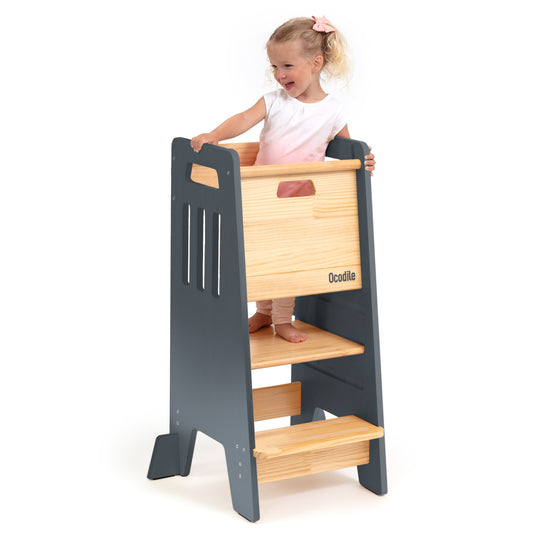
A standing tower changes how shared spaces function. It allows a toddler or preschooler to work at a kitchen island or counter with support, which is often more realistic than creating a dedicated low table in every home. That setup works well for painting, mixing dough, or any project where an adult is already nearby.
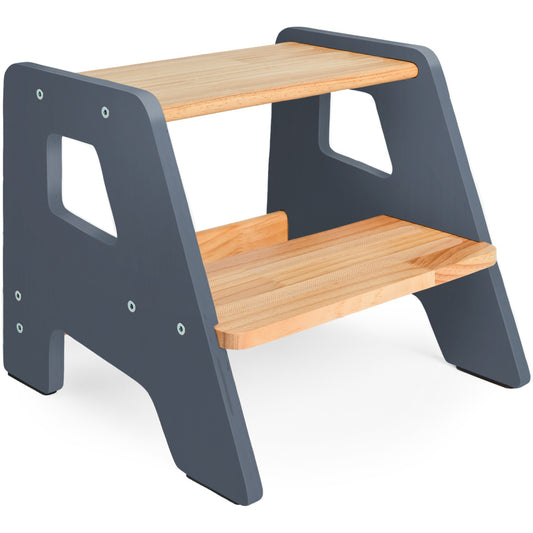
A step stool solves a different problem. It bridges the gap between child-level independence and parent-controlled access. If supervised supplies live on a higher shelf, a sturdy stool helps a child participate in getting them with guidance instead of trying to climb furniture or drag over an unsafe chair.
Why furniture completes the system
Bins and labels create order. Access furniture creates usability.
The strongest craft spaces usually support three things at once:
- A child can start independently with the materials in the reachable zone
- An adult can supervise smoothly when a messier or sharper activity comes out
- The environment teaches limits because not everything is available all the time
That balance is why furniture designed for children's participation matters. It turns storage from a static backdrop into part of the routine.
Keeping the Creative Space Organized
Even a smart setup breaks down if nobody resets it. The goal isn't perfection. The goal is a maintenance rhythm that's so short and clear your child can stick with it.
The easiest version is a five-minute reset at the end of craft time. Put caps on markers, return paper to its tray, throw away scraps, and place each container back in its spot. Kids don't need a lecture during cleanup. They need a predictable sequence they can repeat.
Build habits that hold
Try a maintenance pattern like this:
- After each session. Return only the supplies that came out that day
- Once a week. Check for dried glue, broken crayons, and mixed-up bins
- Every so often. Rotate a few materials to keep the area interesting without crowding it
Rotation matters more than many parents expect. Too many options create visual noise and indecision. A smaller active set keeps the space inviting and easier to maintain.
If you want more ideas for maintaining categories and reducing overflow, B-Sew Inn has a useful roundup of smart craft storage strategies that pairs well with a family routine.
Keep ownership with the child
Children take better care of spaces they recognize as theirs. That doesn't mean giving them total control over every material. It means making the active supplies understandable, reachable, and worth maintaining.
A few habits help:
- Use consistent homes so the system doesn't keep changing
- Limit duplicates so one bin doesn't become the dumping ground for everything
- Review the setup with your child when something stops working
For parents refining the long-term routine, Ocodile's article on art supply storage for kids is a practical companion to the setup itself.
The tidy-up routine shouldn't feel like punishment for making art. It should feel like the last step of making art.
A good childrens craft storage system supports creativity because it reduces friction. Kids can begin faster, use what they need, and put things back without the whole room unraveling. That's what makes the space last.
If you're building a creative area that needs to be both organized and usable, Ocodile offers child-focused furniture designed to support safe access, independence, and everyday family routines.