



The Ultimate Guide to Educational Gifts for Kids
Buying a gift for a child should feel joyful. Often, it feels like a test. You stand in front of shelves full of bright boxes, compare age labels, wonder whether the child will use it for more than a weekend, and try to separate useful from noisy, clever from gimmicky.
That tension is why so many parents and gift buyers start looking for educational gifts for kids. They want something that does more than entertain for a few minutes. They want a gift that supports growth, fits real family life, and still feels special when it’s opened.
The part many gift guides miss is simple. Not every educational gift looks like a toy. Some of the most powerful gifts are the ones that help a child do real things: climb up safely to wash fruit, reach the sink, choose a book independently, get in and out of bed without waiting for help, or join a parent in the kitchen. Those gifts don’t just fill a playroom. They shape daily life.
The Search for Meaningful Childrens Gifts
The usual gift hunt starts with good intentions and ends in overload. A child likes animals, so you look at animal puzzles. They enjoy building, so you compare block sets. Someone mentions STEM, and now you're reading packaging that promises coding, creativity, engineering, and lifelong learning in one box.
Most parents aren’t looking for more stuff. They’re looking for a gift with staying power.

Why purposeful gifting has grown
That instinct is part of a larger shift. The global educational toys market was valued at USD 54.00 billion in 2023 and is projected to reach USD 118.79 billion by 2030, growing at a CAGR of 12.0%, reflecting stronger parental awareness of early childhood education benefits, according to Grand View Research’s educational toys market report.
Parents have become more selective. They want gifts that help children practice coordination, language, concentration, independence, and problem solving. They also want items that fit how children learn, through repetition, movement, observation, and participation.
That’s where a lot of mainstream gift lists fall short. They often confuse educational with branded as educational.
From entertainment to empowerment
A better question is not, “Will this keep a child busy?” It’s, “What will this let the child do?”
That shift changes everything. A good gift can still be fun, colorful, and exciting. But the strongest choices give children room to act, repeat, and build confidence over time. Open-ended materials do this well, and so do practical home tools that invite children into ordinary routines. If you want a helpful way to think about this, Ocodile’s article on what open-ended play means in daily family life offers a useful frame.
A meaningful gift earns its place in the home because a child returns to it without being asked.
When I look at gift ideas through that lens, a pattern appears quickly. The items that last are rarely the loudest ones. They’re the ones that help a child feel capable.
Beyond Toys What Makes a Gift Truly Educational
A gift doesn’t become educational because the box says it teaches letters, numbers, or science. It becomes educational when it helps a child practice a skill in a way that matters to them.
That can include puzzles, blocks, books, matching games, and art materials. But it also includes furniture and home tools that support independence. A low shelf invites choice. A step aid supports handwashing. A child-height table makes focused work easier. A standing platform turns the kitchen into a place of participation instead of passive watching.
Practice matters more than novelty
Children learn through repeated action. They pour, climb, carry, stack, wipe, sort, open, close, repeat. A flashy toy that performs for the child usually has a shorter life than a simple object that asks the child to do the work.
That’s why many families eventually notice a gap in standard gift advice. The lists are full of toys and kits, but thin on practical items that improve the child’s daily environment.
An educational gift doesn't just teach a concept; it provides the opportunity to practice a skill.
That distinction is especially important in Montessori-inspired homes. The goal isn’t to impress a child with more stimulation. It’s to prepare a space where the child can act with growing competence.
Why functional furniture belongs in gift conversations
This overlooked category matters. A 2023 Montessori research study found that children using low furniture and step aids showed 40% higher independence in daily tasks, yet mainstream gift guides still tend to focus on toys instead of functional furniture, as noted in this Montessori gift guidance article from Austin Children’s Academy.
That matches what many parents already sense at home. The gifts with the deepest impact often aren’t the ones that “teach” in an obvious way. They’re the ones that let a child participate in dressing, cleaning, preparing food, choosing activities, or settling into sleep more confidently.
Here’s where the trade-off becomes clear:
- Single-outcome toys can be useful for a season, but many lose their appeal once the child figures them out.
- Open-ended materials stay relevant longer because the child can use them in different ways as skills grow.
- Functional furniture doesn’t just entertain or occupy. It changes what the child can safely do every day.
What works and what usually doesn’t
Some gifts support development because they respect the child’s pace and invite action. Others create dependence by making the adult the operator.
What tends to work well:
- Tools that support real tasks like reaching, carrying, climbing, sorting, and self-care.
- Items with more than one use such as blocks, baskets, shelves, stools, or art materials.
- Calm design that doesn’t overwhelm attention with lights, sounds, or constant prompts.
What often disappoints:
- Over-programmed toys that talk, flash, or direct every step.
- Very narrow kits that can only be used one way, one time.
- Gifts chosen for spectacle rather than the child’s actual developmental needs.
An educational gift should make a child more capable, not more passive. That’s the standard worth keeping.
Matching Gifts to Your Childs Developmental Stage
A good gift lands because it matches what a child is ready to do next. Not what adults wish they’d do. Not what looks impressive in a photo. The right fit sits just close enough to current ability that the child can engage with effort, interest, and repetition.

Infants from birth to 12 months
For infants, the strongest gifts support sensory exploration and movement. At this stage, children are learning how their bodies work and how objects behave. They grasp, mouth, track, kick, reach, drop, and turn toward sound.
Good gift choices here are usually simple. Think textured balls, grasping toys, soft books with real images, mirrors designed for baby use, and movement-friendly floor spaces. You’re not trying to entertain an infant with complexity. You’re giving them clean, responsive experiences they can return to again and again.
Useful questions to ask:
- Can the baby act on it independently?
- Does it encourage reaching, grasping, rolling, or tracking?
- Will it still be interesting after the first few uses?
The biggest mistake at this stage is choosing gifts that overstimulate. Babies don’t need constant lights or sounds to learn. They need time, repetition, and room to move.
Toddlers from 1 to 3 years
Toddlers want to do everything themselves, often before they can do it smoothly. That’s not a problem. It’s the work of toddlerhood.
This is also the age group many gift buyers are shopping for. The toddler segment, up to 4 years old, is projected to hold 54.55% market share in educational toys by 2026, reflecting how central motor-skill-focused gifts are to hand-eye coordination and problem solving, according to Fortune Business Insights’ educational toys market analysis.
That broad demand makes sense. Toddlers benefit from gifts that support:
- Cause and effect
- Gross motor control
- Early fine motor work
- Vocabulary growth
- Participation in household routines
A toddler often gets more from a set of stacking cups, a sturdy push toy, simple wooden puzzles, a child-sized broom, a stool at the sink, or a safe kitchen helper than from a complicated “learning system.”
At the toddler stage, the best gift often answers a simple urge: “Let me try.”
This is also the stage where practical life gifts start to shine. If an item helps a toddler climb safely, wash hands, carry clothing, or help prepare food, it supports both skill and dignity.
Preschoolers from 3 to 5 years
Preschoolers are building longer attention spans and richer pretend play. They begin linking ideas together more intentionally. They sort by category, invent stories, notice sequence, and ask endless practical questions.
Good gifts at this stage often combine hands-on action with imagination. Building sets, loose parts, dress-up items, story baskets, child art tools, beginner board games, simple science observation tools, and early practical tools all work well.
Preschoolers also benefit from gifts that support order and follow-through. A shelf that holds a few clear choices can matter as much as the materials on it. A reading nook can change how often books get chosen. A reachable wardrobe can turn getting dressed into a daily confidence-building activity.
Think in skills, not just ages
Age labels help, but they don’t tell the whole story. Some children need more movement. Some want intense repetition. Some are drawn to language, while others want tools, water, and anything that can be carried across a room.
Use developmental goals as your guide:
| Stage | What the child is practicing | Gift types that fit |
|---|---|---|
| Infant | Sensory discovery, reaching, rolling | grasping toys, mirrors, floor play materials |
| Toddler | climbing, carrying, matching, naming | simple puzzles, practical tools, step aids, blocks |
| Preschooler | sequencing, pretending, problem solving | open-ended building, art, books, role play, accessible furniture |
The best educational gifts for kids meet the child where they are, then support what comes next.
The Montessori-Friendly Gift Selection Checklist
A gift can look beautiful, cost a lot, and still miss the mark. Before buying, I like to run through a short checklist that keeps the decision practical. It helps filter out products that are clever in marketing but weak in daily use.
Start with safety and materials
The first question isn’t whether a gift is educational. It’s whether the child can use it safely and comfortably.
Look for:
- Stable construction so the item doesn’t wobble, tip easily, or shift under weight.
- Child-safe finishes with materials you’d feel comfortable having close to small hands every day.
- Rounded edges and smooth surfaces that reduce unnecessary risk and make repeated use more inviting.
- Solid joinery and durable parts rather than thin components that wear out quickly.
For parents building a calmer, child-accessible home, Ocodile’s overview of Montessori materials for home use is a helpful reference point because it focuses on function, not just appearance.
Check whether the child does the work
This one matters more than most gift buyers realize. Ask whether the gift invites active participation or passive reaction.
A stronger choice usually lets the child:
- Manipulate something with their hands
- Repeat the activity without adult rescue
- Use the item in more than one way over time
If the toy lights up, sings, demonstrates, corrects, and directs every action, the child may stay interested for a while, but the object is doing most of the work. Montessori-friendly gifts leave room for concentration.
Practical rule: If a product is exciting mainly because of what it does on its own, it often has a shorter useful life.
Look for longevity in design
Some gifts are perfect for a developmental window, and that’s fine. Others last because they adapt with the child.
A strong candidate usually has at least one of these traits:
- Open-ended use so the child can return to it in new ways
- Everyday relevance because it supports routines already happening at home
- Simple aesthetics that don’t overwhelm the room or the child
- Repairable or reusable construction that can handle real family life
Ask one final question
Before clicking “buy,” pause and ask: will this gift help the child become more capable?
That answer clears up a lot. It shifts attention away from novelty and back to independence, coordination, concentration, and participation. If a gift supports those things, it usually earns its place.
Bringing Learning Home With The Right Gift Category
Not every family wants the same kind of gift, and not every child responds to the same format. Some children immerse themselves in books. Some need movement first. Some want building materials. Some want to join whatever the adults are doing. Looking at gift categories through real use cases makes the choice easier.

Toys that leave room for thinking
The most useful toy gifts are usually the least over-scripted. Wooden blocks, nesting pieces, basic vehicles, object permanence boxes, shape sorters, simple lacing activities, and pretend play tools all let children experiment.
A block set is a classic example because it grows with the child. At first, the child carries and bangs pieces together. Later, they stack. Then they sort by size, make roads, build enclosures, assign stories, and solve stability problems. The same material serves different stages without needing to be “upgraded.”
By contrast, toys built around one button, one sound effect, or one surprise tend to flatten quickly. They can be fun, but they rarely hold attention in a deep way.
If you’re also considering toy-based options with a science or problem-solving angle, this roundup of learning STEM toys for different ages is useful because it helps separate hands-on choices from trend-driven ones.
Books that support both learning and connection
Books make strong gifts because they serve more than one purpose. They build language, attention, memory, and shared rituals. They also scale beautifully. A baby studies images. A toddler names objects. A preschooler retells. An older child asks bigger questions.
The key is choosing the right type of book for the child in front of you. Realistic picture books often work especially well for younger children because they connect language to familiar life. For children working through worry, change, or big feelings, themed books can support emotional understanding in a gentle way. If that’s the need, this guide to emotional support books for youth is a thoughtful resource.
Books work best when they’re accessible. A beautiful stack on a high shelf doesn’t help much. Front-facing storage, a comfortable reading corner, and a few well-chosen titles usually beat a crowded library.
Activity kits that reward patience
Activity kits can be wonderful gifts when they’re chosen carefully. The better ones encourage process over performance. They invite a child to mix, assemble, classify, observe, or make something with visible steps.
The weak point is that many kits are too adult-directed. They ask the child to follow instructions exactly, produce a finished object, and move on. That can work for some personalities, especially older children who enjoy sequence and completion. It tends to frustrate younger children who need exploration more than accuracy.
Use kits when the child enjoys sitting down with a project. Skip them when the child is in a phase of movement, repetition, and practical imitation.
Furniture that turns everyday routines into learning
This is the category most gift guides underuse.
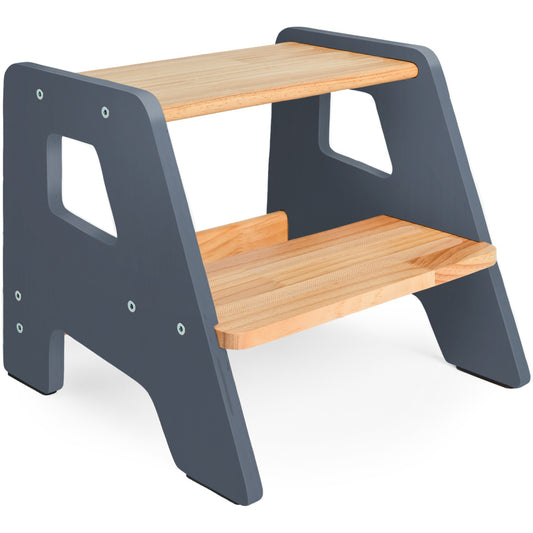
Furniture can be educational when it changes what a child can safely access and practice. A standing platform in the kitchen, a floor bed, a step stool at the sink, a low wardrobe, or reachable storage doesn’t merely organize the room. It creates opportunities for action.
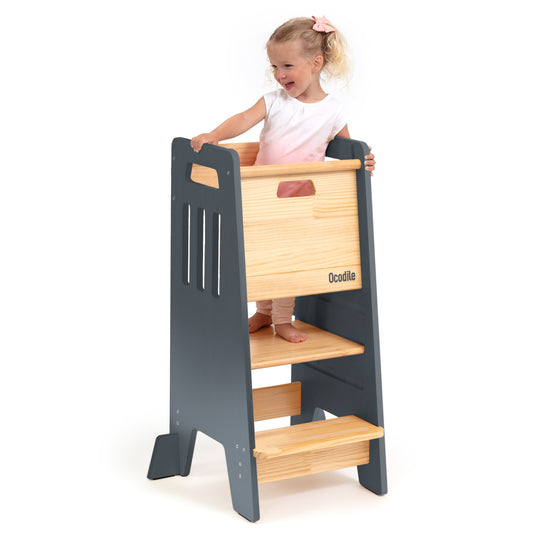
One of the clearest examples is the learning tower. Instead of watching from floor level, the child can stand at counter height and take part in ordinary kitchen work. That matters because a 2018 study found toddlers using adjustable standing platforms showed a 35% faster progression in balance and climbing skills, according to the source material summarized in Getting Smart’s education gifts article.
That kind of gift changes a routine. A parent washes vegetables while the child transfers slices into a bowl. Batter gets stirred. Bananas get peeled. Hands get washed at the right level. The child isn’t being entertained nearby. The child is participating.
One example in this category is Ocodile’s learning tower, which is designed to help children join kitchen and household activities at adult work surfaces while staying supported. In practical use, that means more chances to pour, stir, observe, clean, and talk through real tasks.
A second overlooked category is the floor bed. A floor-level sleep space can support autonomy because the child can enter and leave it independently within the boundaries parents set. The same source notes that a 2022 meta-analysis in Pediatrics showed floor beds reduce night wakings by 28% by eliminating fall hazards and promoting autonomy.
Here’s a quick way to match the gift category to the child’s current need:
| Developmental Goal | Best Fit Category | Why It Works |
|---|---|---|
| Build focus and problem solving | Toys | Open-ended materials invite repetition and experimentation |
| Grow language and emotional understanding | Books | Shared reading builds vocabulary and connection |
| Support sequencing and project work | Activity Kits | Step-based tasks suit children who enjoy process |
| Increase independence in daily life | Furniture | Child-accessible design turns routines into practice |
This short video shows how movement, access, and practical participation come together in child-centered spaces:
The strongest category depends on the family’s real life. If a child already has plenty of toys but no safe way to join the kitchen, furniture may be the more educational gift. If the child craves stories and conversation, books may carry more value than another set of objects. If the child loves to build, a simple open-ended toy may outperform any kit.
The point isn’t to pick the most academic-looking gift. It’s to choose the category that gives the child the richest chance to act, repeat, and grow.
Gifting With Intention For Lasting Impact
A well-chosen gift still needs the right introduction. Children rarely need a speech about how useful or educational something is. They need space to notice it, touch it, and see how it fits into life.

How to present a gift so it gets used
A calm introduction works better than an enthusiastic performance. If it’s a book, read it naturally. If it’s a practical item, show one simple use. If it’s an open-ended toy, place it where the child can return to it later instead of trying to force immediate excitement.
What helps most:
- Model briefly so the child sees the purpose without feeling directed.
- Limit competing options for a few days if you want the new gift to get a fair chance.
- Place the item where use is easy instead of storing it out of sight.
- Let repetition happen even if it looks boring to adults.
A gift has more impact when it becomes part of the child’s rhythm, not just a special event.
Choose less, choose better
Many children don’t need more variety. They need better access, better fit, and more time with fewer things.
That’s why intentional gifting often means choosing one item with a clear role instead of several smaller items that scatter attention. A child who can now reach the sink, choose a bedtime book independently, or help prepare a snack has been given something deeper than novelty. They’ve been given a new layer of participation in family life.
The most lasting educational gifts for kids support the child’s development and the household’s daily flow at the same time. That’s a strong standard to keep.
Frequently Asked Questions About Educational Gifts
Do educational gifts always need to look serious
Not at all. Children learn through joy, movement, humor, repetition, and imagination. A gift can be playful and still be very educational. Blocks, pretend food, dress-up clothes, rhythm instruments, and simple art materials all qualify when they invite active use.
A better test is whether the child is doing the thinking, moving, choosing, or creating.
How do I balance fun gifts with purposeful ones
You don’t need to separate them too sharply. Many of the best gifts do both. A book can feel cozy and build language. A climbing-support item can feel exciting and support coordination. A pretend kitchen setup can be delightful and strengthen sequencing, vocabulary, and social play.
If you’re choosing multiple gifts, a simple mix works well. Include something for imagination, something for movement or practical life, and something for quiet focus.
Do educational gifts have to be expensive
No. Cost and value aren’t the same thing.
Simple gifts often work beautifully. A basket of scarves for movement play, a small set of crayons and good paper, a realistic picture book, a child-sized cleaning tool, or a few wooden kitchen items can all support rich learning. Expensive products can still disappoint if they are fragile, overstimulating, or too narrow in use.
What if the child doesn’t seem interested right away
That happens often, especially when the gift is quieter than what they’re used to. Don’t rush to decide it was a poor choice.
Try this:
- Leave it accessible without pushing it.
- Model one use and stop.
- Reduce clutter nearby so the item is easier to notice.
- Wait for the right moment when the child’s interest matches the gift’s purpose.
Some gifts click instantly. Others become favorites after a week or two, once the child recognizes what they can do with them.
Is furniture really an appropriate gift
Yes, if it directly supports the child’s daily independence and the family welcomes that kind of present. Practical gifts are often the ones children use most. The key is choosing something that gives the child meaningful access, not just something adults find convenient.
A good child-centered furniture gift should feel like an invitation, not a restriction.
If you’re choosing a gift that supports independence, safety, and everyday family connection, Ocodile offers child-focused furniture designed to help children participate more fully in home life through practical pieces such as standing towers, floor beds, and step stools.