



Floor bed headboard: Safe, stylish Montessori room ideas
A floor bed headboard is more than just a pretty accessory; it’s the piece that connects the freedom of a floor bed with the cozy, contained feeling of a traditional one. For parents who are all-in on child-led principles, it adds a much-needed sense of security and makes the sleep space feel complete, all without taking away any of that precious independence.
Why a Floor Bed Headboard Is a Smarter Choice for Kids
Moving to a "big kid" bed is a huge step, and the floor bed has quickly become a go-to for parents focused on autonomy and safety. By getting rid of the risk of falling from high up, these beds let kids get in and out on their own terms. But let's be honest, a mattress on the floor can sometimes feel a bit… unfinished. This is exactly where a headboard comes in to save the day.
Think of it as the anchor for your child’s little sleep sanctuary. It defines the bed area, drawing a clear visual and mental line that separates rest time from playtime. That spot becomes the comforting backdrop for bedtime stories, quiet moments with a favorite book, and a safe place to lean back and relax.
Creating a Sense of Security
For a toddler who just left the snug, all-encompassing safety of a crib, their room can suddenly feel huge. A headboard provides a comforting sense of enclosure and protection, much like the coziness they’re used to but without the restrictive bars.
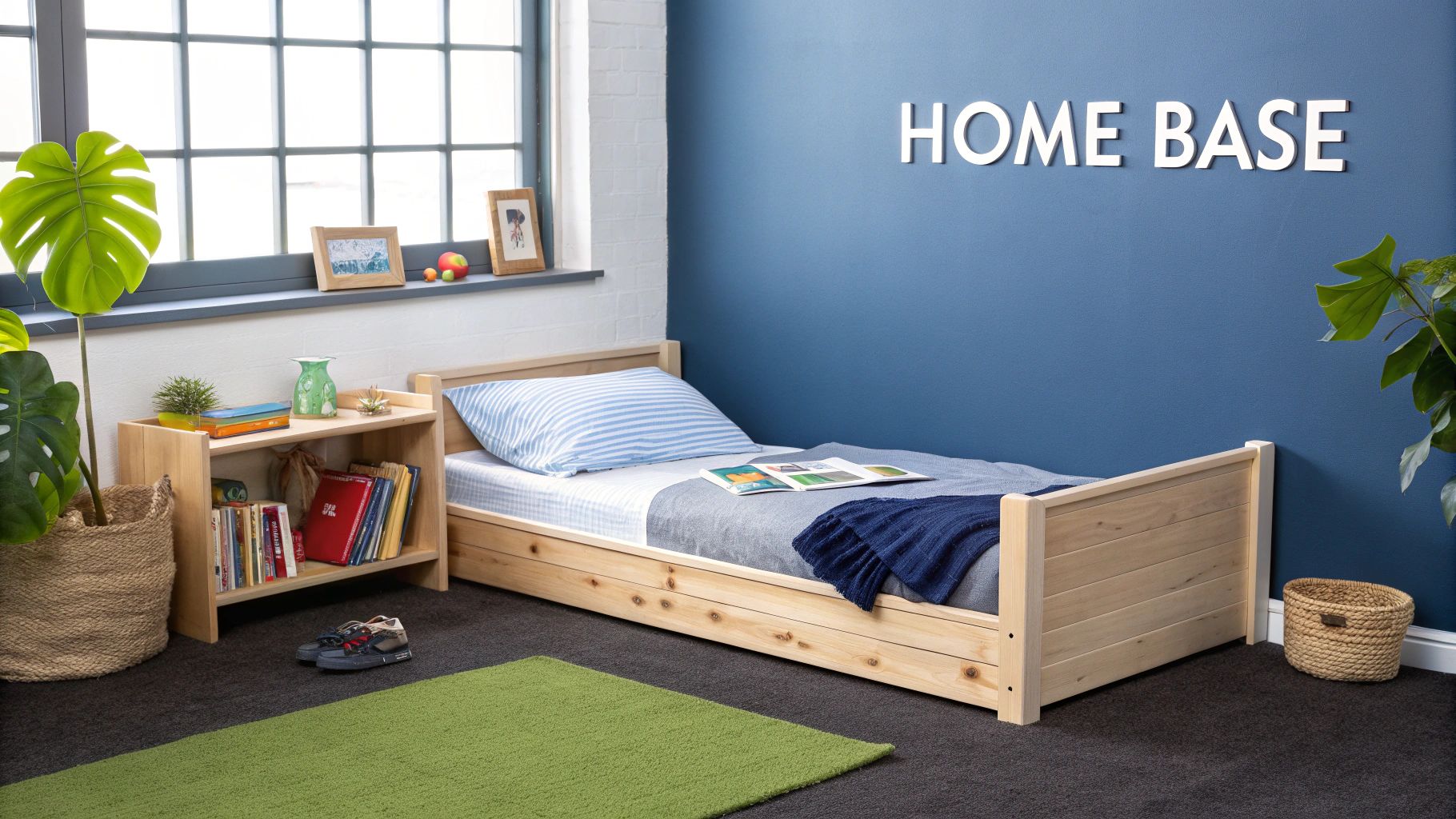
It basically turns the bed into a defined "home base" right in their room—a safe harbor they can retreat to whenever they need a little comfort. This simple addition supports their emotional well-being just as much as their physical safety. It also transforms a simple mattress into a proper piece of furniture, giving the room a more structured and polished look.
A well-chosen headboard does more than just stop pillows from sliding off the back; it completes the bed, making it feel intentional, permanent, and cozy. It tells a child, "This is your special, protected space for rest."
Fostering Independence and Good Habits
While it adds a layer of security, a headboard doesn't get in the way of the main benefit of a floor bed—independence. Your child can still climb in and out of bed all by themselves, which is a huge confidence booster.
In fact, a headboard can even help build good habits. It creates an inviting little nook for pre-sleep reading, helping them connect their bed with calm, quiet activities.
For parents just starting this journey, figuring out the differences between a floor bed vs crib can be a big help. A floor bed headboard is the perfect accessory to make that transition smoother, blending newfound freedom with a comforting sense of familiarity. It’s a smart, simple upgrade that really supports your child's development, safety, and comfort.
Critical Safety Features for Your Child's Headboard
When you bring a floor bed headboard into your child's room, you're not just adding furniture; you're adding something they'll interact with every single day. As parents, we all want that peace of mind knowing their space is completely safe. It’s not just about what looks good—it's about creating a little haven where they can sleep, play, and grow without any hidden dangers.
The goal is to feel totally confident in your choice. That means looking past the style and focusing on the small but crucial details that make a headboard truly child-safe. From the materials it's made of to how it's put together, every little thing matters.
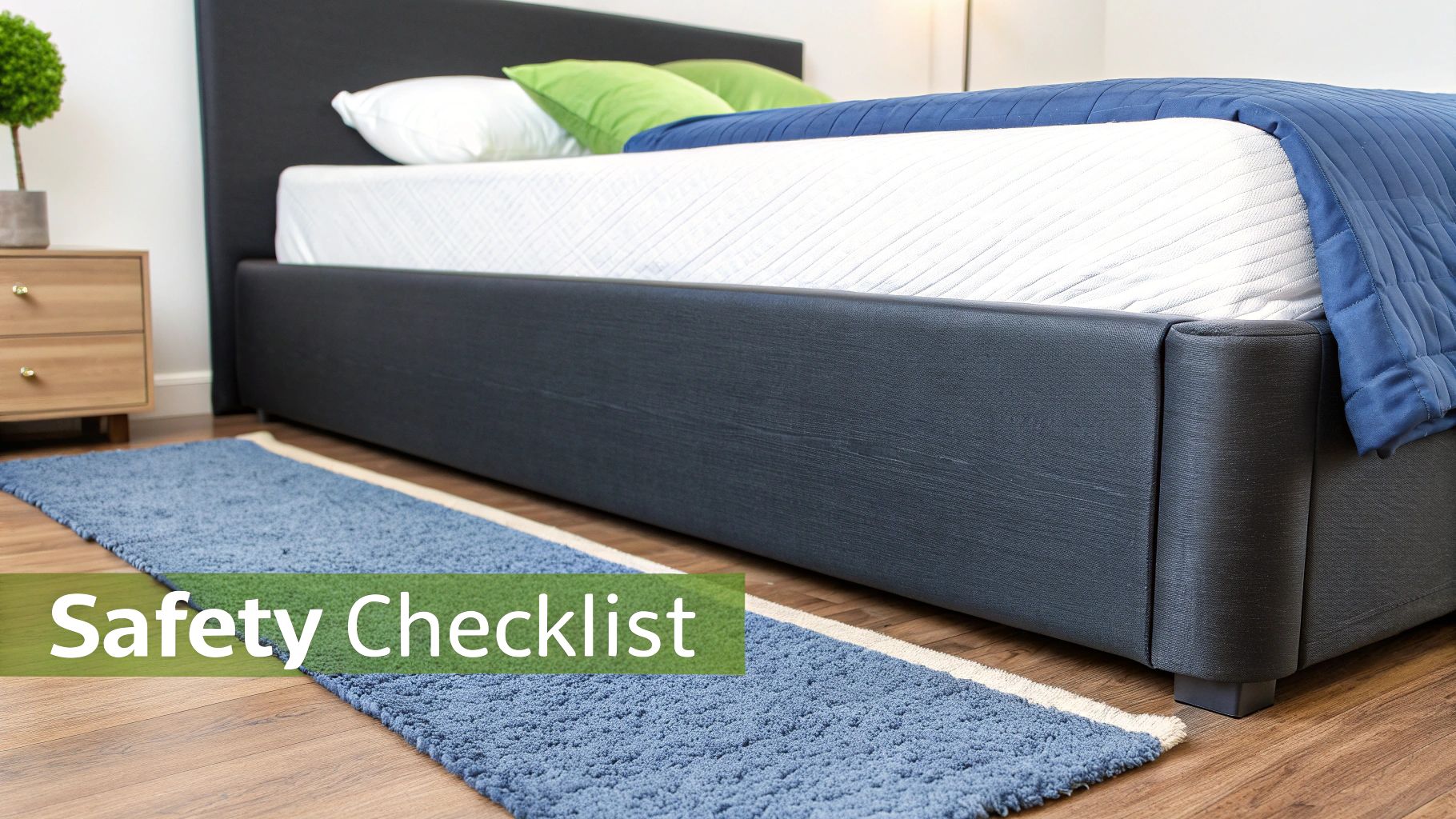
The Non-Negotiable Safety Checklist
Think of choosing a headboard like you would any other part of baby-proofing—you have to anticipate a child's natural curiosity. A safe floor bed headboard should be a soft, protective buffer, not another place for bumps and scrapes.
Here are the absolute must-haves on your list:
- Smoothly Rounded Corners and Edges: Sharp corners are just asking for trouble, especially with wobbly toddlers. Look for headboards with soft, rounded edges that are gentle to the touch and a bit more forgiving during those inevitable tumbles.
- Zero-VOC and Non-Toxic Finishes: Little ones are more sensitive to what's in the air. Volatile Organic Compounds (VOCs) are nasty chemicals in many paints and finishes that get released into the room. Always pick a headboard with a zero-VOC, non-toxic finish so you know your child is breathing clean air while they sleep.
- Robust and Stable Construction: A good headboard should feel solid. No wobbling, no creaking. Quality joinery and durable materials are signs of a well-made piece that can handle a bit of leaning, pushing, and years of use.
It’s clear that parents are focusing more on creating safe and functional sleep spaces. Beds are a huge part of this, expected to make up 36.55% of revenue in the bedroom furniture market in 2025. This trend is great for families looking for better sleep solutions, making the floor bed headboard a key piece in a market projected to grow from $266.15 billion in 2024 to $383.12 billion by 2030.
Secure Attachment is Paramount
How a headboard attaches is probably its most critical safety feature. If it's not secured properly, it can tip, shift, or create dangerous gaps, which are serious risks. You really have two main options, and each has its own things to consider.
Wall-Mounted Headboards: These screw directly into the wall behind the bed.
- Pros: When installed right, they are incredibly stable. This setup completely eliminates the chance of a gap forming between the headboard and the wall.
- Cons: Installation takes a bit more work. You'll need to find the studs in your wall to get a truly secure hold.
Frame-Fixed Headboards: These attach right onto the floor bed frame itself.
- Pros: Usually much easier to install, and you can move the bed and headboard around as one single unit.
- Cons: You have to make sure the hardware is tightened securely and give it a check every so often to make sure nothing has loosened up over time.
No matter which type you choose, the golden rule is zero gaps. The mattress must sit perfectly flush against the headboard, leaving no space where a child could potentially become trapped.
Of course, safety goes beyond just the headboard. A great guide on how to childproof your home can give you more ideas for the entire room. For more specific advice, you might also want to check out our detailed article on ensuring Montessori floor bed safety. By keeping these features in mind, you can create a cozy spot where your child is truly safe.
How a Headboard Fits Into the Montessori Philosophy
The Montessori method is all about respecting the child, building their independence and confidence from day one. A core piece of this is creating a "prepared environment"—a space intentionally designed to help a child grow naturally. The floor bed is a perfect example, and a matching headboard is its ideal partner, taking the concept even further.
Think about a traditional crib. With its high bars, it can feel more like a playpen than a bed, making a child totally dependent on an adult to get in or out. A floor bed knocks down those walls, giving a child the freedom to access their own sleep space. It’s a simple shift, but it shows you trust them and respect their growing autonomy.
Adding a headboard doesn't take that freedom away. What it does is enhance that prepared environment by creating a defined, cozy spot just for rest. It acts as a gentle psychological cue that says, "This is your special place for quiet and sleep," without physically trapping them.
Building Independence Through Smart Design
A big goal in a Montessori bedroom is to make a space where a child can do things for themselves. The floor bed is step one, letting them listen to their own body when they’re tired or ready to get up. A headboard builds on this by turning a simple mattress into a real, multi-use space.
This small addition can transform the bed into a comfy nook for quiet time. It gives them a sturdy backrest, perfect for a toddler who wants to sit up and flip through a picture book all on their own. This helps them build a positive connection with their bed, seeing it as a place for calm, self-led activities like reading, not just for sleep.
By making their bed a comfortable spot for more than just snoozing, you're helping them develop skills at the heart of the Montessori philosophy:
- Concentration: It gives them a cozy, stable spot to focus on a book or a quiet toy without getting distracted.
- Self-Care: The child learns to use their space for different needs—active play happens out in the room, while quiet rest happens in their bed.
- A Love of Learning: Making reading comfortable and easy to do on their own helps spark an early love for books.
A headboard doesn't get in the way of freedom; it gives it an anchor. It provides a sense of place and purpose within the room, turning the bed into a reliable sanctuary for both sleep and quiet moments.
Creating a Cozy, Defined Space
Dr. Maria Montessori noticed that children do best in environments that are orderly, beautiful, and scaled to their size. A floor bed headboard helps create that sense of order by clearly marking out the sleep area from the rest of the room. It adds a visual structure that helps a child understand how different zones in their room are used.
This defined little nook offers a feeling of security, which is a huge comfort for a small child moving from the snug space of a crib. It creates a cozy haven they can retreat to, offering psychological comfort without putting up physical walls. This gentle sense of being "tucked in" can even lead to better sleep, as the child feels safe and secure in their personal space.
Ultimately, a floor bed headboard lines up perfectly with Montessori principles. It respects a child’s freedom to move while giving them the structure, comfort, and security they need to build real independence. It’s a thoughtful touch that helps turn a simple mattress into a purposeful, cherished part of your child’s world.
Selecting The Right Materials and Dimensions
Choosing the right floor bed headboard is a bit like picking the perfect puzzle piece. It has to fit just right, not just in how it looks but also in how it works for your family day-to-day. The material sets the tone for the room and determines how much time you'll spend cleaning it, while getting the dimensions correct makes the whole setup safe and visually balanced.
Think of the material as the headboard's personality. Are you going for the warm, natural vibe of solid wood, or something soft and cozy like an upholstered fabric? Each one has its pros and cons, especially in a toddler's room where durability and easy clean-ups are non-negotiable. Let’s break down the common choices to help you find that perfect match.
Finding The Best Headboard Material
The material you choose for a floor bed headboard has a huge impact on safety, how long it will last, and how easy it is to maintain. Solid wood is a classic for a reason, but upholstered headboards offer a soft, cushioned surface that’s perfect for little ones who love to lean back with a book.
Here's a quick guide to help you weigh your options.
Comparing Headboard Materials for a Child's Floor Bed
This table breaks down some of the most common materials to help you decide which one best suits your needs for safety, durability, and style.
| Material | Pros | Cons | Best For |
|---|---|---|---|
| Solid Wood | Super durable, a breeze to clean with just a wipe-down, and offers a timeless, natural look. | Can be more expensive and harder on accidental bumps if the corners aren't well-rounded. | Families wanting a classic, long-lasting piece that can handle years of use. |
| Engineered Wood | A more budget-friendly choice, available in tons of finishes to match any decor. | Not as tough as solid wood; can be prone to moisture damage and chipping over time. | Parents looking for a stylish, affordable option for a room that might get a makeover every few years. |
| Upholstered Fabric | Gives your child a soft, cushioned backrest, adding an extra layer of comfort and safety. Great for absorbing sound, too. | Can be tricky to clean and may collect dust and allergens if you don't vacuum it regularly. | Creating a snuggly, inviting sleep space, especially for kids who enjoy reading in bed. |
After looking at the materials, it's clear each has its own unique benefits. Ultimately, the best choice is the one that fits your family's lifestyle and your child's needs.
This infographic neatly summarizes why a well-chosen headboard is such a fantastic addition to a Montessori-style room, from boosting independence to creating a defined, cozy spot for reading.
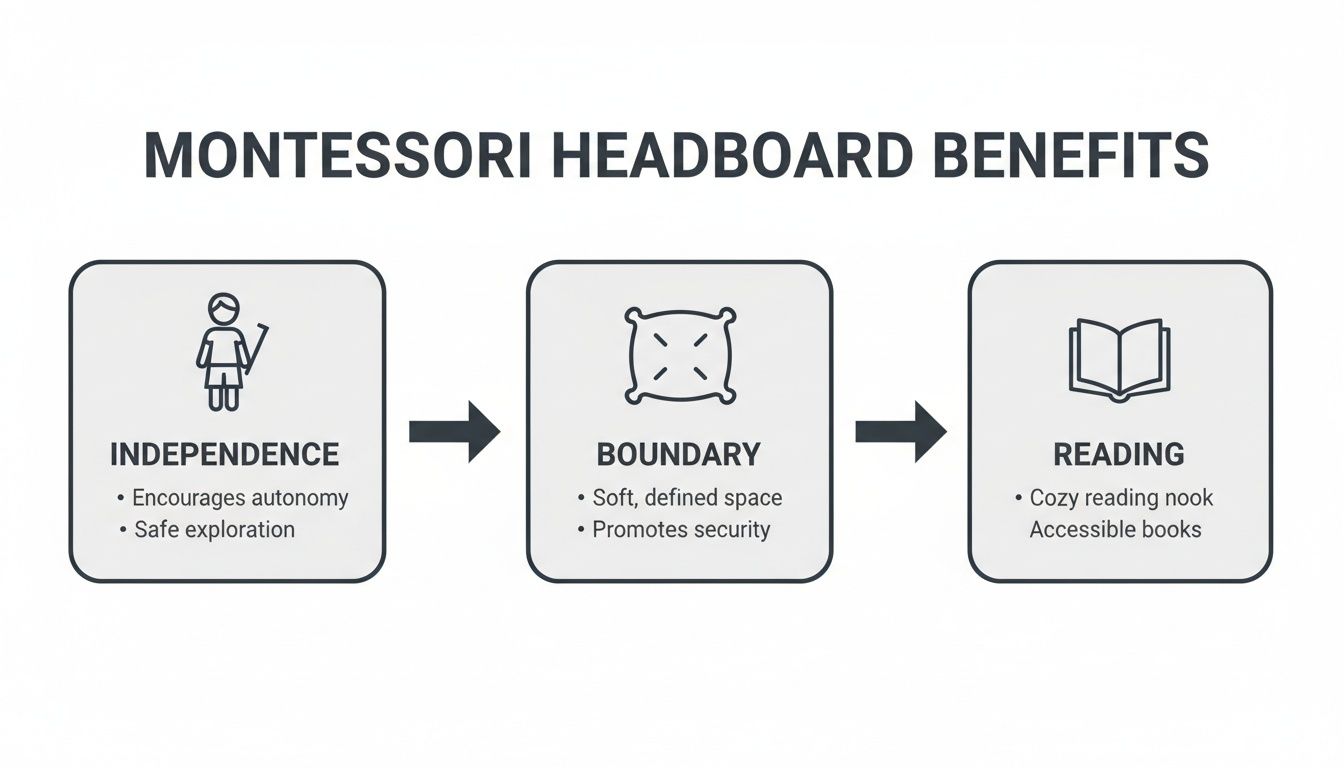
Every element highlighted here—independence, boundary, and reading—is a step on your child’s developmental journey, supported right in their own little space.
Getting The Dimensions Perfect
Once you've landed on a material, the next step is getting the size right for both the mattress and the room itself. A headboard that’s too big can easily overwhelm a small space, while one that’s too small can look awkward and won't offer much support.
First things first, measure the width of your child’s mattress. The headboard should be at least the same width, or you can go slightly wider for a more finished, framed look. If you're exploring different low-to-the-ground sleep setups, this guide on choosing a platform bed has some great tips on design and function that are super relevant here too.
Next up is height. For a floor bed, a lower-profile headboard is almost always the way to go. You want it tall enough to provide a comfy backrest when your child sits up, but not so tall that it takes over the room or becomes tempting to climb. A height of 20 to 30 inches above the mattress is usually a great starting point.
Pro Tip: Before you commit, grab some painter's tape and outline the headboard’s dimensions on the wall behind the bed. This simple trick is a game-changer for visualizing how the size will actually feel in the space and helps you make sure it won't clash with windows or outlets.
Taking a moment to visualize it makes all the difference. You'll see exactly how much wall space it takes up and how it balances with the other furniture. By thinking through both the material and the dimensions, you can pick a headboard that's safe, practical, and perfectly scaled for your child's sanctuary.
Styling a Room Around Your Floor Bed Headboard
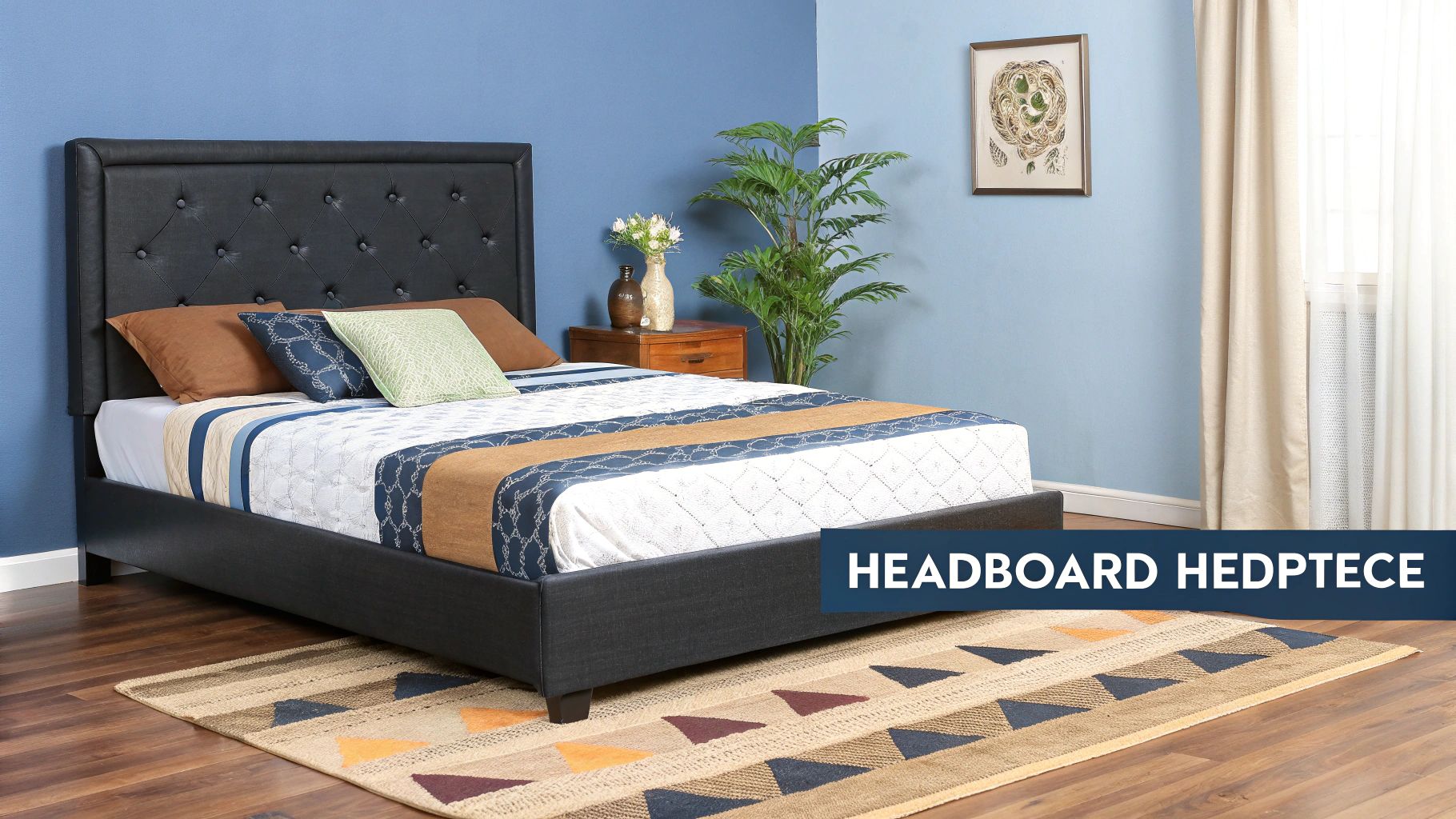
A floor bed headboard is so much more than a safety feature—it's a powerful design element that can anchor the entire look and feel of your child’s bedroom. With the right styling, you can transform it from a simple piece of furniture into the stunning centerpiece of a cohesive, magical space.
Think of the headboard as the "main character" of the room. Every other element, from the bedding and rug to the wall decor and lighting, can play a supporting role. This approach makes decorating feel less overwhelming and more intentional, making sure every choice builds on a central theme.
Creating a Cohesive Theme
The material of your floor bed headboard is the perfect jumping-off point for building a room's theme. Its texture and color naturally guide your other design decisions, creating a harmonious environment without you even trying too hard.
For instance, a natural wood headboard pairs beautifully with earthy, nature-inspired decor. You can lean into this with:
- Botanical Themes: Think bedding with leaf or animal prints, nature-themed art on the walls, and a few potted plants (child-safe varieties, of course!). This creates a calming, woodland escape.
- Neutral Palettes: Complement the wood with soft neutrals like beige, sage green, and muted blues for a serene, Scandinavian-inspired look that feels both modern and timeless.
An upholstered headboard, on the other hand, just begs for a softer, cozier aesthetic.
- Dream-Like Atmospheres: Pair a plush, fabric headboard with soft, pastel-colored bedding, a fluffy rug, and sheer curtains to craft a whimsical, cloud-like sanctuary.
- Bold and Playful: Don't be afraid of color! A vibrant upholstered headboard can be the pop of fun in a room filled with playful patterns and textures.
The key is coordination, not perfect matching. Pick a color palette of three to four complementary shades and use them in varying amounts throughout the room. This gives you a layered, professional look.
Adding Personality and Magic
Once you've got your core theme down, it’s time to add those special touches that make the space uniquely your child's. A headboard can serve as a fantastic canvas for personalization, letting you add character without overwhelming the room.
The goal is to make their sleep space feel like a personal hideaway. A few safe and simple additions can make a world of difference.
Safe and Creative Personalization Ideas:
- Removable Wall Decals: Whimsical decals like stars, animals, or flowers are a lifesaver. Apply them to the wall just above or around the headboard. They're easy to put on and take off, which is perfect for evolving tastes.
- Battery-Operated Fairy Lights: Drape warm, LED fairy lights safely around the top of the headboard to create a magical, starry-night glow for bedtime stories. Just make sure all cords and battery packs are well out of reach.
- Themed Bedding and Pillows: This is the easiest way to inject personality. From dinosaurs and astronauts to florals and geometric shapes, the right duvet cover and accent pillows can instantly tie the whole theme together.
Creating a beautiful space is just one part of the journey. For more ideas on furnishing a room that grows with your child, explore our complete guide to Montessori bedroom furniture. By thoughtfully styling around the floor bed headboard, you can create a beautiful, functional, and deeply personal room that your child will love for years.
A Guide to Safe Installation and Easy Maintenance
Getting the headboard set up correctly is that final, crucial step to creating a sleep space you can feel good about. And the good news? You don't need to be a DIY pro to get it right. The main goal here is a secure, gap-free fit that won't budge.
Most headboards are designed for a pretty simple assembly, either attaching to the bed frame or mounting directly on the wall. A wall-mounted headboard is often the sturdiest choice, as it completely eliminates any chance of a gap opening up between the bed and the wall.
Safety is paramount: If there's one rule to follow, it's this: the mattress must sit perfectly flush against the headboard. Any gap, no matter how tiny it seems, can be an entrapment risk for a small child.
Always follow the manufacturer’s instructions to the letter, and double-check that you're using the right hardware. If you're mounting it to the wall, find and use the wall studs. That’s how you get a rock-solid anchor that gives you real peace of mind.
Your Simple Installation Checklist
Getting the installation right the first time saves a lot of headaches later. Before you even start, grab your tools and make sure all the parts are accounted for.
- Read Instructions First: It's tempting to jump right in, but take five minutes to read the entire manual. It helps you see the big picture and sidestep common mistakes.
- Measure and Mark: Use a pencil to mark exactly where your screws will go. A level is your best friend here—nobody wants a crooked headboard!
- Secure All Hardware: Tighten every single bolt and screw firmly. When you think you’re done, give the headboard a gentle shake to test its stability. It shouldn’t wobble or shift at all.
Once it's securely in place, your focus can shift to simple, ongoing care. A little bit of maintenance keeps it safe and looking great for years to come.
Keeping Your Headboard in Top Condition
A quick and easy maintenance routine is all it takes to preserve the safety and look of the headboard. Just a few minutes once a month makes a world of difference.
How you clean it will depend on the material. For a solid wood headboard, a quick wipe with a damp cloth is usually all it needs. If you have an upholstered one, a weekly vacuum with a brush attachment works wonders to get rid of dust. For any spills on fabric, blot them right away with a clean cloth and a gentle, child-safe cleaner.
Monthly Safety Check:
- Hardware Check: Give all the screws and bolts a quick check to make sure they're still tight.
- Stability Test: Gently push on the headboard. You want to make sure it's still held firmly in place.
- Inspect Surfaces: Do a quick scan for any potential splinters on wood or loose threads on fabric that could be a snag hazard.
This simple routine ensures the headboard remains a safe, comforting part of your child’s room.
Common Questions About Floor Bed Headboards
Moving your little one to a floor bed is a big, exciting step. But it’s totally normal for that excitement to come with a whole list of questions. You want to get every detail right, from the timing of the switch to making sure the new setup is safe, secure, and genuinely practical. Getting clear answers helps you build the confidence to create that perfect little space for your child to grow.
This last section is all about tackling the most common questions and concerns we hear from parents just like you. We'll get straight to the point to give you the clarity you need to make the best choice for your family.
At What Age Can My Child Use a Floor Bed Headboard?
A floor bed with a headboard is a fantastic option once your child is ready to graduate from their crib. This usually happens somewhere between 18 months and 3 years old. The biggest sign they're ready? They can safely climb in and out of bed all by themselves.
The headboard itself is safe right from the start. In fact, it can provide an immediate sense of coziness and security, which often makes the move from an enclosed crib feel a lot less dramatic. Just remember, the newfound freedom of a floor bed means the entire room needs to be thoroughly childproofed for those new adventures.
Is a Gap Between the Headboard and Mattress a Danger?
Yes, absolutely. Any gap between the mattress and the headboard is a major safety risk. It can easily become an entrapment hazard for a small child, which is why a seamless, no-gap fit is something you can't compromise on.
A well-designed floor bed headboard ensures the mattress sits perfectly flush against it. There should be zero space for little arms, legs, or heads to get caught. When you're setting it up, it's so important to follow the instructions to secure the headboard tightly to the wall or bed frame.
This is the kind of detail that creates a truly secure sleep space and gives you total peace of mind while your little one snoozes.
What Is the Easiest Way to Clean an Upholstered Headboard?
Keeping an upholstered headboard clean might seem like a challenge in a toddler’s room, but it’s simpler than you’d think. A little bit of routine care makes all the difference.
- Regular Dusting: Grab your vacuum’s upholstery brush attachment once a week to quickly remove dust and keep allergens from settling in.
- Quick Spill Response: Spills happen! The trick is to act fast. Gently blot the spot with a clean, damp cloth and a mild, child-safe fabric cleaner. Always test new cleaners on a small, hidden area first to make sure it doesn’t affect the color.
- Smart Fabric Choices: To make life even easier, look for headboards upholstered in performance fabrics. They're designed from the get-go to be stain-resistant and much simpler to clean.
Will a Headboard Overwhelm a Small Bedroom?
It’s a common worry—will a headboard make a small room feel even more cramped? Surprisingly, the opposite is often true. A thoughtfully chosen headboard can actually make a compact space feel more organized and pulled-together.
The trick is to pick a design that works with the room's scale, not against it. A low-profile, minimalist headboard in a light color or a natural wood finish can define the sleeping area without eating up visual space. Designs with clean, simple lines or even vertical slats can draw the eye upward, creating an illusion of height and making the whole room feel bigger.
At Ocodile, we craft our designs with these exact questions in mind. Every floor bed headboard we make is safe, practical, and perfectly scaled for a child's room. We are obsessed with non-toxic materials, secure attachments, and timeless styles that support your little one’s journey toward independence. Discover the perfect foundation for your child's sleep sanctuary at https://ocodile.com.