



Floor Bed Slats Explained: Safety, Spacing & Design Guide
Your toddler is awake before you are. They climb out of bed, find the doorway, and start the day independently. That freedom is central to a Montessori floor bed, but the mattress isn't floating on good intentions. Floor bed slats determine stability, airflow, comfort, and how well the setup suits a growing child.
A low bed can be a thoughtful choice, but it still needs careful construction. The right spacing, material, mattress, and maintenance routine matter more than a picture-perfect frame.
Table of Contents
- What Floor Bed Slats Are and Why They Matter
- Choosing the Right Materials and Construction Quality
- Understanding Slat Spacing and Mattress Compatibility
- How Different Mattress Types Perform on Floor Beds
- Safety Considerations for Toddlers on Floor Beds
- Design and Aesthetic Choices for Family Rooms
What Floor Bed Slats Are and Why They Matter
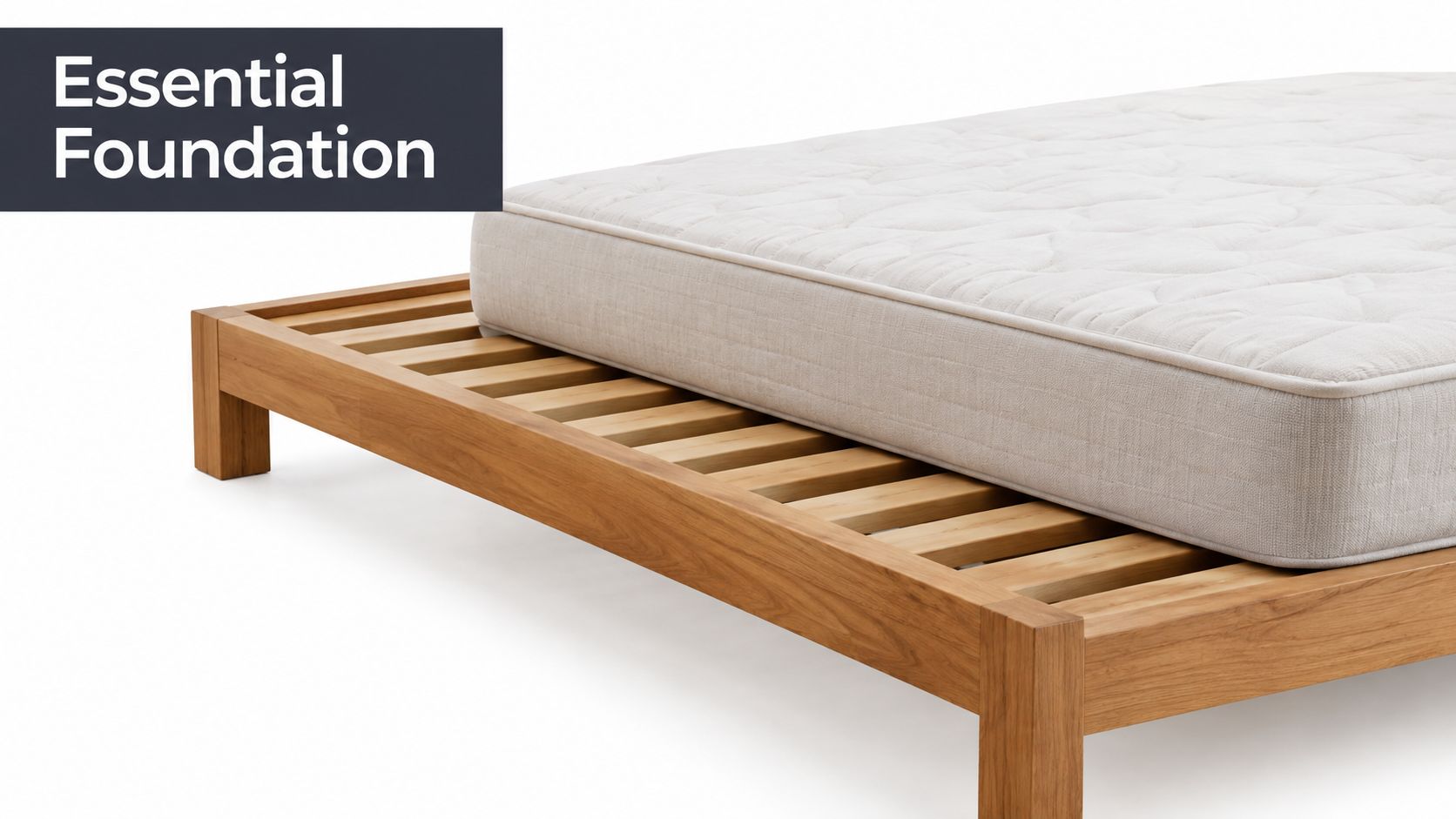
At bedtime, your child sees a low mattress they can enter and leave without help. Underneath, the slats spread weight across the frame while leaving a small air path beneath the mattress. That support system is easy to overlook because it stays out of sight, yet it affects how evenly the mattress rests and whether the bed remains stable when a toddler rolls, kneels, or climbs.
Unlike a box spring, slats don't rely on a deep upholstered foundation. They use individual wooden boards attached across the frame. The open structure can support ventilation, but the gaps must be controlled. If they're too wide, soft foam can press downward between the boards. If the frame or attachments shift, the sleep surface won't feel consistently secure.
The measurements worth checking
Antique bed slats date back to the 18th century, showing that slatted support has served as a practical alternative to solid bedding bases for at least 200 years. Modern guidance commonly recommends slats about 0.75 inches thick, 2.5 to 4 inches wide, and spaced no more than 2.5 to 3 inches apart for foam and hybrid mattresses, as summarized by documented guidance on antique bed slats.
Those dimensions aren't decoration. Thickness helps resist flexing, width gives the mattress a dependable resting surface, and closer spacing limits sinking. For a toddler, the result should be a quiet, even base that supports independence without turning the bed into a raised platform.
Choosing the Right Materials and Construction Quality
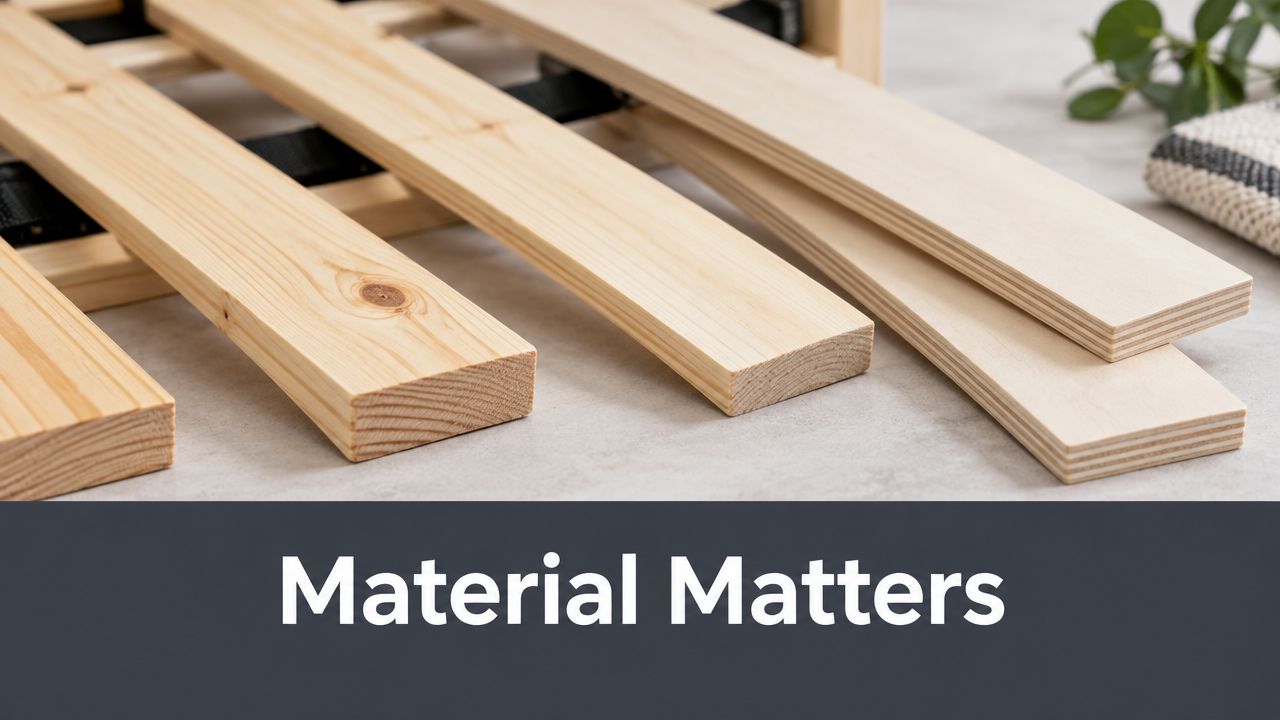
Material choice affects how the base behaves over time. Solid wood is a practical starting point because it offers visible grain, a straightforward construction, and a firm feel when properly supported. Pine and hardwood boards can both work, but parents should inspect the actual dimensions, finish, and attachment method rather than assuming every wooden frame has the same strength.
Engineered options can also have a place. LVL strips are designed for stiffness and may suit a base that needs consistent support, especially when the frame spans a wider sleeping surface. The important question isn't whether a product sounds premium. Check whether the slats sit securely, whether the frame resists rocking, and whether every exposed edge feels smooth.
A simple quality inspection
Look for these details before putting a mattress on the frame:
- Consistent slats: Boards should be straight and evenly positioned, without a visibly loose section.
- Smooth edges: Sanded corners reduce splinter and snag hazards.
- Secure connections: Screws, brackets, or ledges should hold each slat firmly when a child moves across the mattress.
- Center support: Wider beds need a rigid center structure so the middle doesn't become the weak point.
- Clear product limits: A bed should state which mattress sizes and types it accepts.
Wooden slats have also appeared in Egypt, Greece, and Rome in applications such as window treatments and flooring, long before modern bed frames. A current industry guide cites EN 1727:2012 with a minimum load test of 1200 N, about 122 kg per slat position, as described in this overview of slat load standards. That reference gives useful structural context, but parents should still follow the specific limits supplied with the bed.
For replacement parts, a king slat pack for your bed can help illustrate how replacement boards are sold by size. You can also review this guide to a wooden floor bed frame before comparing construction details. The Solid Wood Twin Over Twin Bunk Bed For Kids is described as a space-saving, low-to-the-floor bunk bed designed to leave more room for play while keeping bedtime safe and comfortable.
Understanding Slat Spacing and Mattress Compatibility
Slat spacing is the specification most likely to cause trouble. Foam, memory foam, and latex mattresses can deform into gaps that are too wide. A widely cited threshold keeps gaps at 2.75 inches, or 7 cm, or less. Beyond that point, the mattress may develop localized pressure points, sag faster, and create warranty concerns, according to this mattress support guidance.
| Mattress Type | Max Slat Gap | Support Notes |
|---|---|---|
| Foam | 2.75 inches | Keep gaps at or below this threshold to limit deformation. |
| Latex | 2.75 inches | Close support helps preserve an even surface. |
| Hybrid | About 3 inches | Slightly wider spacing may work, but tighter remains preferable. |
| Innerspring | Up to 4 inches | Some traditional designs tolerate wider gaps, subject to manufacturer guidance. |
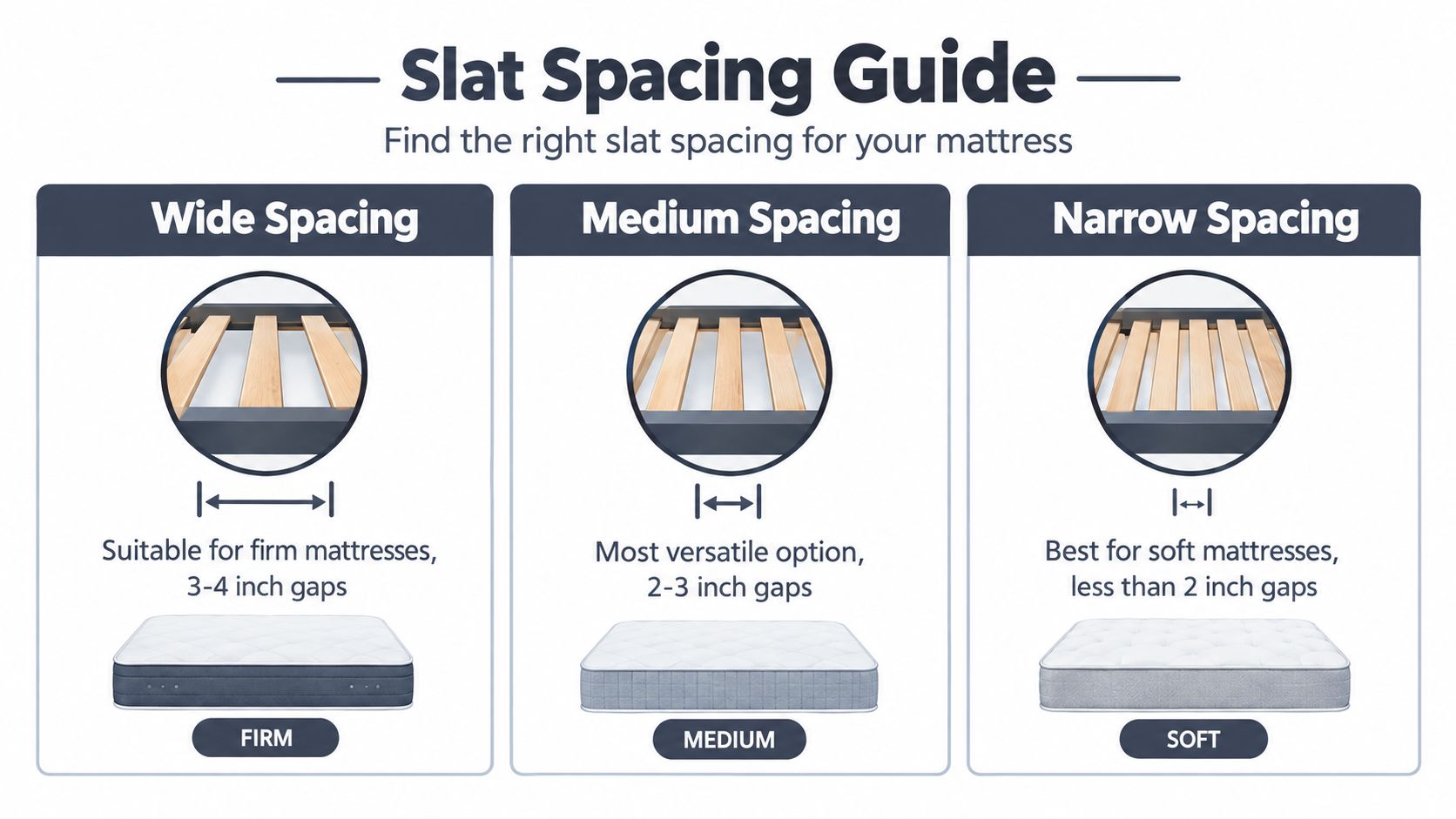
Match the base before buying the mattress
A firm mattress doesn't automatically make wide gaps safe. The mattress's internal construction determines how it responds when a child repeatedly rolls over the same area. Foam needs especially close support, while hybrids and some innerspring designs may tolerate more space.
For practical planning around a low frame, use these low platform bed sizing tips, then confirm the mattress manufacturer's requirements. This guide to the best mattress for a floor bed can also help you compare the base and mattress as one system, rather than choosing each separately.
How Different Mattress Types Perform on Floor Beds
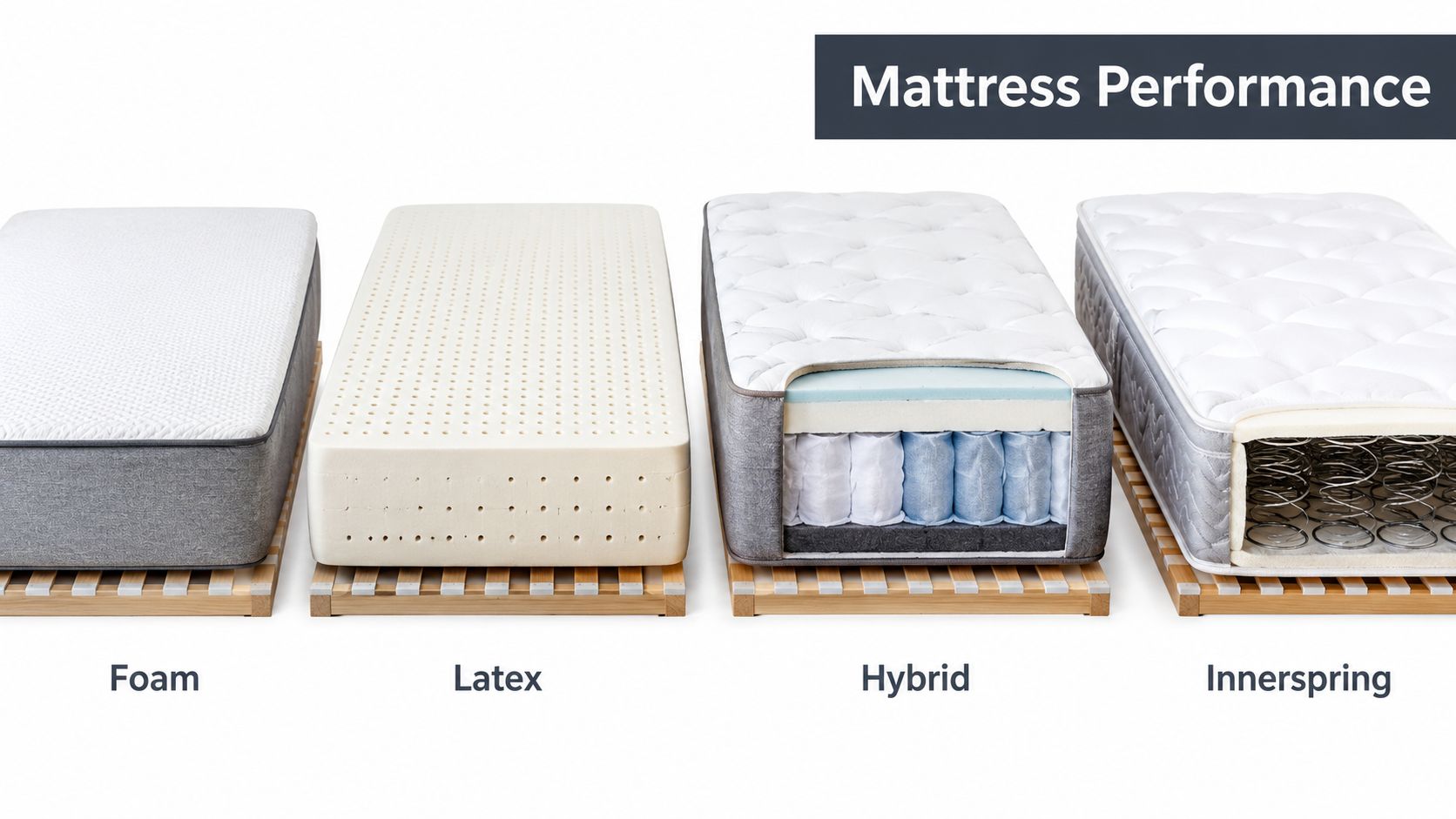
A slatted base changes the environment beneath the mattress. The open space allows air to move underneath, which helps with heat and moisture management, but the same openness demands controlled gaps so the mattress doesn't sink between boards, as explained in this guide to bed frame support slats.
Foam is comfortable but less forgiving of poor support. If the gaps exceed the mattress's allowed limit, the material can press downward and lose its even feel. Latex tends to offer a more resilient response, yet it still needs close, continuous support. Hybrids combine foam and coils, so they may tolerate spacing around 3 inches or less, while traditional innerspring mattresses can sometimes tolerate up to 4 inches, with tighter spacing still preferred for shape retention and edge support.
Airflow doesn't remove moisture risk
A floor bed in a humid room, rental home, or position against an exterior wall can still collect moisture beneath the mattress. Slats improve ventilation, but they aren't a complete solution if the surrounding air stays damp. Parents should lift and inspect the mattress regularly, keep the underside clean, and consider room-level humidity control when the space feels persistently moist.
That maintenance question belongs in choosing the right bed foundation. A Twin Size Montessori-Inspired Floor Bed with Safety Guardrails for Kids is described as a first bed for toddlers aged 2 and above, with guardrails and a design intended to help reduce falls while toddlers learn to sleep independently.
Safety Considerations for Toddlers on Floor Beds
A low sleep surface can reduce the consequence of a tumble, but low height doesn't make every design safe. Toddlers roll, stand, climb, and explore the frame. Tight slat spacing, smooth edges, secure attachments, and a stable structure all matter together.
Commercial floor-bed designs commonly use tight spacing and very low frame heights to preserve airflow while keeping the mattress close to the ground. Product limits still matter, and not every mattress and base combination is suitable, as noted in this toddler floor-bed construction guidance.
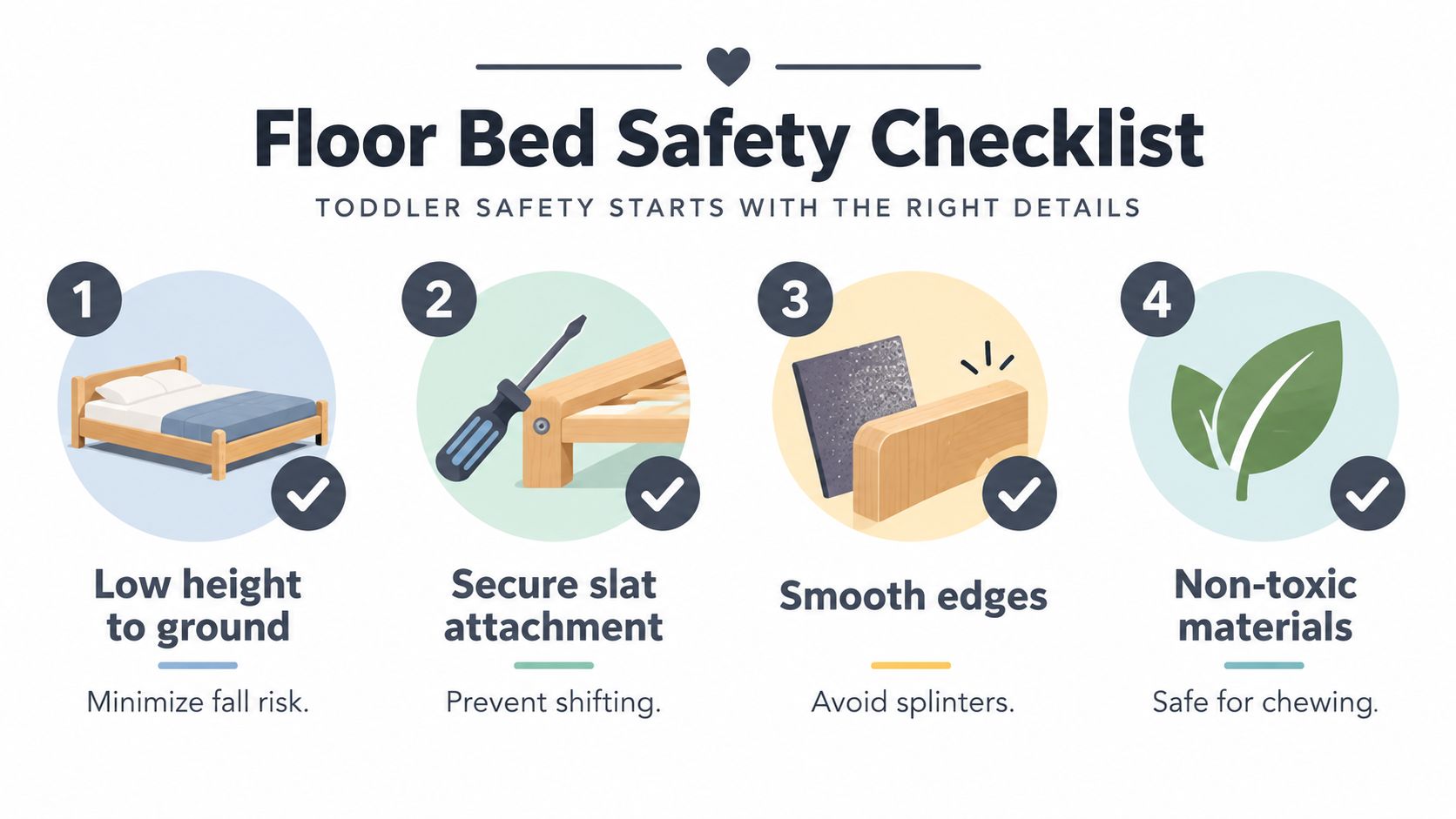
A parent-friendly inspection checklist
- Check the gaps: Make sure the spacing suits the mattress, with no opening that allows a child's limb to become trapped.
- Test the frame: Push gently from several sides. It shouldn't rock, slide, or shift.
- Feel every edge: Run your hand along the frame and slats to find rough spots or splinters.
- Inspect the mattress position: It should lie flat without bowing between supports.
- Look underneath: Check for dampness, dirt, damaged wood, or loose hardware.
- Recheck after use: Children can loosen parts through ordinary climbing and movement.
Keep the sleep area clear of objects that could create climbing routes or gaps. For a broader review of setup choices, use this Montessori floor-bed safety guide.
Design and Aesthetic Choices for Family Rooms
The best floor bed doesn't look like a technical compromise. Visible wood, restrained finishes, and a simple slat pattern can make the bed feel like part of the room rather than equipment placed in a corner. Neutral tones pair easily with low storage, a small reading area, and washable textiles.
The visual design should follow the practical design. A clean silhouette makes loose parts easier to spot, while an uncluttered area around the bed gives a toddler room to move independently. Solid wood slats can add warmth without relying on decorative details that interfere with cleaning or inspection.
Make independence feel natural
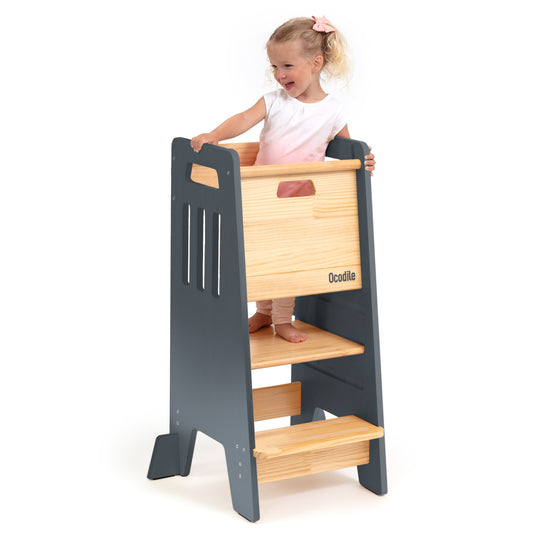
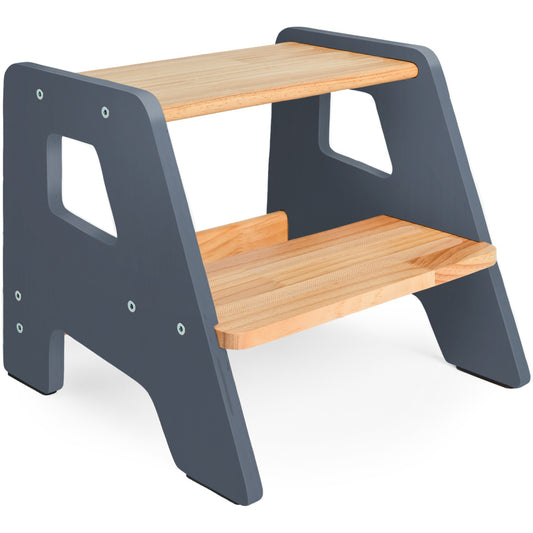
A low bed works well when nearby furniture follows the same scale. A small shelf, soft floor lighting, and accessible clothing storage can support the child's routine without turning the room into a crowded play zone. The 2-Step Wooden Stool for Toddlers (Step Stool for Children Ages 2+) is described as supporting everyday independence for children aged 2 and above, including reaching sinks, toilets, beds, and kitchen counters.
The bed should also fit adult life. Choose a finish that works with the existing room, leave enough space to lift the mattress for inspection, and avoid placing the frame where dampness will collect unnoticed. Montessori furniture can be calm and attractive, but its value comes from making safe independence practical every day.
Ocodile offers Montessori-inspired floor beds and children's furniture designed around low-height independence, solid wood construction, and modern family spaces. Visit Ocodile to compare floor-bed options and build a room where your child can move, rest, and participate more independently.