


How to Choose the Best Learning Tower for Small Spaces
If your toddler is asking to rinse berries, stir pancake batter or brush teeth at the sink, but your kitchen barely has room for a trash can and an open dishwasher door, choosing the best learning tower for small spaces becomes less about cute design and more about fit, stability and daily storage. The right tower should help your child reach counter height for supervised tasks without turning your kitchen into an obstacle course.
Quick answer: in a small home, look for a learning tower that is sturdy before it is slim. Prioritize a compact footprint, guarded sides, an adjustable platform, a stable base and a realistic storage plan. A tower that folds or parks neatly beside a counter is often easier to live with than the smallest model on paper.
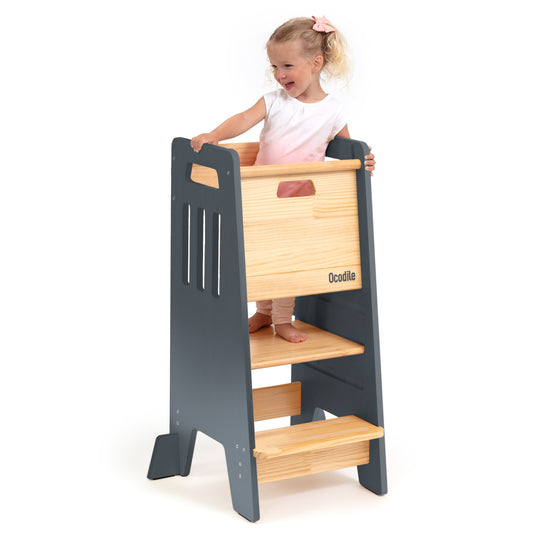
A learning tower is a child-height standing platform with rails that lets a toddler participate at counter height while an adult stays close. If you are new to the category, Ocodile has a helpful primer on what a learning tower is, but this guide focuses on the extra decisions small-space parents need to make.
What Makes the Best Learning Tower for Small Spaces?
Small-space shopping starts with one simple rule: compact should never mean flimsy. A very narrow tower that rocks when a toddler shifts from one foot to the other can feel more stressful than a slightly larger tower that stays steady. Toddlers lean, twist, reach and sometimes bounce with excitement when they are helping, so stability has to come first.
The best design for a tight kitchen is usually the one that fits your routine. If your child helps at the counter every morning, leaving a tower in one safe spot may be better than folding and unfolding it three times a day. If you only use it for weekend baking or evening handwashing practice, a foldable option may be easier.
| Feature to compare | Why it matters in a small home | What to look for |
|---|---|---|
| Compact footprint | Keeps walkways usable | Enough floor space around the tower for an adult to stand nearby |
| Stable base | Helps reduce wobble during shifting and reaching | A solid feel on your floor, with no rocking before your child climbs in |
| Guarded sides | Adds boundaries while your child stands | Rails or enclosed sides that fit your child's size and skill level |
| Adjustable height | Helps the tower fit your child as they grow | A platform position that lets elbows rest comfortably near counter height |
| Foldable or easy to park | Makes storage more realistic | A nearby dry spot where the tower will not block doors or drawers |
For most families, the best learning tower for small spaces is the one that feels secure in real use and does not require a furniture shuffle every time someone needs a snack, a pan or a clear path to the sink.
Start With the Room You Actually Have
Before comparing colors, finishes or add-ons, measure the way your kitchen moves. A product footprint tells you how much floor space a tower uses when standing still. Your actual routine includes opening the refrigerator, loading the dishwasher, walking behind a toddler, turning with a pot in your hands and reaching for cabinets.
When measuring for the best learning tower for small spaces, choose the main task zone first. Most families use a tower near the sink, a prep counter or a kitchen island. Put painter's tape on the floor where the tower might go, then live with that outline for a day. Open nearby drawers and appliance doors. Walk through your normal breakfast rush. If you keep bumping into the tape, that spot will not get easier with a toddler standing there.
Also think about where the tower goes when it is not in use. A narrow kitchen may have only one safe parking place, such as beside a pantry wall or at the end of an island. Avoid storing it where it blocks an oven, exterior door or high-traffic walkway. For more storage-specific ideas, see Ocodile's guide on how to store a foldable learning tower between uses.
A quick measuring routine before you buy
Use this simple walk-through before choosing a tower:
- Open the dishwasher, oven, refrigerator and the drawer closest to the tower spot.
- Stand where you would supervise and check whether you can reach your child without squeezing.
- Test the path from the sink to the stove while imagining the tower in place.
- Identify one storage spot that is dry, low-traffic and easy enough to use daily.
- Check whether baseboards, cabinet handles or island overhangs reduce the usable space.
A tower can be beautifully made and still be the wrong fit if it only works when the kitchen is perfectly clean. The goal is not to find empty showroom space. The goal is to find a safe, repeatable spot in the kitchen you already use.
Safety Features Matter More When Space Is Tight
Small kitchens create more side contact. Adults squeeze past. Toddlers turn to look at a sibling. Cabinet doors open close to their knees. That is why the best learning tower for small spaces should feel steady from every angle, not just from the front.
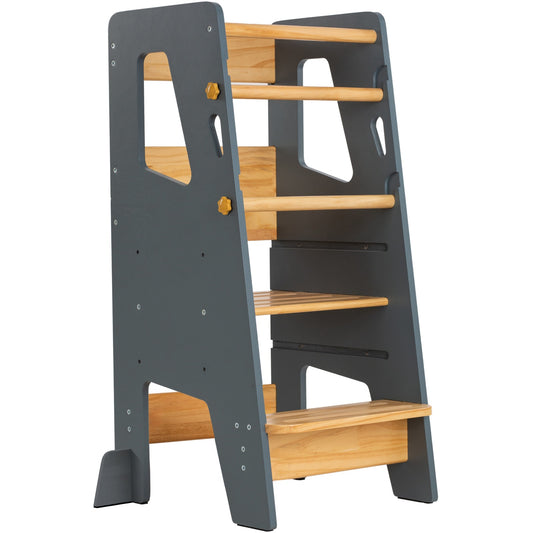
Look for the features that make daily use calmer: a wide or well-balanced base, side rails, a platform height that matches your child's size and a finish that is easy to wipe after messy tasks. A learning tower still requires close supervision. It is not a play structure or a place to leave a child while you step away.
The U.S. Consumer Product Safety Commission has long warned families about tip-over risks with children's environments and household furniture. A learning tower is a different type of product, but the same parenting instinct applies: put stability first and avoid improvised climbing setups like dining chairs, rolling stools or stacked boxes.
Footing matters too. Bare feet or grippy socks often work well indoors because they help toddlers feel the platform under them. If your child wears sneakers around the house, sizing should be snug enough that the shoe does not catch on a step or slide around; detailed sneaker size guides from retailers such as BigBoiSneakers can be useful when comparing fit across brands.
Readiness is part of safety. A toddler should be able to stand steadily, climb with control and follow simple directions such as feet stay on the platform. If you are unsure, Ocodile's article on whether your toddler is ready for a learning tower can help you decide before bringing one into a tight kitchen.
Foldable, Fixed, or Door Design: Which Works Best in a Small Home?
Design type matters more when you do not have extra floor space. A good small-space tower should match both your layout and your child's habits. A careful climber who uses the tower once a day may need something different from an energetic toddler who wants to wash hands, help with lunch and stir dinner in the same afternoon.
When a foldable tower makes sense
For many families, the best learning tower for small spaces is foldable because it can create toddler access when you need it, then help you reclaim floor space after the activity. The Adjustable Foldable Kitchen Tower is a relevant option for parents who want an adjustable learning stool with a foldable design, especially if the tower needs to move between the counter, sink and storage spot.
The practical benefit is simple: you can bring your toddler up to counter height for supervised helping, then put the tower away when the kitchen needs to function like an adult workspace again. That can be helpful in apartments, galley kitchens and homes where the same walkway connects the kitchen, dining area and back door.
When a sliding safety door makes sense
Some toddlers want to climb in by themselves every time. For those families, a door-style entry can make the routine feel more organized. The Standing Toddler Tower with Sliding Safety Door is designed for children to climb up and join kitchen or household activities, with a sliding safety door as its standout feature.
A door does not replace supervision, but it can create a clear in-and-out point instead of encouraging a child to climb over side rails. In a small kitchen, that clearer movement pattern can make the tower easier to teach and easier to manage.
| Tower style | Best fit | Small-space trade-off |
|---|---|---|
| Foldable tower | Homes where the tower must be stored between uses | You need a safe place to fold and park it |
| Fixed open tower | Kitchens with one dedicated helper spot | It occupies floor space even when not in use |
| Door-style tower | Toddlers practicing controlled entry and exit | The door area needs room to operate comfortably |
If you want the best learning tower for small spaces, do not choose by footprint alone. Choose by how the tower opens, how your child climbs, how often you will use it and where it goes when dinner gets busy.

Learning Tower vs. Step Stool in a Small Kitchen
A step stool seems like the obvious small-space answer because it is light and easy to tuck away. For quick moments such as reaching the bathroom sink with a parent beside them, a sturdy step stool may be enough. The trade-off is that most step stools do not provide the same standing boundary around the child.
A learning tower is usually better for longer tasks that involve both hands, such as washing fruit, mixing batter, peeling a banana, kneading dough or wiping the counter. The surrounding rails can help your toddler focus on the task instead of balancing on a small step. You still supervise, but you may spend less time holding their waist and more time guiding the activity.
The best learning tower for small spaces earns its floor space when it replaces unsafe shortcuts. If your child is already dragging a chair to the sink or trying to climb onto counters, a well-chosen tower can give that curiosity a more appropriate place to go. If your child only needs a boost for ten seconds at a time, a step stool may still be the simpler choice.
Small-space Buying Checklist for Parents
Once you understand your room, compare towers through the lens of daily life rather than product photos. A tower may look compact online, but the real question is whether it works during cereal spills, dishwasher unloading and the five minutes before you need to leave for preschool.
Use this checklist as a final filter:
- Choose stable before skinny, especially if your toddler shifts weight quickly.
- Match the tower to one main activity zone, such as the sink or prep counter.
- Check that an adult can stand close enough to help without blocking the whole kitchen.
- Prioritize adjustable height if you want the tower to grow with your child.
- Consider foldable storage if the tower cannot stay out safely.
- Look for wipeable surfaces because kitchen helpers create crumbs, water and sticky fingerprints.
- Avoid anything that encourages climbing over rails instead of using the intended entry point.
The best learning tower for small spaces should reduce daily friction. You should not dread pulling it out, cleaning it or moving around it. If the tower fits your space well, it becomes part of ordinary routines: handwashing before lunch, pouring ingredients into a bowl, brushing teeth at the sink or helping wipe up a spill.
Common Mistakes to Avoid in Small Kitchens
The first mistake is buying the smallest tower without checking stability. A tiny footprint sounds appealing until a toddler leans sideways to grab a spoon. Small homes need smart sizing, not the smallest possible item.
The second mistake is ignoring storage. If there is no safe place to keep the tower, it may end up blocking a doorway or sitting in the middle of the kitchen after bedtime. Foldable designs can help, but only if you know where the folded tower will actually go.
The third mistake is choosing a tower for a future stage instead of your current child. A confident preschooler and a new toddler have different needs. Think about your child's balance, listening skills and climbing control today. The best learning tower for small spaces is the one that fits your current routine while still giving you room to adapt as your child grows.
The final mistake is treating a learning tower as a set-it-and-forget-it item. Small-space use requires habit-building. Teach your child where feet go, what jobs are okay in the tower and when an adult needs to help. Put the tower away consistently if it cannot stay out safely.
Frequently Asked Questions
Which tower works best in a small kitchen? The best learning tower for small spaces is a sturdy, compact tower that fits your main task zone, gives your child guarded standing space and has a storage plan that works in your real kitchen. For many families, that means a foldable tower or a door-style tower that supports controlled climbing.
Is a foldable learning tower safe for toddlers? A foldable learning tower can be a practical choice when it feels stable during use, is set up fully before your child climbs in and is stored safely between activities. Always follow the product instructions and supervise your child closely.
Do I need a learning tower if I already have a step stool? Maybe not. A step stool can work for quick handwashing or brushing teeth with an adult nearby. A learning tower is usually more useful for counter-height tasks that take longer and require both of your child's hands.
Where should I put a learning tower in a small kitchen? Place it where your child can reach the task without blocking major walkways, appliance doors or hot cooking zones. The sink, a prep counter or the end of an island often works better than the narrowest part of the kitchen.
Can a learning tower stay out all day? It depends on your layout. If the tower has a safe dedicated spot and does not block traffic, leaving it out may be convenient. If it creates a tripping hazard or blocks doors, plan to fold or park it after each use.
Choosing for a small space is about fit, not compromise. Start with your kitchen layout, your child's readiness and the routines you repeat every day. If a foldable design would make storage easier, compare Ocodile's Adjustable Foldable Kitchen Tower. If a clearer entry point would help your child climb with more structure, the Standing Toddler Tower with Sliding Safety Door may be worth reviewing. Ocodile also offers free U.S. shipping, 60-day returns and a 5-year warranty, which can make it easier to choose carefully instead of rushing the decision.