



How to Create a Learning Environment at Home
Your child wants to pour the oats, rinse the berries, carry the napkins, and climb onto the chair you wish they’d stop using as a ladder. Meanwhile, the living room has blocks under the sofa, the kitchen counter is crowded, and the idea of creating some beautiful home learning setup feels far away from real life.
That’s where most families start.
The good news is that how to create a learning environment at home has much less to do with having a spare room and much more to do with how your home functions. Children learn through repetition, access, movement, and participation. They learn when materials are reachable, when routines are predictable, and when adults make space for them to do real things slowly.
Many parents also feel squeezed by the layout they already have. A 2023 survey by a major European parenting platform reported that over 60% of urban families felt their space was too small or unsuitable for a dedicated Montessori zone, which is exactly why practical home design matters so much in family life (survey reference).
Why Your Home is the First and Best Classroom
A home learning environment rarely looks polished at first. It looks like a child pulling mixing bowls from a low drawer, carrying a tiny broom twice their size, or asking to read the same book again while you’re trying to answer a message. That’s not a distraction from learning. It is learning.
Children don’t separate life into neat categories. They don’t think, “Now I will develop fine motor control,” or “This is the literacy part of my day.” They absorb language while helping slice bananas, build concentration while returning materials to a shelf, and practice sequencing when bedtime happens in the same order each night.
Small homes can still do a lot
A family in a compact flat often assumes they need a designated classroom corner to do this well. They don’t. A low shelf beside the dining table can hold paper, crayons, and puzzles. A basket of books can live next to the sofa. A stool in the kitchen can turn waiting time into participation.
That shift matters. Instead of asking, “Where do I put the school area?” ask, “Where does my child already want to be, and how can I make that space safer and more usable?”
Your home doesn’t need to look like a classroom. It needs to help your child do meaningful things with increasing independence.
A well-designed home learning space supports three things at once:
- Access: children can reach what they’re allowed to use
- Safety: adults don’t have to say “no” every minute
- Rhythm: the environment helps the day move with less friction
For families drawn to Montessori principles, the most useful starting point is often not a toy list. It’s understanding how independence works inside ordinary routines, which is why resources on Montessori education at home can be helpful when you’re adapting ideas to a real kitchen, real bedroom, and real schedule.
Learning happens where life happens
The strongest home environments don’t isolate learning from family life. They fold it into it.
A child folding washcloths in the bedroom is working on order, coordination, and follow-through. A child washing strawberries at the sink is hearing rich vocabulary, practicing hand control, and building confidence. A child choosing a book from a front-facing shelf is making an early academic habit feel natural.
That’s why home works so well. It offers repetition with purpose, and children thrive on that.
Designing Intentional Spaces for Play and Growth
You don’t need walls to create zones. Children read spaces through cues. A rug signals building. A cushion and shelf signal books. A tray on a low surface signals focused work. Once those cues stay consistent, the room starts doing part of the teaching for you.

The quiet zone
Every home needs one small place that tells the child, “Slow down here.” It can be a floor cushion near a window, a mattress corner with a basket of board books, or a low chair beside a narrow shelf. Keep this area visually calm.
Books matter more than many parents realize. A stimulating home with at least 6 age-appropriate books is associated with better early language development, and children with 6 or more books spent less time on screens. 44.9% of children with 6+ books used devices more than 3 days weekly, compared with 70% of children with only 1 to 2 books (home learning research).
What works here:
- Front-facing book display: young children choose what they can see
- Soft seating: a mat, cushion, or low chair invites lingering
- Limited selection: fewer visible choices usually lead to deeper use
What doesn’t work is overfilling the space with every book you own. Children often engage better when the shelf feels curated rather than crowded.
The creative and active zone
This doesn’t have to be a playroom. In many homes, it’s one section of the living room with a washable rug, a basket of blocks, paper in a tray, and open-ended materials that can be reset quickly. The key is containment, not perfection.
If your child does art, sensory play, or block work on the floor, the surface under them matters. Families who are updating flooring in high-use areas often look into choosing healthy vinyl options because cleanability and indoor air considerations both affect how practical a learning space feels day to day.
Practical rule: If cleanup takes longer than the activity, the setup is too complicated for everyday family life.
For small homes, these simple boundaries help:
- Use one tray or basket per activity so children can carry it out and put it away.
- Keep only a small working set visible and store the rest elsewhere.
- Anchor messy work near easy-clean surfaces rather than fighting your home’s layout.
Many parents find it easier to visualize this when looking at real Montessori playroom ideas for small spaces, then adapting those principles to a living room or dining area instead of trying to copy a showroom.
The practical life zone in the kitchen
The kitchen is one of the richest learning spaces in the home because it combines movement, language, sequencing, and meaningful contribution. A child wiping the table, peeling an egg, transferring chopped fruit, or carrying spoons to the table is doing purposeful work that builds competence.
A useful practical life setup might include:
- A low drawer or basket: child-safe utensils, napkins, small cloths
- A stable standing spot: so the child can participate at counter height
- A predictable return place: everything goes back to the same home
This zone also works because it’s social. Children hear conversation, observe real processes, and connect effort with visible results. That makes learning feel useful, not staged.
Equipping Your Space with Child-Safe Furniture
Furniture shapes behavior. If a shelf is too high, the child asks for help or gives up. If a chair doesn’t fit, the child slumps, kneels, or wanders away. If a step stool feels unstable, the kitchen becomes a place of adult tension instead of shared work.

The right pieces don’t need to be numerous. They need to be safe, scaled, and useful.
What to look for first
Start with safety, because no developmental benefit matters if the setup creates daily risk.
Choose furniture with:
- Rounded edges: especially in narrow walkways and shared rooms
- Stable construction: no wobble when a child leans, climbs, or shifts weight
- Easy-clean finishes: real homes need surfaces that tolerate spills
- Simple lines: fewer visual distractions and fewer awkward snag points
Then look at scale. Proper ergonomics are important. The optimal desk height should line up with a child’s seated elbow at a 90-degree angle, with feet flat on the floor or on a footrest. Materials stored within a child’s independent reach, typically 36 to 48 inches from the ground for ages 3 to 7, and organized in clear or labeled bins can reduce the cognitive load of finding items by 35 to 40% (ergonomic setup guidance).
That sounds technical, but the everyday version is simple. When children can sit comfortably and reach what they need without strain, they stay engaged longer and rely less on adult rescue.
Which pieces actually change family life
Some furniture looks educational but doesn’t earn its footprint. What tends to work in real homes are pieces that support both independence and routine.
A low shelf helps children choose and return materials. A child-sized table gives them a clear work surface for puzzles, drawing, and snacks. A floor bed can support independent movement in the bedroom and make rest routines feel more accessible for young children.
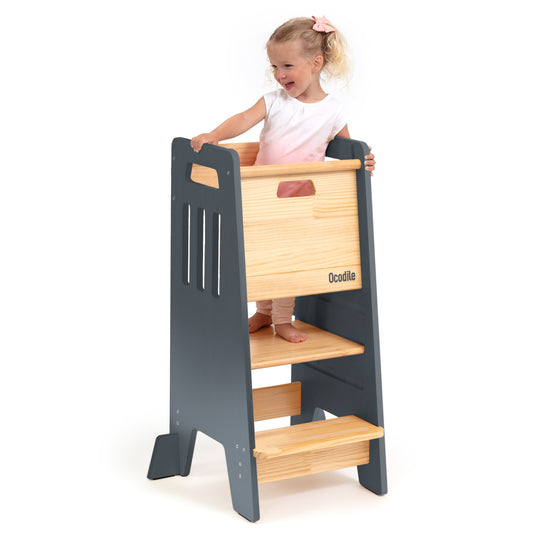
A standing tower is especially useful because it converts ordinary kitchen time into participation time. Instead of watching from below or climbing unsafe furniture, the child can stand securely at counter height to wash produce, stir batter, or help set up lunch.
One practical example is the single mention worth making here. An Ocodile guide to non-toxic kids furniture is useful if you’re comparing materials and finishes while choosing a few core pieces for a small home.
Function beats novelty
Parents often get pulled toward furniture that promises many activities but supports none of them well. A piece earns its place when it answers one of these questions clearly:
| Furniture piece | Good use in daily life | Common mistake |
|---|---|---|
| Low shelf | Keeps a few materials visible and reachable | Overloading it with too many options |
| Child table and chair | Supports focused work, snacks, and art | Using chairs that leave feet dangling |
| Standing tower | Brings child safely into kitchen routines | Treating it like climbing equipment outside supervised use |
| Floor bed | Supports independent rest and room access | Filling the surrounding area with too many distractions |
A short visual demo can help when you’re assessing fit and safety in motion.
Good furniture reduces conflict. The child can do more alone, and the adult doesn’t have to hover over every move.
That is the true benefit. Not a prettier room. A calmer, more capable day.
Building a Daily Routine That Fosters Security and Focus
Children don’t need every hour scripted. They do need a day that makes sense. When the sequence is familiar, they spend less energy figuring out what’s happening and more energy participating in it.

Research shows that children with structured daily learning schedules exhibit 25 to 35% improved focus duration and 40% better homework completion rates. Establishing consistent temporal anchors for activities also reduces decision fatigue by 30 to 45% daily (routine and focus research).
Think flow, not rigidity
A good home routine isn’t built around constant clock-checking. It’s built around anchors that happen in a reliable order.
For younger children, those anchors are often:
- Wake and get dressed
- Breakfast and morning reset
- Focused activity or outing
- Lunch
- Rest or quiet time
- Afternoon play or helping at home
- Dinner
- Bath, books, bed
That sequence creates security because the child knows what usually comes next. If lunch runs late or an outing changes, the day still feels coherent.
A routine that works in shared spaces
In family homes, especially smaller ones, routine and environment need to support each other. If the dining table is both work area and meal area, build in a quick reset before and after use. If siblings share a room, make quiet time expectations visible and repeatable.
A practical weekday rhythm might look like this:
- Morning participation: child helps with a simple kitchen task after breakfast
- Focused play: one prepared activity at the table or floor mat
- Movement break: outside time, dancing, or active indoor play
- Book or quiet corner: slower pace before lunch
- Afternoon independence: child chooses from a small set of known materials
- Evening wind-down: the same few steps before sleep
Parents who want help turning that idea into a usable planner often find Recurrr templates for building study habits useful as a starting structure, then adapt them for younger children and family routines.
A child follows a routine more easily when the adult can actually sustain it.
What tends to break routines
Most routines fail for ordinary reasons, not lack of effort. The plan asks too much. The setup requires too much adult preparation. The child has no buffer between active and quiet states.
When a routine starts fraying, simplify before you add more. Keep the strongest anchors. Reduce the visible choices. Protect transitions, especially around meals, rest, and bedtime.
That’s usually where focus returns.
Simple Tips for Safety Checks and Environment Upkeep
A good learning space needs regular maintenance. Children grow, furniture shifts, materials break, and what worked last season may not work now. Safety is not a one-time setup. It’s a habit.
What to check every month
Walk through the home from your child’s eye level. Open the drawers they use. Put a hand on the shelf they pull from. Step back and notice what looks climbable, tippable, sharp, or overstimulating.
| Area to Check | What to Look For | Action if Needed |
|---|---|---|
| Bookshelves and low storage | Wobble, leaning, overloaded top surfaces | Rebalance items, secure units, remove heavy objects from top |
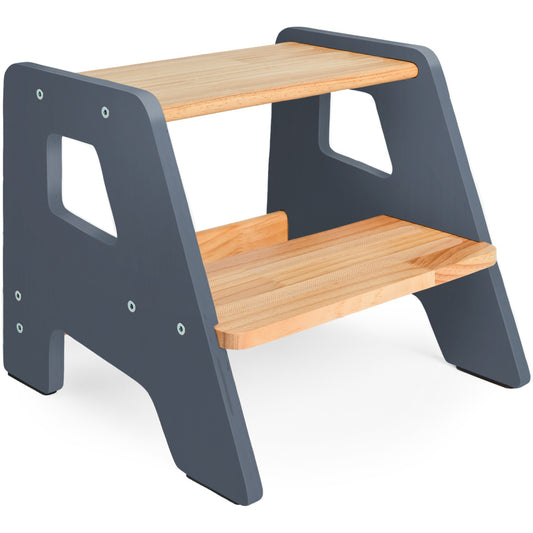
| Standing towers and stools | Loose screws, shifting base, slippery residue | Tighten hardware, clean surfaces, pause use until stable |
| Child table and chairs | Uneven legs, splinters, rough finish | Sand or repair rough spots, replace if unstable |
| Toy baskets and trays | Cracks, broken edges, overfilled containers | Remove damaged items, reduce volume |
| Art and practical life tools | Dried paint buildup, chipped cups, unsafe wear | Clean, replace, or simplify the setup |
| Electrical and air safety areas | Accessible outlets, cords, detector status | Cover outlets, reroute cords, review home safety basics including preventing carbon monoxide hazards |
| Bedroom sleep area | Loose bedding near floor bed, cluttered pathways | Clear walking path, reduce excess items |
| Reading and quiet corners | Piles of books, sagging baskets, dim visibility | Rotate books, improve order, refresh seating |
Keep the space usable, not just tidy
Some homes become so organized that children stop touching anything. Others become so full that children stop seeing what’s available. The middle ground is better.
Try this approach:
- Rotate selectively: put out a small number of books, activities, and art tools
- Return items to the same place: consistency supports independence
- Leave breathing room: empty surface area helps children start and finish work
- Involve the child: cleanup is part of the activity, not a punishment after it
“Everything has a home” works because it gives children a clear endpoint.
Watch for hidden friction
A setup can be safe and still fail because it creates unnecessary struggle. Maybe the crayons are in a lid that’s hard to open. Maybe the wipes are on a high shelf. Maybe cleanup bins are too heavy for small hands.
When children repeatedly dump, avoid, or abandon a space, look at the environment before assuming it’s behavior. Often the room is asking for a small fix.
That mindset keeps upkeep practical. You’re not chasing perfection. You’re removing barriers.
Growing Together in Your Home Learning Space
The strongest home learning environments evolve. They don’t stay frozen at the moment you first organized the shelf or bought the table. As your child grows, their needs change. Their interests sharpen. Their body gets taller. Their work gets more complex.
That’s why observation matters so much. Notice where your child lingers. Notice what they repeat. Notice which part of the day feels smooth and which part always falls apart. Those patterns tell you far more than any idealized room image ever will.
Let the home mature with the child
A toddler may need one reachable shelf, a floor bed, and a secure way to join you in the kitchen. A preschooler may need clearer work areas, more responsibility for cleanup, and materials that support longer concentration. A school-age child may need stronger routine cues and a more protected quiet zone.
The point is not to constantly buy more. It’s to keep asking whether the environment still matches the child in front of you.
A few signs that it’s time to adjust:
- The child avoids spaces they once used often
- Materials are consistently too easy or too chaotic
- Independence has increased, but access hasn’t
- The room requires more adult intervention than it should
Your effort has lasting weight
This work matters, even when it looks ordinary from the outside. Reading the same book again. Making room at the counter. Returning the tray to the same shelf. Protecting a bedtime rhythm. Those choices build a home culture around attention, contribution, and security.
A landmark NYU study found that the quality of a child’s early home learning environment predicted academic achievement in 5th grade, outweighing factors like parental education and early health complications in determining long-term success (NYU study summary).
That doesn’t mean the home needs to be expensive, large, or flawless. It means everyday interactions and thoughtful setup carry real developmental weight.
The goal isn’t a Pinterest-perfect home. The goal is a home where your child can belong, participate, and grow.
When parents accept that, the pressure changes. You stop trying to manufacture a classroom and start shaping a life your child can join.
If you’re building a home that supports independence in real family spaces, Ocodile offers child-focused furniture such as standing towers, floor beds, and step stools designed to help children participate safely in everyday routines.