



How to Encourage Independent Learning: A Guide for Parents
Dinner is half-finished, your child is wrapped around your leg, and you're trying to decide whether to hand them a spoon, move them away from the stove, or give up and turn on a cartoon. Most parents know this moment well. Your child wants to join in, not because they're trying to interrupt, but because they're built to learn by doing.
That urge is the heart of independent learning in early childhood. For toddlers and preschoolers, it doesn't begin with worksheets, study habits, or formal lessons. It begins with movement, access, repetition, and the chance to try everyday tasks in a space that feels safe enough to explore.
Why Fostering Independence Early Matters

A young child rarely asks for independence in neat, convenient ways. It often shows up as “Me do it,” right when you're in a hurry. It can look messy, slow, and badly timed, but it's still a healthy sign. Your child is telling you they want agency.
Many resources about how to encourage independent learning are aimed at older children who can read directions, set goals, and manage schoolwork. That leaves a major gap for ages 2 to 5, when autonomy is built through movement and exploration. A supportive physical environment, including safe and adjustable furniture, can increase a toddler's independent participation in daily activities by up to 35% according to this discussion of early independence in the home.
Independence starts with access
When a child can reach the sink, carry a cup, choose a book, or put away shoes without waiting for an adult, learning changes. They stop being a passive observer and become an active participant in family life.
That matters because early independence supports skills that go far beyond the task itself:
- Problem-solving through trial and error
- Confidence from finishing real work
- Focus through repeated practice
- Resilience when things don't go smoothly
- Responsibility for their own space and routines
Practical rule: If your child needs your body for every step, they can't practice much independence. If they can access the task safely, they're much more likely to try.
The home teaches all day long
Children this age learn most from ordinary life. They learn while pulling on socks, wiping a spill, carrying fruit to the table, and climbing into bed. That's why the home environment matters so much. It either invites participation or blocks it.
Parents don't need a perfect Montessori house to raise an independent child. They need a home with clear pathways, predictable routines, and a few thoughtful changes that say yes more often than no.
Prepare Your Home for Safe Exploration

A child can't be independent in a space designed only for adults. If everything is too high, too heavy, too fragile, or off-limits, they spend the day waiting for help. That creates frustration for them and constant interruption for you.
The most useful shift is to create yes spaces. These are areas where your child can move, touch, choose, and participate without hearing “no” every few minutes. Safety comes first, but access comes right behind it.
Start with the rooms you use most
You don't need to redo the whole house at once. Begin with the places where your child already wants to join you.
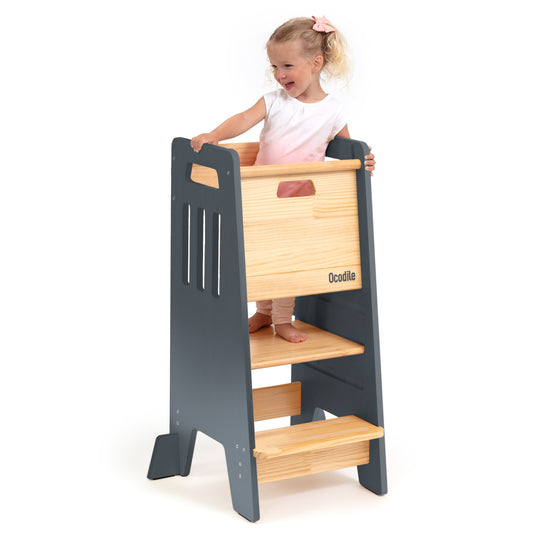
In the kitchen, independence often grows fastest. A stable child-safe platform lets a young child wash produce, stir batter, peel a banana, or watch how meals come together at counter height. If you're still setting up the basics, a practical guide to childproofing your home for safer exploration helps you decide what to secure, what to lower, and what to remove.
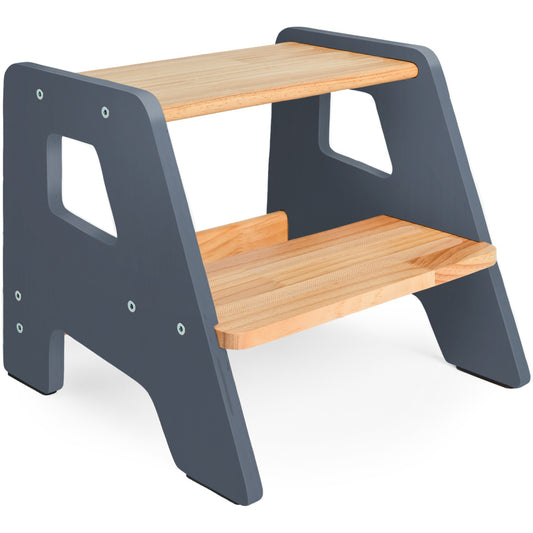
In the bedroom, keep clothes within reach. A low drawer or a few outfit choices on low hooks support dressing without a long negotiation. In the bathroom, a sturdy step stool, a reachable hand towel, and a simple place for a toothbrush can turn “Wait for me” into “I can try.”
Change the layout before you change the child
Parents often ask how to get a child to cooperate more. Usually, the better question is whether the environment supports success.
Try these home adjustments:
- Lower the essentials: Put books, puzzles, cups, napkins, and a few toys on open shelves your child can see and reach.
- Reduce clutter: Too many choices can stall action. A smaller set of visible options makes decision-making easier.
- Use child-sized tools: Small pitchers, light baskets, short hooks, and reachable bins let children work with less frustration.
- Make cleanup obvious: Labeling with pictures, using shallow trays, and giving each item a home helps children restore order without guessing.
A well-prepared space doesn't make a child independent overnight. It removes unnecessary barriers so practice can happen every day.
Think in invitations, not entertainment
A good learning space for a young child doesn't need flashing toys or a rotating craft station. It needs usable materials and a clear purpose. A small shelf with blocks, a basket of cloths for wiping, a low mirror for dressing, or a reachable snack station often does more than louder, more stimulating setups.
One well-designed piece of furniture can make a real difference. A standing tower, floor bed, or low step stool changes what your child can do safely without adult lifting. Ocodile makes children's furniture for this exact kind of access, including products that help children join kitchen routines and move more independently through daily tasks.
Build Independence into Daily Routines
A child learns independence faster from repeated daily practice than from occasional “teaching moments.” The ordinary rhythm of the day does the heavy lifting. Breakfast, getting dressed, tidying toys, washing hands, and bedtime all offer built-in chances to participate.

Many parents accidentally make routines harder by doing everything fast and efficiently. That makes sense when you're tired or late. But when children never get a turn, they don't build the sequence of steps in their mind or body.
Let routines carry the learning
A 2018 policy note summarized in Edutopia's article on encouraging independent learning found that high levels of independent study were more critical predictors of student learning gains than direct instruction time. For young children at home, the translation is simple. Protect time for self-directed play, repetition, and participation instead of filling every hour with adult-led activity.
That can look very ordinary.
At breakfast, a three-year-old carries napkins to the table, places one spoon at each spot, and pours water from a small pitcher. At the door, a two-year-old sits to wrestle with shoes before asking for help. After play, a four-year-old sorts blocks into a basket and books onto a shelf before choosing the next activity.
These moments don't look academic. They are still how to encourage independent learning in a way that fits early childhood.
Use short scripts that support, not control
Children respond well when adults keep language calm and concrete. Long explanations often turn into noise.
A few useful scripts:
- “You can try first. I'm nearby.”
- “Show me what part you can do.”
- “The shirt is twisted. What could help?”
- “You're working hard on that zipper.”
- “Would you like help with the start or the end?”
Those phrases keep ownership with the child. They offer support without taking over.
For more hands-on ideas that fit real family life, Montessori practical life activities for home can help you turn chores into developmentally useful work.
A short visual example can help you picture what this looks like in practice:
Leave some room in the day
Children need open pockets of time. If every transition is rushed and every activity is chosen for them, they become dependent on adult direction. Independent learning grows when a child has enough time to repeat, linger, and figure things out.
If a routine always feels chaotic, simplify it before you try to motivate your child. Fewer steps, clearer materials, and more time usually help more than reminders do.
Guiding Learning with Scaffolding Techniques
Adults often swing between two extremes. They either do too much for the child or step back so far that the task becomes frustrating. Scaffolding is the middle ground. It means giving just enough help for a child to succeed, then gradually removing that help as competence grows.

Prior knowledge matters more than many parents realize
A 2020 study in the American Journal of Humanities and Social Sciences Research found that independent learning accounted for 67.6% of the variance in learning outcomes, and the two strongest factors were prior knowledge and active learning according to the AJHSSR paper. For young children, that means they learn best when they've first seen the task and then get a chance to do it with their hands.
Before asking a child to wipe a table, pour water, or put on a jacket, show the process slowly. Let them watch more than once. Then invite participation.
If you want a parent-friendly explanation of this balance, scaffolding in child development is a useful frame for thinking about when to help and when to pause.
The simplest model works well
The most practical version is:
-
Model it
“Watch how I carry the cup with two hands.” -
Do it together
“Let's hold the pitcher together and pour slowly.” -
Step back
“Now you try. I'll stay close.”
This pattern works for dozens of everyday tasks. It keeps the child active instead of turning them into a spectator.
What support sounds like
The best prompts are specific and light. They point the child back to the task.
| Situation | Helpful scaffold | What to avoid |
|---|---|---|
| Jacket won't go on | “Find the tag. That goes at the back.” | “Here, I'll do it.” |
| Water spills while pouring | “Stop. Put the pitcher down. Let's get a cloth.” | “You always make a mess.” |
| Child freezes during cleanup | “Start with the blocks. I'll do books beside you.” | “Clean all this up now.” |
Try this lens: Help with the smallest step necessary. If a child can do 80 percent, don't rescue the other 20 percent too quickly.
Scaffolding isn't hovering. It's structured support that fades. Children build confidence when adults trust them with real tasks and stay calm enough to let them practice.
Age-Specific Activities and Tracking Progress
Parents often ask what independence should look like by age. The answer varies by temperament, opportunities, and environment. A better approach is to offer realistic activities that match the child's body, attention span, and need for repetition.
Independent learning activities by age
| Age Group | Activity Idea | Skill Developed |
|---|---|---|
| 18 to 24 months | Put dirty clothes in a basket | Following a one-step direction, coordination |
| 18 to 24 months | Carry a small towel to wipe spills | Responsibility, hand control |
| 2 to 3 years | Put shoes on a low shelf | Sequencing, order |
| 2 to 3 years | Help wash fruit or vegetables | Sensory exploration, practical life skills |
| 2 to 3 years | Choose one book and return it when finished | Decision-making, care of materials |
| 3 to 4 years | Pour water from a small pitcher into a cup | Concentration, wrist control |
| 3 to 4 years | Match socks from the laundry | Visual discrimination, persistence |
| 4 to 5 years | Set places for a meal | Memory, responsibility |
| 4 to 5 years | Pack a small bag for an outing with a checklist picture | Planning, independence |
| 4 to 5 years | Tidy toys using picture labels on baskets | Categorizing, self-management |
Watch for signs, not scores
You don't need tests to know whether independence is growing. You're looking for patterns in behavior.
Notice whether your child:
- Starts familiar tasks without prompting
- Stays with an activity longer
- Tries again before asking for help
- Shows pride after finishing
- Recovers faster from small frustration
Those signs matter more than perfection. A child who struggles with a zipper but keeps trying is often making more progress than one who succeeds only with adult hands doing most of the work.
Make progress visible
Research summarized in Structural Learning's guide to independent learning notes that scaffolded goal-setting and clear self-assessment criteria can strongly support learning. For preschoolers, that doesn't mean formal SMART goal worksheets. It means a visible, concrete target they can understand.
A good example is: “Put toys in the basket before bedtime.” Add a sticker each night they complete it with minimal help. Keep the goal short, specific, and tied to a routine.
You can also use a simple chart like this:
| Goal for the week | Visual tracker |
|---|---|
| Put pajamas in the basket | One sticker each night |
| Carry plate to the counter | Draw a smiley face after dinner |
| Climb into bed and pull up blanket | Add a star at bedtime |
Older children and teens need a very different kind of independence support. If you're parenting across age groups, resources on mastering your academic schedule in 2026 can help you think about how autonomy grows from early routines into later self-management.
Navigating Pitfalls and Keeping the Momentum
The biggest mistake parents make isn't laziness or inconsistency. It's stepping in too fast. Adults see the struggle and rush to prevent frustration, spills, delays, or crooked results. That's understandable, but it often interrupts the exact process that builds competence.
Another common issue is expecting a straight line of progress. Independence usually grows in bursts, then stalls, then returns. Some days your child insists on doing everything alone. The next day they want help with tasks they handled yesterday.
When progress fades
A source provided in your brief notes that up to 40% of families experience a kind of dependency regression when routines aren't sustained, and that visible tracking can improve autonomy retention by over 60% according to this article about student independent learning. For preschoolers, that points to a very practical takeaway. Don't rely on memory or vague encouragement alone. Use simple visual reminders and keep the routine visible.
When momentum drops, try this:
- Reset the environment each evening: Put tools back where your child expects them.
- Shrink the task: If cleanup used to mean the whole room, go back to one shelf or one basket.
- Keep praise specific: “You carried your cup carefully” teaches more than “Good job.”
- Pause before helping: Count for a moment and see if your child solves the next step.
Some struggle is productive. Panic, shutdown, and repeated failure are signs the task needs to be simplified.
Children don't need constant success. They need repeated chances to act, recover, and try again. That's how independence becomes part of who they are, not just something they do on a good day.
If you want to make independence easier to practice at home, Ocodile offers child-focused furniture that supports safe participation in everyday routines. A stable standing tower in the kitchen, a step stool at the sink, or a floor bed that a child can access on their own can turn ordinary parts of the day into real opportunities for autonomy.