



Infant Head Control: A Parent's Guide to Key Milestones
You lift your newborn from the crib, and there it is again. That tiny, wobbly head that seems to need your hands every second. Most parents feel two things at once in this moment: awe, and a little fear.
That wobble is normal. A newborn's neck muscles are still learning how to work against gravity, and infant head control develops gradually, not all at once. What looks fragile is the beginning of a very important skill.
Head control is one of your baby's first big physical achievements. It helps them look at your face, follow a toy, stay organized during feeding, and eventually move toward bigger milestones like rolling and sitting. When parents understand what's typical and how to help, that nervous feeling usually turns into confidence.
Your Baby's First Big Move Understanding Head Control
A baby doesn't start life with steady control of the head and neck. In the early weeks, you're doing most of the work by supporting the head every time you pick them up, burp them, or carry them. That's exactly what should be happening.
Why head control matters so much
Head control is more than a neck milestone. It's the base for many other skills your baby will build next.
When a baby can hold the head more steadily, they can do things that matter in daily life:
- See more clearly by lifting the face toward people and toys
- Track movement across the room with their eyes
- Feed more comfortably because a stable head helps with body alignment
- Prepare for sitting and rolling because the neck, shoulders, and upper back start working together
Practical rule: Think of head control as your baby's first “posture skill.” It helps the rest of the body organize for movement.
Parents often get confused because they notice small head lifts very early. A baby may briefly raise the head on your chest or during burping, but that doesn't mean full control is there yet. Early movement is often brief and inconsistent. Steady control comes later, in stages.
What support looks like in real life
In the beginning, your job is simple. Support first, observe second.
That means:
- When lifting your baby, place one hand under the head and neck and the other under the bottom.
- When holding upright, keep the upper body supported so the head doesn't tip backward.
- When watching play, look for short efforts instead of perfection.
You don't need to “train” your baby in a hard or formal way. Most of the best support happens in ordinary daily moments. A few calm opportunities to move, look around, and practice against gravity can go a long way.
The Developmental Timeline for Infant Head Control
Head control follows a clear progression. It's helpful to know the general pattern so you can recognize growth without comparing every tiny moment to another baby.

The early bobblehead stage
In the first 8 weeks, babies are often in what's commonly described as the “Bobblehead” phase. Movements are mostly reflexive, and the head still needs full support. By 2 months, babies should be able to hold the head up at a 45-degree angle while on their tummy without struggling, according to Pathways.org's head control milestone guide.
That's an important shift. It means the neck and upper back are beginning to work together with more purpose.
The mini-cobra stage and beyond
By 3 to 4 months, many babies move into the “Mini-Cobra” phase, where they can lift the head to a full 90-degree angle during tummy time using the chest and shoulder muscles, as described by Pathways.org. By 6 months, babies typically reach full mastery with independent head movement in all directions in that same developmental framework.
If you like seeing milestones in a broader developmental context, Ocodile's overview of childhood development milestones can help place head control alongside the skills that follow.
Here's a quick reference you can scan.
| Age Range | Typical Milestone | What You Might See |
|---|---|---|
| Birth to 2 months | Early head lifting begins | Head wobbling, brief lifts during tummy time, strong need for support |
| Around 2 months | Holds head at 45 degrees on tummy | Chin comes up more easily, less face-down collapse |
| 3 to 4 months | Lifts head to 90 degrees | Baby props up higher, looks around the room with more control |
| By 6 months | Independent head movement in all directions | Head stays steady, turns smoothly to follow people and objects |
What steady progress looks like
Progress rarely looks smooth every day. One day your baby may lift the head beautifully, and the next day they may seem tired, floppy, or uninterested. That's common.
A milestone is a pattern, not a single perfect performance.
Watch for the overall trend. Is your baby gradually spending more time lifting, turning, and recovering from a wobble? That usually tells you more than any one session.
How to Gently Support Your Baby's Neck Strength
Tummy time gets most of the attention for a reason. It helps babies work the neck, shoulders, and upper back against gravity. But many parents run into a real problem that standard advice often brushes past. Some babies cry the second they touch the floor on their tummy.
That doesn't mean you've failed, and it doesn't mean your baby can't build strength.
Start with tummy time, but keep it flexible
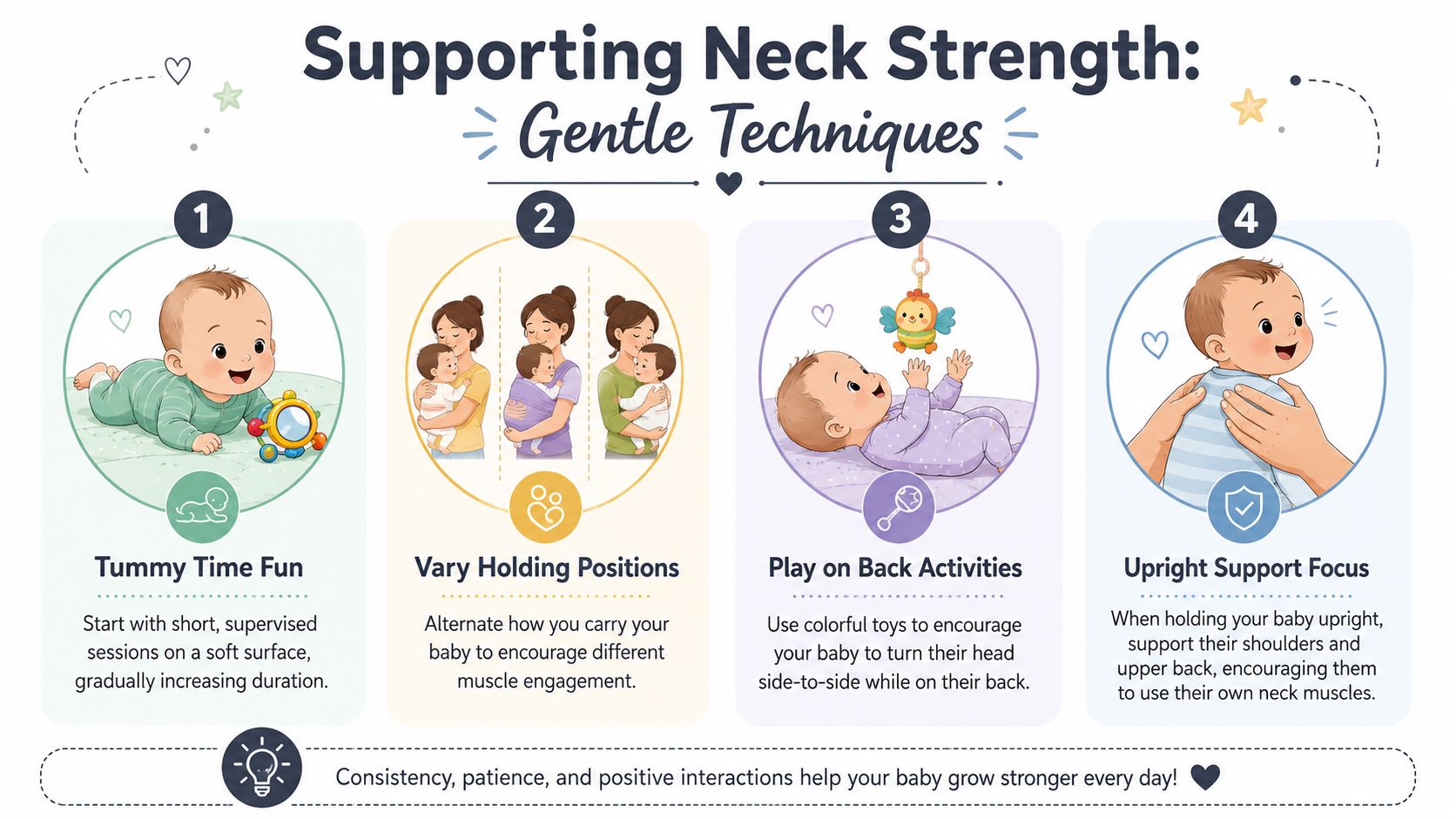
Traditional tummy time is still useful. Some babies tolerate it best for very short periods when they're calm, alert, and not right after a feed. A blanket on the floor, your face nearby, and a simple toy can make it more manageable.
Still, not every baby is ready for the floor right away. The important idea is not “more struggle.” The important idea is more chances to work the same muscles in gentler ways.
Research discussed in Raya's baby head control guide notes that 2-minute daily habits using non-prone methods such as Chest-to-Chest and the Airplane Carry can help build neck strength for babies who strongly reject tummy time.
Gentle alternatives for tummy time rejection
These options can feel more like cuddling than exercise, which is often exactly why they work.
-
Chest-to-Chest
Recline on a couch or bed with your upper body supported. Place your baby tummy-down on your chest. Most babies naturally try to lift their head to look at your face. Because they're close to you, they often stay calmer than they do on the floor. -
Lap Lay
Rest your baby across your lap on their tummy while you sit comfortably. Keep one hand close for support. This gives mild pressure input and a small incline, which can make lifting the head feel easier. -
Airplane Carry
Lay your baby face-down along your forearm, with your hand supporting the chest and body. As you walk slowly, your baby may try to keep the head more level. This can be especially helpful for babies who like movement. -
Upright shoulder time
Hold your baby against your chest with support at the upper back and shoulders. In this position, babies often practice small head corrections as they look around.
How to use these without turning them into a battle
You don't need long sessions. Keep the practice calm and frequent rather than intense.
A simple rhythm works well:
- Try a short moment when your baby is awake and content.
- Stop before frustration builds.
- Repeat later in the day in a different position.
- Use your face, voice, or gentle movement to keep the experience social.
If your baby starts crying hard right away, change the position instead of pushing through. A useful exercise is one your baby can actually practice.
Small adjustments that help
Parents often ask what makes these moments easier. Usually it's not one big trick. It's a few small choices.
- Pick the right time when your baby is calm, not hungry or overly tired.
- Use your body as the surface if the floor feels too hard or too lonely.
- Talk during the activity so your baby has a reason to lift and look.
- Alternate positions because different holds work different muscles in slightly different ways.
Some babies accept floor tummy time later, after they've gained confidence through these gentler options. Others continue to prefer a mix. Both can support healthy progress.
Playful Activities That Build Infant Head Control
The best neck-strengthening work often doesn't look like exercise at all. It looks like a baby staring at your eyebrows, turning toward a rattle, or lifting the head to see a face in the mirror.
Turn daily moments into practice
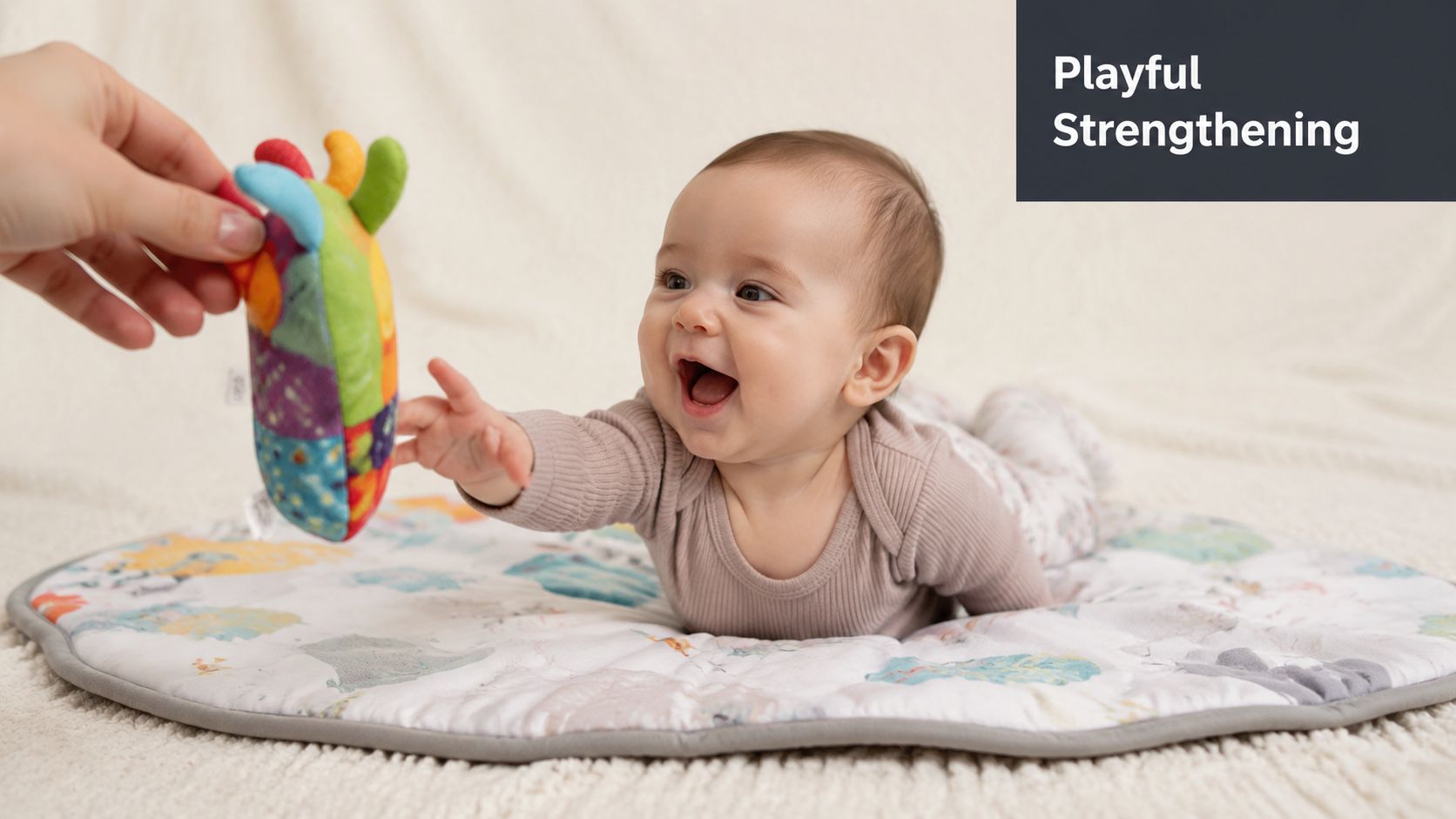
Try this during floor time or while your baby lies on your chest. Hold your face or a high-contrast toy slightly to one side, then slowly move it to the other side. Your baby may first follow with their eyes, then begin adding a small head turn.
A mirror can work well too. During supervised play, place an unbreakable baby-safe mirror in front of your child. Many babies will lift and look longer when they see a face staring back.
If you want fresh ideas for keeping floor play interesting, these tummy time activities offer practical inspiration you can adapt to your baby's age and mood.
Easy play ideas that fit into the day
You don't need special equipment. A few simple interactions are enough.
-
Face tracking
Lie down so your face is close to your baby's. Talk, smile, and slowly shift position. Babies often work harder for a human face than for any toy. -
Toy spotting
Use one colorful object and move it slowly, not quickly. Fast movement can make it hard for a young baby to organize their eyes and neck. -
Shoulder peek
Carry your baby upright and pause at a window, bookshelf, or lamp. Those little moments of looking around help your baby practice steadying the head in real life.
Short, curious play usually works better than long “workout” sessions.
Make it enjoyable, not performative
If your baby only lasts a short time, that still counts. If they prefer your chest over the floor, that counts too. Skill grows through repetition in small pieces.
The goal isn't to create a perfect routine. The goal is to give your baby many reasons to lift, turn, and look.
Safety Guidelines and When to Talk to a Pediatrician
Parents need two things at the same time here. Reassurance, and a clear sense of when concern is appropriate. Most wobbliness in early infancy is normal. Some patterns deserve a closer look.
Everyday safety basics
Support your newborn's head and neck during carries, feeds, and position changes until head control becomes steady. In seats and carriers, make sure your baby's position keeps the airway open and the chin from tucking down.
Sleep safety matters too. Once babies start showing signs that they're moving toward more active rolling and body control, families often start asking about transitions out of swaddling. This guide on safe sleep after swaddling is a helpful next-step resource for thinking through that change.
What deserves a call
Not every baby develops in exactly the same way, but there are some milestones that matter.
According to Child and Family Development's summary of pediatric motor guidelines, approximately 90% of infants by 4 months should be able to hold their head up steadily while in a supported sitting position. The same source notes that if a child still does not control their head well at 6 months, it is considered one of the five primary red flag signs for motor development and needs prompt professional screening.
Signs to watch without panicking
A conversation with your pediatrician makes sense if you notice patterns like these:
- Very limited progress over time in lifting or steadying the head
- Persistent floppiness when your baby is held upright
- A strong preference for one side that doesn't seem to ease
- Head control that still seems poor by the later part of the first half-year
Bring your observations, not a diagnosis. “I'm noticing my baby still struggles to steady the head when upright” is enough to start a useful conversation.
Trust observation over comparison
The internet can make normal variation feel alarming. Your baby doesn't need to perform for a chart every day. But if something consistently feels off, it's worth asking.
Parents are often the first to notice subtle patterns. That attention is valuable.
Creating a Home Environment That Fosters Independence
Head control is an early sign of something bigger. Your baby wants to participate in the world. First by lifting the head, then by rolling, sitting, reaching, and eventually moving toward the people and objects that matter to them.
A home can either support that process or constantly interrupt it.
Give movement room to happen
Babies do best when they have safe, simple opportunities to move on a firm surface without being repositioned all day. A comfortable floor setup encourages turning, looking, pushing up, and experimenting with weight shifts in a natural way.
Thoughtful products can help with that daily freedom. For example, a practical guide to infant foam floor mats can help parents think about creating a comfortable space for floor play and early movement.
Independence starts early and keeps growing
The same philosophy carries forward as children grow. First, they need space to practice lifting and turning. Later, they need safe ways to climb, reach, participate, and join family routines.
That's why the most supportive home environments often feel calm and accessible. They let children do a little more for themselves at each stage, without rushing them.
When you see head control this way, it stops being just a neck milestone. It becomes the first chapter in a much larger story of confidence, movement, and independence.
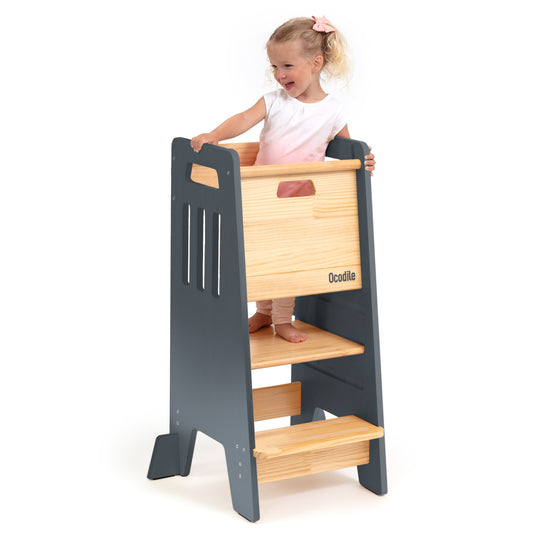
If you're building a home that supports safe movement and growing independence, Ocodile offers child-focused furniture designed to help families create practical, beautiful spaces for everyday development.