


Learning Stand vs. Step Stool: What’s the Difference?
Your toddler wants to help rinse berries, stir pancake batter or wash hands without being lifted every few minutes. A learning stand and a step stool can both solve the reach problem, but they are not the same tool. The difference matters because a child who is steady for a quick sink routine may still need more support during a longer kitchen task.
The short answer is simple: a learning tower style stand is usually better for supervised counter-height activities where your child stays in one place for several minutes, while a step stool is better for quick up-and-down access, like brushing teeth or reaching the toilet. The right choice depends on your child’s balance, the task, your space and how much side support you want around them.
What Is a Learning Stand?
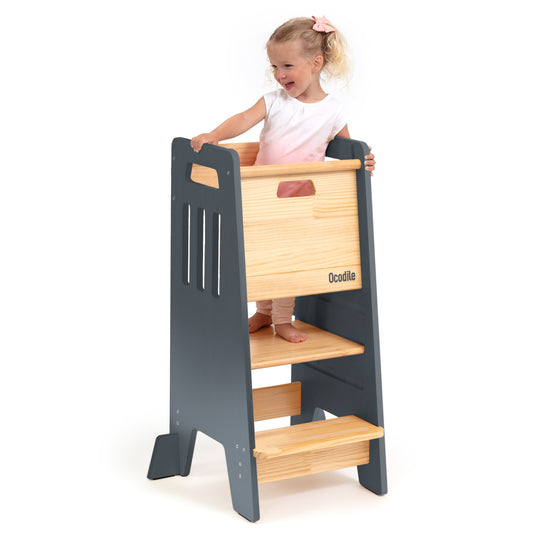
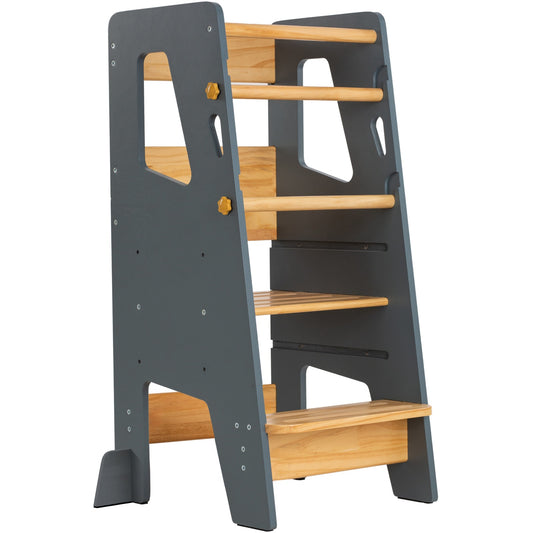
A learning stand is a raised toddler platform with a more enclosed frame than a regular stool. Many parents also call it a learning tower, toddler tower or kitchen helper. It is designed to bring a child up to counter height so they can participate in everyday tasks, such as washing produce, watching you cook, kneading dough or helping pour ingredients.
The key difference is the surrounding structure. Instead of standing on an open step, your child stands inside a frame that can help reduce sideways stepping or sudden turning. That does not make it hands-off. You still supervise closely, keep sharp or hot items out of reach and place the stand on a flat surface. But the added structure can make longer tasks feel more manageable than balancing a toddler on a small stool.
A tower style helper is most useful when your child wants to stay involved for more than a minute or two. If they are constantly asking to see the counter, pulling a chair across the kitchen or climbing your legs while you cook, this may be the safer, more practical category to consider.
What Is a Step Stool?
A step stool is a simple raised step that helps a child reach something briefly. It may have one step or two, and it is often used in bathrooms, bedrooms and entryways. Think of handwashing, brushing teeth, climbing into bed, reaching a bookshelf or helping put shoes away.
A learning stand may be more supportive for counter activities, but a step stool wins on portability. It is easier to move from room to room and usually takes up less floor space. For families with a small bathroom or a child who only needs a quick boost, a well-sized stool can be exactly enough.
The tradeoff is that a stool is more open. A toddler can turn, step backward, lean too far or try to climb sideways if they are excited or distracted. That is why step stools work best for short routines where you can stay close and the child is not handling messy, hot or breakable items.
Learning Stand vs. Step Stool: The Main Differences
Parents often compare these two products because both help a child reach adult-height spaces. The more useful question is not which one is better overall. It is which one fits the moment.
| Feature | Tower style helper | Step stool |
|---|---|---|
| Best for | Longer supervised kitchen or counter tasks | Quick sink, toilet, closet or bed access |
| Support | More enclosed standing area | Open standing surface |
| Portability | Usually larger and less portable | Easy to move around the home |
| Space needed | More floor space | Smaller footprint |
| Parent involvement | Close supervision, especially near counters | Close supervision, especially during climbing |
| Child movement | Helps keep the child positioned | Allows more stepping on and off |
A learning stand can be worth it when the task involves time, attention and side-to-side toddler movement. A step stool can be the better fit when the task is quick and the child only needs a little height.
When a Step Stool Is the Better Fit
A step stool is often enough when your child already has good standing balance, can climb up and down with control and only needs access for short daily routines. It is especially helpful in the bathroom because the goal is usually quick: wash hands, brush teeth, reach the sink, step down.
Step stools also fit well in homes where storage is tight. A bathroom stool can tuck under a sink. A bedroom stool can stay near the bed. A small kitchen stool can help an older preschooler reach a lower counter or help set napkins on the table.
Look for practical details that matter in real life: a stable base, a surface your child can stand on comfortably, appropriate height for the task and materials that feel solid rather than wobbly. If you are deciding between stool types, Ocodile’s guide to finding the best step stool for kids goes deeper into fit, materials and safety considerations.
The caution is that a stool should not become an improvised kitchen tower. If your toddler is reaching across a counter, leaning to grab snacks or trying to stir while standing on an open step, the setup may be asking too much from a small piece of furniture.
When a Learning Stand Makes More Sense
A learning stand makes more sense when the activity is at counter height and your child wants to remain involved. Kitchen tasks are the clearest example. Mixing batter, washing vegetables, spreading butter on toast or watching you prepare lunch all take time. Toddlers shift their weight, bounce, reach and get distracted. A more enclosed standing space can add support during those active moments.
It can also reduce the amount of lifting you do. Instead of picking up your child every time they ask to see what is happening, they can climb into a dedicated helper with your guidance. That can make daily routines feel calmer because your child has a predictable place to participate.

If you are leaning toward this type of setup, the Montessori Toddler Tower - Adjustable Kitchen Stool Helper is an Ocodile option to compare. It is designed for toddler kitchen participation, which is the exact use case where parents often find a regular stool feels too open or unstable for longer activities.
For a deeper look at this specific decision, you may also find Ocodile’s article on when a step tower makes more sense than a step stool helpful.
Safety: What Parents Should Watch Closely
Neither option replaces adult supervision. Toddlers are still learning where their bodies are in space, and even a sturdy product needs the right setup. The safest choice is the one that matches your child’s current abilities and the task in front of them.
Use these checks before choosing a learning stand or step stool:
- Place it on a flat, dry surface before your child climbs.
- Stay within arm’s reach during climbing and counter-height tasks.
- Keep knives, hot pans, cords and small choking hazards away from the edge.
- Teach one child to use it at a time unless the product is specifically designed otherwise.
- Put it away or block access when you cannot supervise.
- Stop the activity if your child starts rocking, jumping or climbing on the outside.
Readiness matters as much as the furniture. A child who can follow simple directions like hands stay here or feet on the step is usually easier to supervise than a child who immediately tries to climb over the side. If you are unsure, this readiness guide on whether your toddler is ready for a learning tower can help you think through balance, climbing control and safety directions.
How to Decide for Your Home
Start with the routine that is causing the most frustration. If you are mostly tired of lifting your child to the bathroom sink ten times a day, a step stool may solve the problem. If the hard moment is cooking dinner while your toddler pulls on your leg, asks to be held or drags over a dining chair, a learning stand is usually the more relevant solution.
Also consider your child’s personality. Some toddlers stand calmly and copy what you do. Others bounce, twist, reach and try to climb anything nearby. A more active child may need more structure for counter tasks, while a cautious older preschooler may do well with a stool for many everyday jobs.
Space matters too. A tower style helper takes up more room, so it needs a predictable parking spot. A stool can move wherever it is needed. If you have a small kitchen, measure where the helper will go and make sure adults can still move safely around it.
This use-case thinking applies to other family gear as well. For example, families comparing outdoor options often look at how a product will actually be used, from storage to safety features. DrBash’s guide to how a kids wagon stroller works takes a similar practical approach to choosing gear based on real family routines.
Quick Decision Guide
If you are still on the fence, match the product to the job rather than the name.
Choose a step stool if your child needs a quick boost for brushing teeth, washing hands, using the toilet, reaching a low shelf or climbing into bed with help. Choose a learning stand if your child wants to help at the kitchen counter, participate in food prep or stay safely positioned for a longer supervised activity.
Some families use both because they solve different problems. A stool stays in the bathroom for fast routines. A tower stays in the kitchen for helping. That setup is not necessary for every home, but it can be convenient if your child is eager to do more things on their own throughout the day.
The most important thing is avoiding improvised solutions. Dining chairs, storage bins and adult stools can feel convenient in the moment, but they are not designed around toddler movement. A purpose-built option gives your child a clearer place to stand and gives you one less thing to manage during busy routines.
Frequently Asked Questions
Is a learning stand the same as a learning tower? In most parent conversations, yes. The terms often refer to the same type of toddler kitchen helper: a raised, more enclosed platform that lets a child participate at counter height with close supervision.
Is a step stool safe for toddlers? A step stool can be safe for toddlers when it is sturdy, the height fits the task and an adult supervises. It is best for short routines, not long counter activities where a child may lean, twist or reach.
What age is best for a tower style helper? Age is less important than readiness. Look for steady standing, controlled climbing and the ability to follow simple safety directions. If your child cannot stay on the platform without rocking or climbing, wait and practice with lower-risk routines.
Do I need both a step stool and a tower? Not always. If your main need is bathroom independence, a stool may be enough. If your child wants to help in the kitchen every day, a tower style helper may be more useful. Some families choose one of each for different rooms.
Can my toddler use a learning stand without supervision? No. A learning stand should be used with adult supervision, especially in the kitchen. It helps create a better setup for participation, but it does not remove normal toddler safety risks.
The Bottom Line for Parents
A learning stand and a step stool are both useful, but they are built for different kinds of independence. A stool helps with quick access. A tower style helper supports longer, supervised participation at counter height.
If your child is ready to help with real family routines, choose the option that fits the task, your space and your comfort level. The right setup can mean less lifting for you, fewer unsafe chair-climbing moments and more chances for your child to practice everyday skills right beside you.