



Lily and River Pikler: lily and river pikler Safe, High-Quality Alternatives
If you’ve been on the hunt for a Lily and River Pikler triangle, you might have noticed they’re pretty much impossible to find. There’s a simple reason for this: the company, which was once a household name for Montessori-style climbing toys, has unfortunately closed its doors. Their products are no longer being made.
The Disappearance of a Beloved Brand

For a long time, Lily and River was the go-to brand for parents wanting a high-quality, wooden climbing frame. They really helped bring the Pikler triangle out of its niche and into playrooms everywhere. But their journey came to a sudden and confusing end.
Sometime between early 2025 and mid-2026, the company ran into serious trouble. From the outside, it looked like a rollercoaster—an announcement that they were closing, then a quick attempt at a relaunch that didn't pan out. By mid-2025, the Lily and River website was gone for good, leaving a lot of loyal customers scratching their heads. You can get a better sense of the company’s final months and its impact on customers, which lays out the whole timeline.
Why This Matters for Parents
Knowing the brand is gone is the first piece of the puzzle for any family looking for a climber right now. While you can't buy a "Lily and River Pikler" anymore, the philosophy behind it is more popular than ever. The term 'Pikler' itself isn't a brand—it's an approach to child development that champions independent play and building motor skills.
That’s a really important distinction. The desire for toys that follow these principles is still huge, and plenty of fantastic alternatives have stepped up to fill the void. The real goal is to find a climbing frame that captures the same spirit:
- Child-Led Exploration: Letting kids figure out their own physical limits without adults hovering or directing them.
- Safety First: Made with sturdy materials, non-toxic finishes, and a design that won’t wobble or tip over with your little one on it.
- Developmental Focus: A tool that builds confidence, gross motor skills, and creative problem-solving.
The whole idea behind a Pikler triangle is to create a safe space for "risky play." It's where kids can test their boundaries and learn from their own experiences, which builds both physical strength and self-reliance.
Moving Forward with Confidence
It can be a little unsettling when a brand you trust disappears, but it’s also a great chance to discover new, high-quality options. Companies like Ocodile are dedicated to making beautiful, safe, and developmentally-focused kids' furniture that fits the Pikler philosophy perfectly.
As you keep looking, the trick is to focus on those core principles of safety and independent play that made the original so loved in the first place. This guide will help you sort through your options and pick a climber that will be a safe, long-lasting, and joyful part of your home.
The Philosophy That Inspired the Pikler Triangle
To really get why a simple wooden frame like the lily and river pikler is so loved, we have to go back to 1930s Hungary. This idea didn't come from a toy company, but from the mind of a pediatrician, Dr. Emmi Pikler, who was completely fascinated by how kids naturally figure out how to move.
Dr. Pikler’s core belief was straightforward but incredibly powerful: children are born knowing how to develop at their own pace. All they need is a safe space and the freedom to explore. They don't need adults to teach them how to sit, stand, or walk—they’ll get there on their own, building not just physical strength but a deep sense of confidence along the way.
Respecting the Child's Pace
This whole philosophy is built on respectful observation. Instead of propping a baby up with pillows or holding their hands to encourage walking, a Pikler-inspired parent provides the right environment and trusts the child to hit those milestones when they're truly ready. It’s a lot like how kids learn to talk; we surround them with language, and they start speaking on their own timeline. Dr. Pikler saw physical development in the exact same way.
This approach is the total opposite of the urge to rush a child's progress. Her work actually showed that stepping in—even when you mean well—can mess with a child's natural learning process. A child who pulls themselves up all on their own learns about balance and strength in a way that a child simply placed in a standing position never will.
A huge part of Dr. Pikler’s research came from her time as a family doctor in Budapest. She spotted a surprising trend in childhood accidents. Her observations revealed that kids from lower-income families who played freely outside had fewer serious injuries like fractures than kids from wealthier families who were often kept indoors and watched closely by governesses. It turned out that kids with the freedom to move and take small, calculated risks became more aware, agile, and even better at falling without getting hurt. You can dive deeper into Dr. Pikler's influential work and her foundational observations.
From Philosophy to Play
The Pikler triangle is the physical form of this philosophy. It's not a toy that tells a child how they're supposed to play. It’s an open-ended invitation to explore.
- An infant might use it to pull up to a standing position.
- A toddler sees it as a small mountain to conquer, one rung at a time.
- A preschooler can turn it into a fort, a hidden cave, or even a boat on the high seas.
Every interaction is led completely by the child's own curiosity and what they're capable of in that moment. They learn to gauge their own limits, solve problems (like figuring out how to get back down), and feel that rush of pride from mastering a new skill.
The triangle is designed to meet the child exactly where they are. It never pushes them past their abilities but always offers the next gentle challenge when they're ready for it.
This is what makes the structure so brilliant. It’s not just building gross motor skills; it’s building resilience, body awareness, and a powerful sense of self-reliance. When you bring a Pikler triangle into your home, you aren't just getting another piece of play equipment—you’re creating a space that quietly tells your child, "I trust you to learn and grow." That's the lasting legacy behind this classic design.
What to Look for in a High-Quality Pikler Triangle
Since the original Lily and River Pikler is no longer on the market, knowing how to spot a top-notch alternative is more important than ever. Think of it like buying a car seat—the small details are a huge deal when it comes to safety and how well it works. This isn't just another toy; it's a piece of gear your child will use to explore their physical abilities, so you absolutely can't compromise on durability and smart design.
The very best climbing triangles are built from solid hardwoods. Materials like Baltic birch are miles ahead of softer woods like pine, which can dent, splinter, or even warp over time. That extra strength means the frame stays solid and secure through years of climbing and playing.
Material and Finish Safety
But it’s not just about the type of wood; the finish is equally critical. You’ll want to look for climbers finished with non-toxic, child-safe paints and sealants. Since toddlers have a habit of putting their mouths on just about everything, you need the peace of mind that comes from knowing the materials are free from nasty chemicals like VOCs (volatile organic compounds).
Another big clue to quality is the attention to detail. Take a close look at the construction—every single edge and corner should be smoothly rounded and sanded down. Any sharp corners or rough patches are an immediate red flag and can lead to scrapes or splinters during playtime.
The flowchart below breaks down the philosophy of Dr. Emmi Pikler, which is the very foundation of any good climbing triangle.

As you can see, Dr. Pikler's approach moves from respectful observation to encouraging independent play—and that's exactly what a quality climber is designed to do.
Structural Integrity and Design
The overall design is really where you can tell the great from the just-okay. Rung spacing is a perfect example. The dowels should be spaced just right—usually about 3-4 inches apart. This lets little hands get a solid grip and small feet find a secure step without any risk of them slipping through.
If you're considering a foldable model, the locking mechanism is a make-or-break safety feature. It has to be strong and secure to prevent any possibility of the triangle collapsing while your child is on it. A flimsy lock is a serious hazard. When you're comparing your options, a sturdy lock and solid hardwood are two of the clearest signs you're looking at a safe, durable piece of equipment.
When you're trying to figure out which Pikler is the right one, it helps to have a quick checklist of what really matters.
Essential Features of a Quality Pikler Triangle
| Feature | What to Look For | Why It Matters |
|---|---|---|
| Wood Type | Solid hardwoods like Baltic birch or European beech. | Much stronger and more durable than softwoods (like pine), preventing dents and splintering. |
| Finish | Non-toxic, child-safe, and low-VOC paints and sealants. | Ensures safety for children who will inevitably mouth and touch all surfaces. |
| Construction | Smoothly sanded surfaces and rounded edges. | Prevents splinters, scrapes, and bumps during active play. |
| Rung Spacing | Dowels spaced approximately 3-4 inches apart. | Provides a secure grip for small hands and safe footing for little feet. |
| Locking Mechanism | A robust and secure lock on foldable models. | Critical for preventing accidental collapse while the triangle is in use. |
| Stability | A-frame design with a wide base and low center of gravity. | Makes the structure incredibly stable and difficult for a child to tip over. |
By keeping an eye out for these key features, you'll be able to choose a climber that will stand up to years of play.
A well-built Pikler triangle is designed for stability above all else. Its A-frame shape should create a low center of gravity, making it incredibly difficult to tip over, even with an adventurous climber nearing the top.
By focusing on these essentials—solid hardwood, non-toxic finishes, rounded corners, and a secure structure—you can feel confident choosing a climbing triangle that offers the best in safety and fun. If you're interested in a more comprehensive setup, you might want to check out our guide on choosing a Pikler triangle set.
How a Pikler Triangle Supports Your Child's Development
At first glance, a Pikler triangle looks like a simple climbing frame. But it's so much more than that—think of it as a personal development studio for your little one, perfectly designed to build strength, coordination, and confidence, all at their own pace. The real magic happens when you step back and let your child explore it on their own terms.
Right away, you'll see a boost in their gross motor skills. A baby might use the rungs to pull themselves up to a wobbly stand, strengthening their legs, core, and arms in the process. As they get a bit older, this naturally evolves into climbing. This simple act is a masterclass in honing balance, coordination, and spatial awareness—that crucial ability to know where their body is in relation to the world around them.
More Than Just a Climb
Navigating the triangle is a workout for the mind, too. When a toddler pauses to figure out how to get over the top and back down the other side, they're engaging in some serious problem-solving. They learn to assess risk, plan their next move, and pivot when one grip or foothold doesn’t feel right.
Every successful climb, no matter how small, is a huge win for their self-esteem. That look of pure triumph when they reach the top for the first time? They earned that all by themselves. It builds a powerful sense of independence that will follow them far beyond the playroom. To really get a sense of how vital this kind of exploration is, it's worth understanding the power of play in nurturing young minds and how it shapes both cognitive and physical growth.
A Pikler triangle doesn’t tell a child how to play; it invites them to figure it out. It offers an open-ended challenge that encourages kids to listen to their bodies and trust their own instincts—a foundational skill for life.
The design, made popular by brands like lily and river pikler, is also a perfect match for a Montessori-inspired home. If you're curious about how this single piece of equipment supports the entire educational philosophy, you can read our deep dive on the connection between the Pikler triangle and Montessori principles. It creates a prepared environment where children can safely test their own limits and make discoveries, fostering the very independence Dr. Montessori championed.
Creating a Complete Play Space with Ocodile

A great climbing triangle, like the ones that filled the gap left by the lily and river pikler, is fantastic on its own. But it really shines when it becomes the heart of a well-planned play space. Think of it as the centerpiece of a "yes space"—a corner of your home where your little one can explore freely and safely. The trick is to pair it with other pieces that all work together.
When you start combining an Ocodile Pikler-style triangle with other items from their collection, you're not just piling up more toys. You're actually building a little world that encourages different parts of your child's growth, from climbing confidence to helping out in the kitchen.
Building a Safe Foundation
First things first: you need a safe zone for all that climbing and exploring. Placing the triangle on a soft but firm surface is a must.
- Ocodile Play Mat: Tossing an Ocodile play mat under the climber is the easiest way to create a cushioned landing. It takes the sting out of the occasional tumble and also visually marks out the "active play zone."
- Ocodile Floor Bed: Setting up the climber near an Ocodile floor bed creates a wonderfully cozy and useful corner. The bed doubles as another soft surface and gives your child the freedom to switch between play and rest all on their own, which is a huge confidence booster.
Just like that, a simple corner becomes a dedicated space for movement, where your child can test their growing skills without you hovering over them.
Connecting Physical and Practical Skills
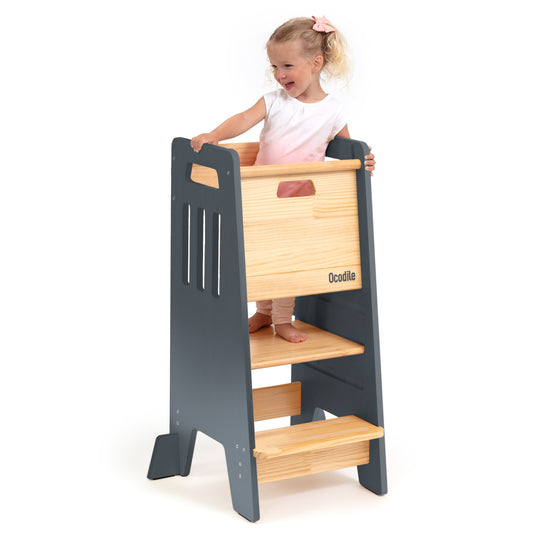
A truly great play area does more than just get the wiggles out. The confidence a child builds while mastering the climber can flow right into everyday family routines. This is where a piece like the Ocodile learning tower fits in perfectly.
While the climber builds those big-muscle skills and bravery in the playroom, the learning tower brings that same can-do attitude into the kitchen. It gives your child a safe boost up to the counter, letting them "help" you cook, wash veggies, or just be part of the action.
By putting these pieces together, you're sending a consistent message: "You are capable, and what you do matters here." This link between independent play and practical family life is how you nurture a truly self-reliant kid.
In the end, putting an Ocodile climber together with a learning tower, floor bed, or play mat turns your home into a place that makes sense to a child. It shows them that their growing independence is welcome in every room, turning regular moments into real opportunities for learning and connection.
Common Questions About Pikler Triangles
Thinking about bringing a climbing triangle into your home? It's a big decision, and it's completely normal to have a few questions buzzing around. Even though the original lily and river pikler isn't made anymore, its brilliant design lives on, and so do the questions parents have.
We've pulled together the most common ones we hear to give you clear, straightforward answers. Our goal is to help you feel confident and excited about this new addition to your play space.
What Is the Right Age to Introduce a Pikler Triangle?
This is easily one of the first questions parents ask. The best part about a Pikler triangle is how it grows with your child, making it useful across a huge age range. You can introduce it as early as 6 months old! At that point, it’s the perfect, sturdy object for your baby to grab onto as they learn to pull themselves up to a stand.
As they get bigger, the way they play with it will naturally change:
- 6-12 Months: It’s all about pulling up, cruising along the base, and getting a feel for the rungs.
- 1-2 Years: Toddlers might take their first brave climbs, often just a rung or two up and then back down. This is a huge milestone!
- 2-4 Years: This is when they start to really master the climb. You'll see them build incredible strength and confidence as they work their way over the top.
- 4+ Years: The triangle transforms into a launchpad for imagination. It becomes a cozy fort, a tall mountain, or the star of a living room obstacle course.
The most important thing is to simply follow your child's lead. The triangle is designed to meet them exactly where they are, offering a challenge they are ready for without any pressure from you.
Are Pikler Triangles Actually Safe?
Safety is non-negotiable, and it's the number one thing on every parent's mind. The good news is that when they’re well-made and used correctly, Pikler triangles are exceptionally safe. Their safety is baked right into the classic A-frame design, which gives them a low center of gravity. This makes them incredibly stable and very difficult to tip over.
That said, true safety comes down to a few key details:
- Quality Materials: Look for climbers built from solid hardwood, like Baltic birch. You want something that won't splinter, crack, or weaken over time.
- Child-Safe Finishes: Make sure any paints or sealants used are non-toxic and have low or zero VOCs. Little ones explore with their hands and mouths!
- Proper Setup: Always use the triangle on a flat, even surface. Placing a soft play mat underneath is a great idea for extra cushioning during the inevitable tumbles.
- Supervision, Not Intervention: Your job is to be a spotter, not a director. Stay close enough to prevent a serious fall, but give them space to figure things out. Try to avoid saying "be careful!" which can make them anxious. Small slips are actually powerful learning moments.
A well-made Pikler triangle is one of the best tools for introducing "risky play" in a controlled space. It lets children test their own limits and learn how to navigate physical challenges safely—a skill they'll take with them to the playground and beyond.
How Do I Encourage My Child to Use It?
It can feel a little deflating when you set up this beautiful new climber and... your child ignores it. Don't worry, this is common! The best approach is pure patience. Avoid pushing them to climb. Just make the triangle a normal, inviting part of their playroom and let curiosity do its job.
If they seem hesitant for a while, you can try a few gentle nudges. Tying a colorful play silk or a favorite small toy to a top rung might spark their interest to reach for it. You can also drape a blanket over it to instantly create a cozy fort. When they see you interacting with it and see it as more than just a climber, they'll be more likely to engage on their own terms.
If you are looking for a foldable option that can be easily stored, you can learn more about the benefits of a foldable Pikler triangle in our detailed guide.
Do I Need a Ramp or Other Attachments?
A standalone Pikler triangle is a fantastic and complete developmental toy all on its own. You don't need anything else.
However, adding an attachment like a reversible ramp—with a smooth slide on one side and climbing holds on the other—can open up a whole new world of play. A ramp gives them a different way to get up and down, which challenges new muscle groups and coordination skills. Plus, turning it into an indoor slide is always a guaranteed win. While a ramp isn't essential on day one, it's definitely the most popular and versatile add-on to consider as your child's confidence grows.
At Ocodile, we believe in creating play environments that nurture independence and confidence. Our beautifully crafted, child-safe climbing triangles and accessories are designed to support your child's natural development every step of the way.
Explore the Ocodile collection and find the perfect centerpiece for your play space