



Montessori Climbing Tower: A Parent's Guide for 2026
The first time a toddler drags a chair to the counter, you realize the problem isn't curiosity. It's height. They want to stir, rinse berries, watch you chop, and be part of the work, but the kitchen was built for adults, not small hands and short legs.
A Montessori climbing tower solves that mismatch without turning the room into a playground. It gives a child a stable way up to counter level, so the everyday moments that usually cause frustration become chances to help, watch, and learn. For many families, that's the difference between keeping a toddler on the outside of the action and letting them join it safely, in a way that still feels normal in a real kitchen.
Why Every Family Needs a Montessori Climbing Tower
At breakfast, the scene repeats itself. You're making toast, the toddler is reaching for the cutting board, and the whole exchange turns into lifting, redirecting, or handing over a spoon from across the room. A climbing tower changes that rhythm because the child can stand where the work is happening, instead of asking to be carried into it.
That matters more than convenience. A child who can see the bowl, touch the apple slices, or rinse a carrot starts participating instead of just waiting. The tower turns a hard boundary, the counter, into a shared workspace.
Practical rule: If a child keeps trying to join the task, it's usually better to adjust the environment than to keep moving the child away from it.
The emotional payoff is easy to miss because it looks so ordinary. A toddler who can help wash fruit or hold a whisk often settles faster, not because they've been entertained, but because they've been included. That inclusion fits neatly with the independence-focused approach many families look for in toddler spaces, which is why guides on encouraging autonomy often pair well with this kind of furniture, like this parent resource on toddler independence.
A tower also gives parents a cleaner way to say yes. Instead of “Not there,” it becomes “Climb up and stand here.” That simple shift makes kitchen time feel less like crowd control and more like shared family life.
Understanding the Montessori Climbing Tower Concept
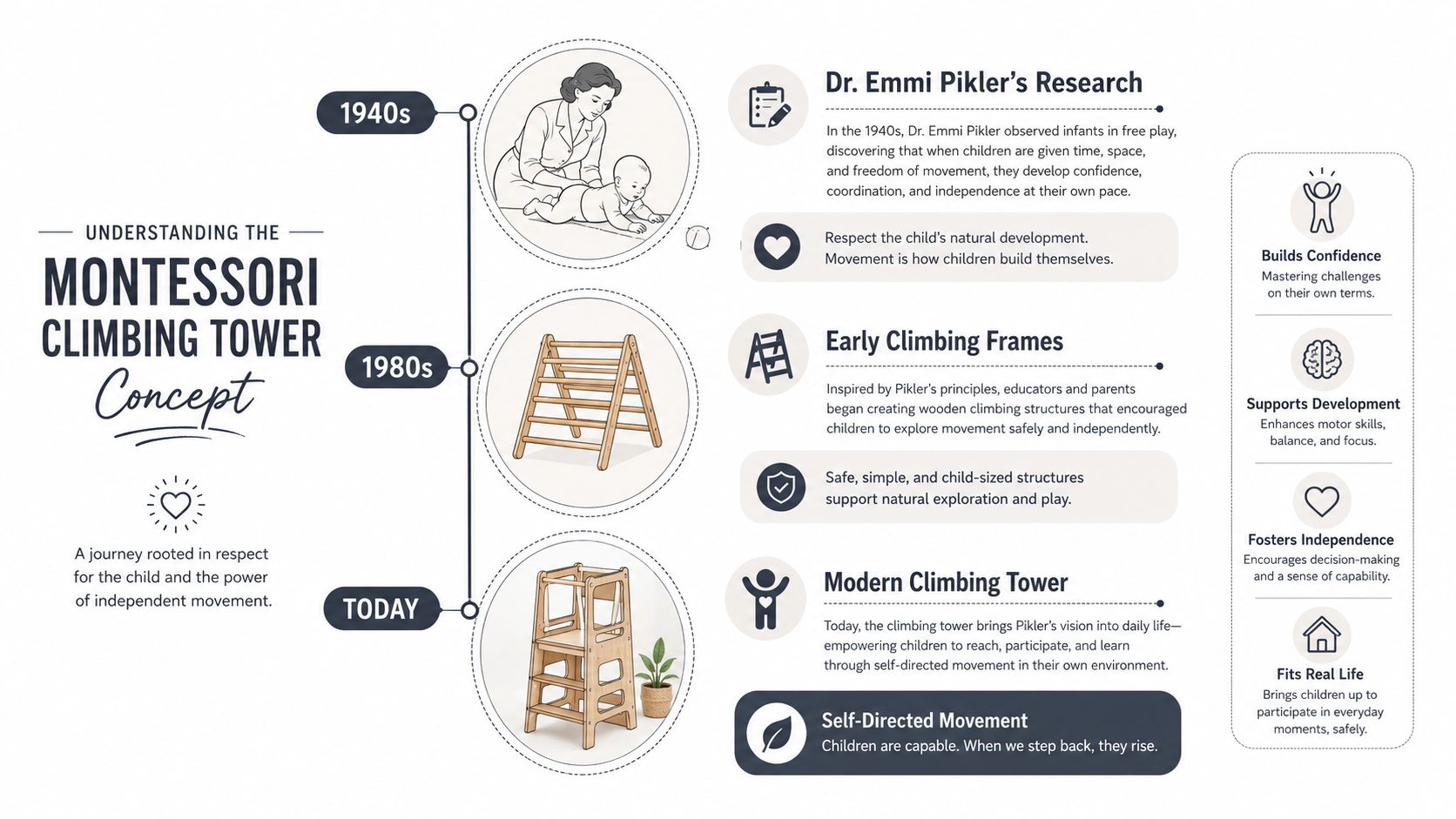
The idea behind the Montessori climbing tower comes from the broader Pikler triangle tradition, commonly linked to Hungarian pediatrician Dr. Emmi Pikler and dated to the mid-20th century. Modern educational summaries describe that lineage as supporting motor development, independence, and self-directed movement in early childhood, which is why these products still feel relevant today even though the language around them has changed over time. The category has become a mainstream commercial adaptation of a long-running child-development philosophy, not a novelty.
What makes it different from a step stool
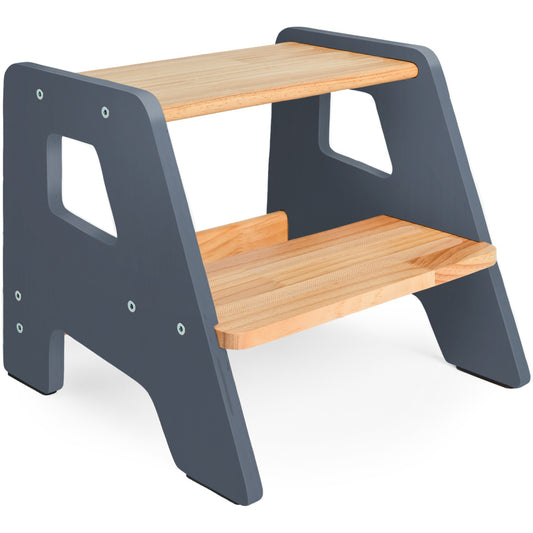
A regular step stool solves one problem, reaching. A Montessori tower solves reaching while also giving the child a protected place to stand. That usually means sides or rails, a more enclosed shape, and often an adjustable platform that can move as the child grows.
The enclosure matters because toddlers don't just stand still once they arrive. They twist, lean, and shift their weight. The tower is designed for that motion, while a loose stool assumes the child will stay centered and balanced.
The age range commonly seen in the market is roughly 1 to 6 years old (video reference). That lines up with the stage when balance, grip strength, and gross-motor coordination change quickly. In practice, the tower works best when it can be lowered for younger children and raised as they get more confident.
A simple way to read the product category
Look for three things first. Is the child enclosed well enough to reduce accidental falls? Can the standing surface adjust? Does the structure feel like a piece of furniture that belongs in your home, not a toy that has to be put away after each use?
That's the core difference between a true Montessori-style tower and a generic helper stool. One is built to support repeated, supervised participation in daily routines. The other is only built to reach.
Safety Standards and Injury Prevention
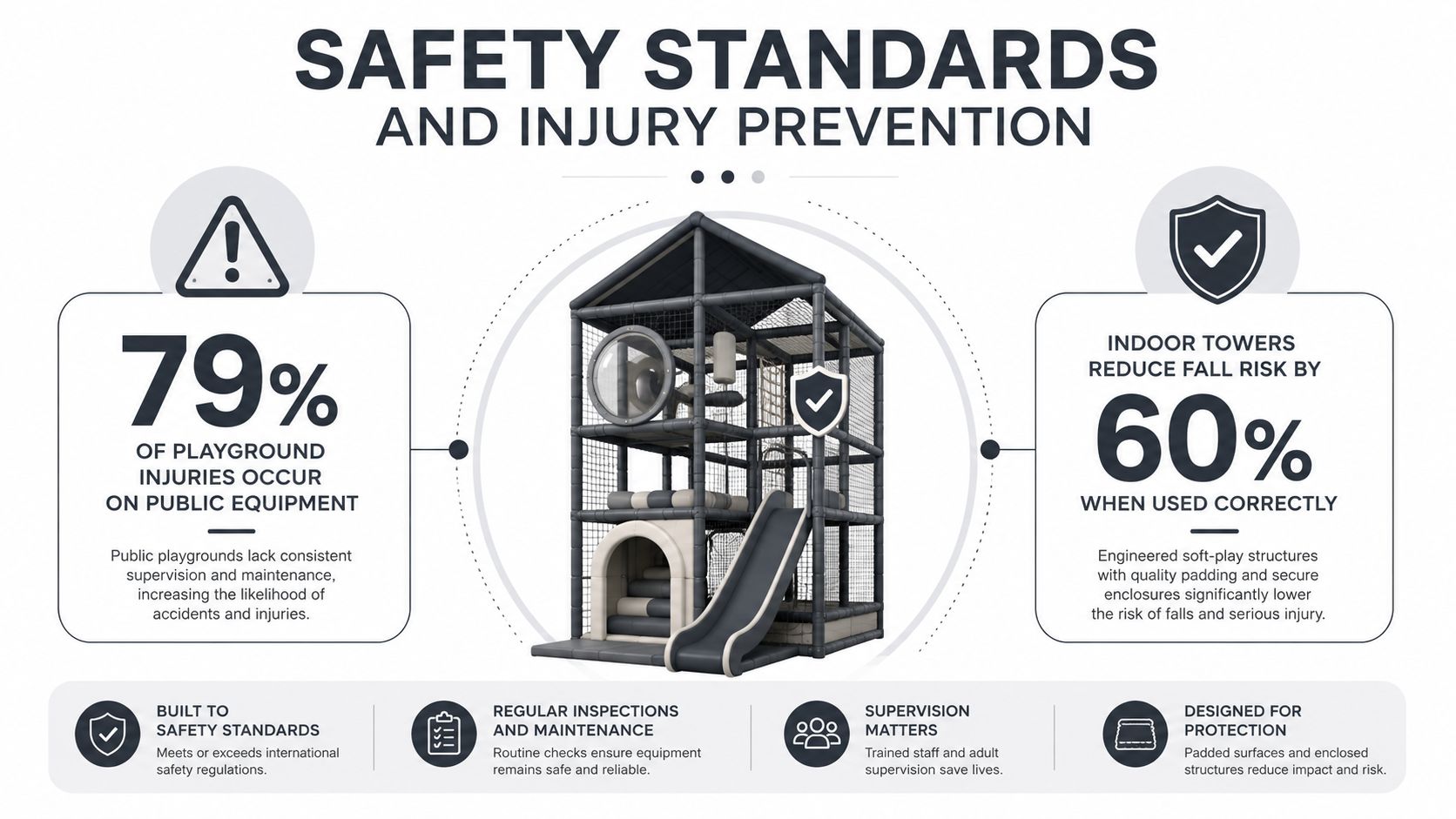
The reason parents worry about falls is obvious, and the injury data behind climbing equipment explains why. In the United States, playground equipment-related extremity fractures were estimated at an annual average of 72,889 children treated in emergency departments, or 119.2 per 100,000 children from 2006 to 2016; among these injuries, 49.8% of extremity fractures and 54.7% of severe fractures occurred on monkey bars or climbing gyms (PubMed review). A separate review of 43,579 pediatric ED fall visits found 151 documented monkey-bar falls, and 64.2% of those resulted in fracture, with an odds ratio of 3.1 for fracture versus other falls (PubMed review). These numbers don't describe Montessori towers directly, but they show why parents should look closely at how indoor climbers are built and used.
What safer indoor use looks like
A quality tower aims to lower the risk profile through design. That usually means a wide base, non-slip feet, rounded edges, and rail heights that make it harder for a child to overlean or step backward without support. Placement matters too. Put the tower on a flat, stable floor, away from sharp furniture corners, hot surfaces, and anything a child could reach and pull down.
Keep the tower where your eyes already go during routine tasks. If you have to keep turning your body to check the child, the setup needs to change.
The home setup should also reflect the same seriousness parents bring to other high-set child furniture. If you've ever reviewed a guide like bunk bed safety for Georgia families, you already know the principle is the same, stable structure, correct placement, and clear rules. Height by itself isn't the only issue. The whole environment has to support the furniture.
For practical testing, a stability review can help you understand whether the tower stays planted when a child shifts weight. That's why guides on stability testing methods are useful, especially when you're comparing products that look similar in photos but behave very differently on a kitchen floor.
When supervision really matters
Supervision isn't about hovering with your hands on the frame every second. It's about staying close enough to intervene before a risky move becomes a fall. In younger toddlers, that usually means active supervision during climbing up, climbing down, and any time the child is changing tasks.
Floor choice matters too. A hard, level surface is usually easier for the tower to stand on than a thick, shifting rug. If the floor isn't ideal, fix the floor first instead of assuming the tower alone will make up for it.
Materials, Load Ratings, and Design Considerations
The numbers on a product page matter more than the marketing words. The most useful ones are load rating, dimensions, product weight, and the material named in the description. Together, those specs tell you whether the tower is likely to stay planted when a child leans, climbs, or shifts sideways.
Read the material before you read the color
Independent listings show common capacities ranging from 35 kg on a basic MDF tower to 80–90 kg on birch-plywood or birch-wood models, even when the recommended age starts at 12–18 months (product listing). That gap matters because a child's body weight is only part of the load. Climbing creates dynamic forces from stepping and leaning, so a tower that merely matches the child's weight isn't giving you much margin.
Birch plywood and birch wood show up often in sturdier home-use models, sometimes paired with water-based varnish or child-safe coatings. A compact tower can still be well built, but the material should feel dense, finished, and stable, not light in a way that makes the frame wobble when you touch it. If a listing emphasizes engineered board without clear safety details, be more cautious and read the spec sheet carefully, especially when comparing it with a more durable material profile. For a broader wood-construction comparison, this guide on engineered wood vs solid wood is a useful companion.
| Material | Typical Load Rating | Pros | Cons |
|---|---|---|---|
| MDF | 35 kg in a basic example | Often cheaper, light enough to move | Lower capacity, less reassuring for dynamic use |
| Birch plywood / birch wood | 80–90 kg in higher-capacity examples | Stronger feel, usually more stable, often better joinery | Often costs more |
| Bamboo | Varies by model | Can feel sturdy and attractive | Specs vary a lot, so you have to inspect the listing carefully |
Footprint and height shape stability
A tower's footprint changes how it behaves when a child leans. Product examples range from compact frames around 79 × 40 × 40 cm to larger climber-style frames around 110 × 105 × 100 cm, with product weights commonly between 8 kg and 13 kg for home-use models (product listing). A wider base and heavier frame generally reduce tipping risk during sideways movement because the structure has more resistance to the moment created by a lean.
One birch-plywood tower lists a 12 kg product weight, a 90 kg total capacity, and a platform adjustable in four positions from 210 mm to 450 mm (product listing). That kind of range is useful because you can lower the standing surface for a younger child and raise it later, instead of forcing the child to overreach.
A tower that feels heavy, low, and broad usually gives you a better everyday experience than a prettier one that feels top-heavy.
How to Choose the Right Tower for Your Child
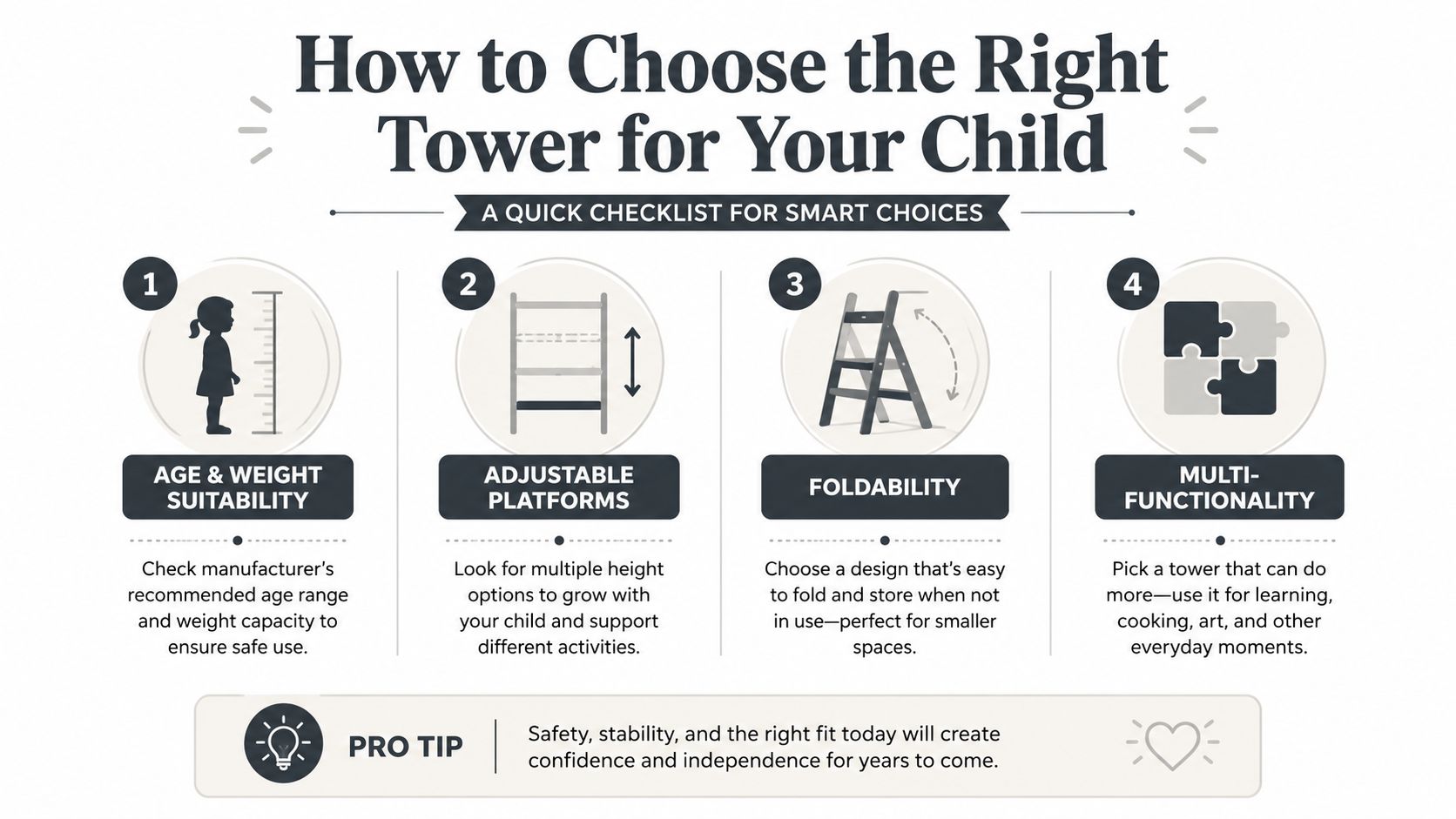
Start with the child, then match the furniture to the room. The right tower for a sturdy 14-month-old in a compact kitchen is not the same as the right tower for a taller preschooler who likes arts and crafts at the counter. Your goal is a tower that fits the child's current size, your floor space, and the tasks your family does.
The fastest way to narrow the options
Measure the counter height, then compare it to the tower's platform settings. You want the child standing high enough to see and reach comfortably without stretching so far that the shoulders rise or the feet drift. If the tower offers multiple platform positions, that's a strong sign it can grow with your child instead of becoming awkward after a short period.
- Age and weight suitability: Check the manufacturer's recommended age range and load rating together, not separately. A strong structure still has to fit the child's motor stage.
- Adjustable platforms: Prefer towers with more than one standing height if your child is still growing quickly. That gives you more control over reach and comfort.
- Foldability: Folding helps in smaller homes, but only if you'll fold it. A compact tower that stays out can be more practical than a foldable one that never gets folded.
- Multi-function designs: Some towers convert into tables, stools, or activity stations. Those can make sense if you need one item to do several jobs, not just climbing support.
Budget should follow the feature you'll use every day
A premium price makes more sense when it buys you adjustability, a stronger frame, or a shape that fits your kitchen well. If you only need a simple helper for a short period, a basic design may be enough. If your child will use it several times a day for meals, washing, and crafts, the stability and adjustability usually matter more than the finish.
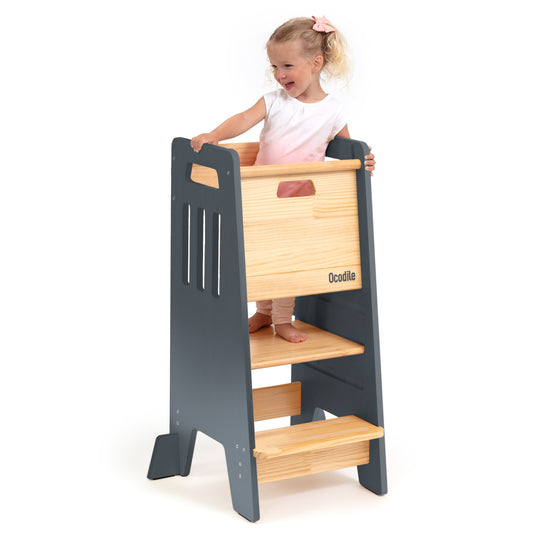
Ocodile's Toddler Standing Tower fits into this category as a Montessori-style kitchen helper, and its adjustable-height standing tower belongs in the same comparison set as the other home-use options families evaluate. The product itself matters less than the spec sheet, so read the size, weight, and platform details before you decide.
A quick self-check before you buy
- Can my child climb in and out with help, without the structure feeling tippy?
- Does the tower fit my kitchen traffic pattern, or will it block daily movement?
- Will I still want this item when the novelty fades and it becomes part of the routine?
Integrating the Tower into Daily Family Routines
The value of a climbing tower shows up after the first week. It stops being a special purchase and becomes the place where your child brushes their hands at the sink, watches dough come together, or stands beside you while you sort vegetables. That everyday use is what makes the tower feel worth the floor space.
Use it for more than cooking
Meal prep is the obvious use, but it isn't the only one. A tower works at the bathroom sink for handwashing, at the craft table for gluing and drawing, and near a window for supervised viewing of rain, birds, or delivery trucks. The developmental benefits shift with the task, fine motor control during pouring, hand-eye coordination during mixing, and confidence when the child can manage a task with less lifting from adults.
The best routines are predictable. If the child knows that “tower time” means washing fruit before snack or standing beside you while you stir, they settle into the activity faster. Repetition also teaches safer habits, like waiting for a hand on the rail before stepping down and keeping both feet planted when something messy is in the bowl.
The tower works best when it becomes part of the house rules, not a novelty item that appears only when someone remembers it.
Make the setup easy to repeat
Keep a small towel nearby, store child-safe tools where the child can see them, and choose one or two regular jobs instead of trying to make every task a tower task. That keeps the routine manageable for adults and clear for children. If the tower is always used the same way, the child learns the pattern sooner and needs fewer verbal reminders.
Window watching deserves a note too. It can be a calm, supervised use case, but it should still follow the same placement rules as kitchen tasks. The tower belongs where the child can observe without being able to reach cords, blinds, or unstable objects.
Common Misconceptions and Safety Myths
A lot of bad advice around towers comes from being too vague. “Always supervise” sounds safe, but it doesn't tell a parent what to do differently when the child already knows how to climb in and out. The better question is whether the child can follow the rules, use the rails, and stay within the tower's intended setup.
Readiness is more than age
Chronological age matters less than motor control and understanding. Some toddlers are ready to use a tower with close supervision earlier than others, while some older children still need a tighter hand on the setup because they rush or lean too far. If a child can't manage the climb slowly and predictably, they're not ready for more independence yet.
Soft isn't automatically safer either. A firm, well-built platform with proper rails is usually more useful than a cushioned setup that still allows poor posture or awkward foot placement. The goal is controlled movement, not a bouncy surface.
Keep maintenance simple and regular
Wipe the tower down often, especially after food tasks. Check joints, screws, edges, and feet for wear, and retire the tower if it becomes loose, damaged, or unstable. A good tower should feel dependable every time you move it, not just on the day it arrives.
The cleanest rule is also the hardest one to ignore. If the tower no longer feels solid enough for a child to step into without hesitation, it's done.
If you're comparing towers, checking materials, or trying to decide which setup fits your kitchen, visit Ocodile and look at the details that matter most, like adjustability, stability, and child-friendly design. The right tower should make daily routines easier, not just look good in a photo, and Ocodile builds for that kind of everyday use.