



The Parent's Guide to the Montessori Climbing Triangle
So, what exactly is a Montessori climbing triangle? It's a simple, wooden A-frame climbing structure designed to let children explore and test their physical limits completely on their own terms. Think of it less as a toy and more as a fundamental tool for development, created to build independence, gross motor skills, and confidence in a safe, child-led way.
The Foundation of Independent Play
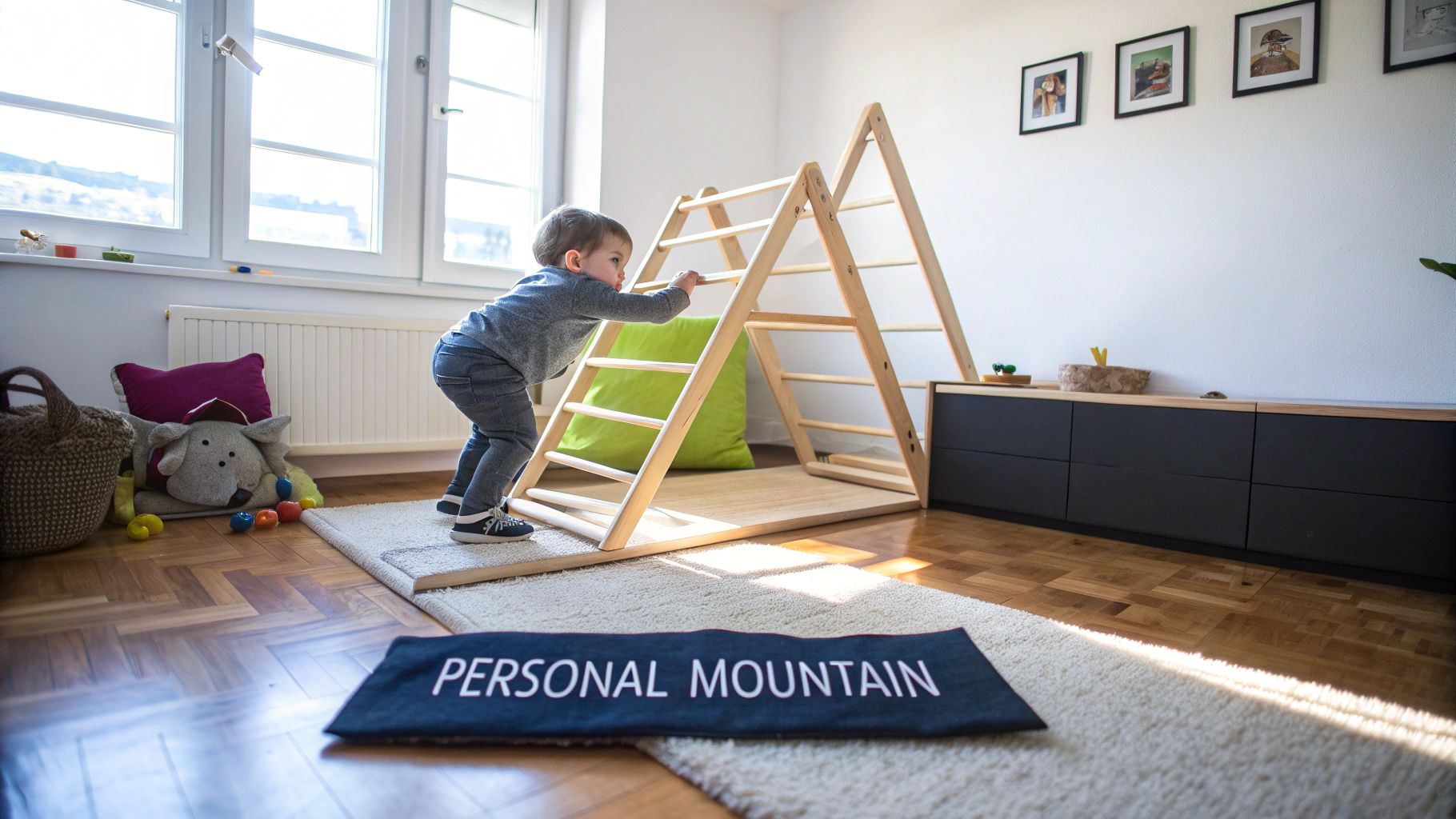
If you have a toddler, you’ve seen it: that powerful, instinctual drive to pull up on the coffee table or scale the side of the sofa. The climbing triangle is designed to channel that exact urge into a productive and secure outlet. It’s your child’s first personal mountain—a challenge they can approach, assess, and conquer all by themselves.
This brilliant structure isn't new. It was actually developed in the early 20th century by Dr. Emmi Pikler, a trailblazing Hungarian pediatrician. Her work was built on the profound belief that children flourish when they have the freedom to move and explore without adults constantly stepping in to "help."
The Pikler and Montessori Connection
While Maria Montessori didn’t design the triangle herself, its philosophy fits perfectly with her own. You'll often hear it called a Pikler Triangle in honor of its creator, but the "Montessori" name has stuck because it so beautifully embodies the method's core ideas:
- Child-Led Learning: The triangle lets your child decide how and when to climb. They learn to listen to their own bodies and understand their limits.
- Developing Independence: By mastering the climb without a helping hand, a child builds a powerful sense of self-reliance and an "I can do it!" attitude.
- Fostering Motor Skills: Gripping the rungs, coordinating arms and legs, and finding their balance are all crucial steps in building gross motor skills.
Dr. Pikler’s insights came from years of careful observation. She argued that unrestricted movement was absolutely essential for healthy development. Her long-term studies backed this up, showing that children who could freely climb and play had 40% fewer broken bones and were healthier overall. You can read more about the research behind free movement on themontessoritwinmama.com.
The true magic of the Montessori climbing triangle is its simplicity. There are no flashing lights or electronic sounds. Its only job is to serve your child's innate drive for development. By giving them this thoughtfully designed tool, you’re not just giving them something to climb—you’re offering a foundation for physical confidence, problem-solving, and lifelong resilience. It’s a truly meaningful investment in their growth.
The Developmental Benefits of a Climbing Triangle
A Montessori climbing triangle is so much more than a simple piece of playroom furniture. Think of it as a dynamic tool, carefully designed to support some of the most critical developmental milestones in your child's early years. The simple act of climbing unlocks a whole cascade of physical, cognitive, and even emotional growth, turning everyday playtime into a powerful learning experience.
The journey starts the moment a tiny hand grips a rung. That simple action strengthens their hands, wrists, and fingers, laying the essential groundwork for fine motor skills they’ll need later for writing, drawing, and buttoning a coat. As they pull themselves up and navigate the structure, they’re engaging their entire body. This builds core strength, improves balance, and refines the gross motor skills that are crucial for walking, running, and jumping. Every single movement is a lesson in coordination and physical self-awareness.
Building Both Body and Brain
But the physical benefits are just the beginning. Every time a child approaches the climbing triangle, they’re also solving complex problems. Deciding where to place a hand or foot, judging the distance to the next rung, and figuring out how to maneuver their body over the peak—these are all mental workouts. This process actively forges new neural pathways in the brain, strengthening their spatial awareness and executive functioning skills.
The climbing triangle is fantastic for fostering gross motor skills and active play, which are key in promoting physical activity and preventing childhood obesity. It gives kids a constructive outlet for all that natural energy, encouraging healthy movement patterns from a very young age.
Dr. Emmi Pikler's pioneering research showed that children using a triangle developed 30% stronger core muscles and a better fine motor grasp. This physical development correlated directly to higher cognitive scores by age three, demonstrating the deep connection between movement and brain growth.
This kind of active engagement has a remarkable impact on motor skill progression. A large-scale parent poll revealed that 78% of families using a Pikler Triangle reported a significant boost in their child's gross motor skills. This included a 45% faster progression from crawling to walking, with many children hitting this milestone around 10 months instead of the typical 12.
Let's break down exactly how this simple structure supports your child's growth.
Key Developmental Skills Supported by the Climbing Triangle
The table below shows how specific actions on the climber translate into crucial developmental wins.
| Developmental Area | How the Climbing Triangle Helps | Example in Action |
|---|---|---|
| Gross Motor Skills | Builds core strength, balance, and coordination through whole-body movement. | A toddler pulling themselves up, balancing on a rung, or carefully climbing over the top. |
| Fine Motor Skills | Strengthens hand, wrist, and finger muscles by gripping the rungs. | A baby firmly grasping a rung to stand, preparing their hands for future writing and drawing. |
| Cognitive Development | Encourages problem-solving, spatial awareness, and planning. | A child figuring out the best route to the top, assessing distances between rungs. |
| Confidence & Self-Esteem | Fosters a sense of accomplishment and self-trust through independent achievement. | The look of pride on a child's face after they reach the peak for the very first time, all on their own. |
| Resilience & Risk-Taking | Teaches children to assess their own limits and recover from small stumbles in a safe space. | A child climbing halfway, deciding that's high enough for today, and safely climbing back down. |
As you can see, it's not just about climbing; it's about building a foundation for a capable, confident, and resilient child.
Fostering Confidence and Resilience
Perhaps the most enduring benefits are psychological. The Montessori climbing triangle is designed for child-led exploration, which means there is no "right" way to use it. When a child masters a new skill—whether it’s pulling up for the first time or climbing all the way over—they do it on their own terms.
This process cultivates a powerful sense of self-confidence and accomplishment. They learn to trust their own bodies and abilities. When they slip and recover, they learn resilience. By conquering a physical challenge they set for themselves, they build an internal belief that says, "I am capable. I can do hard things." This is a foundational lesson that will serve them far beyond the playroom. Our guide to toddler gross motor activities offers more ideas for building these essential skills.
The triangle also provides a safe space for children to practice risk assessment. They naturally learn their own limits, climbing only as high as they feel secure. This independent, hands-on learning fosters a healthy sense of caution and body awareness that is far more effective than a parent constantly saying, "Be careful!"
Guiding Your Child Through Different Ages and Stages
One of the first questions parents ask is, "When should I get a montessori climbing triangle?" The wonderful thing about this piece is how it adapts, growing right alongside your child and meeting them exactly where they are. It’s never about pushing them to the next milestone, but about creating the perfect space for them to discover their own abilities in their own time.
This journey starts much earlier than you might think. The triangle is an incredible support during the critical sensitive period for movement, which Dr. Montessori identified as birth to age four. During this window, gross motor skills can develop at a peak rate—a staggering 200% faster than in later years.
We see this in practice, too. Data from Montessori communities shows that 85% of babies start using the triangle to pull themselves up around 7-8 months. Most go on to master full climbs between 12-18 months, an activity that does wonders for their vestibular system (that's their sense of balance!) and helps prevent tumbles down the road. You can learn more about how this supports early development by exploring insights on child motor skills.
The Infant Stage: 6 to 12 Months
For infants, the climbing triangle is less about climbing and more about discovery. It acts as a sturdy, reliable anchor for them to explore the world in brand-new ways, long before their feet ever leave the ground.
- Tummy Time Gym: Place a soft mat under the triangle and hang some engaging sensory toys or high-contrast cards from the lower rungs. This naturally encourages your baby to look up and reach, building crucial neck and back strength.
- Pulling Up to Stand: Around 6 to 8 months, as your baby gets the hang of sitting and crawling, those rungs are at the perfect height for them to grip and pull themselves up. This is a huge moment in their gross motor development, building leg strength and a whole lot of confidence.
The visual below gives you a good idea of how these early motor skills typically progress.
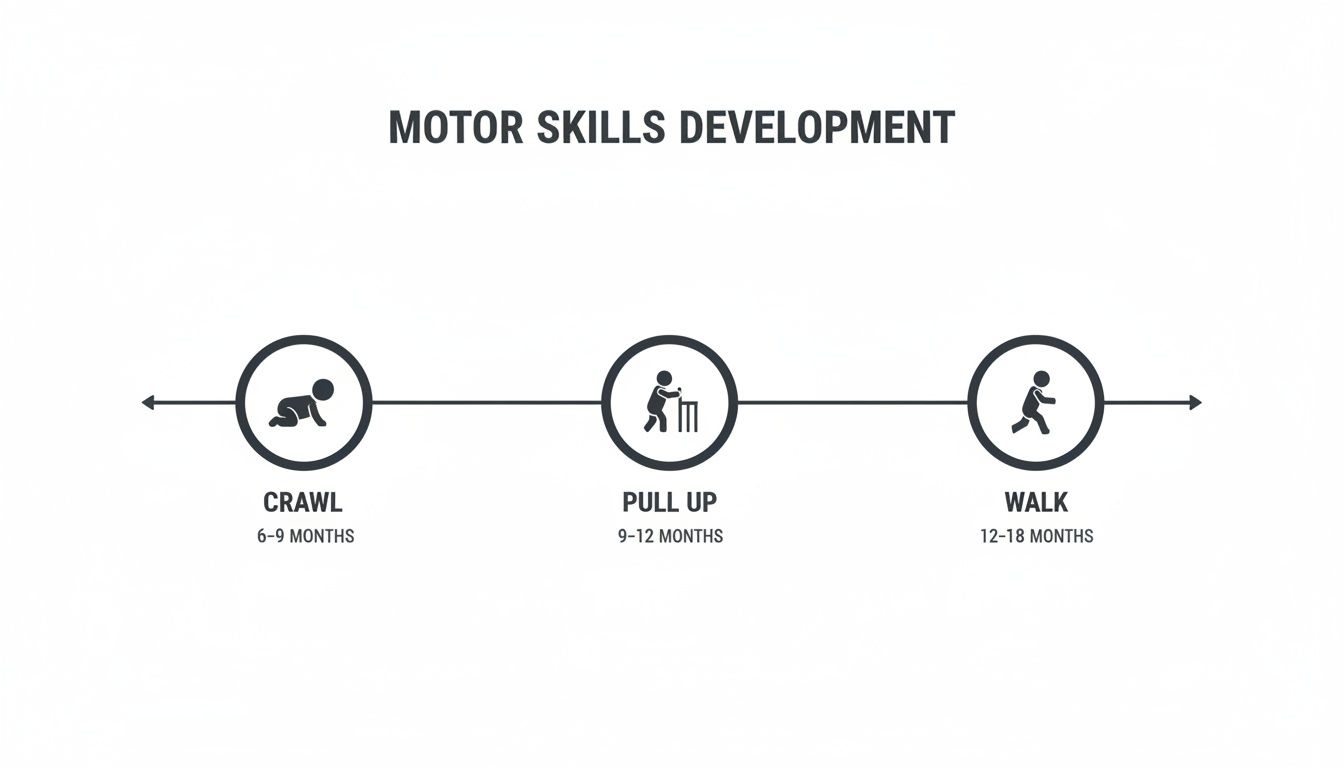
As you can see, pulling up on a structure like a climbing triangle is a natural bridge between crawling and eventually walking on their own.
The Toddler Years: 1 to 3 Years
This is when the magic really happens. As your toddler's confidence and coordination blossom, they'll start interacting with the triangle in a much more dynamic way. They'll begin experimenting, climbing one or two rungs at first, and then, one day, they'll make it all the way to the top.
Your role here is to be a quiet observer. It’s vital to supervise for safety, but try your best to resist the urge to help them or place them on the structure. The real learning happens in that independent struggle. They aren't just building physical muscles; they're building problem-solving skills, resilience, and trust in themselves.
"I stay close and spot him but am careful not to hover. I am always watching him, but I try to remain calm avoiding saying things like 'be careful' or gasping... He has never fallen off the Pikler but he has slipped a bit a few times. If he is slipping I help break the fall but do not completely rescue him." - Parent Insight
This hands-off approach lets a child learn the natural consequences of their movements in a safe space, teaching them to understand their body’s limits.
The Preschool Years: 3 to 5 Years and Beyond
Once your child has conquered the physical challenge of the climb, the triangle transforms yet again. This time, it becomes a launchpad for imagination. It's no longer just a climber; it's anything and everything their mind can dream up.
Imaginative Play Scenarios:
- A Cozy Fort: Drape a blanket over the frame and you’ve got a secret hideout, a quiet reading nook, or a bear's cave.
- An Adventurous Mountain: Suddenly, the triangle is Mount Everest, and your little one is a brave explorer on a grand expedition.
- A Busy Shop: Add a small board across two rungs, and it’s instantly a storefront, a puppet theater, or a ticket counter.
At this stage, the montessori climbing triangle becomes so much more than a tool for physical development. It’s a catalyst for creativity, storytelling, and social play, proving its worth as a long-term investment in your child's whole development.
How to Choose the Right Climbing Triangle for Your Family
Choosing a Montessori climbing triangle feels like a big decision because, well, it is. This isn't just another toy; it's an investment in your child's safety, development, and years of joyful play.
With so many options out there, figuring out what separates a high-quality, long-lasting climber from a wobbly, unreliable one is the key. Let's break down the essential things to look for so you can pick the perfect one for your family with total confidence.
The first thing to look at—and maybe the most important—is the material. The type of wood used says a lot about the triangle's durability and safety.
Hardwoods like solid birch or beech are the gold standard for a reason. They have superior strength and can take a beating, resisting the dings and splintering that come with energetic play. This ensures the frame stays stable and secure for years.
Softer woods, like pine, are often easier on the wallet but can dent more easily and might not hold up as well over time. When you're looking at a product, check for clear descriptions of the wood. It’s one of the best clues to its overall quality. You can dive deeper into the benefits of different woods in our overview of wooden climbing toys.
Decoding Safety Standards
Beyond the wood, safety certifications are your best friend. These aren't just random letters and numbers; they represent serious testing for things like structural integrity, the spacing of the rungs, and the safety of the finishes.
It can feel a bit confusing, so let’s clear up the most important ones you'll see:
- ASTM (American Society for Testing and Materials): This is the one to look for in the United States. ASTM F1148, for example, is a standard for home playground equipment that makes sure things like rung spacing are safe to prevent little bodies from getting stuck.
- EN-71 (European Standard for Toy Safety): This is Europe's equivalent, and it's just as strict. It covers everything from the sturdiness of the structure to making sure there are no harmful chemicals in the paints and finishes.
A triangle that meets these standards has been designed with your child's safety as the top priority. Look for these certifications in the product description—they're a manufacturer’s promise of quality control.
A stable A-frame design is the structural heart of a safe climbing triangle. This geometry provides a wide, sturdy base that resists tipping, even when a child is enthusiastically climbing near the top. Ensure the locking mechanism, especially on foldable models, is robust and easy to secure.
Practical Considerations for Your Home
Once you’ve narrowed down your choices based on material and safety, it's time to think about how the triangle will actually fit into your home and daily life.
Size is a big one. Before you click "buy," grab a tape measure and check the spot where you plan to use it. Remember to leave a good safety perimeter—at least a few feet of clear, soft space on all sides is ideal.
Foldability is another game-changer, especially for families in smaller homes. A foldable Montessori climbing triangle can be tucked away in a closet or against a wall when it's not being used, which is a huge plus for keeping your play space versatile. Just check that the folding mechanism is simple enough for an adult to manage but secure enough that a child can't accidentally collapse it.
Finally, think about the finish. Any paint or sealant should be explicitly labeled as non-toxic, water-based, and child-safe. Little ones love to explore with their mouths, so making sure there are no nasty chemicals like lead or phthalates is non-negotiable.
A smooth, well-sanded finish is also important to prevent splinters and be gentle on little hands and feet. For families thinking about a DIY project, exploring some beginner-friendly woodworking projects can be a great way to learn about ensuring a safe, high-quality build from scratch.
To make things a bit easier, here’s a quick comparison of what to keep an eye on when you're shopping around.
Feature Comparison for Choosing a Climbing Triangle
| Feature | What to Look For | Why It Matters for Safety and Longevity |
|---|---|---|
| Material | Solid hardwoods like birch or beech. Avoid MDF. | Hardwoods offer superior strength and resist dents and splinters, ensuring the frame remains stable for years. |
| Safety Standards | ASTM F1148 (U.S.) or EN-71 (Europe) certification. | These certifications guarantee the product has passed rigorous testing for structural integrity, rung spacing, and chemical safety. |
| Design and Stability | Wide A-frame base and a secure locking mechanism. | A stable base prevents tipping during active play. A robust lock is crucial for foldable models to prevent accidental collapse. |
| Size and Foldability | Dimensions that fit your space with a 3-foot safety perimeter. Foldable design for easy storage. | Proper sizing prevents accidents and ensures enough room for play. Foldability is a practical feature for smaller living areas. |
| Finish | Non-toxic, water-based, lead-free paints and sealants. Smooth, splinter-free surfaces. | Ensures the product is safe for children who may mouth the toy and protects their sensitive skin from splinters. |
By carefully weighing these factors—materials, safety, size, and finish—you can confidently choose a climbing triangle that will become a beloved and beneficial part of your child's world for years to come.
Integrating the Triangle into Your Home Play Space
A Montessori climbing triangle is so much more than a toy—it's a dynamic piece of your child's environment, designed to be explored and reimagined every single day. When you bring one into your home, you're not just adding another plaything; you're creating a cornerstone for creativity and physical growth. The goal is to make it an inviting, safe, and versatile part of their world.
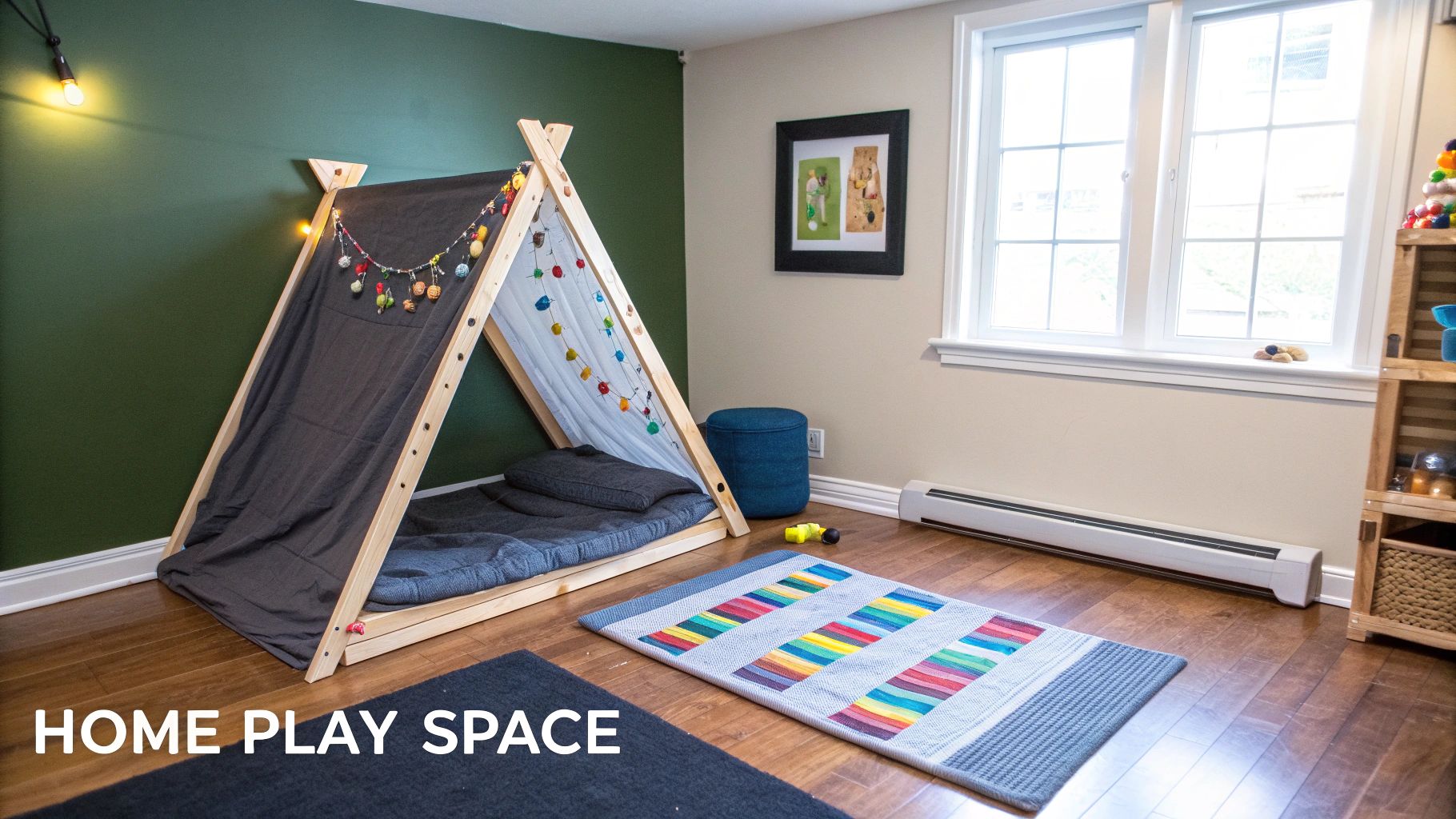
First things first, let's talk location. Think of the triangle as having its own "safety bubble." You’ll want to place it in an area with plenty of open space around it—ideally a few feet clear on all sides—away from hard furniture, walls, or sharp corners. This gives your child the freedom to climb up and down without any risk of bumping into something.
Creating a Safe and Inviting Foundation
Good placement is everything for fostering confident exploration. The surface underneath the triangle is just as important as the space around it.
A soft landing is a must. A thick, non-slip play mat, a plush rug, or even those interlocking foam tiles provide a cushioned surface that can absorb the impact of the occasional tumble. This simple step makes the whole experience feel much safer for a child, encouraging them to test their limits without fear. For a complete guide on setting up a secure play area, check out our tips on how to childproof your home.
Once the area is secure, make the triangle a natural part of the room. It shouldn't feel like a temporary piece of equipment, but a permanent fixture of their play space. When it’s always available, kids are way more likely to engage with it spontaneously, turning to it whenever the urge to move and explore strikes.
Beyond the Climb: Extending Its Play Value
The real genius of the Montessori climbing triangle is how open-ended it is. Sure, its main job is for climbing, but its potential for play is only limited by your child's imagination. By introducing a few simple props, you can unlock endless new possibilities and make sure it stays a favorite for years.
A climbing triangle is a blank canvas for imaginative play. It can become a reading nook, a fort, a tent, a cave, or a bridge to a faraway land, adapting to a child’s developmental needs and creative whims.
Here are a few ideas to get you started:
- Build a Cozy Fort: Just drape a large blanket or sheet over the frame, and you’ve instantly created a secret hideout. Add some pillows and a flashlight, and it becomes the perfect spot for quiet time, reading a book, or sharing secrets.
- Create a Mini Obstacle Course: This is where accessories shine. A reversible ramp/slide attachment turns it into an exciting challenge, encouraging kids to climb up and slide down. You can also place cushions or a small tunnel at the base for a multi-step adventure.
- Hang a Sensory Mobile: For the littlest explorers, the triangle works perfectly as a mobile holder. Hang high-contrast cards, soft toys, or gentle chimes from the lower rungs to engage infants during tummy time, encouraging them to reach out and build that all-important neck strength.
These simple ideas transform the climber from a single-purpose toy into a versatile play hub that supports all kinds of development, from gross motor skills to creative thinking and quiet reflection.
Of course. Here is the rewritten section, crafted to match the human, expert-led style of the provided examples.
Your Questions About the Montessori Climbing Triangle
Even after seeing all the amazing benefits, it's totally normal to have a few more questions. A montessori climbing triangle is a big part of your child’s play space, and you want to feel great about your choice.
To help you get there, we’ve put together answers to the most common questions we hear from parents. Think of this as the final checklist to make sure you have all the info you need.
Is a Montessori Climbing Triangle Really Safe?
This is always the number one question, and for good reason. The short answer is yes—a climbing triangle is one of the safest ways for a child to explore their natural urge to climb, as long as it's well-made and used correctly. Unlike a bookshelf or the kitchen table, it’s actually engineered for this exact purpose.
The safety is built right into the design:
- A solid, wide A-frame base keeps it from tipping over.
- The rungs are spaced just right to prevent a child’s body from getting stuck.
- The gentle angle is just challenging enough for little bodies without being overwhelming.
But the most important safety feature is a bit more philosophical. Children instinctively climb only as high as they feel comfortable. By letting them figure it out on their own, they learn to listen to their bodies, assess risk, and understand their own limits. It’s a far more valuable skill than just hearing, "Don't climb that."
What Is the Difference Between a Pikler and a Montessori Triangle?
You’ll see these two names used all the time, and it can definitely get confusing. The original design is actually the Pikler Triangle, created by a brilliant Hungarian pediatrician named Dr. Emmi Pikler. She designed it to encourage free movement and motor skill development in young children.
So where does "Montessori" come in? The name became attached because the triangle’s purpose fits perfectly with the Montessori method of education.
It encourages child-led learning, independence, and hands-on discovery—all absolute cornerstones of Maria Montessori's philosophy. While she didn't design it herself, it's universally known as a "Montessori-aligned" toy.
So, for all practical purposes, a Pikler Triangle and a Montessori climbing triangle are the exact same thing. The two names simply honor its connection to a pair of the most respected philosophies in early childhood development.
My Child Seems Scared or Uninterested in It
Don't worry, this is completely normal! Some kids hesitate or even ignore the triangle at first, especially if they’re very young or just have a more cautious personality. The number one rule is this: never pressure them or place them on it. The whole point is to build confidence through their own initiative.
If your child isn't immediately climbing, just let the triangle become a familiar, non-threatening piece of furniture in their room. It's an invitation to play, not a demand.
Here are a few gentle ways to spark their interest:
- Model Play: Put a favorite stuffed animal on one of the lowest rungs. See if their curiosity gets the better of them.
- Make it Part of the Room: Sit near it while you read a book or play with other toys. Your calm presence makes the whole area feel safe.
- Use it as a Prop: As we mentioned earlier, you can hang sensory toys from it or drape a blanket over it to create an instant fort.
When your child is ready, they’ll explore. Pushing them can create anxiety and completely undermines the goal of building self-trust. Patience is key here; their timing is always the right timing.
How Do I Care for and Maintain Our Triangle?
One of the best things about a quality wooden climbing triangle is how simple it is to care for. With just a little bit of attention, it can easily last through multiple children.
For day-to-day cleaning, a soft, damp cloth is all you need. For stickier messes, a mild, non-toxic cleaner will do the trick—just be sure to wipe it dry afterward. It’s best to skip the harsh chemical cleaners, which can damage the wood’s finish.
A friendly piece of advice: periodically check and tighten any bolts or screws, especially on a foldable model. A quick check once a month keeps the structure sturdy and secure.
Finally, remember that a wooden montessori climbing triangle is made for indoor use. Keeping it inside protects the wood from moisture and extreme temperatures that could cause it to warp over time. That’s all it takes to keep your triangle ready for years of play.
At Ocodile, we believe in creating environments where children can thrive safely and confidently. Our thoughtfully designed furniture is crafted to support your child's natural development, turning everyday moments into opportunities for growth and connection.
Discover how our child-focused designs can enrich your family's life by exploring our collection at https://ocodile.com.