



Montessori Infant Books: A Complete 2026 Guide
You're sitting on the nursery rug with a three-month-old leaning against a pillow, both hands wrapped around a thick board book. The baby turns one page, stares at a bold shape, then drops the book and reaches for it again. That small exchange is already meaningful. Montessori infant books aren't lessons to complete. They're objects a baby can see, grasp, explore, and revisit.
Table of Contents
- What Montessori Infant Books Actually Are
- Key Features to Look for in a Montessori Baby Book
- Age-Appropriate Books from Newborn to Toddler
- How to Read With Your Infant Without Overdoing It
- Building a Reading-Friendly Montessori Space
- Common Misconceptions About Montessori Baby Books
- A Simple Daily Reading Routine You Can Stick To
What Montessori Infant Books Actually Are
A Montessori infant book is usually a sturdy board book with high-contrast pictures, realistic objects, simple illustrations, and very little text. It might show a face, spoon, dog, or banana rather than a busy fantasy scene. The design meets the child's current abilities instead of asking the baby to sit still and follow an adult script.
This fits the wider Montessori approach of preparing an environment where children can move, choose, and participate. A book belongs beside other reachable materials, not only in an adult's hands. You can read more about that approach in this guide to the Montessori method of teaching.
Practical rule: Choose a book your baby can handle, not one that only looks beautiful on a shelf.
Thick pages withstand grabbing, chewing, and repeated drops. Clear images give the infant something manageable to study, while a single word lets you name what the child is seeing. For books that later support emotional understanding, this resource on building empathy with books offers a useful next step.
Key Features to Look for in a Montessori Baby Book
Start with contrast. For babies in the first year, bold black-and-white patterns, simple geometric shapes, and strong color blocks are easier to notice than pale, crowded artwork. Some Montessori-style sets move from black and white to added red, with red described as recognizable from the third month onward, as shown in this baby Montessori board-book example.

Check the physical design before the artwork:
- Durability: Board pages handle drool and teething better than paper. Cloth is softer and quieter, but may be harder to wipe clean.
- Manageable size: The book should be light enough to lift and broad enough for independent page turning.
- Realistic images: Photographs or simple drawings of familiar objects connect words with daily life.
- Minimal text: A label such as “ball” leaves room for the caregiver's voice and the baby's attention.
Examples such as Talia Levi's Black and White series suit early visual exploration, while My First Book board sets offer more material for older infants. Before buying, ask whether your child can safely grip it, see the image clearly, and return to it without help.
Here's a short visual introduction to choosing and using infant books:
Age-Appropriate Books from Newborn to Toddler
Book needs change as vision, movement, and language develop. Board books generally serve a preliterate audience from newborn to three years old, which makes them a practical format for early exploration, as described in this picture-book guidance.
| Age Stage | Visual Focus | Example Titles |
|---|---|---|
| Birth to 6 months | High contrast, faces, simple shapes | High Contrast, Look Look! |
| 6 to 12 months | Bold color, real objects, animals | First 100 Words, real-photo board books |
| 12 to 24 months | Short narratives, flaps, textures | Dear Zoo, Where Is the Green Sheep? |
During the newborn stage, a baby may study one shape for only a short time. That's fine. From six months onward, photographs of household objects and animals can make naming more relevant because the child encounters similar things around the home.
Toddlers often want participation rather than observation. Flaps, touch-and-feel surfaces, and simple story sequences give their hands a job while their understanding grows. For more ideas as your child moves into toddlerhood, explore Montessori books for toddlers.
How to Read With Your Infant Without Overdoing It
Sit beside your baby so you can share the page, rather than placing the book between you like a presentation. Follow the child's gaze. If they look at a ball, point and say, “That's a ball.” Pause before adding anything else.
Don't insist on finishing the page or the book. Infants often need the adult to notice where attention has gone, and gesture cues can help them look toward a named object during shared reading, according to research on early literacy and language development.
Try this rhythm:
- Name one object. Keep your voice calm and precise.
- Wait. Let the baby reach, stare, mouth, or turn the page.
- Repeat freely. Reading the same pages again isn't a failure.
- Stop when attention fades. A short, child-led exchange is enough.
Evidence about reading and later language outcomes is mixed, so the useful focus is the quality of interaction, not owning a particular style of book. Close the book and offer it back. Dropping or mouthing it is part of learning how books work.
Building a Reading-Friendly Montessori Space
A low, forward-facing shelf can turn three books into a daily invitation. Place it beside a soft mat or floor bed, with covers visible and the books within safe reach. The child can crawl over, choose one, sit, and return it when finished.
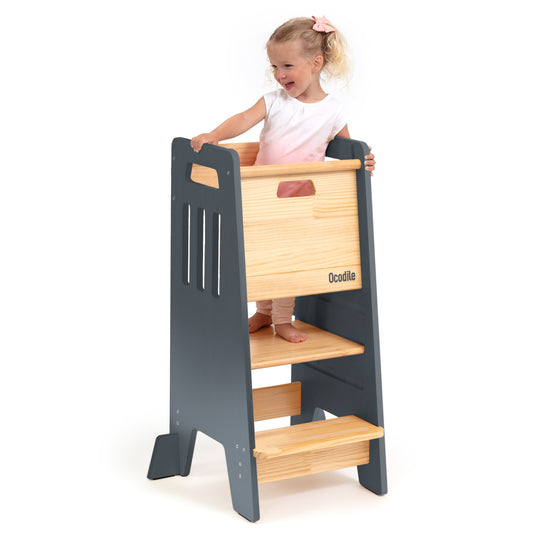
This arrangement connects reading with movement. A toddler who pulls up beside a standing tower may also pause at the shelf to look at a page, blending gross-motor practice with language and attention. The furniture doesn't teach the book. It makes access possible.
An adult bookcase may be attractive, but it's decorative if the child can't see or reach the books. A child-focused Montessori-style bookshelf should favor visibility and safe access over display.
Keep a small selection available and rotate the rest. Four to six titles can offer choice without filling the space with visual noise. Overflow books can stay on a higher adult shelf and return to the child's shelf as interest changes.
Common Misconceptions About Montessori Baby Books
Black-and-white books are useful, but they aren't the only valid Montessori choice. High contrast fits early visual development, while older babies often engage more with simple, colorful pages and clear subjects. Recent eye-tracking research on babies aged two to twelve months found the strongest engagement with high-contrast, colorful, simple pages, while low-contrast pastels and crowded designs held attention least. Pure black and white wasn't among the top performers, and infants sometimes preferred pages adults liked less, as reported by the University of Sussex.
The second mistake is confusing a calm nursery aesthetic with useful content. A vague pastel cloth book may photograph beautifully, but a bright photograph of a spoon gives the child something specific to notice and name.
Use the baby as your guide:
- Looks: Does the child pause on the image?
- Reaches: Can they move toward or touch it?
- Returns: Do they choose the book again?
If the answer is yes, the book is serving the child, regardless of how it looks online.
A Simple Daily Reading Routine You Can Stick To
Reading doesn't need an elaborate lesson. Attach it to moments that already happen, then let the child decide how long the exchange lasts.
- Morning: Offer a high-contrast card or board book during a cuddle.
- After a nap: Place a sturdy photo book nearby for quiet exploration.
- Before sleep: Repeat a familiar cloth or board book as part of the bedtime rhythm.
- On busy days: Name objects in the room if books aren't holding attention.
- On every day: Stop when interest fades, even if several pages remain.
Rotate three to five reachable titles so the shelf feels familiar without becoming overwhelming. A book on a floor bed, beside a low shelf, or near a standing tower becomes more than a reading product. It becomes part of a repeatable ritual in which the child can choose, move, listen, and return.
Ocodile offers child-focused furniture such as front-facing book storage, floor beds, and standing towers that can support safe access and independent routines. Visit Ocodile to explore options for making books part of your child's everyday environment.