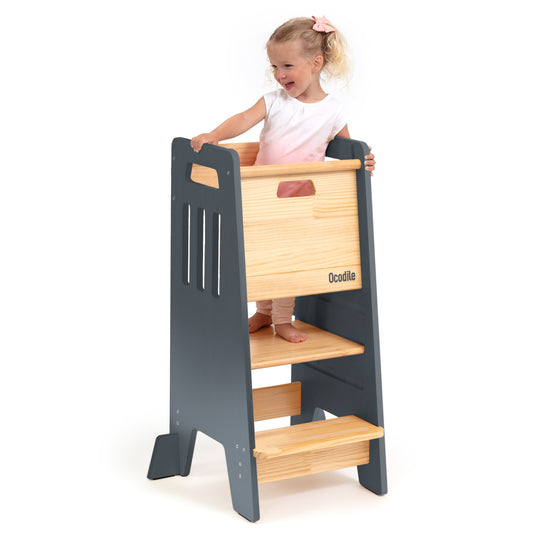


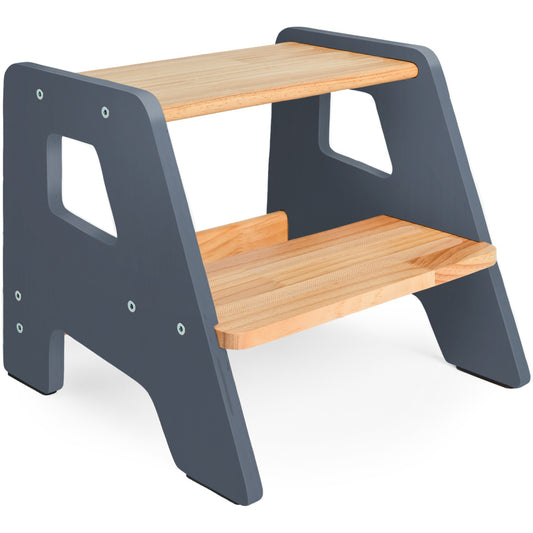


Montessori Stepping Stone: Boost Play & Development
At its core, a Montessori stepping stone is a beautifully simple tool designed to get your child moving, balancing, and thinking creatively. It’s far more than a toy; think of it as a personal, indoor obstacle course that gives kids the power to build physical confidence and sharpen their minds through play they direct themselves.
The Power of Play and Child-Led Discovery

The Montessori method has always championed one big idea: children learn best when they are active drivers of their own education. Stepping stones are the perfect physical example of this philosophy in action. They don’t come with a rulebook or one “right” way to play. Instead, they’re an open invitation for a child to explore, experiment, and solve problems entirely on their own terms.
Picture your child plotting a path of stones across the living room floor. They aren't just mindlessly hopping from one to the next. In their mind, they're calculating distances, testing their balance, and tweaking their movements with every single step. This simple game is a powerful engine for development.
Fostering Foundational Skills
The real magic of a Montessori stepping stone is how it effortlessly blends physical activity with mental growth. The focus is never on getting it perfect, but on the journey of discovery itself. This process nurtures several key abilities all at once:
- Gross Motor Skills: As they step, leap, and hold their balance on different surfaces, kids strengthen their leg muscles, improve core stability, and refine their coordination.
- Proprioception: This is the body's incredible ability to sense its own position in space. Stepping stones help children fine-tune this internal compass, which leads to better coordination and, thankfully, fewer tumbles.
- Problem-Solving: Figuring out which stone to aim for next, how far to stretch, and how to stay steady is a constant, low-stakes puzzle. It’s a fantastic way to build cognitive flexibility.
As Maria Montessori famously said, "Play is the work of the child." Stepping stones truly embody this idea. They turn a simple game into a deeply meaningful activity that builds independence, concentration, and self-confidence.
The Philosophy of Purposeful Play
To really get why these simple objects are so effective, it helps to look at the idea of understanding play-based learning, which is the bedrock of the Montessori approach. The stones are intentionally open-ended. One day they’re rocks for crossing a rushing river; the next, they’re peaks on a mountain trail.
This freedom is key to building a child’s inner drive. When they successfully create and navigate their own challenges, they develop a powerful sense of mastery and a "can-do" attitude that they’ll carry with them far beyond the playroom. Bringing these ideas into your space is a cornerstone of creating a supportive environment. You can explore more ways to foster Montessori education at home to see how every little element can contribute to your child's growth. It's all about turning everyday objects into powerful tools for development.
Unpacking the Developmental Benefits of Stepping Stones
At first glance, a set of Montessori stepping stones might look like a simple collection of colorful blocks. But don't be fooled—it's a powerful developmental toolkit in disguise. Each step, wobble, and successful leap contributes to a whole web of physical, cognitive, and sensory growth. These aren't just toys; they're thoughtfully designed instruments for building a child’s body and mind, all at the same time.
The most obvious benefit is in gross motor development. As your child navigates from one stone to another, they’re constantly firing up their leg muscles, strengthening their core for stability, and fine-tuning their coordination. This isn’t just about building strength. It’s about learning dynamic balance—the ability to stay stable while moving, which is the foundation for everything from running and jumping to playing sports.
Sharpening the Mind Through Movement
Beyond the physical workout, stepping stones are a fantastic exercise for the brain. The simple act of planning a path from one side of the room to the other takes a surprising amount of mental work. A child has to visually scan the layout, judge distances, and make quick decisions about their next move. This is motor planning in its purest form.
This process builds critical thinking skills in a very real, tangible way. If a stone is too far, they learn to adjust their strategy—maybe taking a smaller step to a closer stone first. This sequence of observing, planning, and executing fosters early problem-solving abilities and strengthens their capacity for sequential thought.
The Montessori approach has long understood this deep connection between movement and intellect. A landmark national study on public Montessori programs found that children in these environments show significantly stronger early learning outcomes, scoring higher in areas like memory, executive function, and social understanding.
Engaging the Senses for Deeper Learning
Stepping stones also play a huge role in sensory development, especially for two lesser-known but vital senses: the vestibular and proprioceptive systems.
- Vestibular System: This is our internal balance center, located in the inner ear. It tells us where we are in space. Every time a child steps onto a stone of a different height or angle, they challenge this system, helping it mature and become more refined.
- Proprioceptive System: Think of this as the body's own GPS. It's the internal sense of where our body parts are without having to look. The pressure on their feet and the engagement of muscles send constant feedback to the brain, building a stronger mind-body connection.
As children get the hang of balancing on stepping stones, it’s a good time to think about their footwear. For healthy foot development, you might find it helpful to read a guide to flexible shoes for toddlers.
The table below breaks down how these big ideas translate into concrete, everyday skills. It really shows how playing with stepping stones prepares a child for the world.
Developmental Skills Enhanced by Montessori Stepping Stones
| Developmental Area | Specific Skills Gained | Real-World Application |
|---|---|---|
| Gross Motor Skills | Dynamic balance, leg strength, core stability, coordination | Safely climbing playground equipment, participating in sports, running without frequent falls |
| Cognitive Growth | Motor planning, problem-solving, sequencing, spatial awareness | Following multi-step instructions, navigating crowded spaces, understanding cause and effect |
| Sensory Development | Proprioceptive awareness, vestibular balance, tactile input | Knowing how much force to use when writing, having confidence on uneven surfaces, better body control |
Ultimately, a Montessori stepping stone is so much more than a tool for physical activity. It’s a complete learning experience where every single step helps build a stronger, more capable, and more confident child. This simple toy turns the living room floor into a laboratory for learning about physics, biology, and self-awareness, one joyful hop at a time.
How to Choose the Right Montessori Stepping Stones
Picking out the perfect set of Montessori stepping stones for your child can feel like a big decision, but it’s actually pretty straightforward. You just need to focus on three things: the material, the safety features, and the right size for your little one's age. Getting these right means you’ll end up with a set that’s not just fun, but also perfectly safe and great for their development.
It’s a bit like choosing their first bicycle. For a toddler who's just figuring out how to pedal, you'd get something low to the ground with training wheels. An older, more confident kid needs a bigger bike that's a bit more of a challenge. Stepping stones work on the same principle.
Materials Matter Most
The material of a stepping stone really sets the tone—it affects how long they last, how they look in your home, and what they feel like underfoot. Each option has its own unique vibe.
- Natural Wood: Usually made from birch or pine, wooden stones are the classic choice. They’re sturdy, have a lovely warm texture, and fit right in with the Montessori love for natural materials. Just keep in mind they’re typically for indoor use only.
- Durable Plastic: High-quality, BPA-free plastic stones are great because they're lightweight, a breeze to clean, and can often be used inside or out. They also tend to come in bright colors, which adds a fun color-matching element to playtime.
- Eco-Friendly Cork: Cork is a fantastic, sustainable option. It's surprisingly lightweight, naturally non-slip, and soft underfoot. This makes it a really gentle choice for both little feet and your floors.
While you're thinking about materials, it's also a good time to consider other gross motor equipment. Many parents find that adding things like wooden climbing toys can create a richer, more dynamic play environment.
Safety First, Always
Nothing is more important than your child’s safety. When you’re looking at a set of stepping stones, keep an eye out for specific features that are designed to minimize risk and make playtime worry-free. A well-made set will always prioritize stability and non-toxic materials.
A truly great educational toy is one a child can use confidently and independently. Safety features aren't just about preventing accidents; they're about empowering a child to explore without fear. That’s the real heart of self-directed learning.
Pay close attention to these crucial safety details:
- Non-Slip Base: This is a big one. Look for stones that have a rubber or silicone grip on the bottom to keep them from sliding on smooth floors like hardwood or tile.
- Rounded Edges: Sharp corners are a no-go. Quality stones will have smooth, rounded edges to protect your child from bumps and scrapes.
- Non-Toxic Finishes: Make sure the paint and sealants are child-safe and non-toxic. Certifications like ASTM or EN71 compliance are a good sign, as they mean the product has been properly tested for safety.
Matching Size and Design to Your Child
The size, height, and shape of the stones should match your child's current abilities. The whole point is to offer a challenge they can actually achieve, which is what builds their confidence one step at a time.
This infographic breaks down how these simple tools support key developmental milestones.
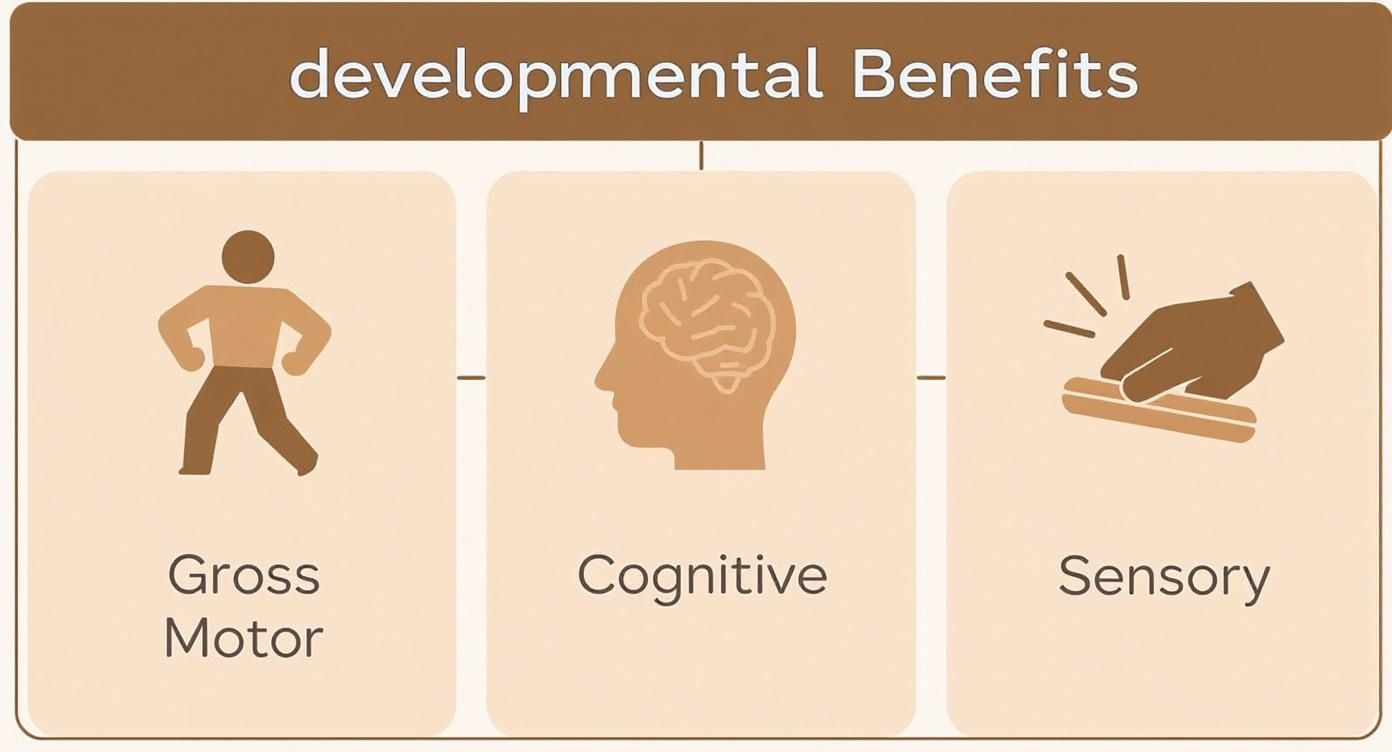
As you can see, they do a lot more than just build balance. They get kids thinking, planning, and processing sensory information all at once.
- For Toddlers (18 months - 3 years): Start with low, wide stones placed close together. This gives new walkers a stable base to practice their balance without a big risk of falling.
- For Preschoolers (3 - 5 years): You can start to introduce stones with different heights and smaller surfaces. This encourages them to think more about their movements, adjust their balance, and solve the problem of how to get from one to the next.
By keeping the material, safety, and age-appropriateness in mind, you can confidently choose a Montessori stepping stone set that will bring hours of joyful, skill-building play into your home.
Creating a Safe and Engaging Play Space at Home
Bringing a set of Montessori stepping stones into your home is just the first part of the equation. The real magic happens when you create the right environment for them. A "prepared" space is a core Montessori idea, and it's all about letting kids explore freely, safely, and with their full attention.
Your goal is to build a "yes" space. This is a place where you don't have to hover or say "no," because the environment itself is set up for safe, creative play.
Think of it like setting up a mini-gym in your living room. You wouldn't put a balance beam next to a coffee table with sharp corners, right? The same logic applies here. The most important thing is to create an open, clutter-free zone so your child has plenty of room to move, balance, and yes, even stumble without getting hurt.
Establishing the Foundation for Safe Play
The surface your child plays on is just as important as the stones themselves. Safety really starts from the ground up, and the right flooring can be the difference between a small wobble and a big bump.
- Ideal Surfaces: Low-pile carpet, foam play mats, or a big area rug are your best friends. They have just enough cushion to soften a tumble but are firm enough to keep the stones stable.
- Surfaces to Avoid: Tile, laminate, or polished hardwood floors can be slippery. Even stones with non-slip grips can shift unexpectedly on these surfaces. Your best bet is to lay down a rug or mat before play starts.
Once the floor is sorted, do a quick scan of the area. Move furniture with sharp edges out of the way and clear any stray toys or tripping hazards. When the space is truly prepared, your child can get completely lost in their activity, which is fantastic for building both their concentration and confidence.
For a deeper dive into making your entire home a safer playground for little ones, check out our guide on how to childproof your home.
Inspiring Creative and Purposeful Play
With your safe space ready, it's time for the fun to begin. When you first introduce the stepping stones, let your child's curiosity lead the way. It’s best to start simple and then add more complexity as their skills and confidence blossom. This follows the same child-led principles that are making Montessori so popular.
In fact, the demand for this kind of learning is growing fast. The United States is home to around 4,000 Montessori programs, which is over 18% of the world's total. Even public Montessori schools in the US have doubled in just the last 15 years. It's a clear sign that more parents are embracing this hands-on, child-centered approach.
A Montessori stepping stone path is a blank canvas for a child's imagination. Our role as parents isn't to direct the play, but to offer invitations that spark their creativity and encourage them to solve problems independently.
Start by laying the stones in a simple, straight line, placed close together. Once your child has that down, you can introduce new layouts. Try a winding path, a big circle, or a zigzag pattern. The trick is to watch what your child can do and then offer a challenge that’s just a little bit tricky, but totally achievable.
You can also toss in some imaginative prompts to get the creative juices flowing. Simple phrases can turn a basic path into a grand adventure:
- "Can you cross the rocky river without falling in?"
- "Let’s hop along the volcano path before the lava comes!"
- "Follow the magic trail to find the hidden treasure!"
By setting up a safe foundation and offering these little sparks of creativity, you turn a simple set of stones into a world of developmental fun, right in your own living room.
Creative Games and Activities for Your Stepping Stones
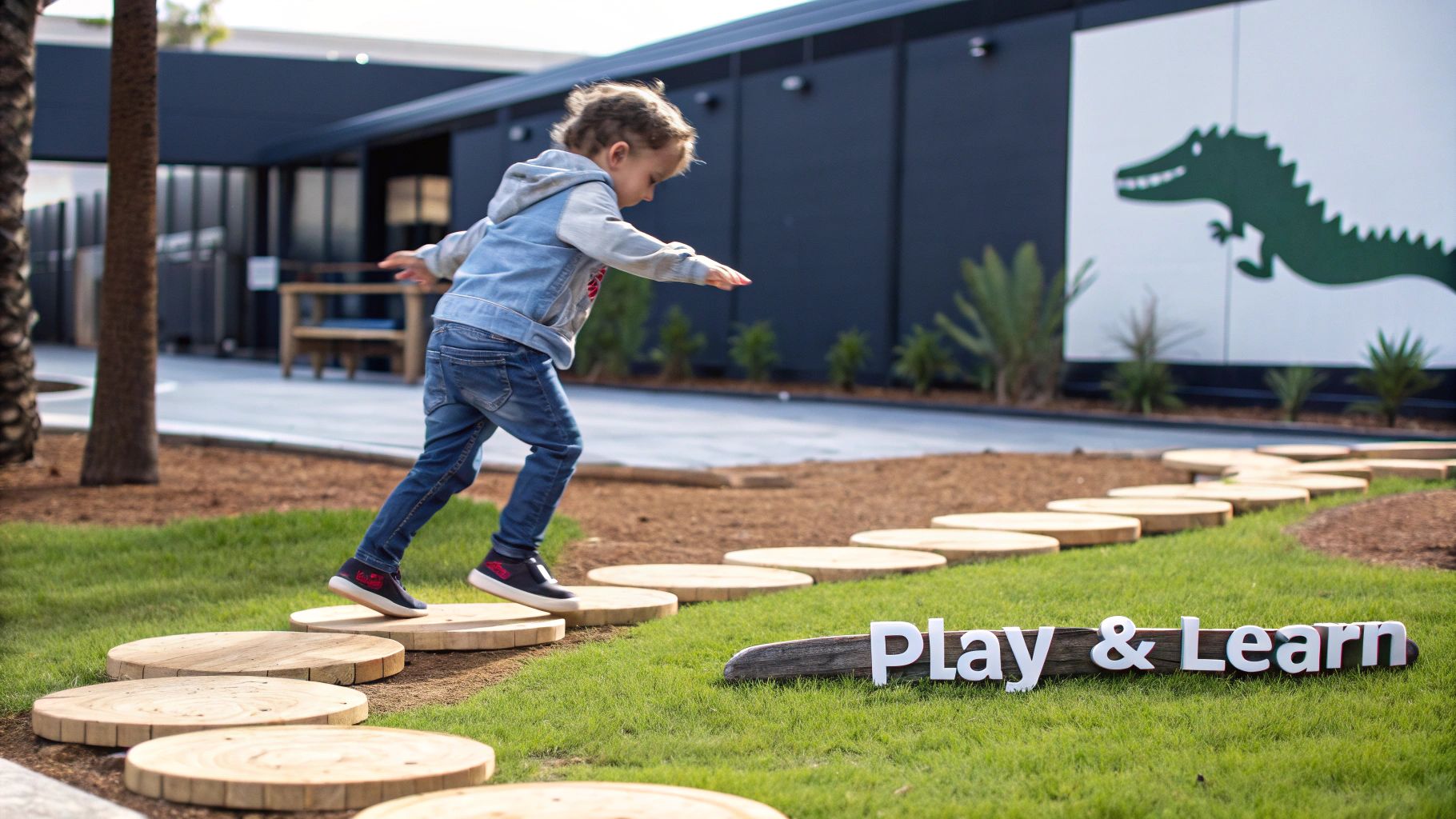
Once your child gets the hang of walking across a simple path, a whole new world of play opens up. A Montessori stepping stone set is so much more than a balance tool; it’s a launchpad for imagination, problem-solving, and a whole lot of fun. The real magic happens when the stones become part of a bigger game.
Moving beyond a simple A-to-B line keeps things fresh and exciting. When you add new rules, goals, or a bit of pretend play, you can keep your child hooked for hours while also sharpening specific skills. The stones transform from a physical toy into an experience that builds up both body and mind.
The Floor is Lava Classic Edition
This timeless game was practically made for stepping stones. It’s an amazing way to get kids thinking on their feet and planning their moves. The rule is simple: the floor is hot lava, and the stones are the only safe place to be.
Just scatter the stones across the room, making sure the gaps are a little tricky but still doable for your child. The goal is to get from one side to the other without touching the “lava.” This game is brilliant for developing dynamic balance and spatial awareness, as your child has to map out a route and land each step just right.
Color and Number Hop
Why not mix a little cognitive practice into the physical fun? If you have different colored stones, you can call out a color and have your child hop only on those stones. It’s a simple game that really helps with color recognition.
You can do the same thing with numbers. Just pop a number on each stone with a bit of tape or chalk, then call out a sequence for them to follow. This is great for number identification and sequencing, turning a physical challenge into a fun brain game.
- Skill Focus: Color recognition, number identification, sequencing, and listening skills.
- Adaptation for Older Kids: Make it a bit tougher by calling out simple math problems, like "hop to stone number 2+1."
Balance Beam Challenge
For this one, line the stones up in a perfectly straight row, placing them close together to create a makeshift balance beam. The challenge is to walk from the first stone to the last without a single wobble or step off. It takes serious focus and control.
This setup really hones their proprioceptive sense—that internal compass that helps them understand where their body is in space. To up the difficulty, try having them walk it backward or balance a small beanbag on their head.
When children get lost in focused, challenging play, they build more than just physical skills. They’re building concentration, resilience, and that deep sense of “I did it!” that’s so crucial for confidence.
This is the kind of purposeful play at the heart of the Montessori method. It’s proof that you don’t need fancy, complicated toys for deep learning—just a simple invitation to explore a skill in a new way.
Obstacle Course Adventures
This is where stepping stones really get to shine as part of a team. Mix them in with other gross motor toys to create an awesome obstacle course that gets the whole body moving.
- Start with a Crawl: Set up a play tunnel to get things started.
- Navigate the Path: Right after the tunnel, lay out a winding path of your Montessori stepping stones.
- Climb the Mountain: Follow the stones with a Pikler triangle or a small climber for a vertical challenge.
- Finish with a Slide: If you have one, a small slide at the end is the perfect reward for finishing the course.
Building an obstacle course doesn't just improve strength and coordination; it also teaches kids about sequencing and following multi-step directions. They have to problem-solve as they figure out how to tackle each station, making it a powerful developmental activity cleverly disguised as pure fun.
A Few Questions You Might Have About Stepping Stones
As you get ready to bring a stepping stone set into your home, a few practical questions are bound to pop up. It’s completely normal! We’ve put together some straightforward answers to the most common things parents ask, so you can feel totally confident about adding this wonderful tool to your child's world.
We'll cover everything from the right age to start to how many stones you actually need, making sure you have all the info to pick the perfect set for your family.
When Can My Child Start Using Stepping Stones?
The sweet spot for introducing stepping stones is right when your toddler becomes a confident, stable walker. For most little ones, this happens somewhere around 18 to 24 months. But remember, it’s less about a specific age and more about their personal readiness. You'll know they're there when they can cruise around without many tumbles and start showing an interest in climbing over things.
When you first introduce them, start simple. Place low, wide stones very close together on a soft surface, like a rug. This initial setup is key for building their confidence, letting them master the basic up-and-down motion before you make things a bit more challenging.
How Many Stepping Stones Should I Get?
For most homes, a set of 5 to 8 stones is the perfect starting point. That’s enough to create all sorts of engaging paths—think straight lines, zigzags, or circles—without overwhelming your play space. A set this size is incredibly versatile and allows for plenty of games and activities.
Of course, you can always add more later as your child gets older or if you want to build more elaborate obstacle courses. The right number really just depends on your play area and how you imagine using them.
Remember, the goal isn't just to have the most stones. It's about creating meaningful challenges. A smaller, well-placed set that encourages thoughtful movement is far more valuable than a large, overwhelming one.
Are Stepping Stones Safe for Outdoor Use?
This is a great question, and the answer comes down to one thing: the material. It is absolutely crucial to check what the manufacturer recommends before taking any set outside.
- Plastic Sets: High-quality, UV-resistant plastic stones are often designed for both indoor and outdoor play. They’ll hold up well on grass, but it’s still a good idea to bring them inside for storage to keep them in great shape.
- Wooden or Cork Sets: These materials are almost always intended for indoor use only. Things like moisture, direct sunlight, and big temperature swings can cause wood to warp, crack, or splinter, while cork can degrade over time.
Always stick to the recommended use to keep the stones safe and durable. That way, they’ll be a secure part of your child’s playtime for years to come.
How Are Stepping Stones Different From a Balance Beam?
While they both look like balance toys, they actually build very different—but complementary—skills. A balance beam is fantastic for developing linear balance. It challenges a child to keep their stability while moving forward in a straight, predictable line. It's all about controlled, forward momentum.
Stepping stones, on the other hand, are all about dynamic balance and motor planning. Each step is a new problem to solve. The child has to constantly adjust to a different height, a new distance, and a varied surface area. This process of judging distance, shifting weight, and correcting wobbles is what sharpens their proprioception, challenging the brain and body to work together in a much more complex way. Think of it like this: a balance beam is a straight path, but stepping stones are a puzzle to solve with every single move.
At Ocodile, we believe in creating tools that are not only fun but also foundational for your child's growth. Our thoughtfully designed products turn your home into a safe and inspiring environment for exploration.
Discover how Ocodile can support your child's developmental journey at ocodile.com