


A Parent's Guide to Non Toxic Foam Play Mats
A non-toxic foam play mat is much more than just a soft spot on the floor. It’s a cushioned, worry-free surface made from materials that have been carefully tested to make sure they're free of harmful chemicals. Think of it as the foundation for a safe play area, supporting everything from your baby's first tummy time wiggles to their wobbly first steps—all without exposure to nasty stuff like BPA, phthalates, or lead.
Creating a Safe Foundation for Playtime
Choosing the right play mat isn’t just about picking a cute color or pattern. It's about creating a truly secure environment where your child can explore, learn, and grow. For parents, that peace of mind comes from knowing the surface their little one spends hours on every day is genuinely safe. This guide is here to demystify what "non-toxic" really means, helping you see past the marketing jargon and focus on what matters: verified materials and real safety standards.
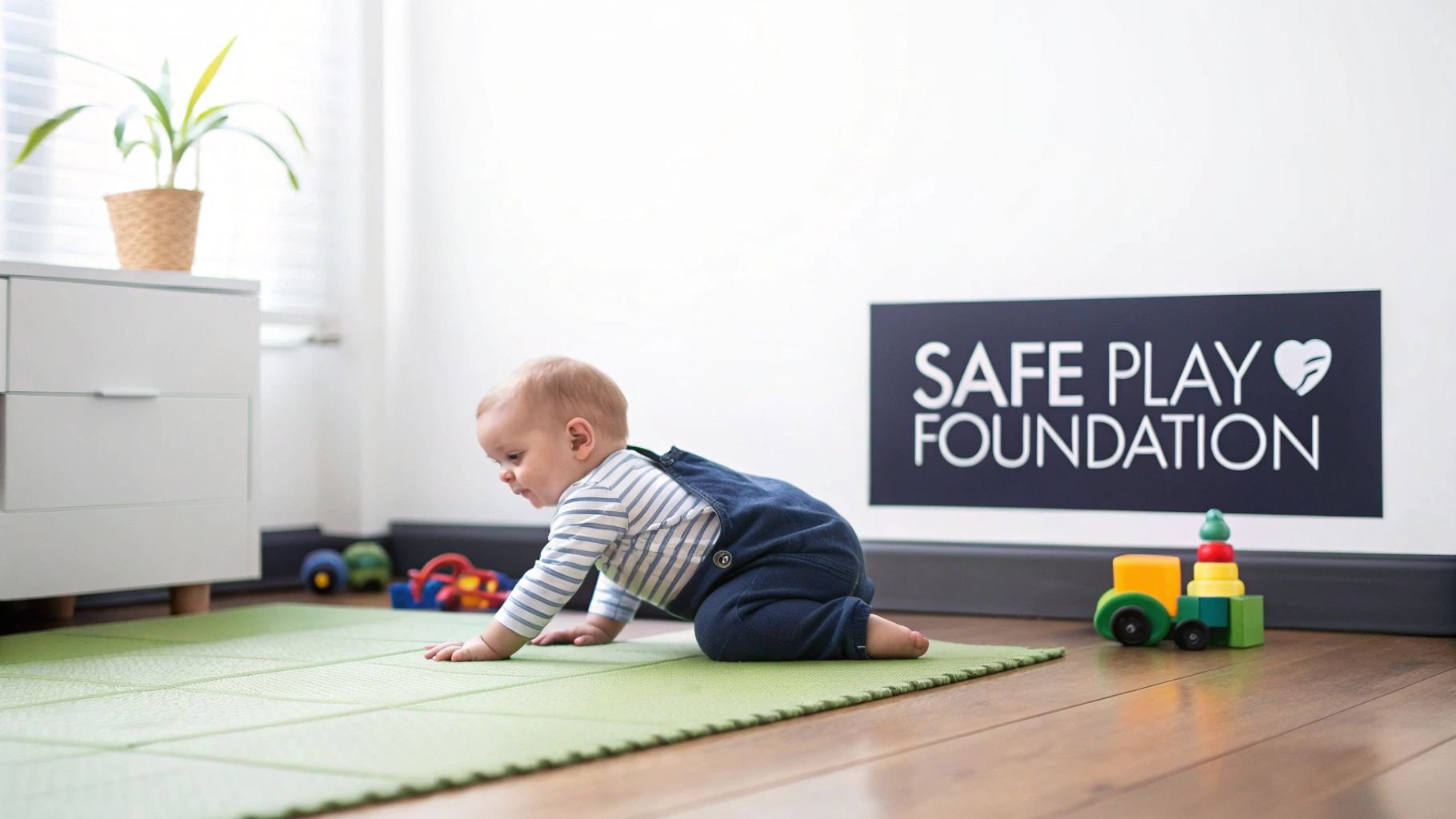
This shift toward safer baby products isn’t just a passing trend; it's a global movement. The baby play mat market was valued at USD 1.4 billion in 2025 and is expected to climb to USD 2.3 billion by 2035. What’s driving this? Parents. One survey found that a whopping 82% of parents insist on BPA-free and non-toxic materials before they even consider buying a product.
Why a Safe Play Mat Matters
A high-quality mat essentially becomes your child's first playground. It’s where they build neck strength during tummy time, figure out how to roll over, and eventually take those first triumphant steps. A non-toxic mat ensures this critical developmental space is a hazard-free zone.
Here’s what a truly safe mat brings to the table:
- A Chemical-Free Zone: It protects your baby's sensitive skin and developing body from harmful substances.
- Impact Absorption: It cushions the inevitable tumbles and falls, reducing the risk of bumps and bruises on hard floors.
- Hygienic Surface: It should have a non-porous, easy-to-clean surface that prevents germs and allergens from building up.
- Sensory Stimulation: A good mat offers a comfortable and engaging texture for little hands and feet to explore.
By prioritizing a certified non toxic foam play mat, you're setting up a prepared environment that aligns perfectly with Montessori principles. You're fostering independence and safe, unstructured play right from the start.
Choosing the right infant foam floor mats is one of the first and most important steps in building this nurturing space. To make it easier, here's a quick checklist summarizing the key safety features to look for before you buy.
Quick Safety Checklist for Non Toxic Play Mats
This table breaks down the most critical features to check for when you're shopping for a foam play mat. Keeping these points in mind will help you choose a product that's truly safe for your little one.
| Safety Feature | What to Look For | Why It Matters |
|---|---|---|
| Material | 100% EVA foam, natural rubber, or organic cotton. | These materials are known for being free from harsh chemicals like BPA, phthalates, and PVC. |
| Certifications | Look for ASTM F963-17, CPSIA, and EN-71 certifications. | These are official standards that verify the product has been tested for toxins and physical safety hazards. |
| Thickness | At least 0.5 inches (1.2 cm) thick. | Provides adequate cushioning to protect against bumps and falls on hard flooring like wood or tile. |
| Surface | A non-porous, waterproof, and wipeable surface. | Makes cleaning up spills and messes simple, preventing the growth of bacteria and mold. |
| Construction | Large, single-piece mats or tiles that lock together tightly. | Small, loose pieces can be a choking hazard for babies and toddlers who put everything in their mouths. |
Ultimately, a mat that ticks all these boxes gives you the confidence to let your child explore freely, knowing their little world is as safe as it is fun.
What Your Play Mat Is Actually Made Of
Figuring out what goes into a "non-toxic" foam play mat can feel like a chemistry lesson, but it’s actually pretty straightforward once you know what to look for.
Think of foam materials like different kinds of running shoes. Some are built for soft, cloud-like cushioning, while others offer firm support, and a few are designed for rugged, all-terrain durability. Each serves a purpose, and knowing the difference helps you pick the perfect fit for your family.
The most common materials you’ll run into are EVA, PE, and XPE foam. Reputable brands stick to these because they hit that sweet spot of safety, comfort, and performance—all without the nasty chemicals found in older plastics. Getting familiar with these is the first step to confidently reading a product label and knowing exactly what you're bringing into your home.
This push for safer materials is changing the entire baby product industry. As parents get savvier about developmental health and toxicity risks, the demand for non-toxic foam play mats is through the roof. We're seeing a clear shift away from materials like PVC, which was once common but is now known for leaching chemicals, toward safer bets like EVA and PE.
In fact, foam mats now dominate the market with a 35% share, prized for their versatility in everything from tummy time to toddler tumbles. You can dig deeper into the data with this baby play mat trends analysis on deepmarketinsights.com.
Comparing Common Foam Play Mat Materials
To make things easier, let's break down the most common foams side-by-side. This quick comparison should help you spot the right material for your needs when you're shopping.
| Material | Key Benefits | Potential Concerns | Best For |
|---|---|---|---|
| EVA | Very soft, great shock absorption, lightweight. | Can be less durable than XPE; may have a slight odor. | Puzzle mats, tummy time, and cushioning falls for new crawlers. |
| PE | Lightweight, water-resistant, durable, affordable. | Firmer than EVA; not as soft for tumbles. | Folding or roll-up mats that need to be portable and easy to clean. |
| XPE | Premium, very durable, waterproof, tear-resistant. | More expensive than EVA or PE. | High-traffic play areas, long-term use, and one-piece, reversible mats. |
| PVC | Inexpensive, waterproof, easy to clean. | Often contains phthalates and other harmful additives. | Generally not recommended for children's play mats. |
Ultimately, sticking with EVA, PE, or XPE is the safest bet. Each one offers a reliable, non-toxic foundation for your child's play space.
The Safe and Recommended Foams
Let's dive a little deeper into the top three choices you'll find in high-quality, non-toxic foam play mats.
-
EVA (Ethylene-Vinyl Acetate): This is the gold standard for most puzzle-style mats and many one-piece versions, too. It's wonderfully soft and flexible with excellent shock absorption, making it perfect for cushioning those inevitable tumbles. Think of it as the memory foam mattress of the play mat world.
-
PE (Polyethylene): Often used in roll-up or folding mats, PE foam is super lightweight and water-resistant. It’s a bit firmer than EVA but is known for being extremely durable and a breeze to clean.
-
XPE (Cross-linked Polyethylene): This is basically the premium, upgraded version of PE foam. It has a finer, smoother cell structure, which makes it even more durable, waterproof, and resistant to tearing. It strikes a fantastic balance between soft cushioning and firm support.
As you consider the materials for your play mat, it’s helpful to think about them in the broader context of other non toxic flooring options you might choose for your home.
The One Material to Avoid: PVC
If there's one material you should consistently steer clear of, it’s PVC (Polyvinyl Chloride), also known as vinyl.
Sure, it’s cheap and durable, but that flexibility usually comes from chemical additives called phthalates. These plasticizers can leach out over time and have been linked to a number of health concerns, which is the last thing you want in a product your baby is lying on.
The real problem with PVC isn’t the plastic itself, but the chemical softeners needed to make it work as a play mat. Choosing materials like EVA or XPE completely sidesteps this risk, since they're naturally soft and flexible without needing those additives.
By sticking to mats made from EVA, PE, or XPE foam, you're choosing materials designed with your child's safety as the top priority. This gives them a secure, healthy space to play, explore, and just be a kid.
Decoding Safety Certifications and Labels
Trying to find a truly non toxic foam play mat can feel like you're staring at a bowl of alphabet soup. All those acronyms and labels can be pretty confusing.
Think of these certifications as a safety report card for your mat. They aren't just marketing fluff from the brand. Instead, they're independent, third-party proof that the product has gone through some serious testing to meet strict safety standards.
When you spot one of these labels, it's a good sign. It means the mat has been checked for everything from nasty chemicals and heavy metals to physical risks, like whether small parts could become a choking hazard. Getting to know them is your best defense against picking a mat that only claims to be safe.
The Key Safety Report Cards
The most trustworthy certifications are like a global language for product safety. Even though the names sound technical, their goal is simple: making sure things are safe enough for our kids.
Here are the big ones you'll want to look for:
- CPSIA (Consumer Product Safety Improvement Act): This one's the law in the U.S. If a product is sold in the States, it must meet CPSIA standards, which include testing for lead, phthalates, and other harmful substances.
- ASTM F963: This is the nitty-gritty toy safety standard in the U.S. It gets into the physical and mechanical details, making sure the mat doesn't have sharp edges or tiny parts that could break off.
- EN 71: This is the European equivalent, and honestly, it’s one of the toughest standards out there. It covers a huge range of chemicals, flammability, and physical safety, often going a step beyond what U.S. regulations require.
This diagram gives a great visual breakdown of the common materials you'll find and what to look out for.
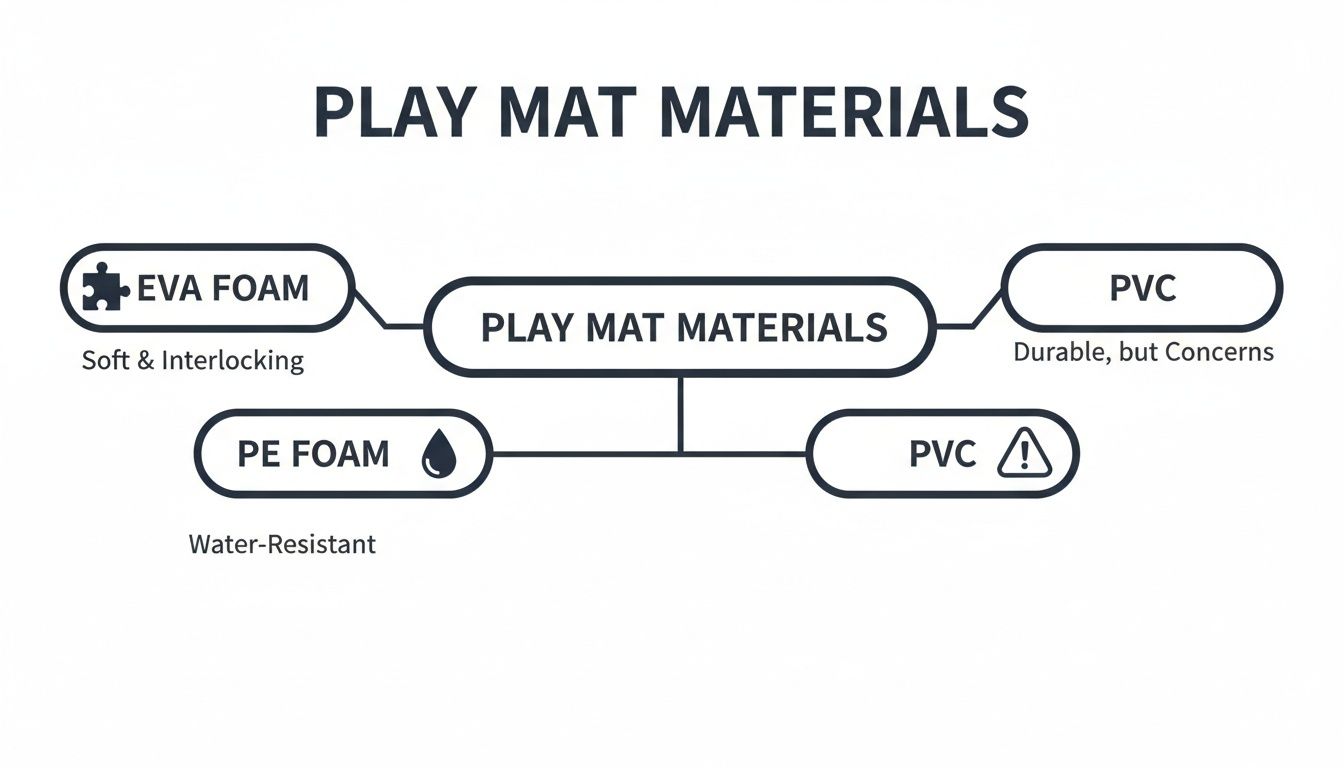
As you can see, it clearly lays out why materials like EVA and PE foam are generally preferred, while PVC gets a red flag because of the additives it often contains.
Understanding Common Labels
On top of the official certifications, you'll see a lot of "free of" claims on packaging. These are helpful, but it's good to know exactly what they mean. It's a bit like learning how to approach reading labels like GOTS for clothing—a little knowledge empowers you to make much smarter decisions.
- BPA-Free: This just confirms the mat doesn't contain Bisphenol-A, a chemical used to make certain plastics.
- Phthalate-Free: A big one, especially for PVC products. It means the mat is free from the chemicals used to make plastic soft and flexible.
- Formamide-Free: This tells you the foam was made without formamide, a substance sometimes used to give foam its soft, squishy feel.
Parents are catching on, and the demand for verified safe products has completely changed the game. North America is leading the charge, making up a whopping USD 630 million of the global baby play mat market in 2024. This boom is all thanks to parents who prioritize safety, pushing non-toxic EVA foam to capture over 40% of the entire global market.
Here's the bottom line: while a "BPA-free" label is a decent start, it's not the whole story. A comprehensive certification like EN 71 or CPSIA gives you a much higher level of confidence because they test for a whole spectrum of potential problems, not just a single chemical.
For families who want to go even further, it's worth taking some time to learn more about GREENGUARD GOLD Certified products. These are tested for thousands of chemical emissions to ensure they don't pollute the air inside your home.
How to Choose the Right Mat for Your Home
Alright, now that you’re armed with the ins and outs of materials and safety certifications, you can start shopping with confidence. Choosing the right non toxic foam play mat isn’t about finding one single “best” mat—it's about finding the perfect fit for your family and your space.
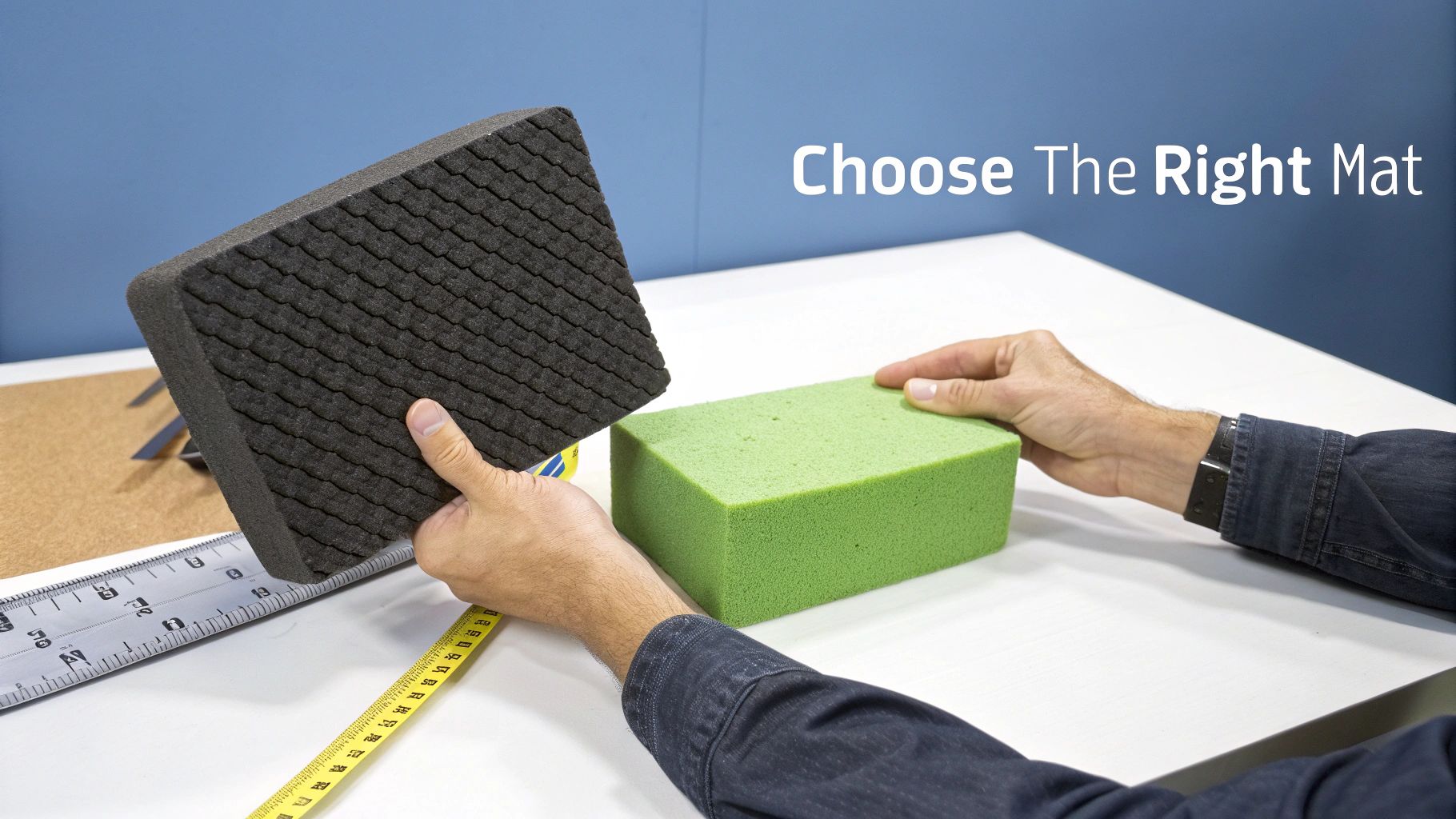
This really comes down to three things: size, thickness, and design. Each one plays a big part in how the mat works for you day-to-day, whether it’s cushioning wobbly first steps or just blending into your living room decor.
Getting the Size and Thickness Just Right
The right dimensions depend completely on your child's age and how much room you have. A mat that’s too small will feel limiting, but one that's too big can totally take over a room.
-
For Babies (0-12 months): A standard 4x6 foot mat is usually perfect for tummy time and those first scoots and crawls. The most important thing here is thickness. You'll want a mat that's at least 0.5 inches (about 1.2 cm) thick to give plenty of cushion while they’re learning to roll and sit up.
-
For Toddlers (1-3 years): Once they're on the move, toddlers need more space to explore. This is where a larger mat or interlocking tiles really shine, as you can cover a big chunk of the playroom floor. For this energetic stage, a thickness of up to 0.8 inches (2 cm) provides extra protection for all that jumping and the inevitable tumbles, especially on hard floors like tile.
A common mistake is going too thin. It might look okay, but a flimsy mat just won’t have the shock absorption needed to protect little heads and knees during those crucial years of movement.
Interlocking Tiles vs. One-Piece Mats
The style of mat you choose affects everything from setup and cleaning to how you store it. There are two main options, and each has its own clear benefits.
Interlocking Tiles: Think of these as giant, soft puzzle pieces you can arrange to fit any room. They are incredibly versatile. You can create a custom-sized play area and even add more tiles as your child grows. Plus, if one tile gets stained or damaged, you can just swap it out instead of replacing the whole thing.
One-Piece Mats: These are large, single mats that roll or fold up, making them super easy to store. The biggest win here is the seamless surface. There are no cracks or crevices for crumbs and spills to hide in, which makes cleanup a breeze. They're a fantastic choice for smaller homes where the play area has to disappear at the end of the day.
You can discover more about different foam play mat styles to figure out which one is best for your family.
Ultimately, the choice comes down to flexibility versus convenience. If you want a surface you can customize and expand, tiles are your best bet. If you value quick cleanups and easy storage above all else, a one-piece mat is the way to go.
Caring for Your Mat to Ensure Lasting Safety
A truly non-toxic foam play mat only stays that way with a bit of simple care. Think of it like a quality wooden cutting board in your kitchen—regular maintenance keeps it performing at its best and ensures it remains a clean, safe surface for your child. If you let it go, the material can start to break down, creating a less-than-ideal spot for play.
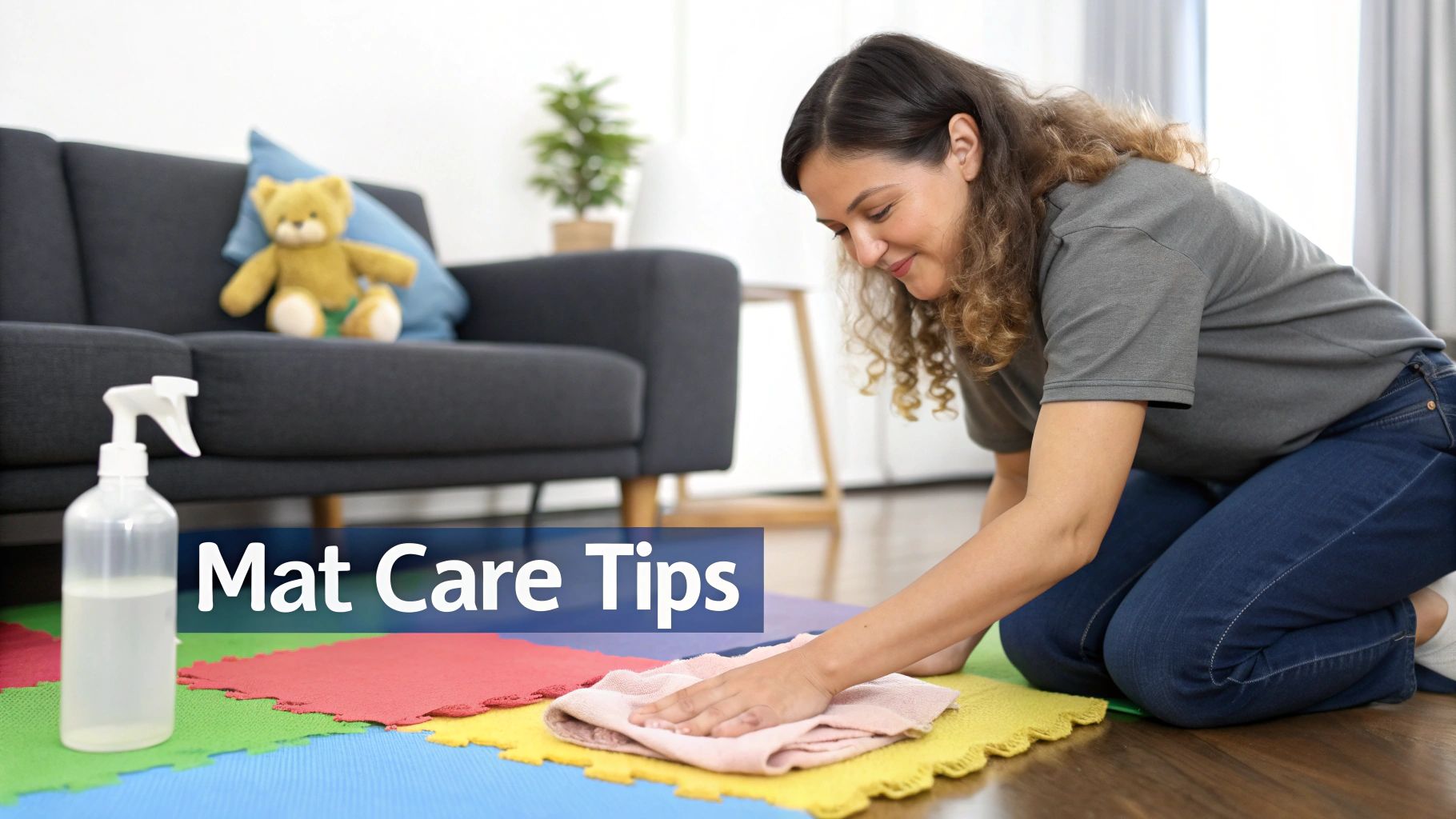
Luckily, keeping your mat in top shape is incredibly easy. For daily upkeep, a quick wipe-down with a damp cloth and a drop of mild soap is all it takes. This simple step tackles surface spills, dust, and crumbs before they have a chance to get ground in.
Creating a Simple Cleaning Routine
The real secret to a pristine mat is consistency. A small, simple routine takes the guesswork out of it and makes sure the play area is always ready for action. Here’s a straightforward approach that works wonders:
- Daily Wipes: Grab a soft cloth with a little gentle soap and water for the everyday messes. It's just like wiping your kitchen counter after a snack.
- Weekly Deep Clean: For a more thorough clean, a diluted vinegar solution (one part vinegar to three parts water) is a great way to disinfect without reaching for harsh chemicals.
- Immediate Spill Response: Jump on spills as soon as they happen. This is the best way to prevent staining, especially from colorful culprits like fruit juice.
Cleaners and Practices to Avoid
What you don't use on your mat is just as important as what you do. The wrong products can easily compromise the foam's integrity and leave behind nasty chemical residues.
Always steer clear of bleach, abrasive scrubbers, ammonia-based cleaners, and solvents. These harsh agents can degrade the foam, cause discoloration, and strip away its protective surface. The last thing you want is to expose your child to the very chemicals you worked so hard to avoid in the first place.
Finally, give the mat a quick once-over every now and then to check for signs of wear and tear, like deep cracks or peeling surfaces. When it’s time to put it away, rolling it loosely instead of folding it tightly will also help it last longer. By following these simple tips, you’re not just protecting your investment—you’re ensuring your non toxic foam play mat remains a safe foundation for fun for years to come.
Even after you’ve done all the research, a few practical questions almost always come up right before you choose a non toxic foam play mat. Let’s walk through some of the most common ones so you can feel totally confident in your decision.
Is It Normal for a New Mat to Have a Smell?
Yes, it's pretty common for a new EVA foam mat to have a slight, distinct smell right out of the box. This is just a normal part of the manufacturing process called "off-gassing," and for certified, non-toxic mats, it isn't considered harmful at all.
The best thing to do is simply unroll or assemble the mat in a well-ventilated space—like the garage or a room with the windows open—for 24 to 48 hours before your baby uses it. The smell should fade away completely. If you notice a really strong, chemical-like odor that just won't go away, it's always a good idea to contact the manufacturer.
Are Interlocking Tile Mats Safe for Babies?
Absolutely, as long as they’re made from high-quality materials and have the right safety certifications. Reputable brands design their interlocking puzzle tiles to be large enough that they don’t present a choking hazard.
One key feature to look for is mats made from "closed-cell" foam. This just means the material is non-porous.
Think of closed-cell foam like a waterproof jacket versus a cotton sweater. Spills, drool, and dust just sit on the surface instead of soaking in, which makes the mat far more hygienic and super easy to wipe clean.
What’s the Best Thickness for a Play Mat?
The ideal thickness really comes down to your child's age and what kind of flooring you have. As a general rule, you want a mat that provides enough cushion to soften those inevitable tumbles.
- For infants (0-12 months): A thickness of at least 0.5 inches (about 1.2 cm) gives excellent shock absorption for tummy time, learning to sit up, and those first crawls.
- For active toddlers: If you have a little one who is walking, climbing, and jumping, or if you're putting the mat on a very hard floor like concrete or tile, you might feel more comfortable with a mat up to 0.8 inches (2 cm) thick for that extra bit of protection.
Can I Use a Steam Cleaner on My Mat?
It’s generally not a good idea to use a steam cleaner on any foam play mat. The intense heat can easily damage the foam’s structure, causing it to warp, lose its soft feel, or even potentially release chemicals.
The safest and most effective way to clean your mat is with a soft cloth, some mild soap, and water. It's always smart to double-check the manufacturer’s care instructions just to be sure you don’t accidentally do something that could void the warranty or damage the mat.
At Ocodile, we believe in creating environments where children can thrive safely. Our products are designed with non-toxic materials and Montessori principles to support your child's natural curiosity and development. Explore our collection to build a nurturing space for your family. Visit us at https://ocodile.com.