



Safe Bunk Bed for Toddlers: Is It Really Safe? safe bunk bed for toddlers
Let's get straight to the point: traditional bunk beds are not safe for toddlers. There’s no gray area here. Safety experts, pediatricians, and seasoned parents all agree that children under six years old simply don't have the developmental skills to navigate a bunk bed safely.
The idea of a “safe bunk bed for toddlers” is pretty much a myth. This guide will break down exactly why and show you some genuinely secure alternatives for your little one.
The Hard Truth About Toddlers and Bunk Beds
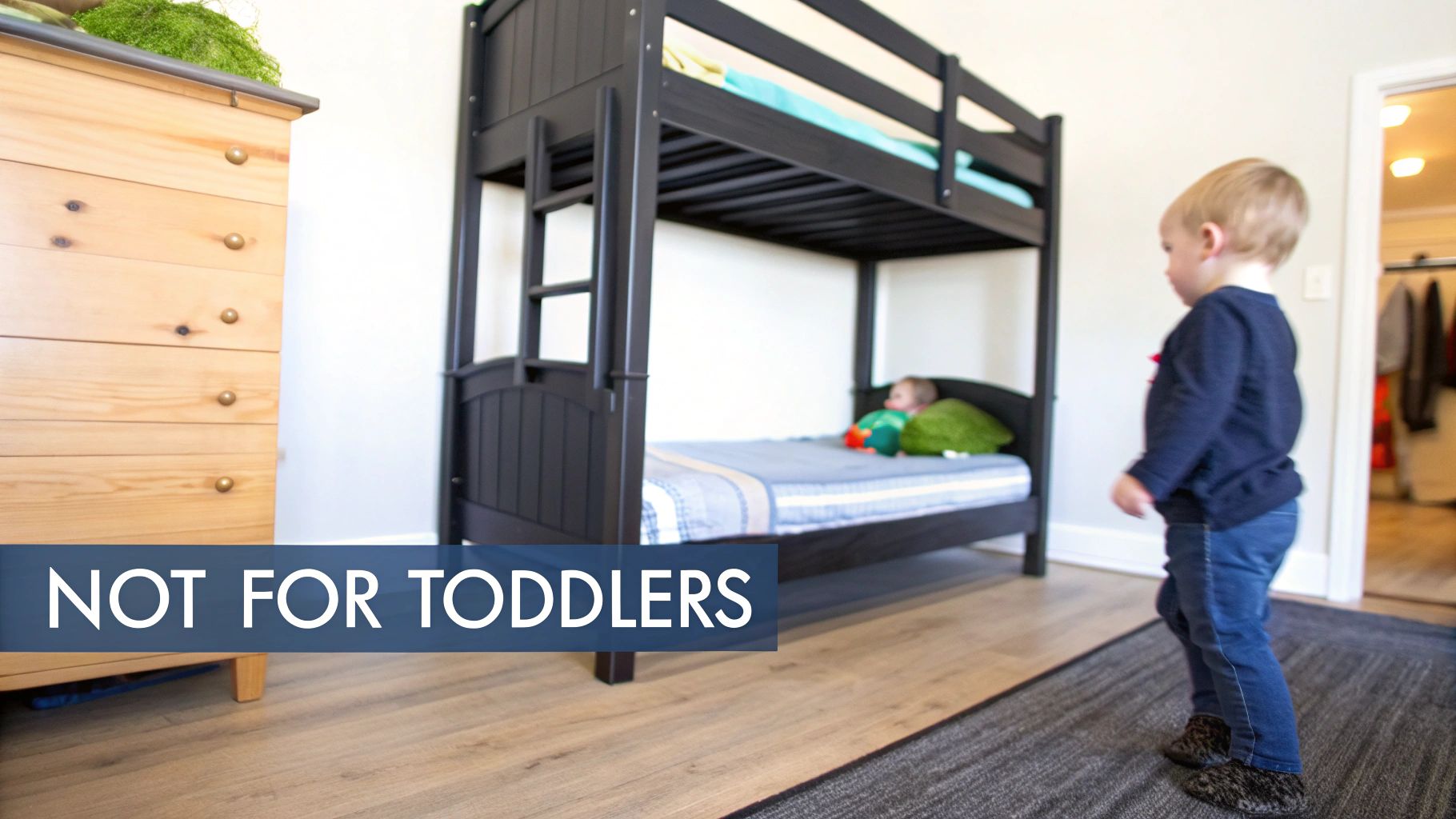
When you're trying to save space in a shared bedroom, a bunk bed can feel like a brilliant solution. But for a toddler, a bunk bed isn't just a piece of furniture—it’s a towering jungle gym loaded with potential dangers their growing brain can't yet process. To really get it, you have to see the world from their perspective: a world of wobbly coordination, poor depth perception, and a whole lot of impulsive curiosity.
A toddler's motor skills are a beautiful work in progress. Climbing a ladder, especially in the dark or when they're still half-asleep, is a surprisingly complex task. It demands coordination they just don’t have yet. What seems like a simple climb to us is a high-stakes adventure for a small child, where one misplaced foot can lead to a serious fall.
Developmental Mismatches and Inherent Dangers
Beyond their physical abilities, toddlers are also missing some crucial cognitive skills. They can't reliably judge height or truly understand the consequences of a fall. That top bunk might look like the world's most exciting play fort, tempting them to jump or lean way over the edge without recognizing the very real risk.
This gap between their boundless curiosity and their understanding of danger is exactly why standard bunk beds are a no-go for this age group.
These risks aren't just hypotheticals; they're backed by some sobering statistics. A key report from the US Consumer Product Safety Commission (CPSC) found that between 1990 and 1999, there were 57 reported deaths of children from entrapment in bunk beds. The vast majority of those victims were under three years old. You can dig into these historical safety findings to see just how long this has been a known concern.
The biggest risks for toddlers aren't just falls from the top. Entrapment in the gaps between the mattress, frame, or guardrails is a silent danger that can happen on either the top or bottom bunk.
To make these hazards crystal clear, let's break them down.
Key Bunk Bed Risks for Toddlers at a Glance
This table sums up the main dangers that bunk beds present to curious, adventurous toddlers.
| Hazard Type | Specific Risk for Toddlers | Why It's a Danger |
|---|---|---|
| Falls | Falling from the top bunk or ladder while climbing or playing. | Toddlers have underdeveloped balance and coordination, making falls more likely and potentially severe. |
| Entrapment | Head, neck, or limbs getting caught in gaps in the bed's structure. | Their small body size and inability to free themselves can lead to strangulation or serious injury. |
| Structural Collapse | Instability from improper assembly or rough play causing the bed to fail. | Toddlers often engage in vigorous play like jumping, which standard bunk beds are not designed to withstand. |
As you can see, the combination of a toddler's physical and cognitive development makes a standard bunk bed a recipe for disaster.
Why Official Age Guidelines for Bunk Beds Exist
When safety experts, like the ones at the U.S. Consumer Product Safety Commission (CPSC), say no child under six should use a top bunk, it can feel like just another rule. But this guideline isn't some random number they pulled out of a hat. It's deeply rooted in the predictable, universal stages of child development.
Understanding the why behind the rule is the first step toward creating a genuinely safe space for your little one to sleep.
Think about a bunk bed ladder from a toddler's point of view. To us, it’s a small staircase. To them, it’s a skyscraper. Their brains are still figuring out how to judge height and distance, which means they just can't grasp the real danger of a five or six-foot fall. What looks like a fun climbing frame is actually a significant risk they aren't cognitively equipped to handle.
This is exactly why finding a truly safe bunk bed for toddlers is less about making a bunk bed fit and more about finding a better-suited alternative for their age.
The Cognitive Leap They Haven't Made Yet
A toddler’s world is all about impulse and curiosity. They see something tall, and their immediate instinct is to climb it, explore it, and maybe even see what happens if they jump off it. The part of their brain that handles impulse control and thinking about consequences—the prefrontal cortex—is still years away from being fully developed.
They simply can’t connect the dots between "this looks like fun" and "I could get seriously hurt." It’s a crucial developmental gap. An older child might get to the top and pause, recognizing the danger. A toddler? They're far more likely to take a risky leap without a second thought.
A six-year-old can usually understand and follow rules like "no jumping on the bed." They also have the coordination to climb down safely, even when they're sleepy. A toddler has neither the consistent impulse control nor the refined motor skills for that job.
Physical Coordination and Midnight Wake-Ups
It's not just about what's going on in their heads. A toddler's physical skills are also a work in progress. Their center of gravity is higher, making them a bit wobbly, and their gross motor skills aren't reliable enough for climbing a ladder safely, especially in the middle of the night.
Picture a groggy toddler waking up from a bad dream or needing the potty. In that disoriented state, they have to find the ladder opening, place their feet on narrow rungs, and coordinate their hands and feet to get down—all in the dark. That’s a complex sequence of moves that is just too much to ask of them, turning a simple midnight bathroom trip into a high-risk event.
- Underdeveloped Balance: Toddlers are notoriously unsteady. This makes climbing ladders, even short ones, a real challenge.
- Poor Limb Coordination: The hand-eye-foot coordination needed for a ladder is more advanced than it looks, especially for a small child.
- Nighttime Disorientation: Waking up suddenly can confuse anyone. For a toddler on a top bunk, it can be downright terrifying and dangerous.
To get a better sense of what to expect at different ages, our guide on child development stages by age can offer some helpful context.
These developmental realities are the bedrock of bunk bed safety rules. They show us why the search for a safe bunk bed for toddlers often leads to the conclusion that the safest option isn't a bunk bed at all, but a sleep setup designed for their unique abilities.
Decoding Essential Bunk Bed Safety Standards
While a traditional bunk bed is definitely off-limits for a toddler, understanding the official safety standards is so important when you're ready to buy one for an older child. This is especially true if a younger sibling is also in the house.
Think of these standards as the non-negotiable safety net built right into the bed's design. They aren't just suggestions; they are critical engineering decisions based on preventing the most common—and most severe—injuries.
In the United States, the two main organizations setting these rules are the Consumer Product Safety Commission (CPSC) and ASTM International. Their guidelines are laser-focused on tackling specific dangers like falls, structural collapse, and, most critically for small children, entrapment.
The Anatomy of a Safe Bunk Bed
A truly safe bunk bed isn't just a sturdy frame. It’s a complete system where every single piece works together to protect your child. The statistics on bunk bed injuries are a stark reminder of why these little details matter so much.
The numbers don't lie: falls are a huge cause of injury. A 16-year study tracking emergency room visits for bunk bed accidents found an average of 35,790 cases annually. This really drives home why features like robust guardrails aren't just a nice-to-have—they're an absolute must. You can dive into the full findings on bunk bed-related injuries to see the whole picture.
Knowing what makes up a compliant bed will make you a much smarter, safer shopper.
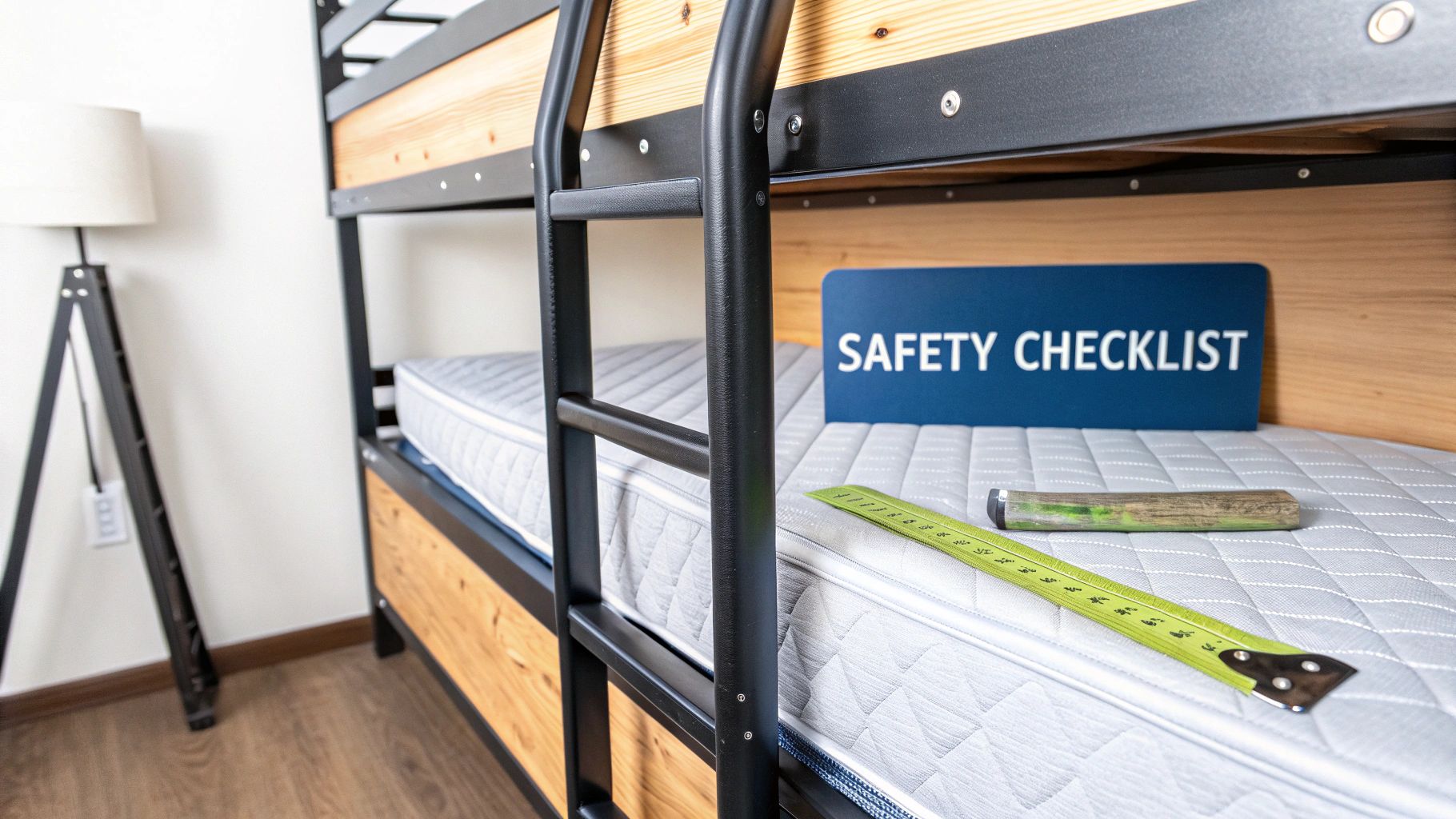
Your Essential Shopping Checklist
When you're out there looking at bunk beds, keep this checklist handy to make sure it meets today's safety benchmarks. These features are your family's first line of defense against accidents.
-
Guardrails on All Sides: This is non-negotiable. The top bunk needs guardrails on all four sides, even if you plan to push one side against a wall. A wall can actually create a dangerous gap where a child could get trapped.
-
Guardrail Height: The top of the guardrails must sit at least five inches above the mattress surface. This is what keeps a sleeping child from rolling out. If you use a mattress that's too thick, you dangerously reduce that height, so always follow the manufacturer's mattress recommendations.
-
Ladder Construction: The ladder should be securely bolted to the frame and feel solid. Look for wide, flat rungs that are easier for little feet to grip, not the narrow, round dowels that can get slippery.
-
Structural Integrity: Don't be shy—give the bed a good shake in the store. A well-built bunk bed should feel stable and solid, without any major wobbling or creaking. This tells you it has strong joints and is made from quality materials.
Entrapment is one of the scariest risks, especially for younger kids who might be playing near the bed. The CPSC mandates that there should be no gaps in the bed's structure between 3.5 inches and 9 inches. This specific range is designed to prevent a child's head or body from getting stuck.
Spotting Hidden Dangers and Red Flags
Beyond the big, obvious features, there are subtle design details that separate a safe bunk bed from a potential hazard. You have to become a bit of a detective, keeping an eye out for small things that could pose a risk.
For instance, take a close look at the headboard and footboard of the top bunk. Any cutouts or openings need to be small enough that a child can't get their head or limbs trapped. This is a common flaw in older or poorly designed beds.
Also, run your hands over the surfaces to check for any protruding hardware, sharp corners, or rough edges. A quality bunk bed will have smooth finishes and recessed bolts to prevent snags and scrapes. Never buy a bunk bed that is missing hardware or shows any signs of cracking wood or splitting welds. While finding a truly safe bunk bed for toddlers is impossible, applying these standards is the best way to ensure safety for your older kids.
Discovering Safer Bunk Bed Alternatives for Toddlers
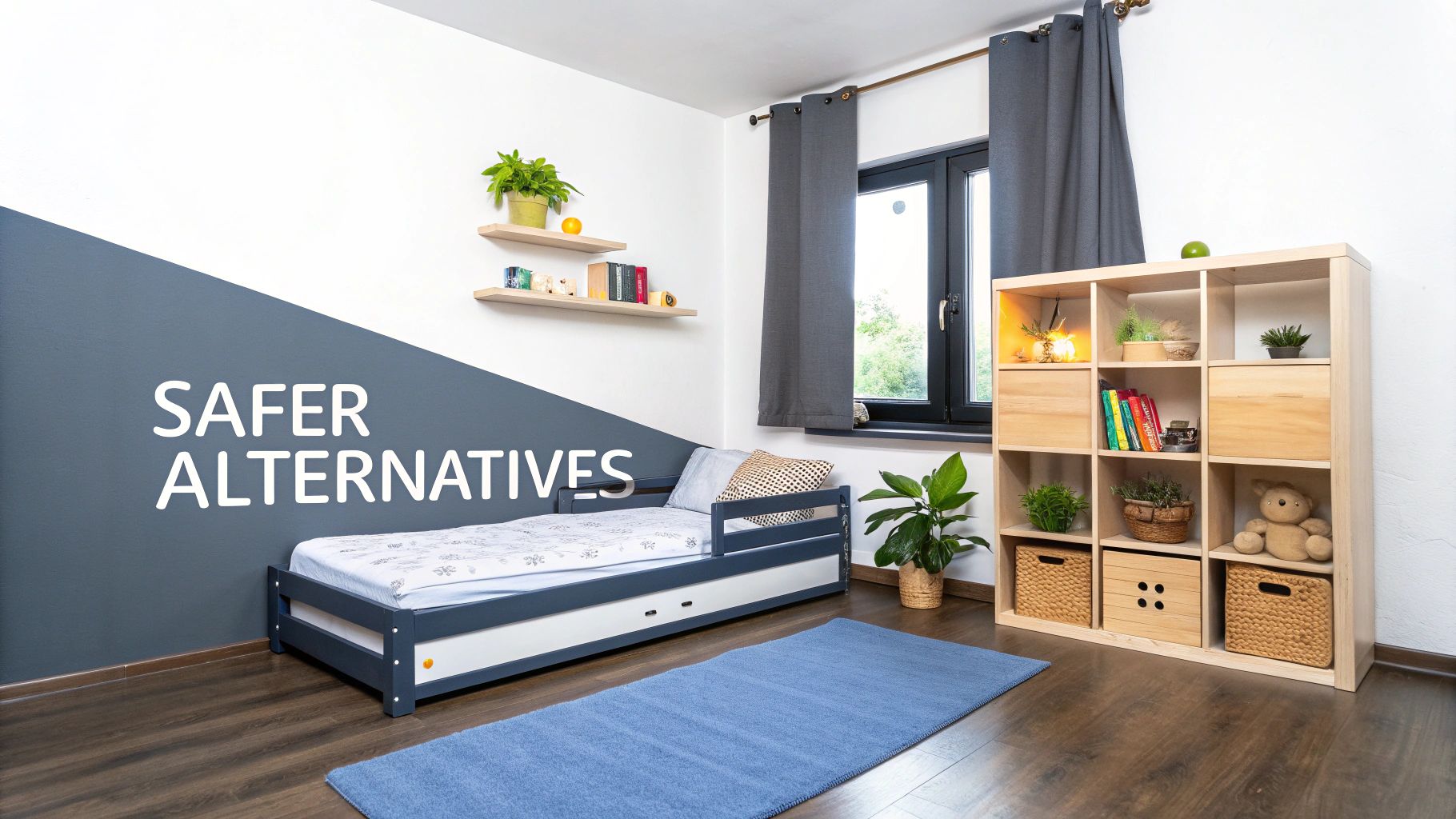
So, we've agreed that traditional bunk beds are a no-go for toddlers. Let's pivot to the good stuff: positive, practical solutions that actually work for little ones. The real goal isn't just to sidestep danger—it's to create a sleep space that boosts your child's independence, confidence, and of course, safety.
Luckily, there are some fantastic alternatives out there that nail all three without the risks that come with height. These options are built with a toddler's developmental stage in mind, making them feel secure, fun, and functional. Instead of trying to make an ill-fitting product work, you can pick a bed that truly gets them.
Embracing the Montessori Floor Bed
One of the most popular—and safest—alternatives is the Montessori-style floor bed. The idea is brilliant in its simplicity: it’s just a mattress on the floor or on a super low frame, often only a few inches high. The biggest safety win is obvious—it completely removes the risk of falling from any height.
But the perks go way beyond fall prevention. A floor bed hands a toddler autonomy over their own little world. They can get in and out of bed all by themselves, which is a huge confidence booster during these formative years. This freedom can dial down bedtime battles and help them build a really positive connection with their own sleep space. We dive deeper into this in our guide comparing a floor bed vs a crib.
A floor bed respects a toddler's natural drive to move and explore. It lets them safely access their own bed, turning it from a place of confinement into their own personal, accessible sanctuary.
Exploring Low-Profile and Toddler Beds
If a mattress right on the floor isn't quite your vibe, a low-profile toddler bed is a perfect happy medium. These beds are designed specifically for this age group, sitting much lower to the ground than a standard twin bed and almost always coming with built-in, low guardrails.
This setup makes for a great transition out of the crib. It offers the security of a defined bed while being low enough that any accidental tumbles are just a small bump, not a dangerous fall. They are perfectly scaled for a toddler's size, helping them feel snug and "just right."
- Low-Profile Beds: These keep the mattress close to the floor, minimizing fall risks while still giving you the look of a traditional bed frame.
- Built-In Guardrails: Most toddler beds have short guardrails that stop them from rolling out but still let them climb in and out independently.
- Child-Sized Dimensions: The smaller size not only fits well in cozy rooms but also helps a little one feel secure and contained.
Creative Solutions for Shared Spaces
But what if you need to sleep two kids in one room? This is often why parents start looking for a safe bunk bed for toddlers to begin with. The good news is you can still save on floor space without resorting to a high bunk.
A trundle bed is a fantastic fix. It's a standard bed with a second, low bed on wheels that slides right underneath. During the day, the room is wide open for play; at night, you just roll the second bed out. This gives you two separate, safe sleeping surfaces with zero vertical danger.
Another great option is to arrange two low-profile beds in an "L" shape in a corner. This layout can free up the center of the room for a play area while keeping both kids safely on the ground. These setups prove you don't have to trade safety for functionality.
To help you weigh the options, here's a quick comparison of the safest sleep solutions for toddlers.
Comparing Toddler-Safe Sleep Options
| Bed Type | Key Safety Benefit | Best For | Considerations |
|---|---|---|---|
| Montessori Floor Bed | Eliminates fall risk completely. | Families wanting to foster maximum independence and freedom of movement. | Requires diligent room-proofing since the child has full access to their space. |
| Low-Profile Toddler Bed | Very low to the ground with built-in guardrails. | A gentle transition from a crib, offering a sense of security and containment. | Toddlers will outgrow them, usually by age 4 or 5. |
| Trundle Bed | Two separate, ground-level beds in one footprint. | Shared rooms where maximizing daytime play space is a priority. | The pull-out bed is often very low, similar to a floor bed. |
| Two Low Beds (L-Shape) | Both children are on the ground; no height risk. | Shared rooms where you want to create a dedicated central play area. | Takes up more permanent floor space than a trundle bed. |
Ultimately, whether you choose a floor bed, a toddler bed, or a creative arrangement for a shared room, the key is keeping your little one low to the ground. This simple principle ensures their sleep space is a safe haven that supports their growth and independence.
Creating a Toddler-Proof Room with a Bunk Bed
Sharing a room is a classic part of childhood. But when you’ve got a bunk bed for an older kid and a curious toddler in the mix, your safety game plan needs a major upgrade. This isn't about making the bunk bed safe for the toddler—it’s about making it completely off-limits to them.
Think of it like this: the bunk bed is a vault, and your toddler is a tiny, very determined safecracker. Your job is to create a series of obstacles that make cracking that vault impossible. It’s a proactive approach that turns a potential hazard into a space where siblings can actually coexist safely.
Strategic Room Layout and Bed Placement
Where you put the bunk bed is your first and most important line of defense. The wrong spot can accidentally give your toddler a perfect leg-up for their climbing adventures.
- Create a Clear Zone: Keep the bed away from other furniture. That nearby dresser or toy chest looks like a launchpad to a toddler who’s decided they need to get to the top.
- Avoid Windows and Fans: A bunk bed should never, ever be placed under a window or a ceiling fan. This simple rule prevents catastrophic falls and keeps little hands far away from moving blades.
- Ensure Solid Footing: Make sure the bunk bed sits on a level, stable surface. Try to avoid putting it on a thick, plush rug, which can make it wobble when your older child is climbing the ladder.
As you plan the room, thinking about how to choose kid-friendly and pet-friendly furniture in general will help create a safer environment all around.
Reinforcing the Structure for Absolute Stability
Even if the bunk is meant for an older child, a toddler’s rough-and-tumble play can put some serious stress on the frame. You need to be sure that structure is rock-solid and can handle the chaos of a shared kids' room.
Start with a full hardware check. Get in there and tighten every single bolt and screw until they are completely snug. Then, give the bed a good, firm shove from all sides. Does it sway? Does it wobble? Any instability at all needs to be fixed immediately. For extra peace of mind, you can check out our guide on how to secure furniture to the wall; many of those same techniques can be used to anchor a bunk bed frame.
A critical safety check is the mattress foundation. Make sure the slats are all securely in place and properly spaced. A loose or broken slat isn't just a hazard for the child on top—it can become falling debris for anyone underneath.
The stats on bunk bed injuries really drive home why this is so important. Bunk bed risks are heavily skewed toward younger children, making them totally unsafe for toddlers. Australian data shows that 86% of under-15 bunk injuries happen to kids under ten, with a huge number of those involving children under five.
Establishing Unbreakable Family Rules
Finally, your most powerful safety tool is your voice. You have to set clear, consistent, and absolutely non-negotiable rules for everyone in the family—and that includes visiting friends.
- The Ladder is Not a Toy: The ladder is only for the older sibling to get in and out of bed. Period.
- The Floor is Not a Trampoline: No jumping on or from either bunk. This is the number one cause of falls and structural damage.
- One Person on Top: Only the older child who sleeps there is allowed on the top bunk. Ever.
These rules aren't just about safety; they help create a culture of respect, turning the bunk bed from a tempting playground into the older child's private, respected space.
Answering Your Top Bunk Bed Safety Questions
Even after going over all the guidelines, it's totally normal to have a few questions lingering. You're trying to make the best choice for your family, after all. Think of this as your go-to guide for those common "what ifs" and "should I's" that pop up when you're considering a bunk bed. We'll give you clear, straight answers to help you feel confident in your decisions.
What Is the Firm Minimum Age for a Top Bunk?
Here’s the hard and fast rule from every safety expert: a child needs to be at least six years old to sleep on a top bunk. This isn't just a random number; it's a crucial benchmark tied directly to how kids develop.
By age six, a child can typically understand and remember rules, like "no jumping on the bed." They also have the physical coordination needed to safely climb a ladder, even when they're half-asleep. A younger child just doesn't have the impulse control or physical stability to handle sleeping several feet off the ground.
This simple decision tree helps visualize the most important safety rule.
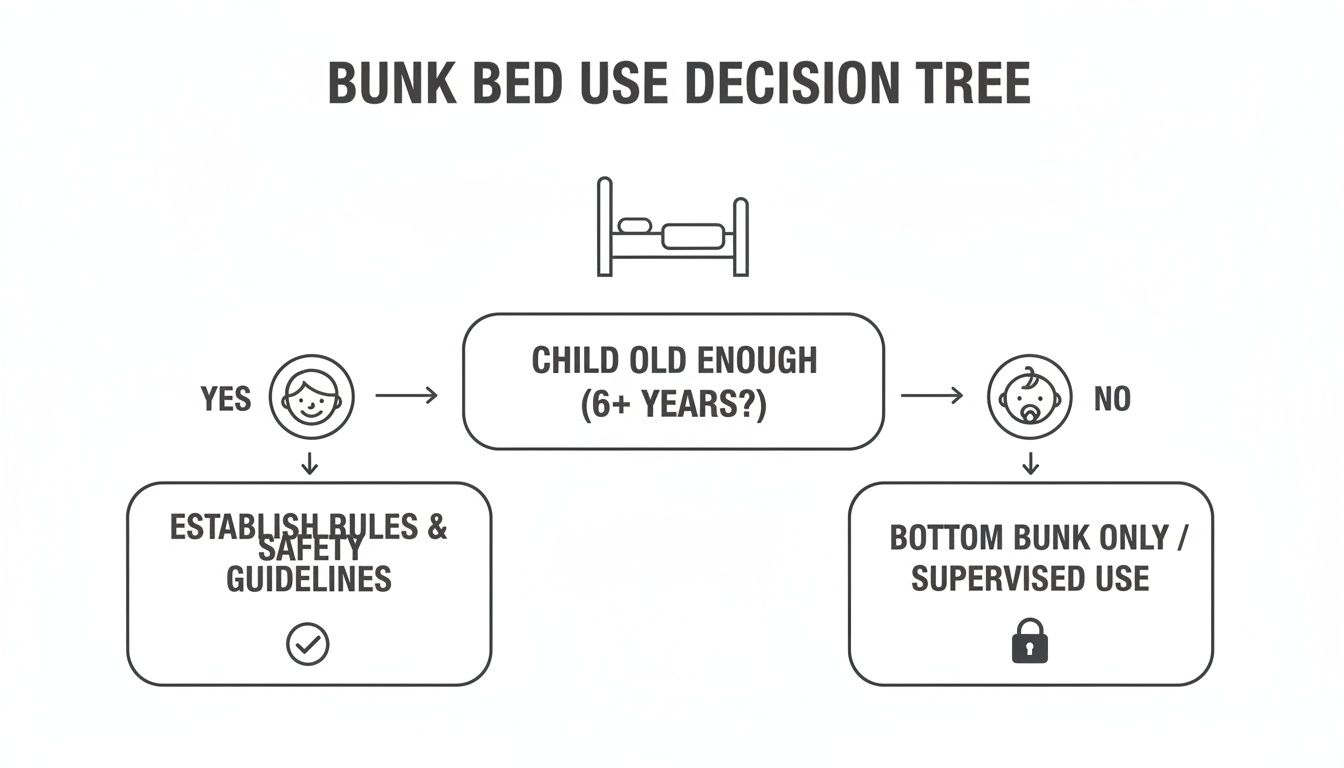
It boils down to two key paths: setting firm rules for older kids and creating a completely secure, off-limits zone for toddlers.
Are Bunk Beds with Stairs Safer for Toddlers?
It makes sense to think stairs would be safer than a ladder, and in some ways, you're right. Stairs have wider, deeper steps that are much easier for little feet to manage. But they absolutely do not make a bunk bed a safe bunk bed for toddlers.
While stairs might reduce the risk of a slip while climbing, they don't change the biggest danger: the height of the top bunk. A fall from that high is just as dangerous no matter how your child got up there. Think of stairs as a great feature for an age-appropriate child, not a workaround that makes the bed safe for a toddler. They're a fantastic choice for a six-year-old, but they don't change the risks for a curious three-year-old.
How Can I Secure an Existing Bunk Bed with a Toddler Around?
If you have a bunk bed for an older child and a toddler who can get into their room, your mission changes. You're no longer trying to make the bed toddler-safe; you're trying to make it toddler-proof. The goal is to create a fortress your youngest can't breach.
Here’s a practical checklist to help you secure the area:
- Do a Full Hardware Audit: Get your tools out. Go over every single screw and bolt on the bed and tighten it until it's solid. A wobbly bed is an unsafe bed.
- Check the Mattress Fit: Make sure the mattress on both bunks fits snugly. There should be zero gaps between the mattress and the frame where a little one could get stuck.
- Create a Clear Perimeter: Position the bunk bed away from anything a toddler could use as a makeshift step stool, like a dresser or bookshelf.
- Set and Enforce the Rules: Your older child needs to be your partner in safety. Make it clear the bunk bed is not a playground. The rules are firm: no jumping, only one person on top, and the ladder is for climbing, not playing.
These steps create layers of safety, making it much harder for a curious toddler to find trouble.
The safest bunk bed in a home with a toddler is one the toddler cannot access. Your strategy should be 100% focused on prevention, treating the ladder and top bunk as an off-limits area at all times.
Beyond the structure, parents often worry about how well materials hold up. For example, a video review discussing product strength for child safety shows just how important it is to consider how materials stand up to real-world kid behavior.
Should I Add Aftermarket Guardrails to a Bunk Bed?
This one is critical: you should never modify a bunk bed with aftermarket parts, especially guardrails that didn't come from the original manufacturer. It might feel like you're adding extra safety, but you could be creating brand new, invisible dangers.
Bunk beds are designed and tested as complete systems to meet strict safety standards, which include very specific measurements for gaps to prevent a child from getting trapped. An aftermarket guardrail, no matter how solid it seems, wasn't tested with your specific bed.
Adding one can create gaps that are the exact wrong size—big enough for a child's body to slip through but small enough to trap their head. This is a serious strangulation hazard. Plus, modifying the bed will almost certainly void its safety certification and any warranty. The safest bunk bed is always the one that's built and used exactly as the manufacturer intended.
At Ocodile, we believe a child's environment should be a source of confidence, not risk. That's why we design furniture that prioritizes safety and encourages independence from the ground up. Explore our collection of toddler-safe floor beds and other child-friendly solutions at https://ocodile.com.