



Top Toddler Art Desk Ideas for Creative Little Artists
A toddler art desk is so much more than a little piece of furniture. It’s a dedicated space that fosters creativity, boosts fine motor skills, and encourages independent play. Giving your child their own creative hub builds a surprising amount of confidence and a sense of ownership, making it a wonderful investment in their development.
Why a Toddler Art Desk Is More Than Just Furniture
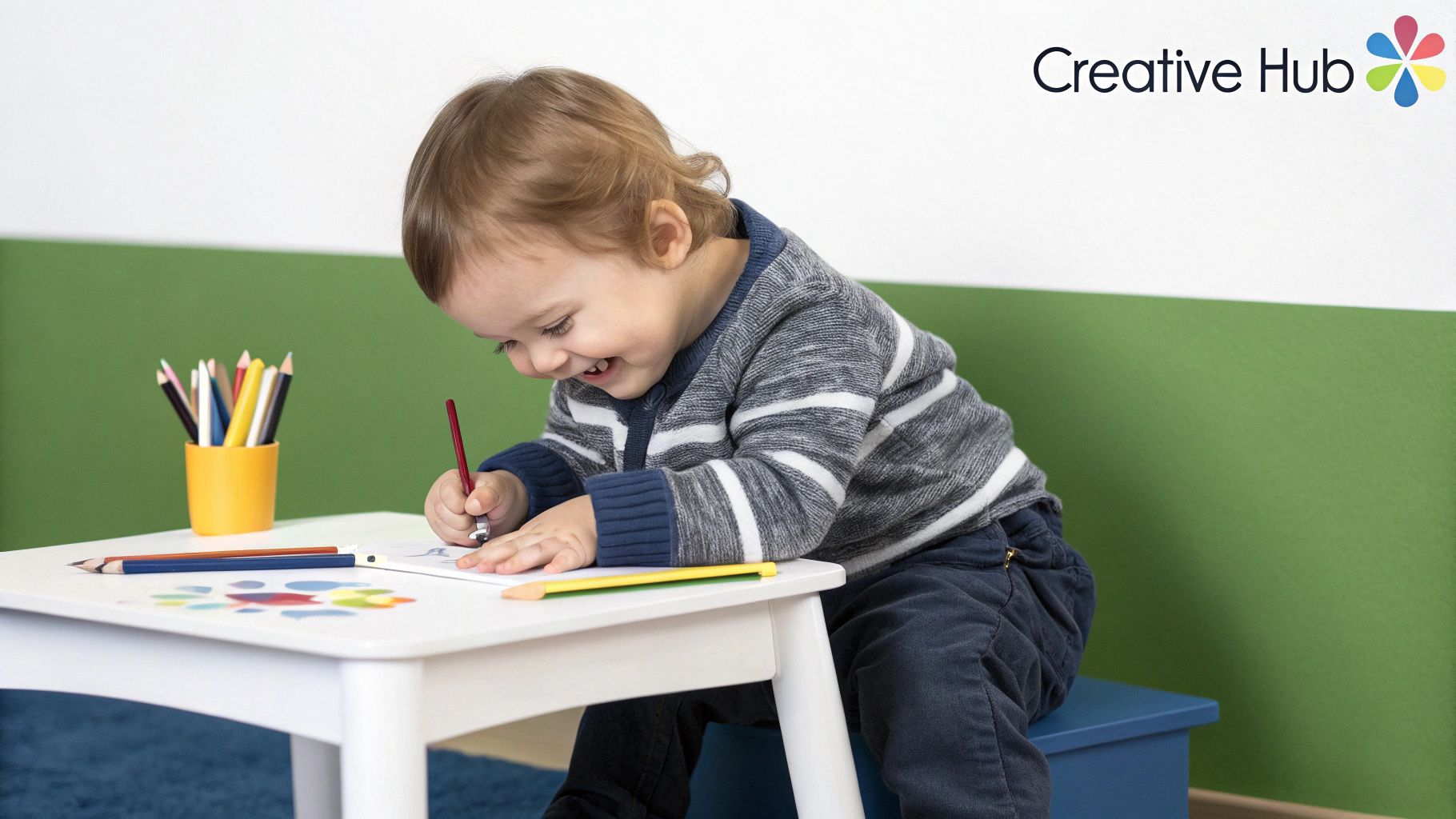
That small corner for scribbling is actually a massive milestone for a toddler. It turns a simple activity into a whole experience, creating a personal headquarters for their imagination. A dedicated art desk sends a clear message: their creative efforts matter. This builds a foundation for self-expression and confidence from a very young age.
This isn't just about keeping crayons off the dining room table (though that’s a nice bonus!). It's about providing a structured environment where learning happens completely naturally.
A Hub for Skill Development
A toddler art desk quickly becomes a central station for crucial developmental growth. Every time they grasp a chunky crayon, pinch modeling clay, or dab with a paintbrush, they're strengthening the small muscles in their hands and fingers.
It's the perfect spot for all sorts of fun fine motor skills development activities. This consistent practice is essential for future tasks we take for granted, like writing their name, buttoning a coat, or tying their shoes.
Fostering Independence and Responsibility
Giving a child their own workspace empowers them with a real sense of ownership. This "my space" mentality is a powerful, yet gentle, way to teach independence.
When a child has a designated spot for their art supplies, they learn to manage their tools, make their own creative choices, and even help tidy up afterward. This simple routine cultivates responsibility in a playful, low-pressure way.
This idea is part of a larger shift toward creating child-centric home environments. You can see it in the numbers—the kids' furniture market was valued at USD 52.8 billion in 2024, which shows a growing emphasis on spaces that support learning and creativity.
For families interested in this approach, a Montessori activity table is a great next step to explore how these thoughtful setups can benefit your child.
What to Look for in a Toddler Art Desk
Picking out the right art desk for your toddler can feel like a big deal, but it really just comes down to a few key things. If you focus on safety, durability, and a comfortable fit, you’ll create a little corner that’s both inviting and practical for your budding artist.
Safety is the absolute top priority. Look for desks with rounded corners and smooth edges to keep those inevitable bumps and tumbles from turning into anything more serious. And since toddlers explore with their mouths, make sure any paint or finish is certified non-toxic.
Materials Matter for Messes and Durability
The material of an art desk will tell you a lot about how long it will last and—more importantly—how easy it is to clean up after a messy session.
Wooden desks have that classic, sturdy feel, but they can be a magnet for marker and paint stains if they aren't sealed really well. Plastic is a breeze to wipe down and super lightweight, while composite wood is often a good budget-friendly option that lands somewhere in the middle.
This little chart breaks down what you can expect from each common material.
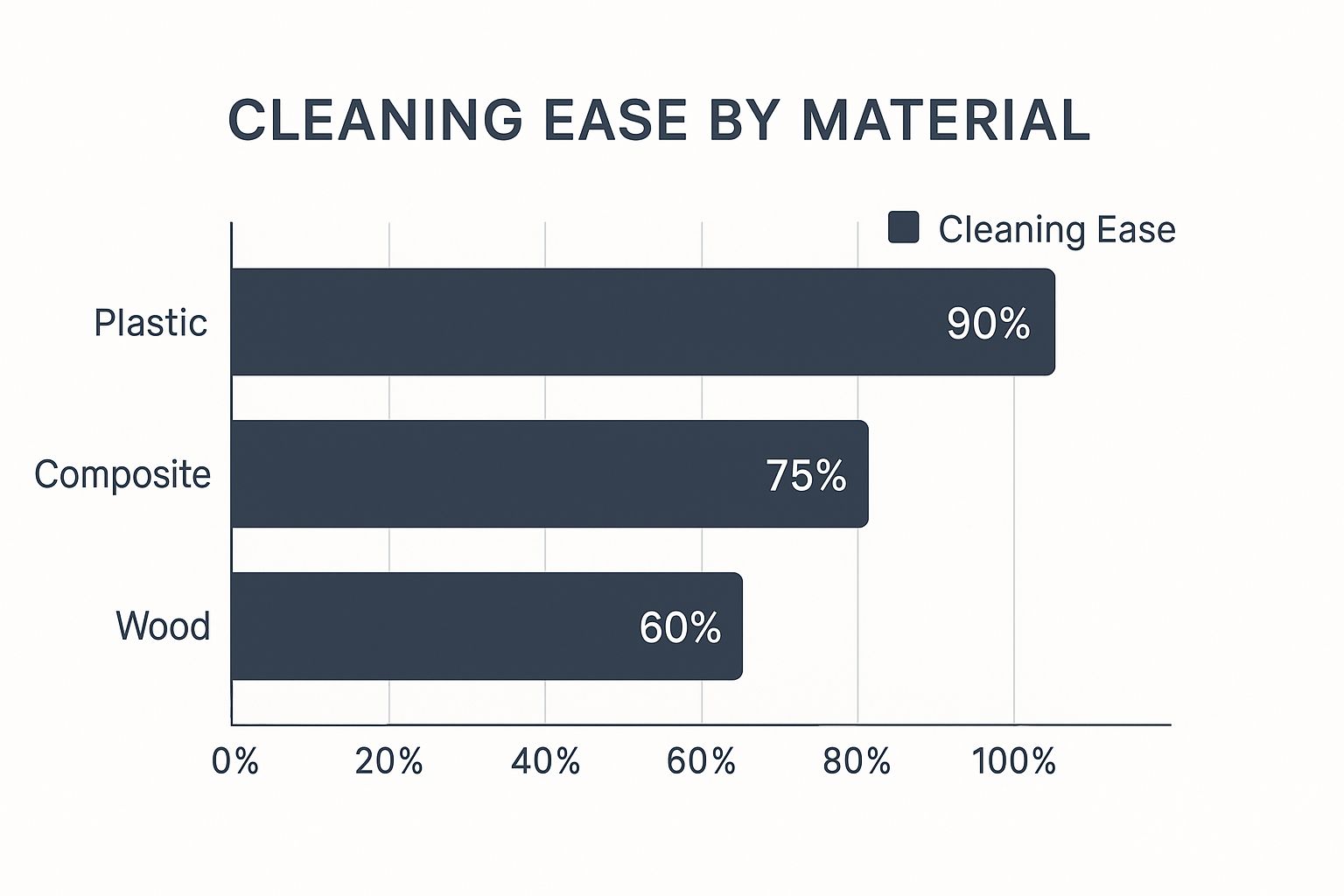
As you can see, plastic is the clear winner for quick cleanups. If you're anticipating lots of finger painting and marker masterpieces, it’s a pretty practical choice.
To give you a clearer picture, here's a quick rundown of what to consider with each material.
Toddler Art Desk Material Comparison
| Material | Pros | Cons | Best For |
|---|---|---|---|
| Solid Wood | Very sturdy, long-lasting, classic aesthetic. | Can be heavy, more expensive, and may stain if not properly sealed. | Families looking for a durable, long-term piece of furniture. |
| Plastic | Lightweight, easy to clean, often comes in bright colors. | Can be less sturdy, may not last as long as wood. | Homes where messy art supplies like paint and markers are used often. |
| Composite Wood (MDF) | Affordable, smooth surface, often lightweight. | Less durable than solid wood, can be damaged by moisture. | Budget-conscious families or for a first, temporary art desk. |
Ultimately, the best material depends on your budget and how much mess you're willing to manage.
Finding the Perfect Fit and Style
Size is way more important than you might think. A desk that’s too high will be frustrating for your little one, and one that’s too low can lead to hunching and bad posture. The best way to get it right is to measure your toddler while they're sitting in a small chair. You want their feet to rest flat on the floor and their elbows to be at a comfortable angle on the tabletop.
A desk that fits them properly right now makes creating a comfortable and joyful experience. It encourages them to settle in and focus on their art, rather than fidgeting in an awkward position.
Beyond the basics, think about the style that will best suit your child’s creative spirit.
- Simple Tables: A plain, flat surface offers the most flexibility. It’s perfect for everything from drawing and painting to playing with dough or building with blocks.
- Easel Desks: Many desks have a top that flips up to become an easel. This is fantastic for painting and just encourages a different posture and way of creating.
- Desks with Paper Rolls: A built-in paper roll is genius. It provides a seemingly endless canvas for spontaneous scribbles and giant drawings, a feature that toddlers absolutely adore.
We're seeing more and more purpose-built furniture for kids, which is great for parents. This trend is part of a larger movement in the children's study table market, which was valued at a whopping $483.3 million in 2025. This growth means there’s a bigger focus on creating spaces for kids that are both ergonomic and inspiring. You can actually explore more data on this expanding market trend to see how it’s shaping the products available to us.
Setting Up the Desk for Safe Creative Play
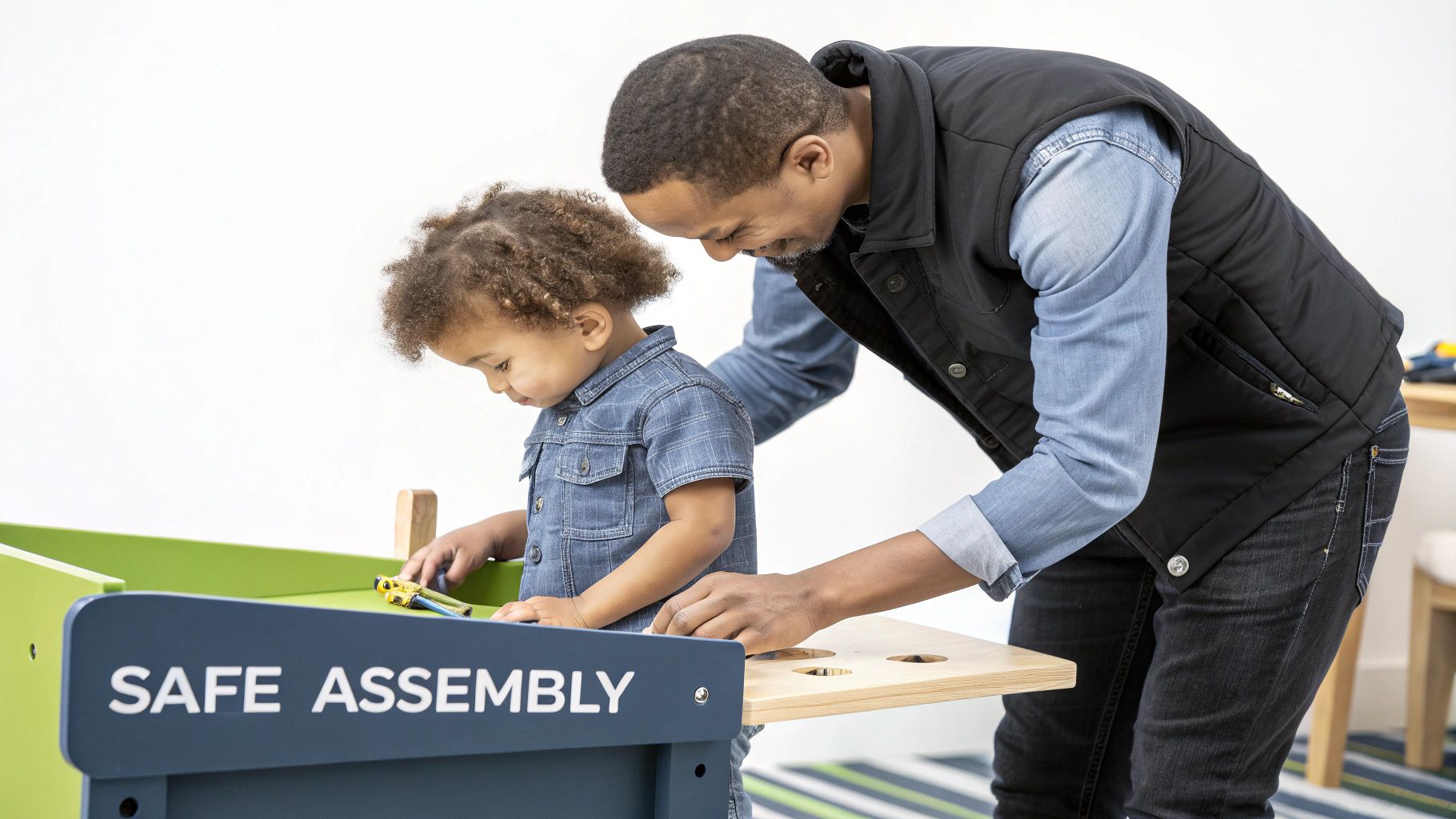
So, the flat-packed box has arrived. Transforming it into a sturdy, safe creative station doesn't have to be a headache. A little prep work before you even tear open the plastic can make the whole process smoother and get your new toddler art desk ready for masterpiece-making in no time.
First things first, do a quick parts inventory. Lay everything out on a soft surface, like a blanket or rug, to avoid scratching the finish. Check the parts list against what’s actually in the box—it’s much better to discover a missing screw now than when you're halfway through the build.
Assembling with Confidence
Let's be honest, those instruction manuals can sometimes feel like they're written in another language. Here’s a great real-world tip: read through all the steps once before you begin. This gives you a mental map of the process and helps you avoid those common pitfalls, like attaching a leg backward.
You can even make this a special experience by involving your toddler. While they can't handle the tools, they can be your official "parts helper." Try giving them a simple job, like handing you a specific piece when you ask for it. This small act of participation helps them feel connected to their new desk right from the start.
The goal here is a piece of furniture that feels secure and stable. A wobbly desk isn't just annoying; it’s a real safety concern for an active toddler who might lean on it for support.
Final Safety Checks
Once that last screw is in place, your job isn't quite done. A thorough safety check is the most critical final step.
- The Wobble Test: Place the desk on a flat surface and give it a firm shake. If there's any wobble at all, go back and tighten all the connections until it feels completely solid.
- Smooth Surface Scan: Run your hands over every surface, paying close attention to the edges and corners. You're feeling for any sharp points, splinters, or rough patches that could cause a nasty scrape.
- Stability and Anchoring: For any piece of children's furniture, stability is non-negotiable. If the art desk feels a bit top-heavy or seems like it could tip if climbed on, anchoring it to the wall is essential. You can find excellent guidance on how to properly secure furniture to the wall to prevent accidents.
These quick checks ensure their new creative corner is a truly safe space for them to play and explore.
Designing an Inviting Creative Corner
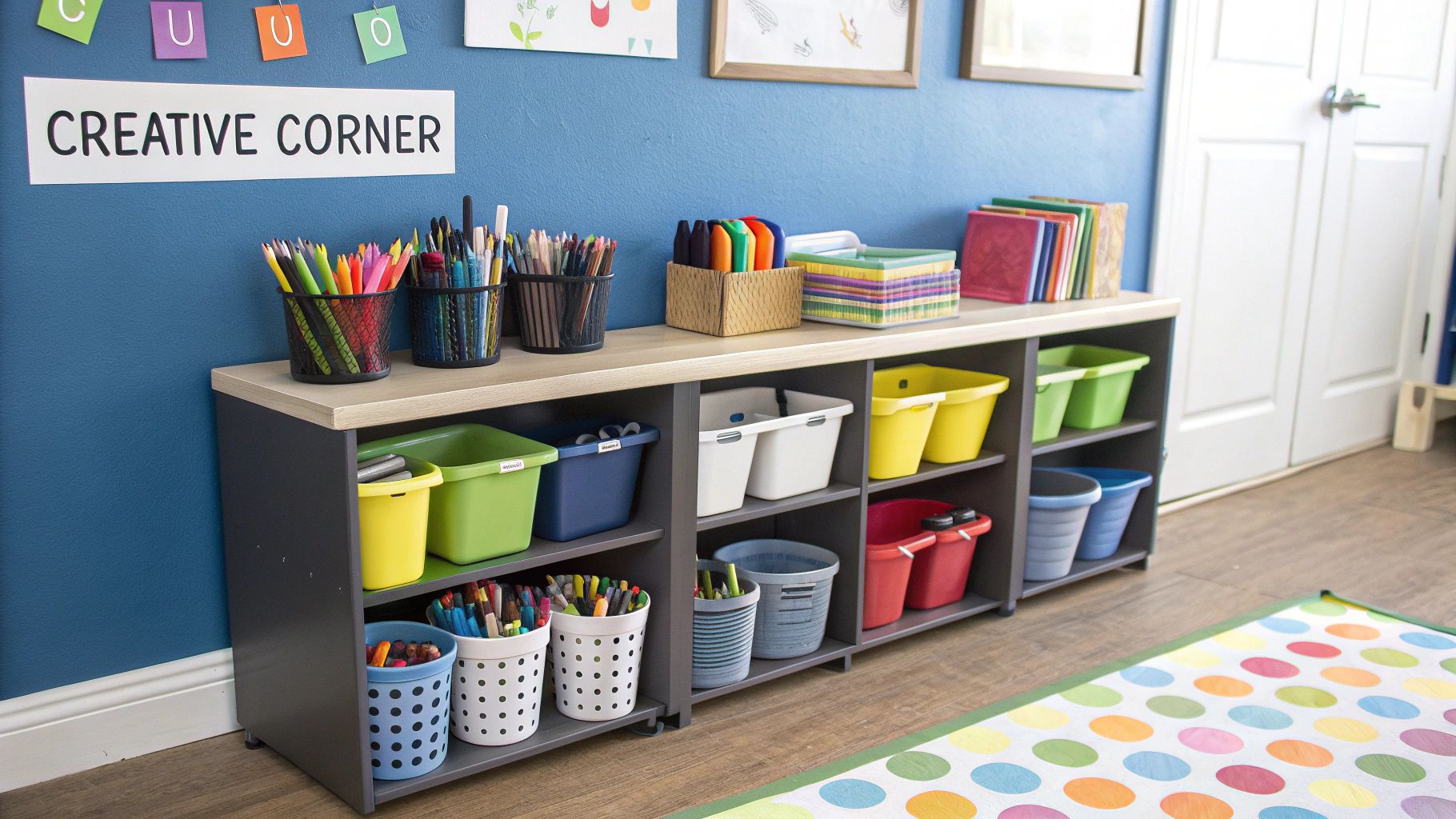
An empty desk is just furniture. The real magic happens when you turn it into a little hub of creativity that your toddler is actually drawn to.
Our goal here is to create a space that’s organized and easy for them to use. A spot that empowers your little one to grab what they need and—just as important—learn to put it all back.
Making Supplies Accessible and Tidy
Smart, toddler-friendly organization is everything. Forget about complicated systems with lids they can’t pry open. You need simple, open-top solutions where they can see everything and grab it themselves. This approach doesn't just build independence; it turns cleanup into a simple matching game instead of a dreaded chore.
Here are a few ideas that have worked for us:
- Colorful Caddies: A rotating caddy or a few small, bright cups are perfect for crayons, markers, and paintbrushes. It keeps them upright and easy to see.
- Low Shelving: A small bookshelf or a simple cube storage unit next to the desk works wonders for paper, tubs of play-doh, and coloring books.
- Wall-Mounted Buckets: I love using small, lightweight buckets mounted on the wall just above the desk. They're great for corralling things like pom-poms, chalk, or craft sticks.
When you set things up this way, you're doing more than just keeping the space neat. You're giving your child the confidence to start and finish a project all on their own.
An organized creative corner reduces frustration for both parent and child. When supplies have a clear home, toddlers are more likely to engage with them and participate in the cleanup process, building foundational habits for life.
It's clear that parents everywhere are leaning into this. The children's arts and crafts market was valued at USD 12.81 billion in 2023 and is only expected to grow. It just shows how much we value creating these kinds of enriching spaces at home. You can discover more about the growth of the children's art market if you're curious.
Adding Personality and Comfort
Okay, the last step is to make the space feel genuinely theirs. A few thoughtful touches can turn their little art desk into the most popular spot in the house.
Start with a comfy, pint-sized chair that lets their feet rest flat on the floor—it's so much better for their posture.
Another idea is to create a mini "gallery wall" nearby. A simple corkboard or a string with some clips works perfectly. When you regularly rotate their latest masterpieces, it makes them feel like a celebrated artist and shows them their work is valued.
These are the little details that transform a simple, functional area into a corner that practically begs them to sit down and create something.
Essential Art Supplies for Your Toddler
A great toddler art desk is only half the equation. The right supplies are what really bring the magic to life. It's tempting to grab every color of the rainbow, but I've found that starting simple is far more effective and less overwhelming for a little one.
The key is to focus on materials that are non-toxic, washable, and designed for small hands. Think chunky crayons that are hard to snap, thick-handled paintbrushes, and big sheets of paper that give them plenty of room for those big, expressive movements.
Building Your Starter Kit
Your first supply stash doesn't need to be huge. You want to choose items that spark exploration without causing frustration. Believe me, a few well-chosen basics will lead to hours of creative fun.
Here are some absolute must-haves for stocking their new art station:
- Washable Finger Paints: These are perfect for sensory play and a first lesson in color mixing. My pro tip? Introduce just one or two colors at a time to keep the mess from getting out of control.
- Chunky Crayons and Sidewalk Chalk: These are so much easier for toddlers to grip than standard crayons. Using them is a fantastic way to build hand strength and coordination without them even realizing it.
- Large Paper Rolls: An endless canvas on a roll is a total game-changer for a toddler art desk. It encourages large-scale drawing and takes away the fear of "messing up" a single precious sheet.
- Nontoxic Modeling Clay or Dough: This is excellent for squishing, rolling, and pinching—all fantastic activities for developing those crucial fine motor skills.
When you bring in something new, moderation is your best friend. Presenting a single new item, like a set of stamps, makes it feel special. It lets your child fully explore its potential before getting distracted by the next shiny thing.
To make sure you're equipping your little artist with the best tools, you can explore guides on the best art supplies for two-year-olds, which really focus on safety and age-appropriateness.
And as their collection inevitably grows, check out our tips for smart art supply storage for kids to help keep that creative corner from taking over the house.
Your Top Toddler Art Desk Questions, Answered
When you're looking for the right art desk, a few common questions always seem to pop up. Let's get them answered so you can feel totally confident in creating that perfect little creative corner.
When Is a Toddler Ready for an Art Desk?
There's no magic age, but most toddlers are ready somewhere between 18 months and 2 years old. The real sign is less about the calendar and more about their development.
Once they can sit up on their own without wobbling and are starting to show genuine interest in scribbling or painting, that's your cue. If you find them fascinated by a crayon during floor time, they're probably ready for their own dedicated space to explore.
How Do I Keep Their Art Area From Exploding?
This is the big one, isn't it? The secret is simple: embrace the washable. Start with a desk that has a surface you can easily wipe clean. A splat mat underneath is also a non-negotiable for protecting your floors from the inevitable masterpieces that miss the paper.
The real game-changer is making cleanup part of the fun. Use simple, open bins for crayons and a little bucket for brushes. When art time is over, make "clean up time" a regular, happy routine, not a chore.
This little habit builds a great foundation for keeping things (mostly) tidy down the road.
What Are the Most Critical Safety Features?
When it comes to safety, you want to focus on a few key things. Look for these non-negotiables:
- A sturdy build so the desk won’t tip over when they lean on it.
- Rounded corners to prevent bumps and bruises during enthusiastic art sessions.
- A non-toxic finish, which you can often verify with certifications like JPMA or GREENGUARD.
Also, take a quick look at the design to make sure there are no small, detachable parts that could become a choking hazard. Simple is often safest.
Is Built-In Storage a Must-Have?
It's definitely nice, but not essential. If you're tight on space, built-in storage can be a lifesaver for keeping everything contained.
However, don't rule out a desk without it. A separate rolling cart or some simple wall-mounted bins can actually give you more flexibility as their collection of paints, papers, and glitter grows. Many parents find a combination of a little built-in storage and a separate cart is the ideal setup.
At Ocodile, we design beautiful, safe, and practical furniture to support your child’s creative journey. Our pieces are crafted to encourage independence and transform everyday moments into cherished memories.
Explore our collection of child-friendly furniture at https://ocodile.com.