



A Parent's Guide to the Toddler Mattress on Floor
Placing a toddler mattress on the floor is a simple, safe, and surprisingly powerful alternative to a traditional crib or toddler bed. It’s an idea rooted in Montessori principles that gives your child freedom of movement and a sense of ownership over their own little space. You’re not just setting up a bed; you’re fostering independence right from the start.
Why a Floor Bed is More Than Just a Trend
Moving away from the high-sided world of a crib to a mattress on the floor can feel like a big leap. For many parents, this isn't about saving space or money—it's a conscious choice that puts a child's natural development front and center. This simple setup is so much more than furniture; it's a tool for empowerment.
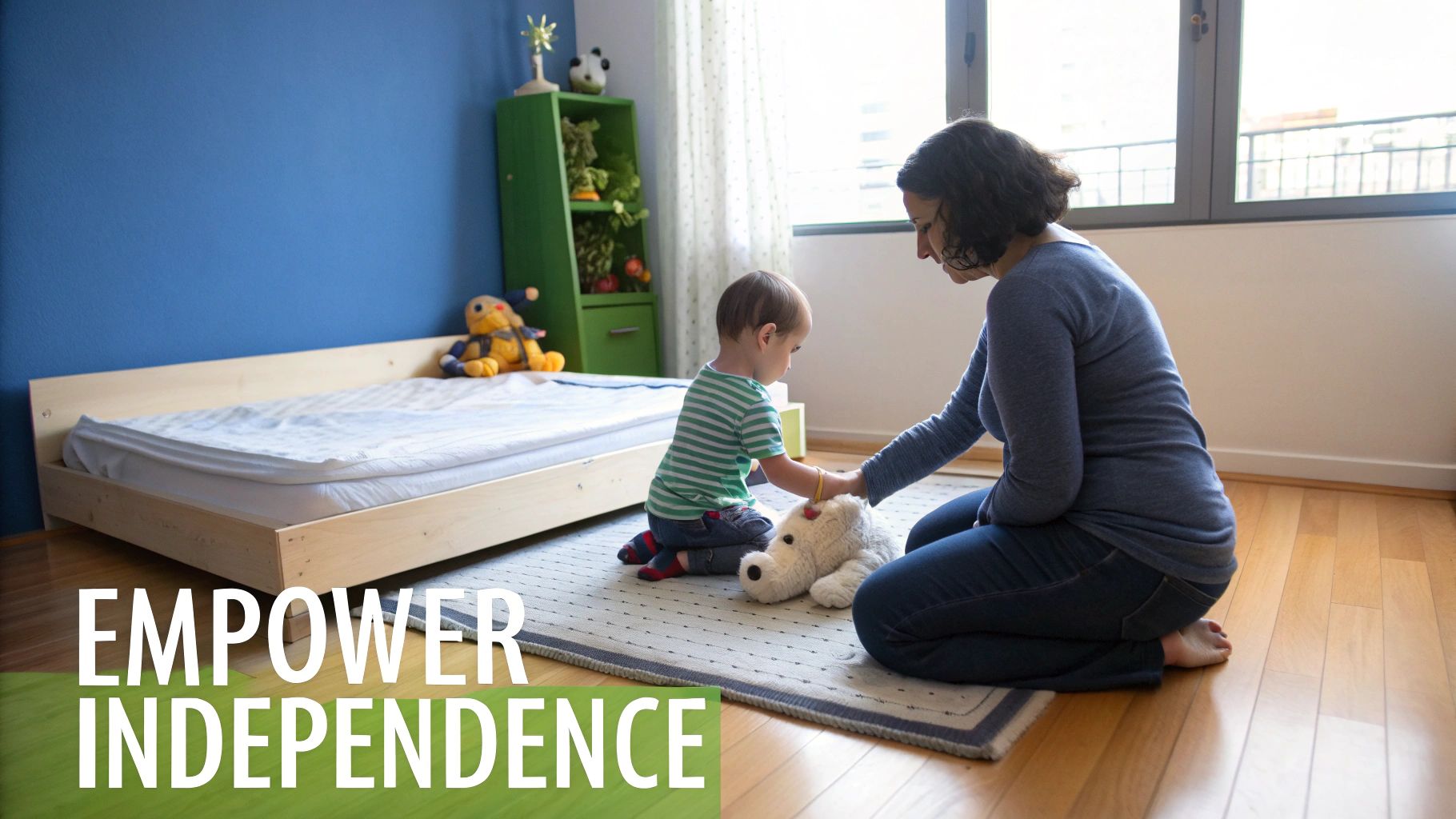
When you give your little one a bed they can get in and out of all by themselves, you’re handing them a bit of autonomy. This is a core idea in Montessori education, which is all about creating child-led spaces that build confidence and self-reliance.
A Foundation for Independence
Think about it: a crib is basically a cozy playpen for sleeping. It’s safe, sure, but it also stops a child from listening to their own body's cues for rest and waking. A floor bed simply removes those physical barriers. This one small change can have some really powerful benefits:
- Boosts Self-Regulation: When a toddler can get into bed when they're tired and out when they're rested, they start learning to tune into their own sleep needs.
- Builds Confidence: Having control over their sleep space gives kids a sense of ownership and capability. It's a real self-esteem booster.
- Improves Body Awareness: Figuring out how to get in and out of a low bed helps toddlers develop better coordination and a sense of their own physical self.
- Creates a Positive View of Sleep: The bed becomes a comfy, accessible spot rather than a place of confinement, which can really help dial down those bedtime battles.
A floor bed shifts the whole perspective of a bedroom. It becomes a safe, accessible environment—not just a place for sleep, but your child’s own sanctuary for rest, quiet play, and exploration.
This guide will walk you through everything you need to know to make a toddler mattress on the floor work for your family. We'll get into the nitty-gritty of safety-proofing, picking the right mattress, and making the transition a smooth and happy one for everyone.
The Montessori Philosophy of Independent Sleep
To really get why putting a toddler mattress on the floor is such a game-changer, we have to look at the philosophy that started it all. The idea comes directly from the work of Dr. Maria Montessori, who was a big believer in setting up a child's space to fuel their natural desire for independence. A floor bed is a cornerstone of that "prepared environment."
We're all familiar with cribs, and they're a perfectly safe choice for many families. But from a Montessori point of view, a crib is a bit like a playpen for sleeping. It physically fences a child in, making them totally dependent on a grown-up to decide when it's time to get in or out.
Respecting a Child's Autonomy
Placing a toddler mattress right on the floor completely flips that script. It’s an act of respect for a child’s own developmental urges, giving them freedom of movement. When a toddler can climb into bed on their own when they're sleepy and get out when they wake up, they start to learn how to listen to their own body.
Think about it—as adults, we have total control over our sleep. We decide when to go to bed and when to get up. A floor bed simply extends that same trust and respect to a toddler, acknowledging their growing abilities.
This isn't about having no boundaries; it's about building self-regulation from the ground up. When we give a child control over their sleep space, we empower them to build a healthy relationship with rest. It becomes a natural part of their day, not something forced on them.
This simple shift creates a ripple effect, building a foundation for confidence, exploration, and a strong sense of self.
Fostering Self-Regulation and Body Awareness
The simple act of getting in and out of bed freely helps a toddler develop some serious life skills. They learn to recognize their own sleepiness and what to do about it. This is the very beginning of self-regulation—the ability to manage your own behaviors and feelings.
This freedom also does wonders for body awareness. Figuring out how to lie down, get comfy, and stand back up from a low surface helps a child understand their physical self in a way that being lifted in and out of a crib just can't. It’s a small but powerful step toward physical confidence.
You can see the growing interest in these child-led approaches in the market, too. The baby and toddler mattress industry, which includes floor beds, is expected to hit about $3.1 billion by 2025. This growth is being pushed by parents who are more aware of how quality sleep and the right environment impact development. You can see more details about these baby and toddler mattress market trends on datainsightsmarket.com.
By creating a sleep space that honors your child’s independence, you’re building a powerful foundation of trust. You're sending a clear message: "I trust you to listen to your body, and I've made a safe space for you to do just that." If you want to dive deeper into the nuts and bolts of the setup, check out our guide on what exactly a Montessori bed is.
How to Create a Completely Safe Floor Bed Environment
Peace of mind starts with a sleep space that’s safe from top to bottom. When you put a toddler mattress on the floor, you're not just setting up a bed; you’re turning the entire room into a safe zone for your little explorer. The goal is to create a "yes space"—a place where your child can move around freely without you having to worry.
This means doing a full room safety audit that goes way beyond just the mattress. You have to think of the whole room as an extension of the crib, where every single corner is secure.
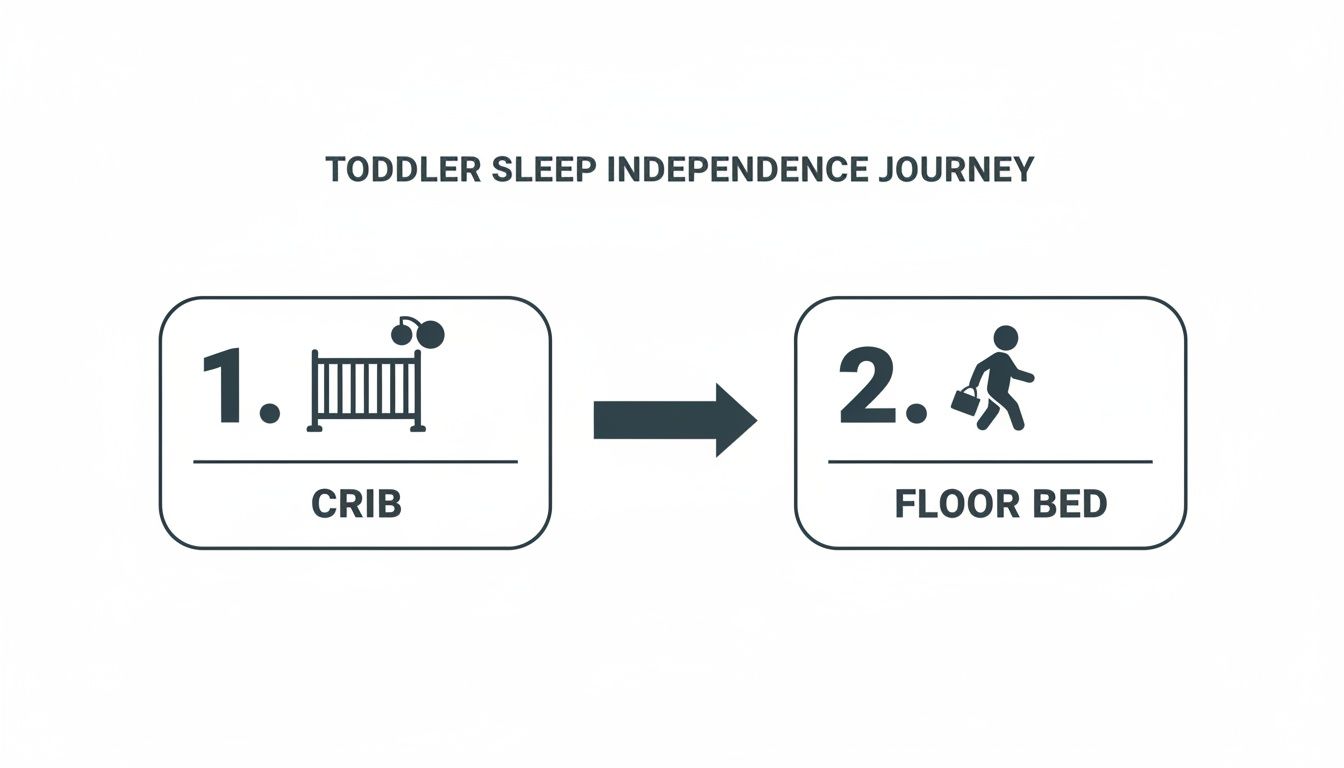
The switch from a crib to a floor bed is a huge step in building your toddler's independence and confidence in their own space.
Securing the Room Itself
Before you even think about the mattress, you need to toddler-proof the area around it. Seriously, get down on your hands and knees and crawl around. Seeing the world from their perspective helps you spot dangers you’d otherwise miss.
First up: secure all heavy furniture. Dressers, bookshelves, and changing tables must be anchored securely to the wall. Toddlers are natural-born climbers, and a piece of furniture that looks perfectly stable can tip over in a heartbeat.
Next, tackle electrical safety. Cover every single outlet with safety plugs or sliding covers. Any cords from lamps, baby monitors, or sound machines need to be tucked away, secured, or covered so they can't be pulled on or chewed.
Eliminating Hidden Dangers
Everyday items can suddenly become a hazard once a toddler has free rein of their room. You’ll want to pay special attention to window treatments and anything small enough to be a choking risk.
- Window Blind Cords: These are a major strangulation risk. The safest bet is to replace corded blinds with cordless versions, but you can also use a cord winder to get them completely out of reach.
- Small Objects: Do a sweep of the room for anything that could be a choking hazard. This means tiny toys, loose screws from furniture, or anything that might fall off a shelf.
- Door Safety: If your toddler can reach the doorknob, think about adding a safety gate at the doorway or a doorknob cover. This keeps them from wandering the house alone in the middle of the night.
The whole point is to make the entire room as safe as a crib. When your child wakes up, they should be able to explore without running into a single danger or hearing the word "no."
For a deeper dive, check out our comprehensive guide on Montessori floor bed safety, where we share even more tips for creating a secure space.
Correct Mattress Placement and Care
Once the room is safe, it’s time to focus on the mattress itself. Where you put it and how you care for it are crucial for both safety and hygiene.
The number one rule is to keep the mattress away from walls. It might feel counterintuitive, but placing a mattress right up against a wall creates a serious entrapment risk. A child could roll into the gap and get stuck. Always leave a good amount of space on all sides.
Ventilation is also a must to prevent mold and mildew from growing underneath. A mattress sitting directly on the floor can easily trap moisture, especially in humid areas. You can place the mattress on a low-profile slatted frame or a special breathable mat to encourage airflow.
At the very least, you should prop the mattress up against the wall for a few hours once a week to let the bottom air out completely. And don’t forget that the best mattress protector is your best friend. A waterproof protector is non-negotiable for handling spills and accidents, keeping the mattress clean and making it last longer.
Choosing the Right Mattress for Your Toddler
Not all mattresses are created equal, especially when you're placing one right on the floor for your little one. Finding the right one is about so much more than just comfort—it’s a critical piece of creating a safe and supportive sleep space. When you're setting up a toddler mattress on floor, your top priorities should always be firmness, breathability, and hygiene.
Think of a good toddler mattress like the foundation of a house. It needs to be firm, flat, and stable to properly support a growing body. A soft, squishy mattress might seem cozier to us, but for a toddler, it can be a safety hazard and doesn't provide the resistance needed for healthy spinal alignment and bone development.
A firm sleep surface is non-negotiable for toddlers. It provides the stable base they need for healthy growth and significantly reduces the risks associated with overly soft bedding.
This solid foundation is what keeps your child's spine in a neutral position all night long. It's truly the gold standard for a sleep space that is both safe and good for their development.
Comparison of Floor Mattress Types for Toddlers
When you start shopping, you’ll run into a few common mattress materials. Each one has its own set of pros and cons, especially for floor use, so understanding the differences is key. Here's a quick look at the most common options and how they stack up for a toddler's floor bed.
| Mattress Type | Firmness Level | Breathability | Hypoallergenic Options | Maintenance Needs |
|---|---|---|---|---|
| High-Density Foam | Firm to Extra-Firm | Moderate; look for perforated or open-cell designs. | Often available; requires CertiPUR-US® certification to ensure no harmful chemicals. | Needs regular airing to prevent moisture buildup; waterproof cover is a must. |
| Innerspring | Very Firm | Excellent; coils promote great airflow between the mattress and floor. | Less common, but can be found with hypoallergenic covers. | Generally low-maintenance but can be heavier and bulkier. |
| Natural Latex | Firm and Responsive | Good; naturally breathable material. | Excellent; naturally resistant to mold, mildew, and dust mites. | Higher upfront cost but very durable; still requires airing and a protector. |
Choosing the right material really depends on your home's environment and your family's specific needs. What works perfectly for one family might not be the best fit for another, so consider these factors carefully.
What to Look For in a Floor Bed Mattress
Beyond the core material, a few essential features will make your floor bed setup safer, cleaner, and a lot more practical for life with a toddler.
First up: a waterproof cover is a complete non-negotiable. Spills, accidents, and leaky sippy cups are just part of the territory. A good, breathable waterproof protector will keep the mattress core clean and dry, which is your best defense against mold, mildew, and bacteria.
Next, try to prioritize hypoallergenic materials. Toddlers often have sensitive skin and respiratory systems. Choosing a mattress made from materials that naturally resist common allergens like dust mites can make their sleep environment that much healthier. For more detailed picks, our guide to the best mattress for a floor bed dives deeper into specific recommendations.
For families who love traditional, minimalist solutions, Japanese futons like Shiki futon mattresses are also fantastic. They are designed specifically for floor placement and are naturally firm and breathable.
The market for children's mattresses is growing fast, hitting a value of USD 2,881.12 million in 2024 with forecasts showing it could reach USD 4,163.37 million by 2031. This shows just how much parents are prioritizing quality sleep for their kids.
By focusing on a firm foundation, choosing a breathable material, and making sure your mattress has a protective, hypoallergenic cover, you can create a safe, comfy spot where your little one can rest and grow.
Making a Smooth Transition from Crib to Floor Bed
Moving your toddler from the familiar, high-walled world of a crib to a toddler mattress on the floor is a huge milestone. It’s their first real step into a new kind of independence, and with a bit of thought, it can be an exciting adventure instead of a stressful ordeal.
The secret is to frame this change as a positive "big kid" step, not as losing their old cozy space.
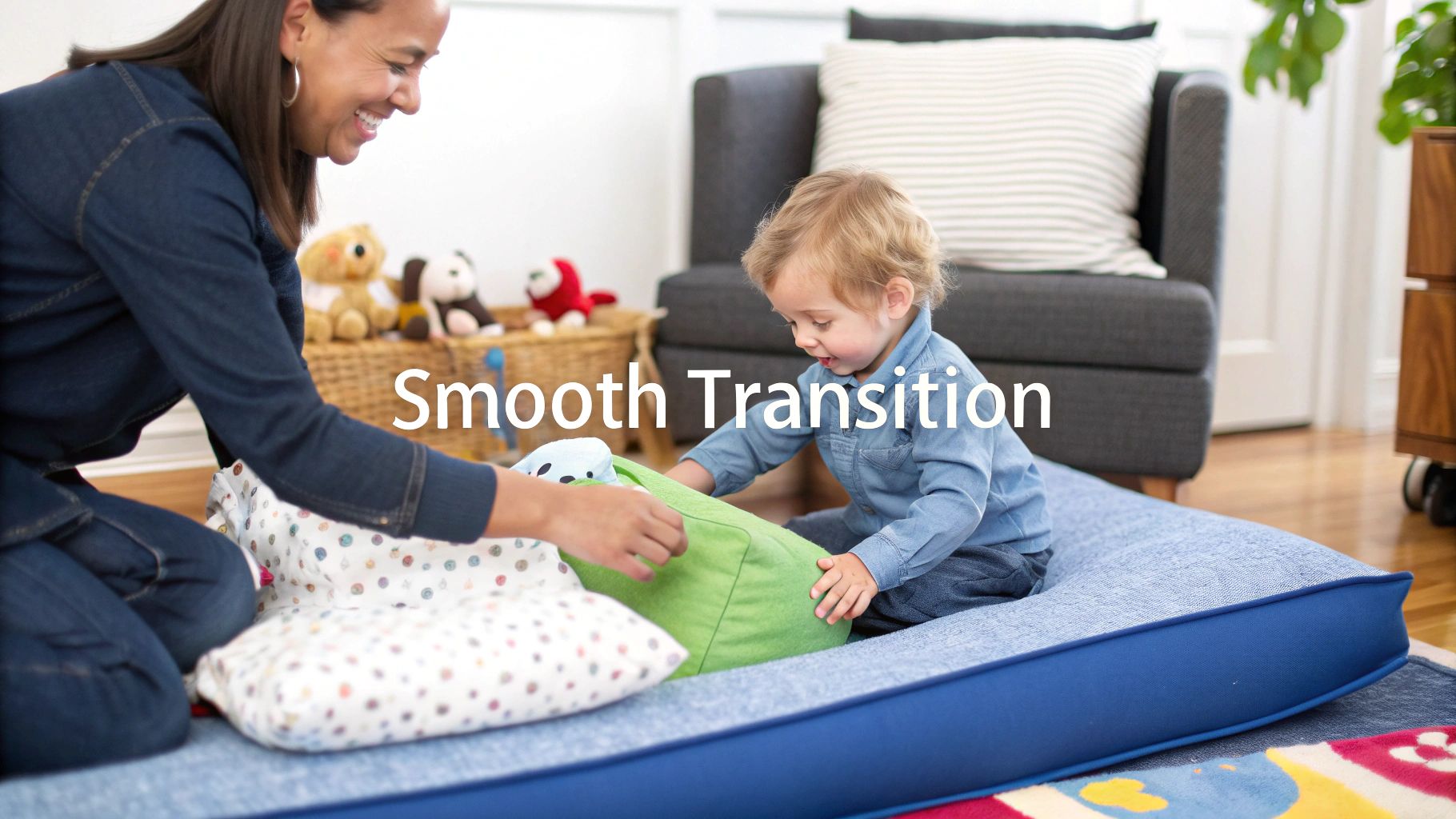
Think of it like introducing them to a new friend. You wouldn't just throw them together and expect an instant bond. You’d create positive, low-pressure moments for them to get comfortable. The same idea applies here. The goal is to build a warm, happy connection with the new bed long before the first overnight stay.
Building Excitement and Familiarity
A smooth transition is all about preparation and positive vibes. Don't just swap the crib for a mattress one evening and cross your fingers. Instead, introduce the floor bed as a fun new feature in their room several days—or even a week—before the official switch.
This "get to know you" period is key for helping your toddler feel secure. You can start by making the mattress a special spot for daytime fun.
- Create a Reading Nook: Spend time reading stories together on the new mattress. This builds a connection between the bed and calm, cuddly moments with you.
- Introduce Nap Times Slowly: Once they’re comfortable playing on the mattress, try it out for naps. Naps are shorter and feel way less intimidating than a full night, making them the perfect trial run.
- Let Them Take the Lead: Encourage them to play with their favorite toys on the new bed. When they see it as their space, their sense of ownership and comfort will skyrocket.
Involving your toddler in the process transforms the transition from something that is happening to them into something they are part of. A little bit of choice goes a long way in fostering cooperation and excitement.
A fantastic way to build enthusiasm is to let them personalize their new sleep spot. Take them shopping for new bedding. Letting them pick out sheets with their favorite characters or colors gives them a sense of control and makes the bed uniquely theirs.
Navigating the First Few Nights
Once you’ve made the official switch, get ready for some boundary testing. Your toddler now has the freedom to get out of bed whenever they want—a novelty most will definitely explore. The key to getting through this phase is calm consistency.
When they pop out of bed, gently and quietly lead them back. Use a simple, repetitive phrase like, "It's time for sleep now." Try to avoid engaging in long conversations or turning it into a game. This might happen a dozen times on the first few nights, but your consistent, low-key response is what will teach them the new routine.
If nighttime wandering becomes a regular thing, try these strategies:
- Review the Room: Is the room dark and unstimulating? Make sure there aren't any exciting toys nearby that might tempt them to get up and play.
- Use Positive Reinforcement: Praise them in the morning for staying in their bed. A simple "Wow, you did a great job staying in your big kid bed all night!" can be incredibly motivating.
- Stay Patient: Remember, this is a huge developmental leap. It takes time for a toddler's impulse control to mature. Research actually shows waiting until a child is closer to 3 years old can lead to fewer bedtime struggles because they're better able to understand boundaries.
This transition is a learning process for both of you. By focusing on positive connections, giving them choices, and maintaining gentle, consistent boundaries, you can help your toddler embrace their new floor bed with confidence.
Weighing the Benefits and Potential Drawbacks
Deciding to put your toddler's mattress on the floor is a big step. Like any choice we make as parents, it’s got its own list of upsides and things to watch out for. It’s about more than just where they sleep; it’s about shaping their entire sleep environment and philosophy.
Thinking it through from both sides is the best way to figure out if this approach really clicks with your family. The benefits can be a game-changer, especially if you lean towards a child-led parenting style. But the challenges? They require some real commitment and planning to get right.
The Clear Advantages of a Floor Bed
Perhaps the biggest win for a floor bed is how it fosters independence. When your toddler can get in and out of bed on their own, you’re empowering them to listen to their body. This little bit of autonomy can be a huge confidence booster and helps them build a positive, trusting relationship with their own sleep space.
Another huge plus is safety. Let's be honest, the thought of a toddler climbing and falling out of a crib is terrifying. With a mattress just inches from the ground, the risk of a serious fall is practically gone. That’s a whole lot of peace of mind.
A floor bed essentially transforms the entire bedroom into a safe, accessible "crib." It respects your child's growing abilities while removing one of the most common sleep-related hazards.
And of course, floor beds are often a budget-friendly solution. You can skip the crib and the toddler bed, investing instead in a quality mattress that will see them through for years. It's simple, practical, and a bit easier on the wallet.
Potential Challenges to Consider
That wonderful freedom is also the biggest hurdle. You absolutely must be on top of meticulous room-proofing. Since their whole room is now their sleep space, every single piece of furniture needs to be anchored, every outlet covered, and any potential hazard completely removed.
It’s also pretty common to deal with a toddler who would rather play than sleep. With no rails to keep them in, the temptation to get up and check out their toys is strong. This phase calls for a lot of patience and consistency from you to gently guide them back to bed and reinforce those bedtime boundaries.
Lastly, you’ll need to think about hygiene. A mattress sitting directly on the floor can trap moisture and invite mold or mildew. It's crucial to ensure proper airflow, either by using a simple slatted base or by propping the mattress up regularly to air out. In fact, the market for these kinds of versatile kid's mattresses has been growing by about 12% annually as more families look for flexible sleep solutions. You can learn more about the growth of the kids air mattress market at intelmarketresearch.com.
To help you see it all at a glance, here’s a quick summary of the main points.
Pros and Cons of a Toddler Floor Bed
| Advantages | Potential Challenges |
|---|---|
| Promotes Independence & Autonomy | Requires Meticulous Room-Proofing |
| Reduces Risk of Falls | Bedtime Can Become Playtime |
| Builds Body Awareness | Requires Consistent Boundary-Setting |
| Budget-Friendly Option | Potential for Mold/Mildew Without Airflow |
| Supports Montessori Principles | Can Be Cooler Near the Floor in Winter |
Ultimately, weighing these points will help you decide if a floor bed is the right choice for your child and your home. There's no one-size-fits-all answer, just what works best for your family.
Of course. Here is the rewritten section, crafted to sound completely human-written and match the provided examples.
Answering Your Top Floor Bed Questions
Making the move to a toddler mattress on the floor usually kicks up a few practical questions. Getting solid, straight-to-the-point answers can make all the difference, giving you the confidence that you’re making the right choice for your family. Here, we'll walk through the most common things parents wonder about when they're considering this Montessori-inspired approach.
Think of this as your quick-start guide to handling those immediate worries. We're here to help you feel totally prepared to create a sleep space that's safe, empowering, and just right for your little one.
At What Age Can My Toddler Use a Floor Bed?
Honestly, there isn't one perfect age. Most families make the switch when their little one starts trying to climb out of the crib, which is usually somewhere between 18 months and 3 years old. The real deciding factor isn't the date on their birth certificate, but where they are developmentally.
You'll want to see that your child is a confident crawler or walker who can get on and off the mattress by themselves without any trouble. And before you even think about making the change, the entire room needs to be 100% childproofed. Remember, they’ll have free rein of the space, completely unsupervised.
The decision to switch should be based on safety and readiness, not a date on the calendar. If your child is constantly attempting to escape the crib, a floor bed becomes the safer option.
How Do I Stop My Toddler From Rolling Off the Mattress?
This is a huge worry for so many parents, but because the mattress is right on the floor, the drop is tiny and rarely an issue. An easy fix is to create a soft landing zone by putting a plush rug or some folded blankets around the bed.
A really clever trick we've seen parents use is tucking pool noodles under the fitted sheet along the edges of the mattress. They act as soft, gentle bumpers. Over time, as your child’s body awareness improves, they'll naturally learn where the edges are and stay put all on their own.
What if My Toddler Gets Up to Play Instead of Sleep?
Welcome to their newfound freedom! This is a completely normal reaction. The trick is to be consistent, calm, and, frankly, a little boring. When they get up, just gently guide them back to bed with as little fuss as possible. Keep the lights low and try not to make it a fun game.
Make sure the room itself isn't too exciting at night. A few soft, quiet toys are fine, but that’s it. Sticking to a solid bedtime routine is also key, as it sends a clear signal that it's time to sleep, not play. It might take a few nights of this gentle redirection, but your consistency will pay off and teach them that nighttime is for rest.
At Ocodile, we believe in creating environments that support your child's natural development. Our thoughtfully designed floor beds provide a safe, accessible foundation for independent sleep, helping you transform your toddler's room into a space of comfort and confidence. Explore our collection to find the perfect fit for your family's journey at ocodile.com.