



How to Choose the Perfect Toddler School Desk
A toddler school desk might seem like just a tiny table, but it's so much more. Think of it as the first dedicated space where your little one’s creativity, independence, and love for learning really start to take shape.
Why a Toddler Desk Is More Than Just Furniture

This isn't just another piece of furniture; it's your child's very first "workstation." It’s a launchpad for everything from their first wobbly crayon scribbles to the intense focus it takes to solve a chunky puzzle. Giving them their own desk sends a powerful message: what you do here is important.
When a child has a space that’s all theirs, it sparks a huge sense of ownership and pride. This isn't just a table; it's their table. That feeling of responsibility is a big deal in early development, gently encouraging them to look after their own things and their little corner of the world.
Building Skills for Life
A dedicated desk helps set up simple routines that will serve them for years. It creates a natural separation between free-for-all playtime on the floor and quieter, seated activities. This simple structure helps toddlers understand transitions and prepares them for the focus needed in school later on.
It’s all about creating an inviting little nook where your child feels empowered to explore. This special zone helps build:
- Independence: They learn to pull up their own chair, pick an activity, and get lost in it all on their own.
- Focus: A clear, clutter-free surface cuts down on distractions, which can help them concentrate for surprisingly long stretches.
- Creativity: It becomes the natural spot for drawing, painting, and building, making creative time a part of their daily rhythm.
A toddler desk is a perfect example of a "prepared environment," a core concept in early childhood education. It’s a space designed just for them, inviting them to dive into meaningful play and build real self-reliance.
A Growing Trend for Early Learning
It's clear parents are catching on. The kids' furniture market, including the humble toddler desk, has seen some serious growth. Projections show the market is set to skyrocket to $90.91 billion by 2033. This boom is all about the growing demand for safe, functional, and developmentally-friendly furniture for learning at home. You can read more about the kids' furniture market growth on Data Bridge Market Research.
Mastering Safety and Ergonomics for Your Toddler
When you're ready to bring a toddler school desk into your home, two things should be at the very top of your list: safety and ergonomics. Think of them as the solid foundation for all the amazing learning and play that will happen there. Getting this right from the start means your child’s little workspace is not just fun, but truly supportive of their growing body.
It all begins with a steady base. A wobbly desk and a busy toddler are a combination you definitely want to avoid. Look for a desk with a wide, solid footprint that won't tip over, even when your little one inevitably leans, pushes, or tries to climb on it.
Your Non-Negotiable Safety Checklist
Once you've confirmed it's stable, a few other key details separate a great desk from a hazardous one. Keep this mental checklist handy when you're shopping around:
- Rounded Corners: Sharp corners are a real hazard for toddlers who are always on the move. Make sure every edge on both the desk and chair is smoothly rounded to prevent bumps, bruises, or worse.
- Non-Toxic Finishes: Toddlers love to explore the world with their hands and, yes, their mouths. The desk absolutely must have a non-toxic, low-VOC (Volatile Organic Compound) paint or finish. These compounds can release yucky gases into your home, affecting air quality and your child's health.
- Pinch-Free Design: Take a close look at any moving parts, like lids for storage bins or adjustable leg mechanisms. They should be designed so that curious little fingers can't get pinched or trapped.
A truly safe toddler school desk is one you don't have to worry about. It’s built with a child’s curious and often clumsy nature in mind, turning their "workstation" into a secure space for exploration.
Now that we've covered the essential safety checks, let's talk about ergonomics. It's a big word, but it's crucial for your toddler's comfort and healthy development.
To make things simple, we've created a quick-reference table. Use this to easily check any toddler desk for the most important safety and ergonomic features.
Toddler Desk Safety and Ergonomics Checklist
| Feature | What to Look For | Why It Matters for Your Toddler |
|---|---|---|
| Stability | A wide, heavy base that resists tipping. | Prevents the desk from falling over if your toddler leans or climbs on it. |
| Corners & Edges | Smoothly rounded on both the desk and chair. | Reduces the risk of injury from accidental bumps and falls. |
| Materials & Finish | Low-VOC or zero-VOC, non-toxic paint and sealants. | Keeps harmful chemicals away from your child, who may touch or mouth the furniture. |
| Pinch Points | Child-safe hinges and adjustment mechanisms. | Protects little fingers from getting caught in moving parts. |
| The 90-90-90 Rule | Chair and desk height allow for proper posture. | Supports healthy spine development, improves focus, and reduces fidgeting. |
| Adjustability | Desk and chair can be adjusted as your child grows. | Ensures a proper ergonomic fit over time, making it a longer-lasting investment. |
By keeping these points in mind, you can confidently choose a desk that creates a truly safe and supportive environment for your child to learn and play.
Understanding Ergonomics: The 90-90-90 Rule
Ergonomics might sound complicated, but for a toddler, it really just comes down to one simple guideline: the 90-90-90 rule. This is the gold standard for healthy posture.
When your child sits down, their body should ideally form three 90-degree angles:
- Ankles at 90 degrees: Their feet should be flat on the floor, not dangling or tucked under the chair.
- Knees at 90 degrees: Their thighs should be parallel to the floor, creating a nice right angle at the knees. You can get more great tips in our guide on how to properly determine the height of a chair seat.
- Hips at 90 degrees: Their back should be straight against the chair back, forming that final right angle at their hips.
This posture isn’t just for comfort—it’s vital for supporting their developing spine. It also helps them stop fidgeting and focus better on their drawing or puzzles. A desk that’s too high will make them hunch their shoulders up, while one that's too low will cause them to slouch over.
With hybrid learning becoming more common, the right furniture has gone from a "nice-to-have" to a "must-have." Adjustable toddler desks are now a key tool for parents, and studies show a proper setup can reduce posture issues in young children by 35-50%. Even more impressive, data from the educational furniture market at Global Growth Insights suggests that kids with a dedicated, ergonomic desk can score 15-20% higher in early literacy assessments.
Finding the Right Fit with Ideal Desk Dimensions
Think of picking a toddler desk like you're buying their first pair of shoes. Get the fit just right, and you're supporting healthy posture and happy learning. Get it wrong, and you could be setting them up for discomfort and bad habits. Let's move past the guesswork and look at the actual numbers that create a desk that feels made for them.
The goal here is a workspace that's both comfortable and actually usable. A desk surface that's too tiny is just an exercise in frustration—crayons and papers will be constantly tumbling to the floor. On the other hand, a huge, sprawling desk can be intimidating for a little person, making them feel lost. The sweet spot is a surface with just enough room for an open book and some art supplies, without feeling overwhelming.
Matching Dimensions to Your Child's Age
Toddlers grow so fast that a desk that’s a perfect fit at 18 months will look comically small by age three. This is why an adjustable toddler desk is such a smart move—it can grow with your child, ensuring that perfect ergonomic fit for years to come.
Here are some general guidelines for desk and chair heights, based on your child's age and average height:
- 18-24 Months (Avg. Height: 32-35 inches): Look for a desk height around 16-18 inches with a chair seat height of 8-9 inches. This lower profile is key for letting them get in and out of the chair all by themselves.
- 2-3 Years (Avg. Height: 35-38 inches): A desk height of 18-20 inches paired with a chair seat of 10-11 inches is usually the sweet spot. They're getting taller and need a bit more legroom.
- 3-4 Years (Avg. Height: 38-42 inches): Aim for a desk that's 20-22 inches high with a chair seat of 12-13 inches. This size accommodates their longer limbs and gets them ready for preschool-sized furniture.
If you want to get even more specific, you can dive into our complete guide to children's desks and chairs.
The right workspace isn't just about size; it's about empowerment. When a desk fits your child correctly, it invites them to sit down and engage, making learning feel natural and fun instead of like a chore.
This flowchart is a great visual cheat-sheet for the most important safety checks to run through when you're looking at a desk.

The main thing to remember is that safety isn't just one single feature. It’s the combination of a stable build, a kid-friendly design, and non-toxic materials working together.
What Makes a Toddler Desk Montessori-Friendly?
When you hear "Montessori-friendly," it’s easy to picture a specific brand or a certain aesthetic. But it’s not about a logo—it’s a philosophy. A Montessori-friendly desk is simply one built on core ideas like independence, simplicity, and being perfectly sized for your little one. It's furniture designed to empower them, not just fill a corner of a room.
Think of it as their own personal "prepared environment," just in miniature. Dr. Maria Montessori's entire approach was about giving children the right tools and the freedom to explore their world. The right desk is like an open invitation for your child to dive into activities and learning, all on their own terms.
Embracing Simplicity and Natural Materials
One of the biggest tells of a Montessori-friendly desk is its simplicity. The design should be clean and uncluttered, with a clear surface that helps your child focus on one thing at a time. Desks loaded with built-in gadgets, bright cartoon characters, or other distractions can overwhelm a young mind and pull their attention away from what they’re actually doing.
A Montessori-friendly desk doesn’t scream for attention. Instead, it quietly offers a space for your child's concentration to flourish, making the activity itself the main event.
The materials matter, too. You’ll notice that most Montessori-aligned furniture leans heavily into natural materials like wood. A solid wood desk isn't just sturdy; it offers a wonderful tactile experience that connects your child to the natural world. It’s also incredibly durable, which is a must for any furniture that’s going to live with a toddler.
If you want to dive deeper into this, our guide on choosing a Montessori table and chair set has some great pointers.
Key Features of a Montessori-Aligned Desk
To really support your child’s independent spirit, you want to look for features that put them in control. The goal is to create a space where they can work and play without needing you to constantly step in and help.
Here’s what to look for:
- Child-Sized Proportions: The desk and chair absolutely must be low enough for your toddler to sit down and get up on their own. This small thing is a huge boost for their physical confidence and autonomy.
- Open and Accessible Design: This is a big one. Ideally, their materials (puzzles, crayons, paper) are stored on low, open shelves nearby—not tucked away in tricky drawers attached to the desk. This lets them choose an activity, bring it to their desk, and—most importantly—put it away all by themselves.
- Uncluttered Workspace: A simple, flat surface is like a blank canvas. It gives them just enough room for a single activity, which subtly teaches them to concentrate on one task at a time.
This idea of creating dedicated, kid-friendly spaces at home is really catching on. As more families set up these little zones, the market for children's furniture is growing. Research even shows that a properly designed workspace can reduce a child's slouching by 40%, which fits perfectly with the Montessori goal of supporting healthy development. You can see more about the growth of the children's furniture market on Archive Market Research.
Smart Ways to Set Up Your Toddler's Desk at Home

You’ve picked out the perfect little desk—fantastic! But now comes the next big question: where exactly should it go? The spot you choose for this new learning station is just as important as the desk itself. You’re looking for that sweet spot between a quiet corner for focus and a place where you can still keep a gentle eye on things.
A cozy nook in the living room or family area often works beautifully. This keeps your child close, but it also helps them understand that the desk is a special place for calmer activities, separate from the high-energy play zone. Putting it in a busy hallway can be too distracting, but sticking it in a bedroom might leave them feeling a little too isolated.
Let There Be Light
Good lighting is something you just can't compromise on, especially for your toddler's developing eyes. If you can, try to position the desk near a window to catch as much natural light as possible. Studies show natural light not only helps reduce eye strain but can actually lift their mood and improve concentration.
For those gray days or evening art projects, a soft, warm desk lamp is your best friend. Steer clear of harsh, cool-toned fluorescent lights that can feel a bit clinical and create an annoying glare. A good lamp makes all the difference, ensuring their coloring, puzzles, or block-building is always comfortably lit.
Organization for Independence
An organized desk is more than just tidy; it’s a tool that empowers your toddler to take charge of their own supplies. For some great tips, check out this practical advice on how to organize a small desk which can help you create a functional, clutter-free space.
The real secret to toddler organization is making everything accessible. If they can’t reach it and put it away themselves, the system is doomed to fail. It’s about building their confidence, not just keeping things neat.
Here’s how to make that happen with a few simple tricks:
- Accessible Bins: Use lightweight, open bins or baskets on a low shelf right next to the desk. You can even label them with pictures (a crayon, a puzzle piece, a block) so your little one knows exactly where everything belongs, no reading required.
- Keep Choices Limited: Don't overwhelm them with options. It’s better to rotate a small selection of activities and supplies each week. This keeps things feeling fresh and interesting without creating a mountain of clutter.
- One Thing at a Time: Gently encourage the habit of having only one activity out on the desk at once. This really helps them focus and, as a bonus, makes cleanup a breeze.
Your Simple Maintenance Checklist
Finally, a quick weekly check-in will keep the desk safe, sturdy, and inviting for your little learner.
- Wipe It Down: Grab a damp cloth and a child-safe cleaner to wipe away any germs, snack crumbs, and stray crayon marks.
- Check for Stability: Give the desk and chair a gentle wiggle to make sure nothing has come loose.
- Tighten Hardware: Every few weeks, take a moment to check all the screws and bolts. Tighten up any that have loosened from all that busy, daily use.
Exploring Great Alternatives to a Traditional Desk
A traditional toddler school desk is a great tool, but it's definitely not the only game in town for creating a little learning nook. Depending on your family’s rhythm, the space you have, and your child’s unique personality, an alternative might actually be a much better fit. It’s all about finding what works for your home.
It’s not just parents who are thinking outside the box. The school furniture market is projected to hit $5.85 billion in 2025, and while desks and chairs still make up a big slice (46%), there's a huge shift happening. Over 54% of schools are now putting their money into flexible learning spaces, a trend that’s trickling right down into our homes. You can see more on these trends in the school furniture market on Global Growth Insights.
Let's look at some fantastic alternatives.
The Multi-Functional Activity Table
Think of an activity table as the social hub for toddler learning. These tables are typically a bit larger and lower to the ground than a standard desk, making them absolutely perfect for playdates or homes with multiple little ones.
Their generous surface is a lifesaver for:
- Messy Crafts: Finally, a place to spread out the finger paints, play-doh, and sensory bins without a constant fear of it all ending up on the rug.
- Large-Scale Projects: Perfect for those elaborate block towers or giant floor puzzles that need a bit more real estate.
- Shared Play: Two or more kids can easily work side-by-side, which is a wonderful way to foster teamwork and sharing skills.
The Grounded Floor Desk
The floor desk is a simple but brilliant idea that works with a toddler's natural desire to play on the ground. It’s basically a low, portable lap tray or a tiny table that lets your child sit right on the floor or a cushion while they draw or play.
This is a fantastic option for helping them develop body awareness and core strength. By using their muscles to sit upright without the full support of a chair, they’re building stability in a very natural way. Plus, for anyone tight on space, floor desks are a dream—just tuck them under the sofa or in a closet when playtime is over.
A floor desk meets your child where they are—literally. It respects their natural developmental stage and provides a simple, focused workspace without needing a full furniture set.
The Empowering Learning Tower
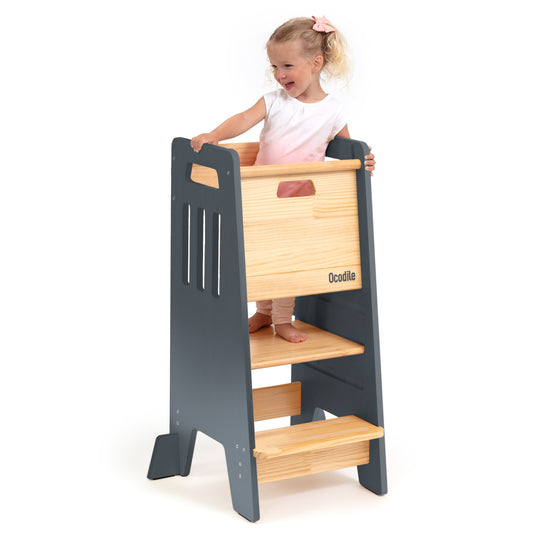
For the toddler who has to be in the middle of everything you're doing, a learning tower (often called a kitchen helper) is a total game-changer. While it's not a desk in the classic sense, it acts as a safe, enclosed step stool that brings your child right up to counter height.
This simple piece of furniture transforms your kitchen island or a workbench into their own personal station. They can draw, have a snack, or "help" you with dinner, all while standing securely at your level. It’s a wonderful way to include them in daily routines.
Common Questions About Toddler Desks
You’ve found what looks like the perfect little desk, but a few practical questions are probably buzzing around your head. It’s totally normal. After all, you’re not just buying another piece of furniture—you’re creating a special spot for your child to learn and grow.
Let's walk through some of the most common questions I hear from parents to help you feel great about your decision.
So, when is the right time? The honest answer is that there's no magic date, but most toddlers show they're ready somewhere between 18 and 24 months old.
Instead of watching the calendar, watch your child. Are they starting to enjoy sitting for activities like puzzles or looking at books? Can they confidently get on and off a small chair by themselves? These are your cues. The key is to introduce it as a fun new place to play, not as a formal “school” setup.
How Do I Get Them to Actually Use It?
Bringing the desk home is the easy part. The real trick is making it a place they want to be. The secret? Make it irresistible.
Start by setting out a couple of their favorite, low-mess activities. Think chunky crayons, a simple wooden puzzle, or a favorite board book.
It helps to sit with them at first, showing them how much fun their new space is. You could try establishing a gentle routine, like having "art time" at the desk right after their nap. When they see you’re excited about it, they will be too. Always praise their creations and maybe even display their artwork nearby to show them this is their special, creative corner.
Your enthusiasm is contagious. When you treat their desk as an exciting and important place, they will too. It becomes their little corner of the world for purposeful play and discovery.
Another big question is about storage. Should you get a desk with built-in cubbies and drawers? This really comes down to your child’s personality. While it sounds convenient, all those little compartments can sometimes be more of a distraction than a help.
For a toddler who gets sidetracked easily, a simple toddler school desk with a clear, open surface is often the better choice. This lines up perfectly with the Montessori approach of focusing on one task at a time, keeping other materials neatly stored on separate, low shelves.