



What Is Freedom of Movement Explained for Families
Freedom of movement is a pretty intuitive idea. At its heart, it’s the basic human right to travel, live, and work wherever you choose, both inside your own country and across borders. It's the ability to pick up and decide where to call home without the government putting up unreasonable roadblocks.
Understanding Freedom of Movement in Simple Terms
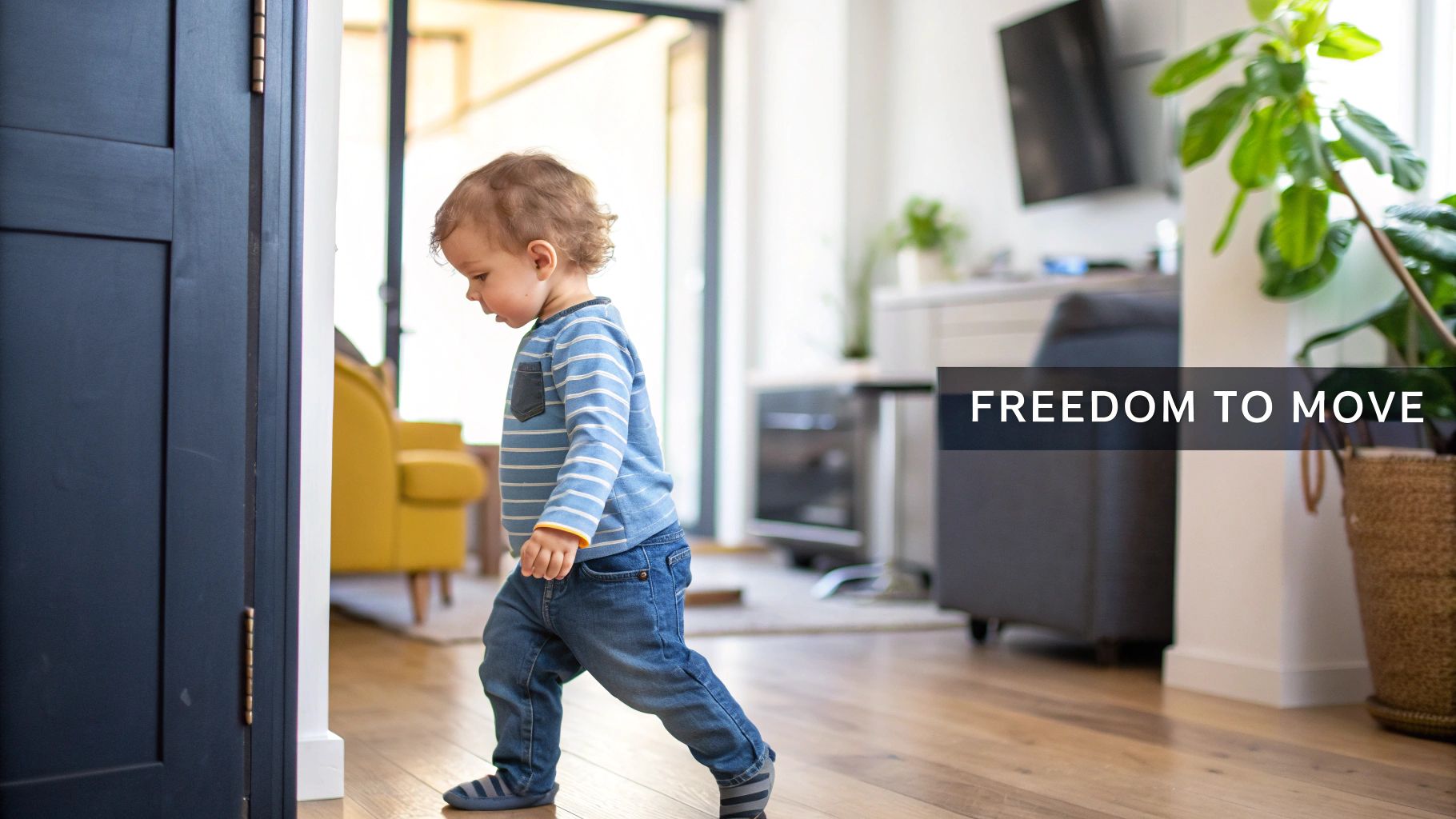
Picture a toddler just learning to walk. They toddle from the living room to the kitchen, driven by pure curiosity. Their world gets a little bigger with every wobbly step. That simple, natural act is the perfect picture of what freedom of movement is all about: the ability to explore, connect, and chase opportunities without arbitrary barriers holding you back.
This right isn't just about vacations or backpacking trips; it’s about the huge life choices we all make. It's the freedom to relocate for a better job, move to be closer to aging parents, or give your kids a chance at a different kind of life. It’s a true cornerstone of personal liberty.
The Two Sides of Mobility
To really get it, it helps to look at freedom of movement from two different angles: moving around within your country and moving between countries. Both are vital for a family's well-being.
-
Domestic Mobility: This is your right to travel and live anywhere within the borders of your own country. It's what allows you to pack up and move from one state to another for work, school, or just a change of scenery.
-
International Mobility: This covers your right to leave any country, including your own, and just as importantly, your right to return. It’s what makes it possible for families to travel abroad, experience new cultures, and keep those precious ties with relatives living oceans away.
These two parts aren't separate; they work together to create a powerful right that supports our autonomy and keeps families connected. Without it, our choices would be seriously hemmed in, affecting everything from career paths to personal relationships.
Freedom of movement is more than just a legal concept—it’s a lived experience. It's the power to chase a dream in a new city or to make sure your child grows up knowing their grandparents, even if they live on another continent.
To break it down even further, this table shows the core components of this right in a snapshot.
Key Pillars of Freedom of Movement at a Glance
| Aspect of Freedom | What It Means for You | Common Example |
|---|---|---|
| Move Within Your Country | You can live in any state, city, or town you choose. | Accepting a job offer and relocating from California to Texas. |
| Leave Any Country | You have the right to exit your home country or any other country. | A family from the UK taking a holiday in Spain. |
| Return to Your Country | You always have the right to come back to your country of citizenship. | An American citizen returning home after working abroad for several years. |
This table simplifies a complex topic, but it highlights just how fundamental these rights are to our everyday decisions.
Why This Right Matters for Families
For families, this isn't an abstract idea—it’s incredibly practical. It shows up in big life decisions and the small details of daily life.
When a parent weighs a job offer in a different state, they’re exercising their freedom of domestic movement. When a family plans a trip to see relatives overseas, they’re relying on their right to international travel.
Ultimately, this freedom is what allows families to stay close, chase their dreams, and build a better future for their kids. It ensures that a line on a map doesn't have to be a barrier to opportunity or to love. It’s about having the power to build your life where you and your family can truly thrive.
The Legal Foundations of Your Right to Move Freely
The ability to pack up and move somewhere new, or even just to travel for a weekend getaway, feels like a basic part of life. But this freedom isn't just a vague notion; it's a right built on a solid foundation of international law, carefully put together over decades to protect personal liberty. Think of this legal architecture as the guardrails that ensure governments respect this fundamental human right.
This whole framework really took shape after the massive upheaval of World War II. It was a moment when the world came together, determined to prevent the widespread violations of human dignity from ever happening again. The result was a series of historic international agreements that, for the first time, clearly defined the basic rights of every single person.
The Cornerstone of Mobility Rights
The most important document in this conversation is the Universal Declaration of Human Rights (UDHR). Adopted by the United Nations way back in 1948, it’s the bedrock of modern human rights law. The UDHR wasn't meant to be legally binding on its own, but rather to act as a "common standard of achievement for all peoples and all nations."
Inside this landmark declaration, Article 13 gives us the clearest and most powerful statement on freedom of movement. It’s short, sweet, but incredibly significant, establishing the core ideas that have guided laws and treaties ever since.
Article 13 of the Universal Declaration of Human Rights
- Everyone has the right to freedom of movement and residence within the borders of each state.
- Everyone has the right to leave any country, including his own, and to return to his country.
This simple text brilliantly covers both sides of the coin: the freedom to move around within your own country and the freedom to travel between different countries. It’s the legal anchor that protects your ability to relocate for a new job, visit family across the globe, or simply see the world.
Making the Right Official in International Law
While the UDHR set the moral standard, other legally binding treaties came next. These turned its principles into real, enforceable commitments for the countries that signed on, requiring governments to actively protect their citizens' rights.
One of the big ones is the International Covenant on Civil and Political Rights (ICCPR), a treaty that over 170 countries have ratified. Its Article 12 builds on the UDHR’s foundation, adding some important details.
- It’s Legally Binding: Unlike the UDHR, the ICCPR is a formal treaty. This means nations that ratify it are legally obligated to follow its rules.
- It Defines Protections: The treaty gets specific, stating that the right to leave a country can only be restricted when it's lawful and necessary to protect things like national security, public health, or the rights of others.
- It Protects Your Right to Return: It crucially reinforces that "no one shall be arbitrarily deprived of the right to enter his own country."
This legal language matters because it shows that while your right to move is fundamental, it's not absolute. It acknowledges that governments can place limits, but only under very specific and necessary conditions.
Freedom of Movement in Action: The EU Example
Perhaps the most ambitious and well-known application of freedom of movement is what we see in the European Union. The EU took those big ideas from international law and turned them into a daily reality for hundreds of millions of people through the Schengen Area.
The Schengen Agreement, which started back in 1985, created a zone where all internal border checks have pretty much disappeared. For families living in this area, freedom of movement isn't just a legal concept—it’s just a normal part of life.
A family in France can hop in the car and drive to Germany for the weekend without ever showing a passport. A person from Spain can take a job in Italy and move there with very little paperwork. This system is a powerful, real-world example of how legal frameworks can directly support family connections, economic growth, and cultural exchange on a huge scale.
Understanding Necessary Limits on Free Movement
While the freedom of movement is a core human right, it isn't an absolute, unlimited pass to go anywhere, anytime. A great way to think about it is how a toddler explores their home. They have the freedom to roam and discover, but sensible limits—like a childproof lock on the medicine cabinet—are there to ensure their safety and the well-being of the whole family. In the same way, governments can and do place legal restrictions on our movement to protect the community.
These limitations aren't supposed to be random or unfair. International law, like the International Covenant on Civil and Political Rights (ICCPR), is very clear that any restrictions have to be set by law, be absolutely necessary, and be proportional to a legitimate goal. It’s all about striking a careful balance between individual liberty and the collective good.
Protecting Public Health and Safety
One of the most relatable reasons for limiting movement is to protect public health. We all just lived through a massive, real-world example with the COVID-19 pandemic. Governments around the globe rolled out lockdowns, quarantines, and travel bans to try and slow down the virus.
These measures, as disruptive as they were, were justified by the urgent need to keep healthcare systems from collapsing and to save lives. It was a clear-cut case where the freedom of individuals to move about was temporarily pulled back for the greater safety of everyone.
Thankfully, as the immediate danger passed, so did many of the restrictions. The Freedom in the World 2023 report actually noted that 34 countries saw targeted improvements in freedom of movement in 2022, mostly because pandemic-related controls were eased. This was a welcome bit of good news after years of declining global freedom.
National Security and Border Control
Another major, long-standing limit on free movement is all about national security. Every country has the fundamental right to control its own borders—deciding who comes in, under what rules, and for how long. This is the whole reason we have passports, visas, and border checkpoints.
These systems are in place for a few critical reasons:
- Preventing Terrorism: Screening people at the border helps identify and stop individuals who might pose a threat.
- Controlling Immigration: Governments manage the flow of people coming to live and work, making sure the process is legal and orderly.
- Fighting Crime: Border controls are vital for stopping international crime like human trafficking and drug smuggling.
Of course, while these measures are necessary, they have to be applied fairly and without discrimination. The real challenge for governments is to keep their borders secure without stomping on the rights of legitimate travelers and people seeking asylum.
The goal is for security measures to be a shield, not a cage. They should protect the people inside a country, not trap them or unfairly keep others out without a valid, legal reason.
Maintaining Public Order
Freedom of movement can also be restricted simply to maintain public order. This is a broader idea that covers situations where a free-for-all could lead to chaos or harm. For instance, during a massive protest or a big sporting event, police might temporarily block off streets or limit access to certain areas.
This isn't about shutting down free speech; it's about public safety. It's about managing crowds to prevent stampedes, directing traffic to avoid a total standstill, or keeping rival fan groups a safe distance apart. Think of it like putting up a baby gate to keep a curious toddler away from the stairs—it’s just guiding movement to prevent accidents. You can find more ideas on creating safe spaces for little ones in our guide on how to childproof your home.
The key is that these restrictions have to be temporary, specific to the situation, and lifted as soon as they're no longer needed. They are tools for handling immediate safety issues, not permanent roadblocks. When used the right way, these limits help make sure everyone can enjoy their freedoms safely.
How Freedom of Movement Shapes Your Family's World
When you hear "freedom of movement," you might picture something vast and abstract, tucked away in dusty legal books. But this right isn't just for politicians and lawyers—it’s a real, living part of your family’s daily life. It’s in every summer road trip, every move to a new city, and every plan you make for your children's future.
This isn't just about crossing borders. It's about having the power to build the life you want for your family, whether that means seeking new opportunities or just staying connected with loved ones. Once you see how it plays out in everyday situations, its true importance really hits home.
Navigating International Travel with Kids
Planning a trip abroad with your little ones is so much more than packing their favorite snacks and digging out passports. It’s a hands-on lesson in international freedom of movement, and it comes with some serious responsibilities designed to keep kids safe.
If you’re a single parent or flying solo with the kids, you’ll almost certainly need extra paperwork. To prevent international child abduction, many countries now require a letter of consent from the parent who isn't traveling.
- What you'll need: A signed letter—often notarized—from the other parent, giving you permission to take the child out of the country.
- Why it matters: This simple piece of paper proves that both legal guardians are on board with the trip.
- What happens if you forget it: A border official could delay your entry or even deny it altogether, turning your much-awaited vacation into a nightmare.
This is a perfect example of a sensible limit on movement. It’s a temporary restriction that protects the child and respects the rights of both parents, showing how freedom and safety have to go hand-in-hand.
The extra paperwork might feel like a pain, but it serves a crucial purpose. It’s a safeguard that makes an abstract right a secure reality for our most vulnerable travelers—our kids.
The Balancing Act of Relocation and Custody
For separated or divorced parents, the right to move freely gets a lot more complicated. You absolutely have the right to choose where you live, but that freedom can be seriously reined in by a custody agreement. This is where your personal freedom bumps up against family law.
A parent can't just pack up and move to another state with their child if it goes against a court order. Custody agreements often include a residency restriction, which clearly defines the geographic area where the child needs to live. It’s a serious limit, and ignoring it has major legal consequences.
This isn't about punishing a parent; it's about protecting the child's right to have a meaningful, stable relationship with both parents. The law recognizes that a child's best interests sometimes outweigh one parent's desire to move. As you can imagine, the legal implications of a custodial parent moving out of state are complex and require careful navigation. This balance is key to keeping family life stable, even after a separation. For anyone working through these challenges, focusing on strengthening family relationships can provide invaluable support and guidance.
Opening Doors to a Brighter Future
On a happier note, this same freedom is also what fuels progress for your family. It’s the right that lets you pack up and chase a better life for your kids, whether that’s for a new job, better schools, or just to be closer to Grandma and Grandpa.
Think about these totally normal, life-changing moments:
- The Big Job Offer: A parent lands a fantastic job in a city a few hours away. It means better pay, more opportunities, and a higher quality of life for everyone.
- The School Search: A family moves one town over to get into a top-rated public school district with great programs for their child.
- The Call for Backup: New parents decide to move closer to their own parents for that much-needed village of support and childcare.
In every one of these scenarios, the freedom to move is what makes it all possible. It’s the legal principle that empowers you to make proactive choices for your children's well-being. This isn't just an abstract right; it's a practical tool for building a better life.
A Global Snapshot of Mobility Rights
The right to move freely feels like a basic human right, but in reality, it's far from universal. The biggest factor dictating your ability to travel, explore, or relocate is the passport you hold. This single document determines whether you can cross borders with ease or face a maze of visa applications, restrictions, and flat-out denials.
The difference in lived experiences is stark.
Think about a family in Western Europe. Hopping on a train to another country for the weekend might involve less planning than a trip to the grocery store. Now, picture a family in a region rocked by political instability. For them, just moving to the next town could be a massive, even dangerous, undertaking. A nation's political climate, economic stability, and diplomatic ties all shape what "freedom of movement" actually looks like for its citizens.
Mapping Global Freedom
This isn't just a gut feeling; the data tells a clear story. The Human Freedom Index 2023, which covers a staggering 98.8% of the world’s population across 165 jurisdictions, paints a pretty grim picture.
It found that 89.8% of people lived in places where human freedom—including movement—actually declined between 2019 and 2021. The global average score dropped to just 6.75 out of 10. The top performers, like Switzerland, New Zealand, and Denmark, are all clustered in North America, Western Europe, and Oceania, highlighting a major global divide. You can dig into the specifics by checking out the full report on global disparities from the Fraser Institute.
This infographic is a great reminder of the documents families need for international travel, showing just how structured and regulated crossing a border really is.
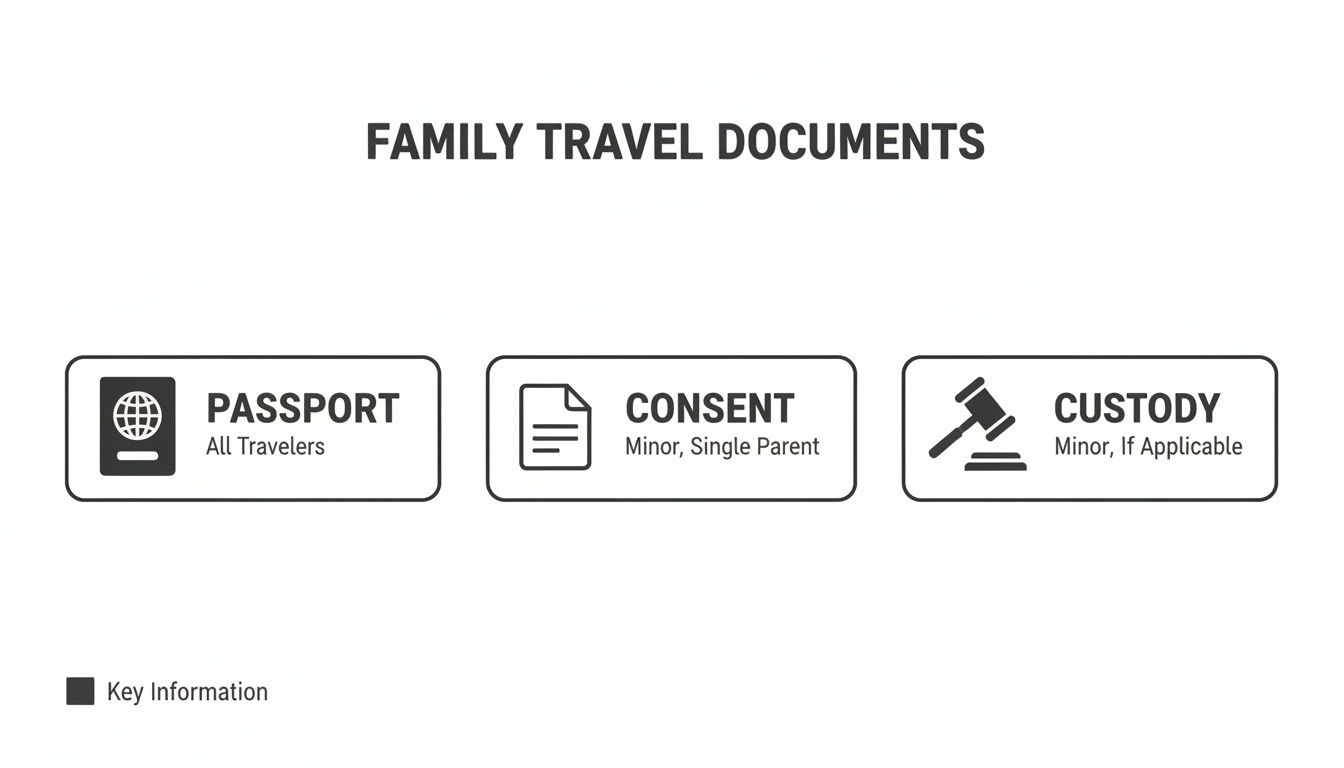
It’s a clear visual cue that even for those with powerful passports, freedom of movement comes with a lot of rules, especially when kids are in the picture.
High Freedom Versus Heavy Restrictions
To make this global difference more concrete, let's look at the two extremes. In high-ranking countries, citizens often have visa-free or visa-on-arrival access to over 180 destinations. That’s a world of opportunity for education, business, and keeping family connections alive.
On the other end of the spectrum, citizens from countries at the bottom of the list might have access to fewer than 40 countries without a pre-approved visa. For them, every international trip means mountains of paperwork, stressful interviews, and a high risk of being turned away. It’s a system that can cut families off from the global community.
The passport you hold is one of the single most powerful determinants of your opportunity in life. It is, in many ways, an accident of birth that defines the boundaries of your world.
This table really brings home the stark contrast in what "travel" means depending on where you're from.
A Global Snapshot of Freedom Rankings
This table contrasts countries with high and low freedom of movement scores, illustrating the global disparity in this fundamental right based on recent data.
| Region/Country | Freedom Index Ranking (Example) | Key Characteristics of Movement |
|---|---|---|
| Western Europe | High | Extensive visa-free travel, strong rights to live and work in neighboring countries (like within the EU), and robust legal protections for travelers. |
| Conflict-Affected Regions | Low | Severe travel restrictions, complex and often expensive visa processes, and significant safety risks for both domestic and international travel. |
Seeing these vast differences helps us appreciate the freedoms many of us might take for granted. It also shines a light on the huge challenges countless families face in a world where the right to move freely is still more of a dream than a reality.
Fostering Freedom and Independence at Home
After digging into the big, legal world of freedom of movement, it’s really powerful to bring that whole idea right back home. Those grand principles of autonomy and self-determination aren’t just for international treaties; they actually start in the small, everyday moments of childhood. In fact, encouraging independence in your child is the very first step in teaching them what freedom is all about.
The connection is surprisingly simple. When you create a safe space for a toddler to explore, you’re laying the foundation for a confident, resilient person. Those wobbly first steps across the living room? That's their first taste of mobility and choice—a tiny version of the big rights we've been discussing.
Building Freedom From the Ground Up
Think about how a child learns. They touch everything, they try to climb, and yeah, they sometimes fall. Every one of these actions is a tiny exercise in personal freedom. By giving them the right tools and a secure environment, you’re empowering them to test their own limits safely and build skills they'll use for life.
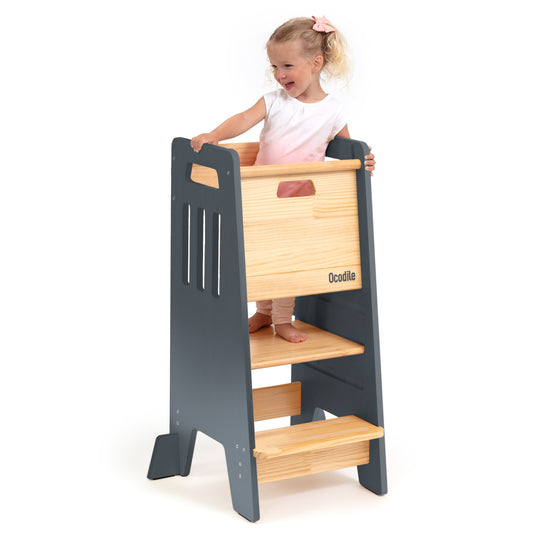
A kitchen standing tower, for instance, does way more than just give your child a boost. It offers them the freedom to actually be part of family activities, learn real skills, and see the world from a whole new angle. They go from being a passive observer to an active participant who can make choices and contribute. This small act of inclusion builds a surprisingly powerful foundation. We have more strategies on this in our guide on encouraging independence in toddlers.
The Global Context in Your Living Room
This approach at home actually mirrors the larger struggles for mobility rights around the globe. Global freedom indexes show how restrictions on movement are a key part of broader declines in freedom, with Europe often scoring as the freest region. With global freedom reportedly dipping for 19 consecutive years by 2024, nurturing independence from a young age feels more urgent than ever. You can discover more insights about these global trends on atlanticcouncil.org.
By empowering our children's movement and choices at home, we are raising individuals who understand and value freedom on a fundamental level. They learn that their voice matters and that they have agency over their own lives.
When you're thinking about how to build this independence at home, remember that early physical development is a huge piece of the puzzle. Resources on supporting infant gross motor skills can offer some fantastic guidance. The journey to becoming an independent adult really does start with these foundational physical abilities.
Ultimately, by championing your child’s right to move, explore, and participate within the safety of your home, you’re doing more than just parenting. You are nurturing the core values of freedom, confidence, and self-reliance, getting them ready to one day navigate a complex world with a strong sense of who they are. It’s a profound lesson that begins with a single, empowered step.
Common Questions About Freedom of Movement
Figuring out what "freedom of movement" means for you and your family can get tricky. Let's clear up some of the most common questions people have when it comes to their right to travel and move around.
Do I Need the Other Parent’s Permission to Take My Child Abroad?
Yes, almost always. In most countries, you'll need consent from everyone who has parental responsibility. If you're traveling without the other parent, it's a very good idea to carry a signed letter of consent, a copy of their passport, and your child's birth certificate.
This isn't just red tape; it's a crucial step to prevent international child abduction. Showing up at a border without this paperwork can cause major delays or even get you turned away. Always, always check the specific rules for both your home country and your destination.
What’s the Difference Between Freedom of Movement and Immigration?
It's easy to mix these two up, but they're quite different. Freedom of movement is a broad human right. It covers your ability to travel within your own country, leave any country, and come back to your own. Think of it as a basic principle of personal liberty.
Immigration, on the other hand, is the specific legal process of moving to another country to live and work there for the long haul. While they're related, the freedom of movement you might enjoy within a bloc like the EU is much wider than general immigration rights, which are entirely controlled by the laws of individual nations.
The key takeaway is this: Freedom of movement is a general right, while immigration is a regulated process. One doesn't automatically grant you the other, unless a specific international agreement is in place.
Can My Freedom of Movement Be Restricted if I Have a Criminal Record?
Absolutely. A criminal record can legally put the brakes on your freedom of movement. Many countries have the right to deny you entry based on past convictions, especially if they're serious.
It's not just about international travel, either. The conditions of parole or probation often come with domestic travel restrictions, limiting where you can go even within your own country. These are seen as lawful and necessary limits on this right, put in place for public safety.