





What Is Zero VOC Paint and Why It Matters
Zero-VOC paint is typically defined as having less than 5 grams per liter (g/L) of volatile organic compounds in the base formula. The catch is that tinting and additives can change the final VOC level, so the color you choose may not match the number printed on the can.
You're standing in the paint aisle with a nursery to finish, a deadline on the calendar, and a child's room that needs to feel calm, clean, and ready. The labels all sound reassuring, but they don't all mean the same thing, and that's where parents get tripped up.
Painting a Nursery Should Not Mean Worrying About Air Quality
The first time many parents really notice paint labels is when they're choosing a color for a nursery or playroom. The can says zero VOC, another says low VOC, and a third promises to be eco-friendly. It's a lot to decode when all you want is a room that looks warm and doesn't leave you second-guessing the air your child will breathe.
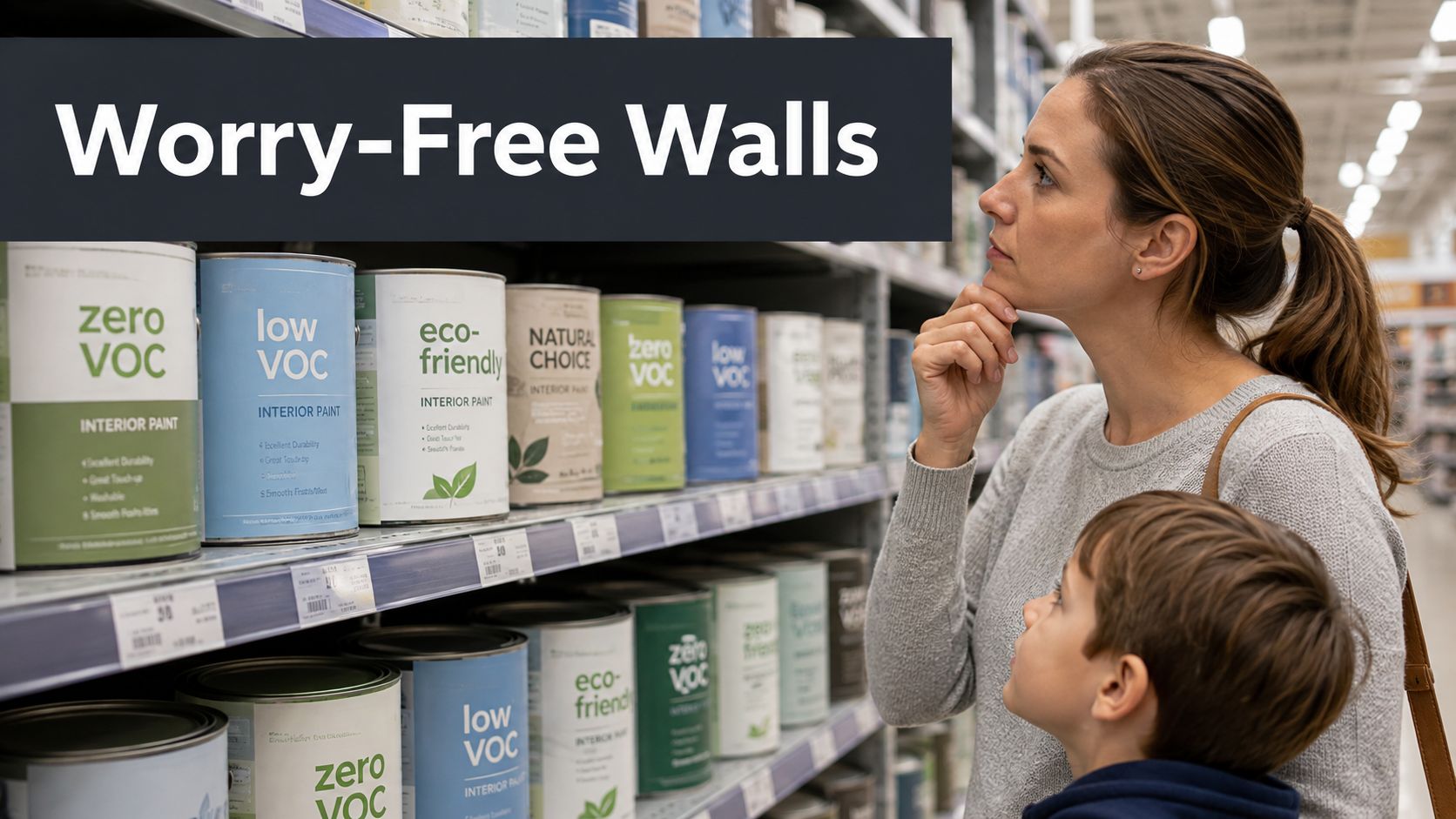
VOC means volatile organic compounds, chemicals that evaporate at room temperature and can affect indoor air quality. In paint, VOCs are part of why a freshly painted room can smell strong, even when the surface looks dry. That smell is not the whole story, but it's often the first clue that something is still off-gassing.
A useful way to think about what is zero voc paint is to treat it like the recipe behind the paint, not a magic promise about the finished room. Major guidance commonly defines zero-VOC paint as having less than 5 g/L of VOCs in the base paint, while low-VOC paint is commonly under 50 g/L according to Alameda County's paint fact sheet. That matters because the label usually refers to the untinted base, not necessarily the final product after color is mixed in.
If you're trying to keep a nursery as low-emission as possible, the best habit is to ask what the paint is before and after tinting. A practical indoor air quality monitor guide can also help you think beyond labels and pay attention to the air in the room itself.
Practical rule: treat the front of the can as the start of the conversation, not the end of it.
For nursery planning, that mindset pairs well with room layout and furniture choices. If you're also thinking through storage, sleep setup, and child-friendly design, this guide to creating the perfect nursery for your little one fits naturally with the paint decision.
Zero-VOC vs Low-VOC vs Standard Paint Explained
Parents often get stuck because the words sound close together, but the differences matter in real life. A paint can be lower in emissions without being the lowest option, and the right choice depends on the room, the color, and how sensitive your household is to odors or irritation.
Paint Categories Compared
| Criteria | Zero-VOC | Low-VOC | Standard |
|---|---|---|---|
| VOC threshold in the base paint | Less than 5 g/L | Less than 50 g/L | Higher than low-emission categories |
| Typical fit | Nurseries, bedrooms, furniture, sensitive households | General interior rooms where low odor matters | Projects where emissions are not the top priority |
| Odor after application | Usually lower, but not always odor-free | Often reduced compared with standard paint | Often stronger |
| Buyer focus | Lowest-emission starting point | Middle ground between performance and emissions | Broad availability and familiar product types |
The category names help, but they don't tell the full story. A product can be called zero-VOC and still carry odor from other ingredients, and a low-VOC product can still be a smart choice if the color or finish you need isn't available in a true zero-VOC system. That's why comparing the base formula, the final tinted result, and any certifications is more useful than chasing a label alone.
Market data shows the shift toward lower-emission coatings is not just a niche trend. One industry review reports that global VOC emissions from paints and coatings fell 30% between 2010 and 2022, 65% of manufacturers now offer low- or zero-VOC products, and zero-VOC paints accounted for 15% of architectural paint sales in 2022 according to the industry review. That tells you something important. Parents aren't asking for unusual products anymore, they're asking for paints that fit where family life happens.
If you want a practical starting point for shopping, this guide to safe non toxic paint options is useful for seeing how brands and retailers talk about lower-emission choices. The main thing is to match the product to the room, not just the marketing language.
Simple comparison: zero-VOC is usually the lowest-emission bucket at the base-paint stage, low-VOC is the next step up, and standard paint sits outside that low-emission range.
The Tinting Problem Most Parents Never Hear About
A can can say zero-VOC and still end up with a different final number after color is mixed in. That's the part most parents never hear in the aisle, and it's the part that matters most if you're choosing a deep blue accent wall for a nursery or a rich green dresser for a child's room.
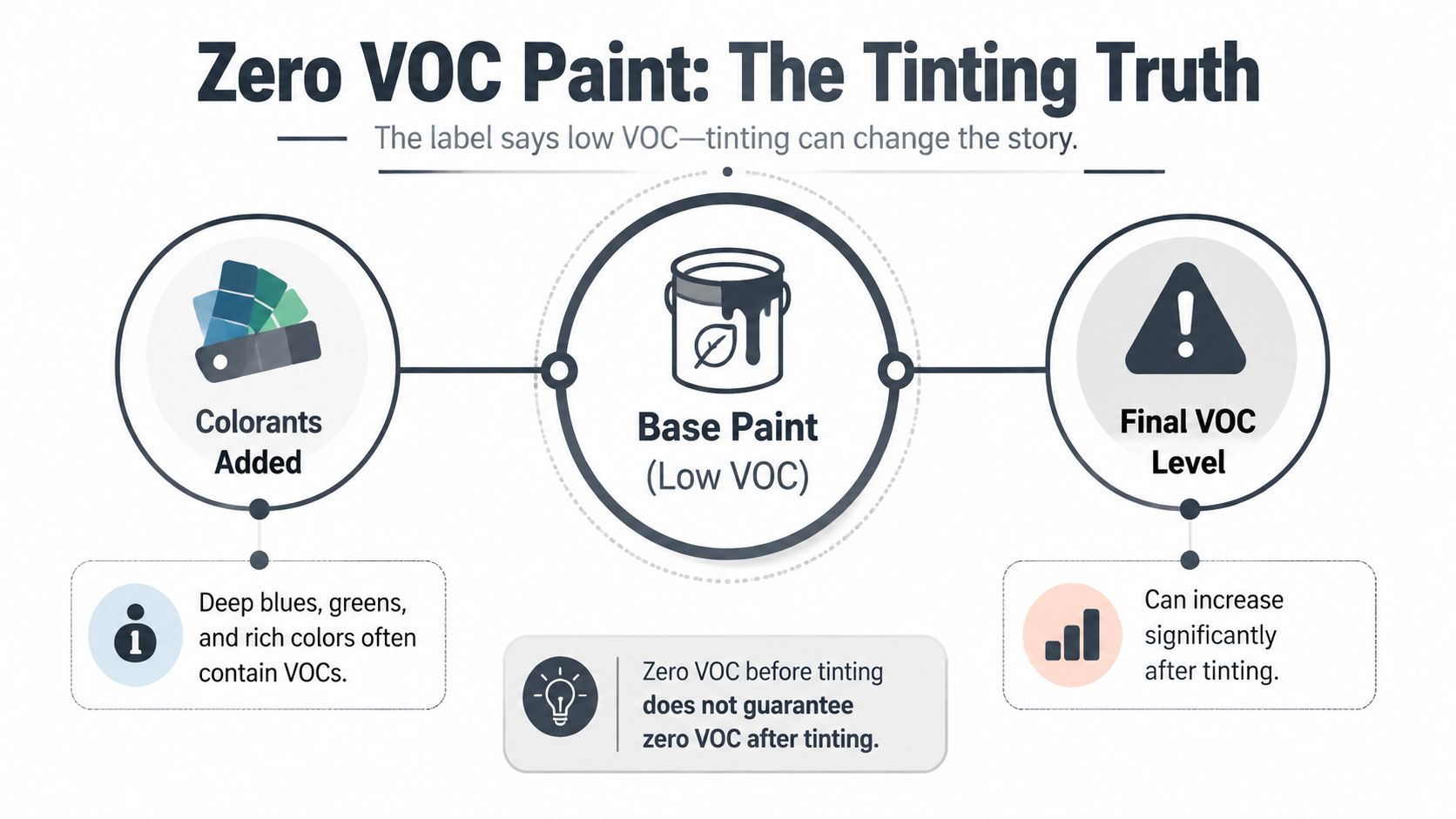
The comparison is simple. Ordering a zero-VOC base is a bit like buying a sugar-free drink, then adding a flavored syrup that contains sugar. The original product still started out one way, but what you consume is the final mix, not the label on the base ingredient.
A technical sheet for a zero-VOC interior latex from PPG Dulux lists the base at 0 g/L by ASTM D3960, then notes that added colorants may raise VOCs to as much as 8 g/L depending on the color choice technical data sheet. That's why two paints both marketed as zero-VOC can end up behaving differently once they're tinted. The base formula and the finished colored paint are not the same thing.
Ask the store what the VOC level is after tinting, not just the base number on the shelf tag.
The most useful follow-up question is direct. “Can you show me the VOC level of this paint after tinting?” If the staff can't answer, ask for the technical data sheet for the exact color system being mixed. That sheet should tell you more than the front label ever will.
The parent-friendly takeaway is straightforward. If you're choosing a pale neutral, the base may stay close to the listed number. If you're choosing a saturated color, especially in a line that uses standard tinting colorants, the final product may no longer behave like a true zero-VOC paint.
How to Read Paint Labels and Spot Trustworthy Certifications
Paint labels can be honest and still be incomplete. A can that says zero VOC may be telling you something real about the base formula, but it does not automatically tell you how the finished product will behave on the wall, or how much the product emits once the room is closed up.
What to look for beyond the front label
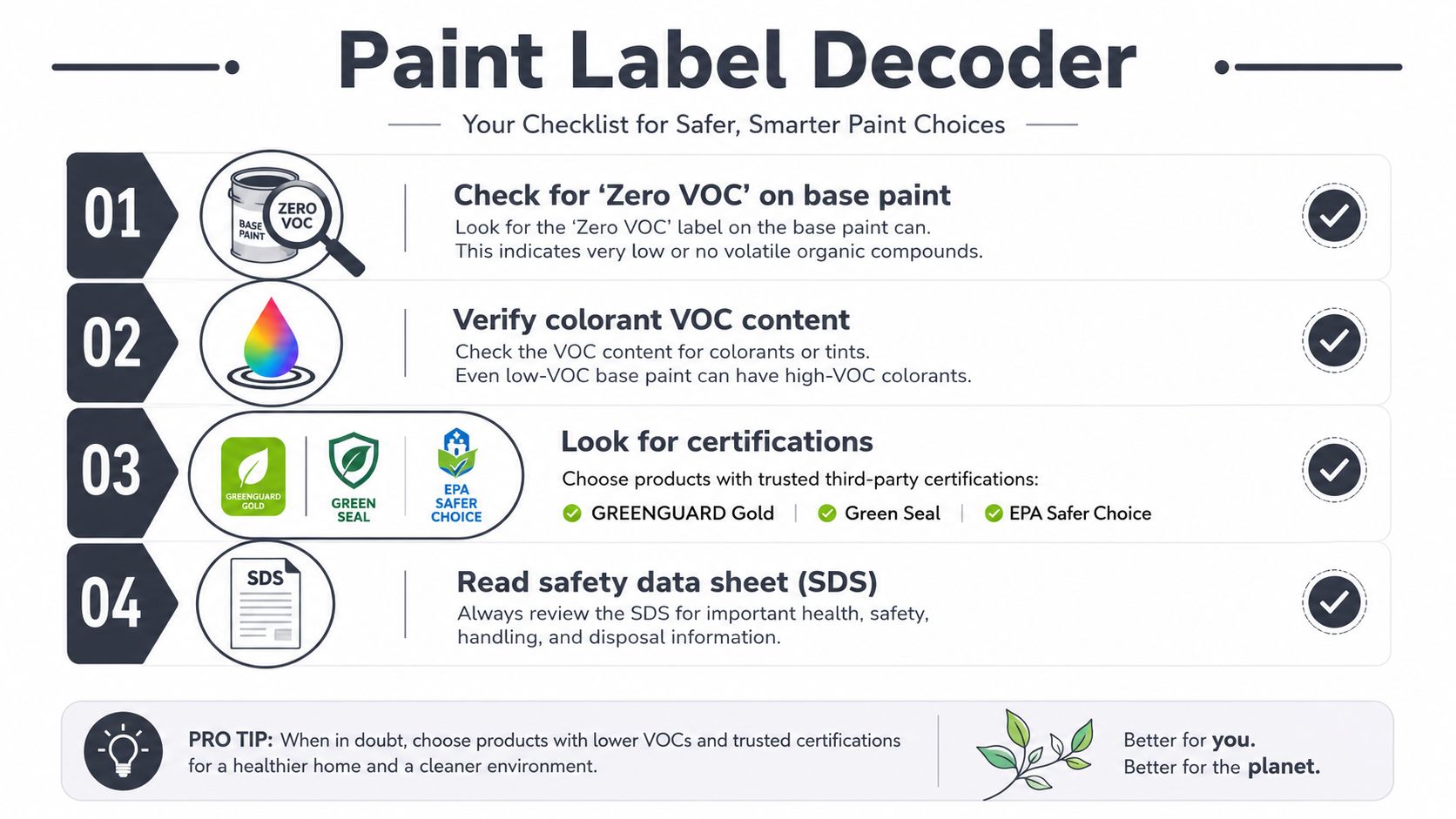
The most reliable clues are usually the ones that look less flashy. GREENGUARD Gold, Green Seal, and EPA Safer Choice are the kinds of marks that suggest someone checked the product against a defined standard instead of leaving you with broad marketing language. Terms like eco-friendly or natural can sound nice, but they don't tell you what was tested or how.
Good buying habit: read the label as if it were a summary, then verify the product sheet like you're checking the receipt.
A smart shopping checklist is short and practical:
- Check the base VOC claim: confirm whether the can says zero-VOC or low-VOC.
- Ask about colorants: find out whether the tinting system changes the final VOC level.
- Look for certification marks: prefer labels backed by a specific testing framework.
- Request the SDS or technical data sheet: the product's details are usually found there.
- Compare the exact finish you need: flat, eggshell, and gloss can behave differently, so don't assume one line covers them all.
That last point matters because the same product family can perform differently once the finish changes. If you're also choosing finishes for shelving, tables, or toddler furniture, this guide on non-toxic wood finishes is a helpful companion to the paint decision.
The safest approach is to treat labels as a starting point and documentation as the deciding factor. If a retailer can't show you the VOC level, the certification, or the technical sheet for the color you want, that's a sign to keep asking. A careful parent doesn't need perfect chemistry knowledge, just a better filter for claims that sound nice versus claims that can be checked.
Zero-VOC Paint for Children's Rooms and Furniture
Children's rooms work harder than adult bedrooms. Walls get wiped down, doors get bumped, toy bins scrape corners, and furniture takes daily use from little hands that are curious, sticky, and often not gentle.
Why the room matters beyond the wall color
A nursery or playroom is not just a decorative project. It's a space where a child sleeps, plays, and spends long stretches of time close to surfaces that were painted only days or weeks earlier. That makes low-emission products more appealing, especially when you're balancing air quality with the practical reality of a room that needs to hold up to real family life.
Zero-VOC paint is often chosen for this reason, but the best result depends on the whole setup. Good ventilation during and after painting matters, and so does the material of the furniture in the room. Solid hardwood or plywood often fits a low-emission approach better than materials that rely heavily on resins and engineered layers, which is why parents comparing engineered wood vs solid wood usually end up thinking about the room as a system, not a single product.
A painted crib wall and a painted bookshelf don't carry the same wear pattern. Furniture gets touched constantly, so the finish needs to be wipeable without turning the room into a chemistry mystery every time it's cleaned. That's where durability and washability become part of the air-quality conversation, not separate from it.
What parents should expect in real use
Zero-VOC paint can be a strong fit for families, but it should still be treated as one piece of a broader strategy. The room should have enough airflow, the furniture should be made from safer materials, and the paint should be allowed to cure before the space is used heavily. A lower-emission wall finish can support a calmer room, but it won't compensate for poor ventilation or heavily off-gassing furnishings.
That's also why child-focused purchases often work best when the room is planned as a whole. A safer finish on the wall, a sturdy surface on the furniture, and materials chosen for everyday cleaning add up to a more practical room for the long run. Parents don't need perfection, they need fewer weak points.
Application Tips and Safety Practices for Families
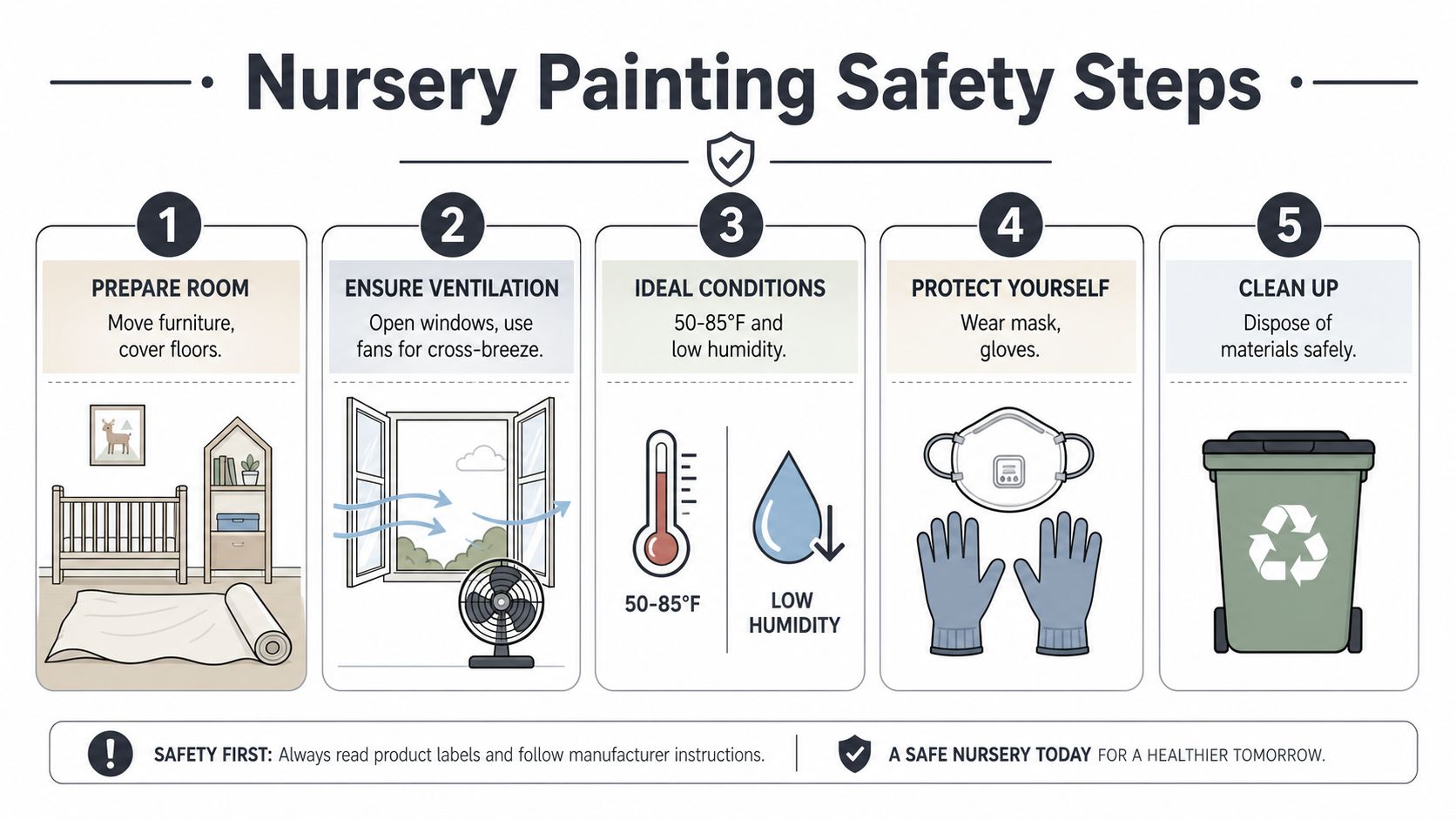
Good ventilation does more for a paint job than many realize. Even with zero-VOC paint, the room should have fresh air moving through it while the paint goes on and while it cures, because the finish still needs time to settle.
A safer painting routine at home
Open windows on opposite sides of the room if you can. Use fans to keep air moving, but point them so they help exchange air instead of blowing dust across wet surfaces. If the room feels stuffy, pause and let the air clear before continuing.
Temperature and humidity matter too. The infographic's target range, 50-85°F, is a useful practical guide, and low humidity helps paint cure more predictably. Once the walls are done, give the room time. 48 to 72 hours of curing with good airflow is a sensible buffer before a child spends meaningful time in the space.
A few other habits make the process easier:
- Store supplies out of reach: keep leftover paint, rollers, and trays away from children.
- Clean tools promptly: wash brushes and rollers as directed so residue doesn't linger.
- Use gentle cleaners later: once the surface has cured, choose non-abrasive cleaning methods so you don't wear down the finish.
- Watch for sensitivities: if a child is prone to odors or respiratory irritation, give the room more time and more airflow before use.
For parents who like choosing child-safe activities alongside room projects, the taste-safe art ideas from Grow With Me are a useful reminder that a family space should be safe for both creativity and cleanup.
Good rule of thumb: if you can still smell the room strongly, don't rush the child back in just because the surface feels dry.
Common Misconceptions About Zero-VOC Paint
The biggest myth is that zero-VOC means no smell at all. That's not how paint works. A product can have very low VOCs and still have an odor from other ingredients, especially while it's drying.
Another common assumption is that zero-VOC paint can't hold up to family use. That used to be a more reasonable concern than it is now, but today's low-emission products are widely used in everyday homes. The useful question is not whether the paint is automatically fragile, but whether the specific product has the finish, washability, and certification that match your room.
A third misunderstanding is that all green labels mean the same thing. They don't. A broad phrase on the front of a can is not the same as a documented standard, and it definitely isn't the same as checking the exact VOC level after tinting.
The last myth is that zero-VOC paint is only for nurseries. It's a good fit there, but it also makes sense in bedrooms, hallways, playrooms, and on furniture that gets close daily contact. The core principle is lower indoor emissions in spaces where people spend time, especially children. Zero-VOC is useful, but it works best alongside ventilation, careful material choices, and a closer look at the final tinted product.
Ocodile designs children's furniture for families who care about safety, function, and the feel of a healthy home, which makes it a natural fit for the same thoughtful approach you'd use when choosing low-emission paint. If you're building a nursery or child's room with practical, child-friendly pieces in mind, visit Ocodile and explore how safe design can support everyday family life.