



Where a Two-Step Step Stool Works Best at Home
When your toddler wants to wash hands “by myself,” help stir pancake batter or climb up to brush teeth, your back often pays for it. A two step step stool can be a simple, sturdy way to give toddlers and preschoolers a little extra height for short everyday tasks, but it works best in specific spots, not everywhere.
The quick answer: use it where your child needs brief, supervised access to a low or medium-height surface, such as a bathroom sink, toilet, closet shelf, low bed or entryway bench. Skip it for long standing tasks, high counters, slippery floors, heat sources and anything that encourages climbing on furniture.
For many families, the real goal is not “more climbing.” It is fewer unsafe workarounds, like dragging over a dining chair, standing on tiptoe at the sink or asking to be lifted every five minutes. The right stool in the right place can make everyday routines calmer, especially when it is stable, easy to move and sized for your child.
Best places for a two step step stool at home
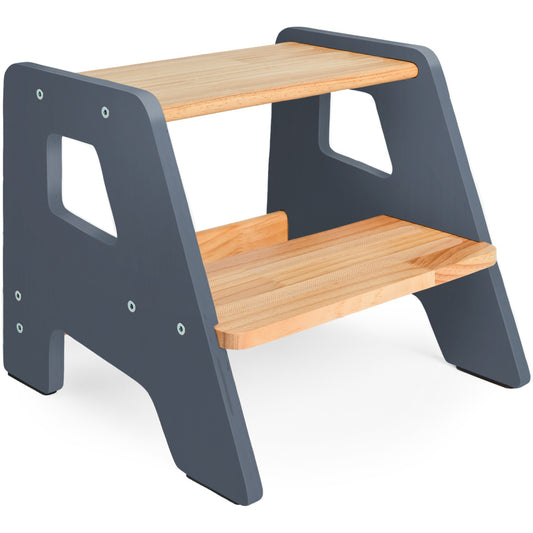
A two-level stool works best when the task is quick, predictable and close to the ground. The lower step gives your child a smaller first climb, while the top step adds enough height to reach a sink, shelf or bed edge without a parent lifting them every time.
That design is helpful for toddlers who can climb carefully but still need a simple path up and down. Unlike a toddler tower, though, most step stools have open sides. That means they are best for short moments with a caregiver nearby, not for long cooking projects or busy counter activities.
Use this as a simple home map before deciding where to keep one.
| Home area | Best everyday use | Why it can work well | Use extra caution around |
|---|---|---|---|
| Bathroom | Handwashing, brushing teeth, reaching the sink | Short routines happen many times a day | Wet floors, loose bath mats and toiletries |
| Toilet area | Climbing up after a potty seat is placed securely | Helps reduce lifting during potty practice | Wobbly toilet seats, rushing and slippery tile |
| Bedroom | Reaching a low bed or choosing clothes from a low drawer | Encourages small self-care tasks | Dressers, cords, lamps and small objects |
| Entryway | Sitting to put on shoes or reaching a low hook | Keeps shoes, coats and bags in one routine zone | Door swing areas and cluttered floors |
| Kitchen | Quick access to a low counter or snack shelf | Useful for brief, closely supervised moments | Stoves, knives, hot liquids and long tasks |
Bathroom sink routines: the most common everyday win
For sink routines, a two step step stool often makes the biggest difference because toddlers wash hands many times a day. Instead of lifting your child for every bathroom visit, you can set up a repeatable routine: climb up, turn on the water with help if needed, use soap, rinse, dry hands and climb down.
The benefit is practical for both parent and child. You lift less, and your toddler gets more practice doing the same steps in the same order. That repetition is what makes bathroom routines smoother over time.
A few setup details matter. Place the stool squarely in front of the sink, not at an angle. Keep the floor dry. Move soap, toothpaste and toothbrushes within safe reach, but store medications, razors and cleaning products far away. If your child has to stretch sideways to reach the faucet, the stool is not positioned well.
Wooden stools can feel solid underfoot, while plastic stools are often lighter to move. Either way, the best choice is the one that does not rock, slide or feel narrow when your child shifts weight. If you are still comparing materials, footprint and stability, Ocodile’s guide to finding the best step stool for kids walks through the safety details parents usually care about most.
Potty training and toilet access
During potty training, a two step step stool can help with two connected tasks: getting onto the toilet with help and reaching the sink afterward. This is especially useful if your child uses a toilet insert rather than a small potty chair on the floor.
The stool does not make potty training happen faster on its own. What it can do is reduce one common frustration: your child needing to be lifted for every attempt. When the setup feels secure, some toddlers are more willing to practice the full routine from pants down to handwashing.
The safest setup is boring in the best way. The stool should sit flat, the toilet insert should fit snugly and the bathroom floor should be dry. Stay close enough to steady your child as they turn, sit or climb down. Toddlers often lose balance during transitions, not while standing still.
If potty training is your main reason for buying, you may also want to compare stool styles with Ocodile’s article on whether a 2-in-1 step stool can help with potty training. It covers when a stool is helpful and when a different setup may be easier.

Bedroom and closet: useful, with clear boundaries
A two step step stool can work well in a child’s bedroom when the goal is small self-care: reaching a low bed, picking pajamas from a bottom drawer or accessing a low clothing hook. These are the moments when toddlers often want to “do it myself,” but the furniture was built for adults.
The key is to keep the stool near child-safe zones only. A stool beside a low bed can help a preschooler climb in more calmly at bedtime. A stool near a low closet rod can make getting dressed feel more manageable. A stool in front of a tall dresser, bookcase or windowsill creates a climbing invitation you probably do not want.
One firm boundary is adult storage. Do not keep a step stool in front of dressers or nightstands that hold medication, coins, jewelry, ring boxes or loose keepsakes. If a grown-up is comparing the best places to buy an engagement ring in New Zealand and has sizing tools, jewelry trays or small valuables nearby, that area should stay out of toddler reach.
The U.S. Consumer Product Safety Commission’s Anchor It campaign is a good reminder that climbable furniture and curious children are a risky mix. A stool should help with a planned task, not give your child access to tall furniture.
Entryway, mudroom and laundry areas
In the entryway, a stool can make the leaving-the-house routine less chaotic. Your child can sit on the bottom step to pull on shoes, reach a low coat hook or place a backpack in the same spot each day. For parents, that can mean fewer shoes scattered across the floor and fewer last-minute “carry me” requests.
A two step step stool also works in a mudroom or laundry area when the task is simple and supervised. A preschooler might place socks in a low basket, reach a towel from a low shelf or help move lightweight clothing into a hamper. These are good real-life tasks because they are short, visible and easy to repeat.
Be careful around laundry machines, detergent, folding tables and doors. The stool should not be used to access washer controls, high shelves or cleaning supplies. If the area is narrow, check that an opening door will not hit the stool or knock your child off balance.
Kitchen use: helpful for quick tasks, not always enough
In the kitchen, a two step step stool is best for brief, closely supervised tasks away from heat and sharp tools. It may work for reaching a low snack shelf, rinsing fruit at a sink with a parent beside them or placing napkins on a counter.
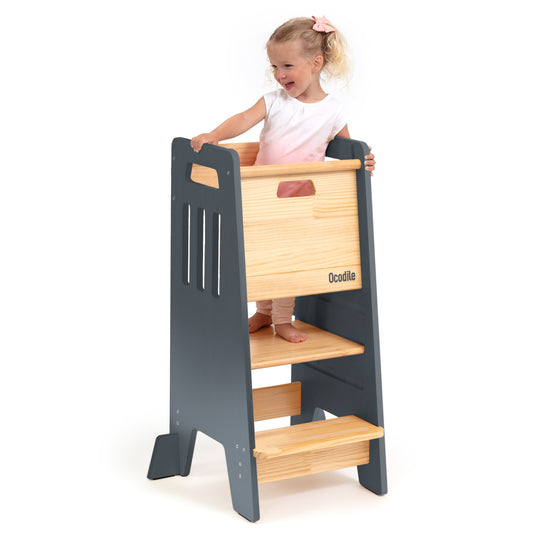
For longer cooking activities, a toddler tower is often the better fit. A basic stool is open on the sides and back, so an excited toddler can step off, twist or lean without much warning. A tower gives a more defined standing space, which can be helpful when your child is mixing batter, washing produce or watching you prepare food.
If you want to compare the two options more deeply, Ocodile has a practical guide on when a step tower makes more sense than a step stool. The short version is simple: stools are better for quick up-and-down access, while towers are better for longer counter-height participation.
For families who want a counter-height option that can be put away when not in use, the Adjustable Foldable Kitchen Tower is designed to help toddlers join everyday kitchen moments at counter height. The foldable design can be useful in homes where floor space matters.
Another option is the Standing Toddler Tower with Sliding Safety Door, which is designed with a sliding door so little ones can climb in and join household activities within a more contained space. As with any climbing furniture, a caregiver should still supervise and keep the tower away from stoves, knives, hot drinks and busy walkways.
Where not to use a two step step stool
A two step step stool is not a safe shortcut for every hard-to-reach place. If the task involves heat, water depth, sharp tools, high shelves or a child standing for a long time, pause before using one.
Avoid using a stool in these spots:
- Next to a stove, oven, air fryer, toaster or hot appliance
- Beside a bathtub or shower where the floor may be slick
- Near stairs, balconies, windows or exterior doors
- In front of tall dressers, bookcases or unsecured furniture
- On thick rugs, uneven flooring or wet tile
- Anywhere your child must lean far forward or sideways to reach
A good test is whether your child can stand with both feet fully on the top step and reach the task without stretching. If they have to bounce, tiptoe or pull on the counter edge, the stool is either too low, too far away or the wrong tool for that job.
What to look for before you place one in a room
A two step step stool should feel stable before your child ever climbs on it. Press gently on the top step, shift weight side to side and check for rocking. If it slides easily when you nudge it, it may not be right for slick floors or active toddlers.
Look for practical details that make daily use easier. Wide steps give little feet more room. A non-slip surface can help reduce sliding feet. A broad base usually feels steadier than a narrow one. Rounded edges are helpful in busy family spaces. If the stool will move between rooms, weight matters too: it should be manageable for an adult to carry, but not so flimsy that it tips easily.
Always check the manufacturer’s age, weight and use guidance. Parents sometimes focus only on height, but the fit also depends on your child’s balance, impulse control and the room layout. A stool that works beautifully at the bathroom sink may be the wrong choice at a high kitchen island.
A simple room-by-room decision rule
Before placing a stool, ask one parent-level question: “What exact task do I want my child to do here?” If the answer is clear and short, like washing hands or reaching a low hook, a stool may be a good fit. If the answer is vague, like “help in the kitchen” or “reach things in the closet,” narrow the task first.
The safest homes for little climbers are set up with specific yes spaces and clear no spaces. A stool can live in the bathroom for handwashing, but not in front of a medicine cabinet. It can help at a low bed, but not beside an unsecured dresser. It can support quick snack prep, but not cooking near a burner.
That kind of setup gives your child more chances to practice real tasks without turning every surface into something climbable.
Frequently Asked Questions
What is a two step step stool best used for? It is best for short, supervised tasks where a toddler or preschooler needs a little extra height, such as washing hands, brushing teeth, reaching a low hook or climbing into a low bed.
Is a two-step stool safe for toddlers? It can be safe when it is sturdy, placed on a flat dry floor and used with adult supervision. It should not be used near stairs, hot appliances, bathtubs, windows or unsecured furniture.
Can my child use a step stool in the kitchen? Yes, but only for brief tasks away from heat, sharp tools and busy walkways. For longer counter activities, a toddler tower usually offers a more defined space for standing.
What age is right for a step stool? Readiness depends more on balance, climbing ability and listening skills than age alone. Always follow the manufacturer’s guidance and stay close while your child practices.
Should I choose a stool or a toddler tower? Choose a stool for quick reach tasks like handwashing. Choose a toddler tower for longer, supervised counter-height activities like mixing, rinsing produce or helping prepare simple foods.
A practical next step
The best stool placement is the one that solves a real daily problem without creating a new safety concern. Start with one routine, usually handwashing, potty practice or getting dressed, then watch how your child uses the setup.
If your main challenge is quick access around the home, compare step stool size, stability and room fit first. If your child wants to spend more time helping at the counter, an Ocodile toddler tower may be the more practical next step, especially for families who want sturdy, child-focused furniture with free U.S. shipping, 60-day returns and a 5-year warranty.