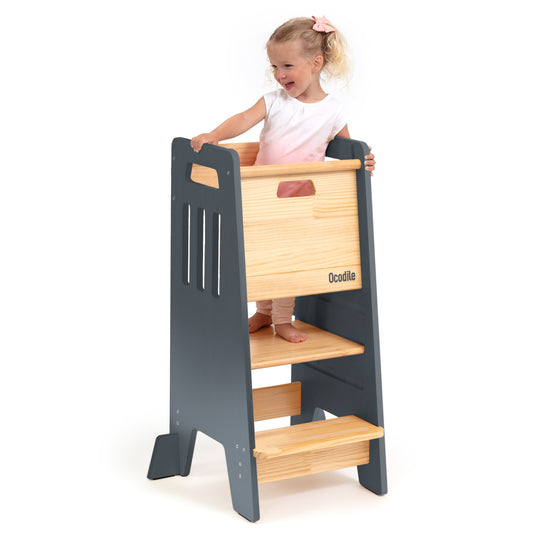




Why an Adjustable Tower Can Last Through Preschool
If you’re looking at toddler furniture and wondering whether it will become useless in six months, that is a fair question. Toddlers grow fast, preschoolers get more capable and no parent wants another bulky item taking up kitchen space for a tiny window of use. An adjustable tower can be different because it adapts to a child’s changing height, confidence and daily routines, from washing hands at the sink to helping stir pancake batter at the counter.
The short answer: a sturdy, height-adjustable toddler tower can often stay useful through the preschool years because the platform can move as your child grows. Instead of replacing a too-short step stool or watching your child outgrow a fixed-height helper stand, you get one safer, more stable place for repeated everyday tasks.
Why an adjustable tower can last through preschool
A well made adjustable tower earns its keep because it solves the same parent problem at several ages: your child wants to be where the action is, but the counter, sink and island are built for adults. At 18 months, that may mean standing next to you while you rinse fruit. At age 3, it may mean spreading peanut butter with help. At age 4 or 5, it may mean washing hands, pouring cereal or setting napkins on the table.
The key is not just height. It is the combination of a stable base, enclosed standing area and a platform that can be repositioned so your child is not reaching too high or crouching awkwardly.
Preschoolers still need supervision, but they also need repeated chances to practice real-life tasks. A tower that adjusts lets the same piece of furniture match those changing tasks without forcing you to improvise with dining chairs, wobbly stools or constant lifting.
What changes between toddlerhood and preschool
A young toddler is usually using a tower for access. They want to see the sink, reach the counter and stand near a parent. The adult is doing most of the task, and the child is watching or joining in small ways.
By preschool, the work changes. Children often want to do the first step on their own, even if they still need help finishing. They may climb into position, wash their hands, press cookie cutters into dough, rinse a cup or help put away utensils.
An adjustable tower gives you more room to support that shift because the standing height can change as legs get longer and balance improves. The goal is a comfortable working position where your child can reach the surface without standing on tiptoe or leaning their belly hard against the counter.
This matters in everyday parenting moments. Less lifting can save your back during repeated handwashing. A more secure setup can reduce the temptation to drag over a chair. The right height can also make tasks feel calmer because your child is not straining to participate.
Adjustable tower vs. step stool vs. fixed tower
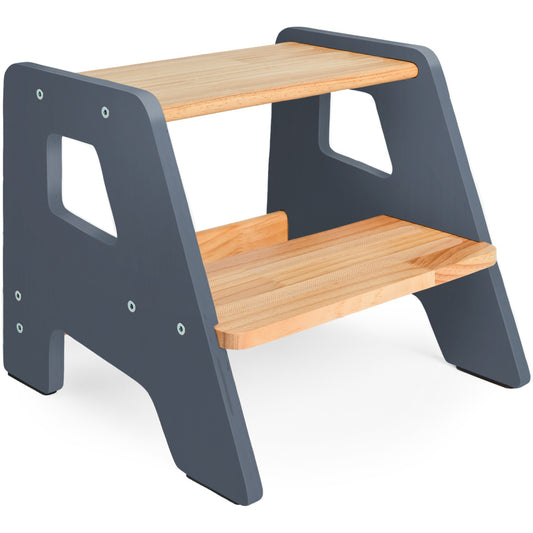
Parents often compare towers with step stools because both help a child reach higher surfaces. The difference is containment and use case. A step stool may be fine for a quick reach at the bathroom sink when your child is steady and you are nearby. A tower is usually better for longer standing tasks, especially in the kitchen, because it gives a child a defined standing space with rails around them.
A fixed-height tower can still be useful, but it may have a shorter practical life if the platform height does not match your child’s growth. If the platform sits too high, a taller preschooler may feel cramped. If it sits too low, a younger toddler may lean or reach too much.
| Option | Best for | Main limitation |
|---|---|---|
| Step stool | Quick bathroom or sink access for steady children | Less containment for longer tasks |
| Fixed-height tower | Simple counter participation at one stage | May not fit as your child grows |
| Height-adjustable tower | Repeated kitchen, sink and counter routines over several years | Usually takes more thought to choose and set up |
If you are still comparing basic tower types, Ocodile’s toddler tower guide gives a broader parent-friendly overview of how these pieces fit into daily routines.
The features that help a tower grow with your child
The most important long-term feature is the adjustable platform. A lower setting can suit a taller preschooler because it gives more head and body room while still keeping the counter within reach. A higher setting can help a smaller toddler participate without overreaching.
Stability also matters more as children get stronger. A preschooler may shift side to side, lean to rinse a spoon or turn around to ask a question. A sturdy, solid build helps the tower feel secure during those normal movements. It does not replace supervision, but it does make the setup feel less improvised than a chair pulled up to the counter.
Look closely at rails and openings. The standing area should help a child stay oriented toward the task, not invite constant climbing in odd directions. For many families, an easy-to-clean finish is also part of longevity because towers live near flour, water, yogurt, banana hands and craft supplies.
Cleanability is especially relevant around food. The same basic principle applies in bigger food spaces, where companies focus on hygienic cleaning for food-production environments; at home, your version is simpler: choose furniture surfaces you can wipe down often and keep routines consistent after messy kitchen tasks.

Everyday uses from age 2 to preschool
By preschool, an adjustable tower is less about novelty and more about making ordinary routines easier. The best uses are the ones that happen again and again, because those are the moments where a child gains practice and parents feel the difference.
In the kitchen, a tower can help your child rinse berries, sprinkle cheese, tear lettuce, stir batter or watch you prepare dinner. These are not complicated activities, but they let your child be part of family life instead of tugging at your leg while you cook.
At the sink, it can help with handwashing before meals, brushing teeth in some bathroom setups or rinsing paintbrushes after a craft. During preschool years, these routines often become daily expectations, so a steady place to stand can reduce arguments about being picked up.
It can also help during simple household tasks. A child might place napkins on the counter, help wipe a safe surface or sort spoons into a drawer with you nearby. The point is not to make chores perfect. It is to let your child practice small, real tasks in a setup that feels manageable for everyone.
Safety still depends on readiness and supervision
A tower should be used only when your child is developmentally ready. Age can help as a rough guide, but readiness matters more. Your child should be able to stand steadily, climb with control and follow simple directions like “feet stay on the platform” or “hold the rail while climbing down.”
If your child is still unsteady, climbs impulsively or cannot follow basic safety limits, it may be better to wait. For a deeper readiness check, Ocodile’s guide on whether your toddler is ready for a learning tower covers the balance and behavior signs parents can watch for.
Even for preschoolers, towers are not a set-it-and-walk-away item. Place the tower on a flat surface, keep it away from hot pans, knives and cords, and stay close enough to guide your child. A tower helps create a safer setup than many improvised options, but it still belongs within active supervision.
What to look for in an adjustable tower before you buy
When you choose an adjustable tower, start with the routines you actually need help with. A family that cooks every night may care most about counter height, wipeable surfaces and a footprint that fits near the island. A family in a smaller kitchen may place more value on a foldable design or a shape that stores neatly.
Pay attention to build quality. Parents often describe a good tower with words like sturdy, stable, solid and well made because those are the qualities you notice during everyday use. If a child shifts weight or climbs in and out several times a day, flimsy construction becomes frustrating quickly.
The finish matters too. A child-safe coating can make the tower more suitable for daily family use, especially when hands, snacks and spills are part of the picture. Smooth edges, secure rails and a practical platform adjustment system are also worth considering.
Ocodile focuses on safe, durable children’s furniture for home routines, including toddler towers, step stools, floor beds and other kid-friendly pieces. If you are comparing kitchen options specifically, the article on choosing a safe toddler tower for kitchens is a helpful next read.
How to make one tower last longer at home
Longevity is not only about the product. How you use and maintain it also affects how long it stays helpful.
Set the platform height to match the task, not just your child’s age. At the kitchen counter, your child should be able to work with relaxed shoulders and both feet flat on the platform. At a lower bathroom vanity, a different setup may be needed, and a step stool might sometimes be the better tool.
Keep the tower in one predictable place when possible. Children learn routines faster when the setup is consistent: climb in, stand with both feet flat, help with the task, climb down with an adult nearby. If the tower moves from room to room, reset the safety check each time.
A quick wipe after messy use also helps. Flour in corners, sticky juice on rails or water left on the standing surface can make the tower less pleasant to use and harder to maintain over time. A simple cleanup habit after cooking or handwashing keeps it ready for the next routine.
When a tower may not be the right fit
An adjustable tower is useful for many families, but it is not the answer to every situation. If your kitchen is extremely tight, check measurements carefully before bringing in any standing furniture. If your child mostly needs a quick boost to reach a low sink, a stable step stool may be enough for that one job.
Also consider temperament. Some toddlers are careful climbers, and others treat every object like playground equipment. If your child is in a heavy climbing phase, you may need extra supervision, clearer boundaries or more time before regular tower use feels calm.
Finally, remember that preschool does not mean “no help needed.” A 4-year-old may be taller and more coordinated than a toddler, but they still need an adult nearby around counters, sinks and kitchen tools.
Frequently Asked Questions
What age is an adjustable tower best for? An adjustable tower is usually best for toddlers and preschoolers who can stand steadily, climb with control and follow simple safety directions. Readiness matters more than age alone.
Can a preschooler still use a toddler tower? Yes, many preschoolers can still use a toddler tower if the platform height and standing space fit their body comfortably. A height-adjustable design often makes this easier as your child gets taller.
Is a tower safer than a chair at the counter? A well designed tower can be a safer, more stable option than a regular chair because it provides a defined standing area and support rails. It still requires adult supervision.
How do I know when to lower the platform? Lower the platform when your child seems cramped, bends awkwardly at the counter or has grown tall enough to reach comfortably from a lower standing height. Their feet should stay flat and their posture should look natural.
Do I need both a tower and a step stool? Some families use both. A tower works well for longer kitchen and counter tasks, while a step stool can be convenient for quick bathroom routines or lower surfaces.
A practical next step for preschool-ready routines
If your goal is to stop lifting your child for every sink and counter task, a well chosen height-adjustable tower can be worth considering. It gives your toddler a steady place to participate now, then adapts as your preschooler gets taller and more capable.
Start by checking readiness, your kitchen layout and the routines where you need help most. Then compare sturdy designs that fit your space, wipe clean easily and give your child room to grow. Ocodile’s toddler furniture is designed for practical home use, with options that support everyday participation while keeping safety, durability and real family routines in mind.