


A Parent’s Guide to the Wooden Step Stool for Kitchen
A quality wooden step stool for kitchen use is so much more than a piece of furniture. Think of it as a gateway, a special pass for your little one to join you in the heart of the home. It turns those everyday chores, like washing veggies or mixing batter, into precious moments of learning and connection.
This simple tool is all about fostering independence, building confidence, and making your toddler a real, active part of family life.
Giving Your Child a Boost in the Kitchen

For most of us, the kitchen is where the action is—full of warmth, great smells, and family bustle. But from a toddler's point of view, it’s a world of giant legs and countertops just out of sight. A sturdy wooden stool changes that perspective in an instant.
By bringing your child up to counter height, they go from being a spectator to a hands-on helper. It’s a game-changer.
This simple boost does incredible things for their development. It's not just about getting to see what's going on; it's about getting to do it. When your little one can reach the sink to wash their hands or stand beside you to stir some batter, they're diving into what the Montessori world calls "practical life" activities.
More Than Just a Step Up
These aren't just make-believe tasks; they're the building blocks for real-life skills. By getting involved in these simple, real-world activities, kids develop their fine motor control, their ability to concentrate, and a genuine sense of responsibility.
They learn cause and effect right before their eyes—"When I stir the bowl, the flour and eggs mix together!" That kind of hands-on lesson sticks with them far more than just watching from the floor.
A wooden step stool for kitchen time helps grow:
- Independence: Letting a child do things for themselves, like grabbing their own cup or washing an apple, builds a powerful sense of self-reliance. It's a huge "I did it!" moment.
- Confidence: Every task they complete, no matter how small, is a win. It fills up their confidence tank and makes them eager to try the next thing.
- Connection: Honestly, just working side-by-side does wonders for your bond. You're creating memories together, centered on teamwork and fun.
Beyond physical presence in the kitchen, fostering strong parent-child bonds through shared experiences, such as those encouraged by a comprehensive review of a daddy and me book guide, significantly contributes to a child's overall development.
Creating a Collaborative Space
At the end of the day, bringing a step stool into your kitchen is about creating a space where everyone feels included. It sends a clear message to your child: "You belong here. You are a valued part of this family, and what you do matters."
That sense of belonging is absolutely vital for their emotional well-being. It transforms your kitchen from a parent-only zone into a safe, collaborative space where learning happens naturally.
By choosing the right stool, you’re giving your child a secure platform to reach new heights—both literally and developmentally. The kitchen becomes a classroom and a playground all in one, a place where you and your little helper can grow together, one small step at a time.
It might seem like a simple piece of furniture, but the idea of giving our little ones a boost in the kitchen has a surprisingly long story. This journey isn't just about a block of wood; it's about centuries of finding that perfect balance between a simple lift and serious safety.
The story starts way before the modern kitchen as we know it. The basic thinking behind today's wooden step stool for kitchen use actually goes back to ancient craftsmen who needed a practical way to reach their work.
From Ancient Seats to Modern Safety
The roots of the step stool go back thousands of years. You can see early versions in the simple three- or four-legged wooden seats used by ancient Egyptian craftsmen around 1991-1450 BC. Some of these now sit in the Metropolitan Museum of Art, proving that a stable design is truly timeless.
A huge leap forward came much later with an 1862 U.S. patent from John H. Balsley. He created the first folding wooden step ladder, and his design was genius. He used top hinges so it could be easily stored and, more importantly, he designed it with flat steps instead of the slippery round rods common at the time. This simple change is thought to have cut slip-and-fall accidents by over 50% in its day. You can read about the evolution of step ladders on Putnam Rolling Ladder to see how far we've come.
This new focus on safety was a real turning point. The step stool was no longer just a way to get higher—it became a tool engineered to prevent injuries at home. Balsley’s invention showed everyone that a thoughtful design could make a huge difference in everyday life.
Fast forward to the 20th century, and the step stool was a staple in American homes. You might even remember the iconic metal and vinyl stools from the 1950s and '60s, often with a little fold-out seat, in your grandparent’s kitchen. They were true workhorses.
While the look and materials have changed over the years, the main goal has always been the same: to give safe, sturdy access to out-of-reach places. That's a principle the best modern stools still live by.
Those mid-century stools were built for everything, from reaching the top shelf to giving a guest a place to sit. Their popularity just proved how much we all need a little lift now and then.
The Return to Natural Materials
Lately, we’ve seen a big shift back to natural materials, especially for things we buy for our kids. Wood is making a comeback because it’s durable, looks classic, and is a more sustainable choice. Today’s wooden step stool for kitchen use is a direct result of this long history of practical design.
Modern stools really do offer the best of both worlds:
- Time-Honored Craftsmanship: They use solid wood and sturdy building methods that have been trusted for centuries.
- Contemporary Safety Standards: They include modern features like guardrails, non-slip surfaces, and wide bases that prevent tipping.
This blend means that even though the stool might have a classic look, its safety features are completely up-to-date. It’s an evolution that respects the past while putting the safety of our little helpers first.
So, the kitchen helper stool you see today isn't just a random piece of furniture. It’s the product of centuries of fine-tuning, starting as a simple wooden block and becoming a sophisticated safety tool. It carries a legacy of making homes safer and more inclusive for the whole family—from us reaching for the high cupboards to our toddlers eager to finally join in at the counter.
How to Choose the Right Wooden Step Stool
Picking the perfect wooden step stool for your kitchen feels like a small decision, but it's one that you'll live with every day. Get it right, and you open up a world of connection and learning for your little one. Get it wrong, and it can be a source of constant worry.
It helps to think about it like buying a car seat. You wouldn’t just grab one off the shelf because you like the color, right? You’d dig into the safety ratings, the materials, and how it fits your car. A great wooden step stool deserves that same careful thought—it’s an investment in your child’s independence and, most importantly, their safety.
Material and Build Quality
The heart of any good stool is what it's made of. Wood is a wonderful choice for its classic look and sturdy feel, but the type of wood makes a huge difference.
- Hardwoods (like Birch or Oak): Think of these as the gold standard. They're dense, strong, and can take a beating from dropped spoons and bumped chairs without showing much wear. A solid hardwood stool is built to last, often through multiple kids.
- Softwoods (like Pine): Pine is often easier on the wallet, but it's also, well, softer. It's more likely to get dings and scratches from the daily chaos of a kitchen, which can affect its stability over time.
- Engineered Wood (like Plywood): Don't dismiss plywood out of hand! High-quality, multi-layered plywood can be incredibly strong and stable. The key is to check the quality and make sure any glues or finishes are non-toxic and have low VOCs (Volatile Organic Compounds).
The finish is just as crucial as the wood itself. You want a surface that’s smooth and completely splinter-free, coated with a non-toxic, child-safe paint or sealant. This protects the wood from the inevitable spills and messes while keeping your child safe. And on a style note, a beautiful natural wood stool can be the perfect complement for many decor schemes, especially cozy rustic kitchen styles.
Non-Negotiable Safety Features
When a toddler is involved, safety isn't just a feature—it's everything. These are the details that separate a great stool from a potential accident waiting to happen. They aren’t just nice to have; they’re essential.
Your child's safety is paramount. The top crossbar of a kitchen helper or tower should always be above their waist. If it's not, it's time to lower the platform to a safer setting. This simple check is crucial for preventing tumbles.
Here’s what you absolutely need to look for:
- A Wide, Sturdy Base: A stool's first line of defense against tipping is its footprint. Look for a design where the base is noticeably wider than the top platform. This gives it a low center of gravity and makes it far more stable, even when your little one is leaning over to reach for a cookie.
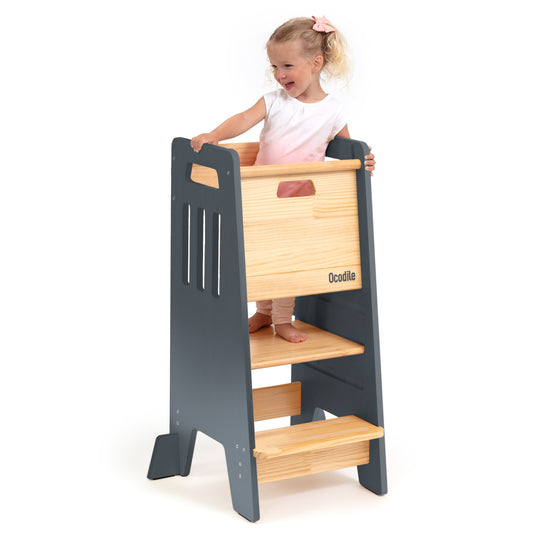
- Guardrails or an Enclosure: For young toddlers, a simple step just won't cut it at counter height. A learning tower design with rails on all four sides creates a safe little cocoon, keeping them securely contained while they "help." This is a must-have for kids under three.
- Non-Slip Surfaces: Kitchens mean spills. Both the standing platform and any steps should have a non-slip surface, whether it's a textured finish or dedicated grip strips. This gives them a secure footing, even if things get a little wet.
- Anti-Tip Feet: Flip the stool over and look at the feet. The best ones have special pads that not only prevent sliding on slick kitchen floors but also add an extra layer of anti-tip stability.
To make it easier to see what really counts, here is a quick checklist to guide you as you compare different wooden stools.
Wooden Step Stool Feature Checklist
This table breaks down the most important features to look for, helping you evaluate your options at a glance.
| Feature | What to Look For | Why It Matters for Safety & Longevity |
|---|---|---|
| Material | Solid hardwood like birch or high-quality plywood. | Provides a strong, durable frame that resists warping and can handle daily use for years. |
| Base Design | A footprint that is wider than the standing platform. | Creates a low center of gravity, drastically reducing the risk of the stool tipping over. |
| Safety Rails | An enclosed design on three or four sides. | Essential for younger toddlers, as it prevents falls and keeps them safely contained at counter height. |
| Surfaces | Non-slip mats or a textured finish on the platform and steps. | Ensures your child has secure footing, preventing slips and falls, especially in a kitchen environment. |
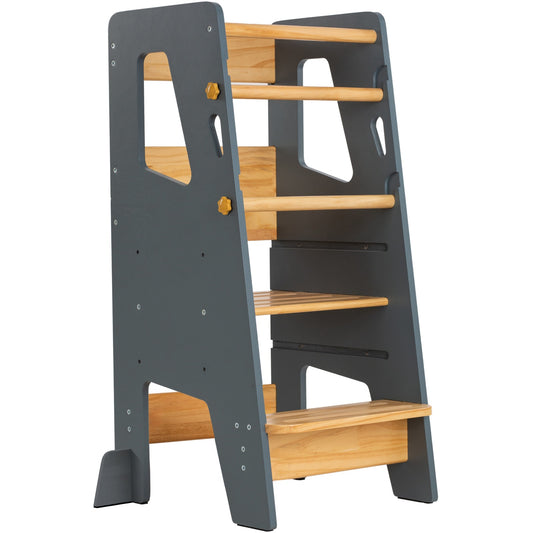
| Adjustability | Multiple platform height settings. | Allows the stool to "grow" with your child, ensuring it remains at a safe and ergonomic height. |
| Corners & Edges | Smooth, rounded corners instead of sharp angles. | Minimizes the risk of injury from bumps and falls, creating a more child-friendly product. |
Think of this checklist as your secret weapon for finding a stool that’s not just beautiful, but built for real family life.
Sizing and Height Adjustability
The perfect stool needs to fit two things: your kitchen and your child. Before you even start shopping, pull out a tape measure and check the height of your countertops. The goal is for the stool’s platform to bring your child to a height where their elbows are just above the counter, giving them a comfortable and safe working space.
This is where adjustability comes in. Many of the best step stools for kids have platforms that can be moved to different heights. This feature is a game-changer, letting the stool grow with your child from a curious toddler into a confident little helper. An adjustable stool means you’ll get years of use out of it, making it a much smarter investment. If you're curious about some of the top-rated models, we break them down in our guide to the best step stool for kids.
By focusing on these key ingredients—solid materials, smart safety features, and the right fit—you can confidently choose a wooden stool that will become a safe, beloved, and long-lasting part of your kitchen adventures.
Fostering Independence with Montessori Principles
A wooden step stool for kitchen use is a key piece in bringing Montessori ideas into your home. It’s like building a little bridge between your child's world and the adult one. The whole point of the Montessori philosophy is to create a "prepared environment" where kids can safely explore and do things on their own. This simple stool is a perfect way to do just that.
It completely changes the kitchen dynamic. Instead of just watching you from down on the floor, your child can stand right beside you, ready to get involved. This simple change is huge for building their confidence and making them feel like a real part of the family.
The Power of Practical Life Activities
Dr. Maria Montessori knew that "practical life" activities were a big deal for a child's development. These are the real, everyday tasks kids see us doing, like washing our hands or getting food ready. A step stool is their ticket to safely joining in on these activities.
When a toddler gets to carefully pour water into a cup or slice a soft banana with a kid-safe knife, they're doing so much more than just "helping." They're learning to focus, working on their fine motor skills, and figuring out how to follow steps in order. Every tiny success adds another layer to their self-confidence.
"A child who has become master of his acts through long and repeated exercises, and who has been encouraged by the pleasant and interesting activities in which he has been engaged, is a child filled with health and joy and worthy of admiration." - Dr. Maria Montessori
This hands-on involvement taps into a child’s natural desire to contribute and be a part of the family's daily routine. It teaches them that what they do matters, which is an incredible lesson in self-worth.
Designing a Prepared Kitchen Environment
You don't need to do a full kitchen remodel to make it Montessori-friendly. It’s all about small, smart changes. Just placing a sturdy wooden stool at the sink or at a dedicated spot on the counter is an open invitation for your child to participate.
Here are a few ways a stool helps prepare the environment:
- Accessibility: It gives them access to the sink for washing hands or rinsing veggies.
- Workspace: It creates a perfect, child-height spot for simple food prep tasks.
- Independence: It lets them get their own drink or grab a healthy snack you've left within their reach.
This chart helps break down the core safety features to look for when choosing a stool to create this kind of environment.

The flowchart really drives home the point that features like guardrails and a wide, stable base are absolute must-haves for a safe and independent workspace for little ones.
Today, more and more parents want products that are both sustainable and help empower their kids. It’s no surprise that demand for tools like this is on the rise. We've seen a projected 28% increase in demand for child-safe, versatile furniture, with 62% of parents saying they actively look for items that support Montessori-style independence.
By giving your child the right tools, you're doing more than just keeping them occupied. You're showing them you trust them and respect their need to learn and grow. You’re turning everyday moments into powerful opportunities for connection and discovery. If you want to explore this further, you might like our guide on applying Montessori education at home. It all starts with a simple stool.
So, you've brought home the perfect wooden step stool for your kitchen. Now for the really important part: making it a safe, seamless part of your daily routine where your little helper can join in on the fun without you having to hover nervously.
It’s all about creating a "safe zone" in your kitchen. Proper placement is everything, ensuring your child has access to the fun stuff while being kept well away from any potential dangers.

Think of it this way: these stools are a modern take on a timeless idea. For generations, they've helped little ones participate and saved parents' backs from constant lifting—a real win-win for family bonding in the heart of the home.
Mapping Your Kitchen's Safe Zones
Before your child even takes their first step up, take a quick scan of your kitchen. Not all counter space is created equal when you have a curious toddler involved. The goal is to find a spot where they can be part of the action, but safely contained.
Here’s a simple way to think about placement:
-
Green Zones (Go for it!): The kitchen sink is a fantastic spot. Here, they can "help" wash vegetables, splash with bubbles, or just enjoy some supervised water play. Another great green zone is a clear stretch of countertop, far from the stove, perfect for mixing batter, kneading dough, or just playing with their own set of toy utensils.
-
Red Zones (No-Go Areas): This is non-negotiable. Keep the stool far, far away from the stovetop and oven. Also, be mindful of counters holding knife blocks, hot appliances like coffee makers or toasters, and any dangling cords from kettles or mixers.
The best spot is always one that gives your child clear access to a single, kid-friendly task, while being physically separate from heat, sharp objects, and electrical hazards. And remember, your supervision is the most important safety feature of all.
A well-placed stool gives you peace of mind, letting you relax and enjoy the moment, knowing their curiosity won't lead them into harm's way.
Setting Clear and Simple Ground Rules
Once you've picked the perfect spot, it’s time to introduce the stool to your child. This is a great chance to establish some simple, positive ground rules right from the start. You can frame it as their special "helper spot," which comes with its own rules to keep things fun and safe.
Keep the language clear and easy for them to remember.
- "Feet always stay on the stool." This is key to preventing them from trying to climb up onto the counter, which is a major fall risk.
- "Stools are for standing, not for jumping." A gentle reminder that their helper stool is a useful tool, not a trampoline.
- "We only use the stool with a grown-up." This reinforces that the stool is for supervised activities only.
Introducing these boundaries from day one helps build lasting safety habits. It turns your time together in the kitchen into a positive, stress-free adventure. And speaking of safety, always making sure furniture is secure is a cornerstone of childproofing. You can find more tips in our guide on how to properly secure furniture to the wall.
Common Questions About Kitchen Step Stools
Bringing a new piece of gear into your home for your toddler naturally comes with a few questions. When it’s something like a wooden step stool for kitchen use, where safety and development are top of mind, you want to feel completely confident in your choice.
Let’s walk through some of the most common questions we hear from parents. Our hope is to give you all the info you need to find the perfect kitchen helper and start making those wonderful, messy memories together.
When Can My Child Safely Start Using a Kitchen Step Stool?
This is the number one question, and the answer is more about your child's readiness than a specific age on the calendar. While most little ones are ready somewhere between 18 months and 2 years old, the real key is to watch for specific developmental signs.
Here’s what to look for:
- Confident Standing: Can your child stand on their own for a good while without wobbling or needing to grab onto something for support?
- Independent Climbing: Are they already trying to climb up on low furniture by themselves? This shows they have the motor skills and coordination to manage a stool.
- Genuine Curiosity: Do they spend a lot of time on their tiptoes, trying to see what’s happening on the counter? If they’re desperate to be part of the action, they’re ready for a boost.
For younger toddlers, especially those under two, we strongly recommend a more enclosed "learning tower" or "kitchen helper" design. These models have guardrails on all sides, creating a safe space that prevents tumbles. No matter their age, remember that constant and close supervision is the golden rule of kitchen safety.
How Do I Clean and Maintain a Wooden Step Stool?
One of the best things about a well-made wooden stool is how simple it is to keep clean. Kitchens are ground zero for spills and splatters, so any furniture in there has to be tough.
For everyday messes, a soft, damp cloth is all you need. If you’re dealing with something sticky, a little mild soap will do the trick. It’s really important to avoid abrasive sponges or harsh chemical cleaners. These can damage the protective finish on the wood, leaving it open to moisture damage. Think of it like caring for your wooden dining table—gentle cleaning is the way to go.
Beyond wiping it down, a little bit of preventative care is a great habit to form.
Take a moment every few months to do a quick "safety check." Give the stool a little wiggle to make sure it's still rock-solid, and use the tool it came with to tighten any hardware that might have loosened over time. This simple routine will keep the stool sturdy and safe for years of use.
This is especially crucial for stools with adjustable platforms. You want to be certain that the hardware supporting your child’s weight is always tight and secure.
Are Wooden Stools Safe for Tile or Hardwood Floors?
Absolutely. A thoughtfully designed wooden stool is perfectly safe for slick kitchen floors like tile, hardwood, or vinyl. The trick is to look for a couple of key design features that stop it from slipping and sliding.
A high-quality stool will have two main things to keep it stable on any surface:
- A Wide, Stable Base: The legs should angle outward, making the stool's footprint on the floor wider than the platform your child stands on. This simple bit of engineering creates a low center of gravity and makes the stool naturally resistant to tipping over.
- Non-Slip Feet: Flip the stool over and check the bottom of the legs. They should have non-slip pads or feet made from a grippy material like rubber. This creates friction with the floor and stops the stool from sliding around, even with a wiggly toddler on board.
Before you let your little one hop on for the first time, give it a quick test yourself. Place the stool where you plan to use it and give it a good push from a few different directions. It should feel solid and stay put.
What Is the Difference Between a Step Stool and a Learning Tower?
This is a great question, and while people often use the terms interchangeably, there’s a big difference in the design and safety, especially for young toddlers.
Here’s an easy way to think about it:
- A Step Stool: This is a simple, open design with one or more steps. It’s fantastic for older, more coordinated kids (usually 3 and up) who have mastered their balance, or even for adults who need to reach a high shelf.
- A Learning Tower: Also called a kitchen helper, this is a much more secure structure. It features a standing platform that is enclosed by safety rails on three or four sides. This creates a protective cocoon, allowing a young child to stand safely at counter height without any risk of falling or accidentally stepping off the side.
For any child under the age of three, a learning tower is without a doubt the safer option for kitchen activities. It provides the security they need to focus on the task at hand and gives parents priceless peace of mind. The open design of a standard wooden step stool for kitchen use is a better fit for older kids who have already developed solid balance and coordination.
At Ocodile, we believe the right tools can turn ordinary moments into amazing opportunities for learning and connection. By choosing a well-designed stool, you’re creating a safe space for your child to explore, grow, and feel like a true part of the family team. Find the perfect helper for your kitchen adventures at Ocodile.