




 - Monica
 - Lindsay

A Parent's Guide to the Children's Shape Sorter
Your toddler is sitting on the floor, brow furrowed, turning a block over and over in both hands. The square won't go into the round hole. They try pushing harder. Then they pause, look closely, switch pieces, and suddenly get it. That little moment feels simple, but it's doing a lot of work.
A children's shape sorter is one of those rare toys that looks almost too plain to matter. Yet it invites focus, movement, trial and error, and conversation. A child isn't just dropping blocks into a box. They're studying shape, adjusting their grip, testing an idea, and learning from what happens next.
That's why so many parents keep coming back to this classic toy. It grows with the child, it doesn't need batteries to stay interesting, and it supports joyful learning in a very concrete way. If you're building a home play space with intention, you might also enjoy these ideas on educational wooden toys for thoughtful early play.
More Than Just Blocks and Holes
When adults watch shape-sorting play, it's easy to describe only what we see on the surface. A child picks up a piece. A child tries a hole. A child succeeds or gets frustrated. But underneath that small scene, something much richer is happening.
A well-designed shape sorter acts as a closed-loop perceptual-motor training system, meaning the child has to look carefully, notice differences in geometry, rotate the object, and use just enough force to place it correctly while adjusting their hands based on visual feedback, as described by Green Toys' overview of shape sorter play. In plain language, the toy asks the brain and the hands to work as a team.
That's what makes this toy so special. It gives immediate feedback without needing an adult to say “right” or “wrong.” The shape fits, or it doesn't. The child feels the result right away.
A good toy doesn't rush a child toward the answer. It gives them a clear problem and enough support to solve it.
Parents often tell me they worry if their child seems “stuck” on a shape sorter. I usually see the opposite. A child who stays with the task is practicing attention, flexibility, and persistence. Even when the block doesn't go in, the play is still productive.
The beauty of a children's shape sorter is that it turns abstract learning into something a toddler can hold. “Same,” “different,” “turn it,” “try again,” and “that one fits” all become physical experiences. For a young child, that's how understanding begins.
The Developmental Power of a Simple Toy
A shape sorter teaches through repetition, but not boring repetition. Each attempt gives the child new information. The hole is too narrow. The corners don't line up. Turning the wrist helps. Pushing harder doesn't.
That learning loop matters because it builds more than motor skill. It builds organized thinking. In a longitudinal study, researchers found a clear age effect in shape sorter performance, with reaching and placement times decreasing significantly from 14 to 36 months, showing measurable maturation in motor-planning skills in this age window, according to the study on developmental change in shape sorter tasks.

What the child is really practicing
A shape sorter looks like one task, but it asks for several skills at once.
- Fine motor control helps the child grasp, turn, and release each piece with increasing precision.
- Hand-eye coordination comes in when they aim the shape toward the matching opening.
- Problem-solving appears when the first attempt fails and they need a new plan.
- Spatial reasoning grows as they learn that a block may be correct, but only in the right orientation.
This is one reason simple toys often stay useful for so long. They meet children at different levels. A beginner might only explore the pieces with their hands. A more experienced toddler may compare shapes, predict which opening will work, and correct themselves without help.
Why trial and error matters
Many adults feel tempted to step in too quickly. We want to help. But with a shape sorter, a little struggle is often where the learning lives.
Practical rule: If your child is engaged, pause before you correct. A few extra seconds of trying often lead to a real breakthrough.
When children test ideas and revise them, they're building habits that matter later in all kinds of learning. That same “try, notice, adjust” pattern supports early puzzles, dressing, building, and eventually more formal problem-solving.
If you're interested in the bigger picture, this article from Superstar Nannies on childhood education gives a helpful overview of why everyday early experiences shape later learning. For hands-on ideas that strengthen the same small muscle movements shape sorters rely on, these fine motor skills development activities are a useful next step.
The brain learns through the hands
Toddlers don't separate “thinking” from “doing” the way adults do. When they rotate a triangle and finally align it, the body is part of the lesson. They're not just learning the word triangle. They're learning what a triangle does, how it looks from different angles, and how careful movement leads to success.
That's why this toy deserves more credit than it gets. It doesn't just keep little hands busy. It teaches the brain how to compare, test, and adapt.
Your Child's Shape Sorter Journey by Age
A shape sorter can be interesting long before a child uses it in the “correct” way. That's important to remember, because many parents assume the toy only counts once a child is sorting independently. It counts much earlier than that.
Early exploration
For younger babies, the shape sorter is often a sensory object first. They may mouth the pieces, bang them together, shake the container, or open and close parts of the toy if they can. That kind of exploration is normal.
At this stage, the learning is very physical. The child is discovering weight, texture, sound, and how objects move. If they aren't matching shapes yet, nothing is wrong. They're still gathering information.
The classic sorting stage
In the second year of life, many children begin to understand the basic idea that one piece belongs in one opening. At this stage, you'll often see repeated attempts, excitement after success, and frustration when a familiar strategy doesn't work.
A helpful way to support this stage is to simplify the task.
- Offer fewer pieces so the child doesn't have to scan too many options at once.
- Start with easier contrasts like a circle and a square.
- Model slowly by turning one piece in front of them without rushing.
- Name what they notice with simple phrases like “round,” “corners,” or “turn it.”
Children at this stage often need help staying calm when a shape doesn't fit. Your tone matters more than a perfect explanation. A warm “You're working hard” often does more than “No, not that one.”
Growing confidence
Later, shape sorting can become faster, more accurate, and more playful. Older toddlers may complete the toy with less support, sort pieces by type before inserting them, or use the blocks in pretend play, stacking, lining up, or “feeding” them into the box in a game they invent themselves.
Some children want to master the same sorter again and again. Others use it as one part of a larger game. Both patterns can be healthy.
The most useful question isn't “Can my child do it perfectly?” It's “How are they interacting with it now?” A child who explores, experiments, and stays engaged is already learning. The toy changes meaning as the child changes, and that's part of its value.
How to Choose the Right Shape Sorter
Not every shape sorter fits every child. Some are beautifully made but too challenging too soon. Others are colorful and exciting but so busy that the main learning gets lost. The best choice is usually the one that feels clear, safe, and well matched to your child's current abilities.
Match complexity to the child
Mainstream shape sorters vary in complexity, from 5-piece sorters for 6+ months to 12-shape Montessori-style sets for 12+ months, with toddler-safe materials such as BPA-free plastics or water-based finishes, as shown in the VTech shape sorter product information. That wide range is useful, but it can also confuse parents.
A simpler sorter usually works best when a child is just learning the idea of matching shape to opening. A more complex sorter can be wonderful once that basic concept is secure. If the toy causes instant frustration every time, it may be too difficult right now. If your child solves it instantly and loses interest, they may be ready for more challenge.
Think about material, not just looks
Some families love wood. Others prefer plastic. Both can work well if the design is thoughtful.
| Material | Pros | Cons | Best For |
|---|---|---|---|
| Wood | Feels sturdy, often calmer visually, usually has a natural look many families enjoy | Can be heavier, may need gentler cleaning | Home play spaces, Montessori-style setups, children who benefit from fewer distractions |
| Plastic | Lightweight, easy to wipe clean, often good for shared settings | Some designs can be visually busy or noisy | Childcare settings, travel, families who need easy sanitation |
| Soft or fabric-based options | Gentle, quiet, easy for early exploration | Less precise feedback when fitting shapes | Very early play, children who are sensitive to noise, supervised travel use |
Safety comes first
Here's the short checklist I give parents before buying any children's shape sorter:
- Check piece size so blocks are appropriate for mouthing-age children.
- Look for smooth edges that won't scrape small hands.
- Choose easy-clean surfaces if the toy will be used often or shared.
- Notice the finish and look for child-safe materials and coatings.
- Pay attention to lids and doors so reset is easy and fingers are less likely to get pinched.
Inclusion matters too
Some children need a different kind of “just right” challenge. A toy can still be developmentally rich while being more accessible.
Children with motor delays may do better with larger pieces and bigger openings. Children with visual differences may benefit from stronger contrast between the shape and the background. Children with sensory sensitivities may prefer a quieter toy with fewer lights, sounds, or competing details.
A shape sorter doesn't have to be fancy to be inclusive. It just has to respect how the child takes in information and how much support their body needs to succeed.
Choose the toy your child can enter with confidence, not the one that looks most advanced on the shelf.
That mindset helps parents avoid a common trap. We sometimes buy for the child we imagine in six months. Most of the time, it's better to buy for the child in front of us now.
Shape Sorters and Montessori-Aligned Play
Many parents are drawn to Montessori-style play because it feels calmer, clearer, and more respectful of the child's pace. A classic shape sorter fits beautifully into that approach when it's simple, well made, and easy for a child to use with growing independence.

Why this toy fits the philosophy
One Montessori idea parents often notice right away is control of error. That means the material gives feedback on its own. The adult doesn't need to constantly correct or praise. With a shape sorter, the wrong piece won't go in. The child can see that, feel that, and try another way.
Another helpful principle is focus on one main challenge. A traditional sorter asks the child to notice shape and orientation. It doesn't usually interrupt with music, flashing buttons, or unrelated features. That can support deeper concentration.
Families creating this kind of setup at home often appreciate resources on Montessori materials for home, especially when they want toys that are purposeful without being overstimulating.
Traditional play supports richer conversation
There's another reason many educators still prefer classic shape sorters over electronic versions. In a study comparing play with traditional and electronic shape sorters, parents using the traditional toy produced more spatial and shape-related language, with 83.6% of utterances focused on shape-related functions compared with 69.1% in the electronic condition, according to the Temple University paper on parent language during shape sorter play.
That finding matters because language during play helps children connect action with meaning. Instead of talking about buttons, sounds, or device features, adults are more likely to say things like “This one has corners,” “Turn it,” or “That shape is round.”
When the toy gets quieter, the conversation often gets better.
A short demonstration can help you picture that kind of focused play in action.
Independence grows in small moments
Montessori-aligned play isn't about making everything serious. It's about trusting that children learn well through hands-on discovery. A shape sorter supports that beautifully because it invites repetition without pressure. The child can return to the same task, notice something new, and build confidence through self-correction.
That's one reason this toy stays relevant even in a home with many choices. It respects the child's need to act, observe, and figure things out with their own hands.
Creative Play Activities and Practical Care
One of the nicest things about a shape sorter is that you don't have to use it only one way. Once a child knows the basic toy, you can stretch its value with simple variations that keep the learning fresh.

Easy ways to extend the play
Try a few of these when your child seems bored with the usual routine.
- Name and match. Hold up one piece and talk about what you see. “This one is round.” “This one has corners.” Keep it conversational, not like a quiz.
- Stack and balance. Use the blocks outside the sorter. Children learn a lot by building small towers and watching which shapes are easier to balance.
- Trace the shapes. Place a block on paper and trace around it. Then let your child match the block to the outline.
- Hide and find. Put a few pieces in a small bag or basket and ask your child to pull one out, feel it, and then look for where it belongs.
- What's missing. Set out a few pieces, cover one, and see whether your child notices which shape is gone.
These little changes keep the toy from becoming too predictable. They also help the child see that shapes aren't just part of one puzzle. Shapes are everywhere.
Keep language warm and simple
You don't need a lesson plan while your child plays. A few well-timed words are enough.
Try phrases like:
- “You turned it.”
- “That one didn't fit.”
- “You found the same shape.”
- “Try another side.”
Those comments support thinking without taking over the task.
Some of the best play support sounds more like noticing than teaching.
Cleaning and care
A toy this hands-on gets used hard, and that's a good sign. Clean it based on the material.
For plastic sorters, mild soap and water usually work well. Make sure all parts dry fully before putting them away. For wooden sorters, use a lightly damp cloth rather than soaking the toy. Dry it promptly so the wood stays in good condition.
A few habits help any sorter last longer:
- Store all pieces together in the container or a small basket nearby.
- Check surfaces regularly for wear, rough spots, or loose parts.
- Wipe after mouthing-heavy play if your child is in that stage.
- Rotate with other toys so the sorter stays inviting instead of feeling overfamiliar.
A well-cared-for shape sorter can stay useful for a long time, and often for more than one child.
Building a Foundation with Thoughtful Play
A children's shape sorter may look humble, but it supports some of the most important work of early childhood. It helps a young child notice differences, test ideas, manage frustration, and succeed through persistence. That's a powerful combination.
It also reminds us that good toys don't need to do everything at once. In many cases, the best toys are the ones that are clear, safe, and open enough for the child to do the real thinking. A sorter can support motor planning, early spatial reasoning, richer parent-child conversation, and independent discovery, all through ordinary play on the floor.
Choosing one thoughtfully matters. The right toy meets your child where they are, not where a package says they should be. It feels manageable in their hands, safe in your home, and flexible enough to grow with them. And when you consider inclusion, materials, and the child's real experience of the toy, you create better play from the start.
That same mindset shapes many of the best choices parents make at home. When families look for products that support independence, protect safety, and respect a child's development, they're building more than a nursery or play corner. They're building a daily environment where children can participate, explore, and feel capable.
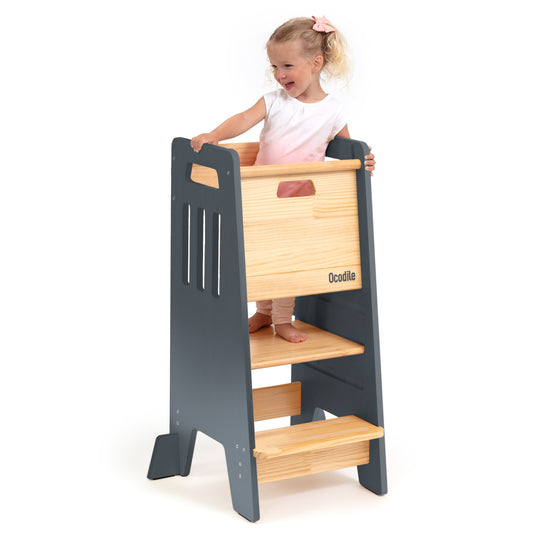
If those values matter in your home, Ocodile is worth exploring. Their child-focused furniture is designed around the same ideas that make thoughtful play materials so valuable: safety, practical function, quality materials, and support for a child's growing independence in everyday family life.