



Children's Stackable Chairs: Safety, Style, & Space-Saving
A lot of parents start looking for children's stackable chairs after the same moment. The play table has become command central for coloring, snacks, puzzles, and homework. Friends come over, cousins visit, or siblings want their own spot, and suddenly the room feels full of furniture that never quite goes away.
That's where stackable seating earns its place. A good chair can support a child's posture, clear the floor in seconds, and still look at home beside your dining table or in a calm play corner. A bad one does the opposite. It slides, wobbles, scratches floors, or takes up space even when nobody's using it.
From a product design perspective, this category matters because families aren't just buying a seat. They're buying daily convenience, safer independence, and fewer frustrations in small spaces. That's one reason the broader kids' seating market was estimated at over USD 31 billion in 2025 and projected to keep growing, with demand tied to child safety, ergonomic design, and specialized furniture according to this kids' chairs market report.
Welcome to the World of Children's Stackable Chairs
Children's stackable chairs solve a very specific family problem. You need enough seating for real life, but you don't want your home to feel like a classroom storeroom. When the chairs are thoughtfully designed, they give children a proper seat height for eating, making, reading, and socializing, then stack neatly when the day changes.
In practice, the best designs are almost invisible when they're working well. A child can pull one out for a puzzle, carry it to a low table, and put it back with help or on their own. Parents get floor space back without hauling adult-sized furniture from room to room.
What makes this category so useful
Most families aren't choosing stackable chairs because stacking sounds exciting. They choose them because the chairs support several jobs at once:
- Daily flexibility: One room can shift from breakfast nook to craft zone to guest play space.
- Cleaner layouts: Fewer loose chairs sitting around means less visual clutter.
- Better fit for kids: Child-sized seating usually works better than asking a child to perch on furniture built for adults.
A chair for children should disappear into the rhythm of the day. Easy to pull out, easy to clean, easy to put away.
More than a storage solution
There's also a style concern that parents don't always say out loud. Many want practical furniture, but they don't want their home to look overly institutional. That's fair. Good children's stackable chairs should feel intentional, not temporary.
That's why the strongest options balance three things at once. Safety, practicality, and visual calm. When those line up, stackable chairs stop feeling like a compromise and start feeling like smart family furniture.
Why Choose Stackable Chairs for Your Family

Some children's furniture earns its place by being charming. Stackable chairs earn it by being useful every single day. If you're deciding whether they're worth it, the answer usually comes down to how your family uses space, how much independence you want to encourage, and whether you want to buy once instead of replacing flimsy seating later.
Space that works harder
A fixed set of small chairs can make a room feel permanently busy. Stackable chairs change that. You can keep a couple in use and store the rest vertically when you need open floor area for blocks, movement, or guests.
That matters in apartments, shared bedrooms, dining rooms that double as homework zones, and homes where grandparents visit often. It also matters in houses with plenty of square footage, because the issue usually isn't total space. It's usable space.
Independence without the chaos
Many stackable models are light enough for adults to move quickly, and some are manageable for older children too. That small detail changes behavior. A child who can get their own chair, bring it to the right place, and return it after use is practicing real-world independence.
That's one reason this style fits so well in Montessori-inspired homes. The furniture supports participation instead of waiting for an adult to reset the room every time.
Value that shows up over time
Cheap chairs often look fine on day one. The trade-offs appear later. The legs twist slightly, the shell flexes too much, the finish gets hard to clean, or the shape just doesn't support comfortable sitting for more than a few minutes.
A better chair tends to pay for itself in routine use:
- Less replacement hassle: Durable materials hold up better to dragging, spills, and repetitive stacking.
- More uses per chair: The same chair can work for meals, crafts, reading, and playdates.
- Lower storage burden: Furniture that stacks is easier to live with, especially in multipurpose rooms.
Practical rule: If a chair only works in one corner of the house, it's furniture. If it works in three rooms and stores easily, it's a family tool.
The biggest reason families choose children's stackable chairs is simple. They reduce friction. Cleanup is faster, rooms adapt more easily, and children get seating that feels made for them rather than borrowed from adult life.
How to Choose the Right Size and Ensure Safety
The safest children's stackable chair isn't the one with the nicest color or the thickest-looking frame. It's the one that fits your child's body and holds steady under daily use. Sizing comes first because a chair that's too tall or too deep changes posture immediately. Children start dangling their feet, sliding forward, or bracing awkwardly.
Kaplan's classroom chair sizing is a useful benchmark because it ties seat height directly to age bands. Their offerings include 11.5-inch seats for ages 2 to 5 and 13.5-inch seats for ages 3 to 6, and most child sizes are rated to 150 lb according to Kaplan's size guidance for stackable classroom chairs. That kind of sizing matters because children sit better when their feet are closer to the floor and their body isn't constantly searching for support.
Start with seat height, not age on the box
Age guidance is helpful, but body proportions vary. A better approach is to check whether your child can sit with a stable pelvis, knees comfortably bent, and feet supported by the floor or close to it.
Here's a quick reference point based on the age-to-seat-height ranges noted above:
| Age Range | Recommended Seat Height |
|---|---|
| 12 to 36 months | 7.5 in. to 9.5 in. |
| 2 to 5 years | 11.5 in. |
| 3 to 6 years | 13.5 in. |
| 5 to 8 years | 15.5 in. |
| 6 years through adult | 17.5 in. |
If you're comparing proportions across different chair styles, this guide on chair seat height basics can help you visualize what a good fit should look like.
Safety details that actually matter
Parents often get shown rounded edges, bright colors, and cheerful product photos. Those details are nice, but they're not enough. You want to inspect the things that affect stability, wear, and long-term safety.
Look for these signs of sound construction:
- Stable base geometry: The chair should feel planted when a child climbs in and out.
- Rounded contact points: Edges and corners should reduce scrape risk, especially around the seat and back.
- Protective feet or glides: These help the chair sit evenly and reduce floor damage.
- Clear load guidance: Even if your child is small, a published load rating signals that the maker has thought about structural margin.
- Easy-clean surfaces: Dirt trapped in seams and rough textures often becomes a hygiene issue before it becomes a design issue.
The compliance gap parents run into
Many product listings fall short in this regard. They mention stackability and size, but they don't clearly explain compliance, stability testing, or material safety in a way non-experts can easily verify. That leaves parents assuming “school style” means “safe,” which isn't always a reliable shortcut.
Ask direct questions before you buy:
- What safety standard or testing basis was used?
- What materials touch the child directly?
- Is the finish or plastic intended for children's furniture use?
- Does the chair remain stable when a child shifts sideways or pushes off the table?
- Are replacement feet or glides available if they wear out?
If a brand can describe colors but can't describe construction, keep looking.
For a broader room-by-room perspective on practical finishes and easy-living surfaces, Find family-friendly furniture options that hold up to children and everyday mess.
Understanding Materials and Durability
Materials decide how a chair feels, where it can live, and how gracefully it ages. In children's stackable chairs, the most useful comparison isn't “which material is best?” It's “which material fits the way your family lives?”
A molded shell chair that works beautifully in a daycare art room may feel too utilitarian in a dining space. A wooden chair that looks warm and calm in a home may ask for more care than a busy childcare setting can realistically give.

HDPE and steel for hard-working spaces
For mixed indoor and outdoor use, HDPE paired with a powder-coated steel frame is one of the most practical constructions available. Lifetime's children's stacking chair uses UV-protected high-density polyethylene with a powder-coated steel frame, and it's described for indoor and outdoor use with resistance to fading, cracking, staining, moisture exposure, and rust in the published product information from Lifetime's chair specification page.
That combination is especially useful when your chair may move between kitchen, patio, playroom, and covered outdoor space. It also helps in settings where sanitation matters and surfaces need to wipe clean quickly.
Wood for warmth and visual calm
Wooden stackable chairs are often chosen for a different reason. They soften a room. In a home with natural materials, quieter colors, and open shelving, wood tends to blend in better than molded plastic.
The trade-off is maintenance discipline. Wood generally asks you to pay attention to moisture, finish wear, and impact marks. If your priority is aesthetic consistency, that may be worth it. If your priority is quick wipe-downs after paint, yogurt, and sidewalk dust, plastic and steel may be the easier path.
If material safety is high on your list, it helps to compare finishes and surface choices through the lens of non-toxic kids furniture basics.
Polypropylene and steel for classroom logic
Polypropylene shell chairs on steel frames are common in educational spaces for good reason. They balance stiffness, cleanability, and repeatable manufacturing. When paired with bracing underneath and good floor glides, they often feel more controlled and less wobbly than very cheap all-plastic lookalikes.
Here's the practical match-up:
- Choose HDPE plus steel if you need indoor-outdoor flexibility and easy cleaning.
- Choose wood if appearance in the home matters as much as function.
- Choose polypropylene shell plus steel if you want more standardized sizing and high-use classroom behavior.
Materials should match the mess, not just the mood board.
Smart Features for Modern Families
Once size and material are right, the useful differences show up in smaller design decisions. These are the features that make a chair pleasant to live with instead of merely acceptable to own.
Features that reduce daily friction
Start at floor level. Protective feet matter more than many buyers expect because chairs rarely move only by lifting. They get nudged, twisted, and dragged a little. Good feet or glides help the chair move more cleanly and reduce scratches on wood, laminate, or tile.
Then look at how the chair stacks. Some designs stack smoothly but catch fingers, scrape the seat below, or require more force than they should. A well-resolved stack is one that feels obvious. Lift, align, lower, done.
Useful details to prioritize:
- A back shape that supports upright sitting: Helpful for art, reading, and meals that last longer than a quick snack.
- Low enough weight for practical movement: Adults should be able to reset a room fast. Older children may be able to help.
- Surfaces that don't trap grime: Texture should support grip without turning cleaning into scrubbing.
- Frame-to-seat connections that stay tight: Movement at joints is often the first sign of a chair aging poorly.
Why durability changes the buying decision
Durability isn't just about surviving rough treatment. It's about whether a chair still feels trustworthy after years of ordinary family life. In childcare settings, that matters even more because furniture sees constant repetition.
Some commercial-grade stackable chairs are reported by customers to last over 20 years in childcare use, which is noted alongside category durability benchmarks in the product context around Lifetime Children's Essential Stacking Chair information. That doesn't mean every family needs institutional-grade seating. It does mean durable materials and sound construction can change the replacement cycle dramatically.
Design that supports independence
The best children's stackable chairs also support autonomy. A child-sized chair with predictable handling teaches habits. Pull it out. Use it. Return it. That's not a minor convenience. It's a repeated opportunity for participation.
In that sense, features like manageable weight, stable footing, and simple cleaning all support the same goal. They make the child's environment easier to understand and easier to take part in.
Inspiring Uses for Stackable Chairs at Home and Beyond
Some furniture only makes sense in one room. Children's stackable chairs are more interesting than that because they move with the day.

A pair can live beside a low table in the morning for drawing, then move to the dining room when extra cousins arrive for dinner. Later, one chair may become the reading seat in a bedroom corner while the others stack neatly against a wall. That versatility is the whole point. The chair isn't asking the room to stay fixed.
At home, they shine in small transitions
One of the best home uses is the quick setup. Holiday meals, birthday craft tables, rainy-day forts that turn into snack stations. These are all moments when adults need child-sized seating fast, without dragging bulky furniture across the house.
They also work well in these situations:
- Reading nook seating: A defined place for books feels more inviting when the chair fits the child.
- Shared sibling spaces: Chairs can come out together, then disappear when play needs more floor area.
- Art and sensory play: Easy-clean surfaces make cleanup far less stressful.
- Covered outdoor use: Some materials handle patios and garden tables well when the weather cooperates.
For families organizing compact rooms, small-space furniture planning ideas can help you decide where stackable seating fits without crowding circulation paths.
In schools and mixed-age settings, stackability becomes operational
The institutional value shows up when several ages share one environment. A preschool, Montessori-inspired classroom, or home with children at different stages needs seating that adapts without taking over storage.
Worthington Direct notes a particularly useful feature in some school-style models: different sizes can stack together, which improves storage efficiency in mixed-age environments according to their overview of Angeles value stack chairs. That sounds like a technical detail, but anyone who has cleaned up after group activities knows how important it is.
Here's a quick visual for ways families and educators use them:
When one chair can move from snack table to art table to story circle, you need fewer furniture decisions and get more usable space back.
Your Buying Checklist and Frequently Asked Questions
Buying children's stackable chairs gets easier when you ignore the color first and check the fundamentals. If the chair fits the child, feels stable, and suits the room it will live in, you're already ahead of most shoppers.

A practical checklist before you buy
- Check fit first: Confirm the seat height matches your child's stage and supports a stable sitting posture.
- Match the material to the room: Indoor-outdoor use, quick sanitation, and visual style all point to different choices.
- Inspect the feet and frame: Stable contact with the floor matters as much as the seat itself.
- Ask about safety details directly: Don't assume stackable means thoroughly explained or clearly tested.
- Try the stacking motion if possible: It should feel controlled, not awkward or pinch-prone.
- Think about where the chairs rest when unused: The storage plan is part of the purchase decision.
If you're building a room that needs to work across sleep, play, and quiet time, it can help to look at adjacent children's products too, such as children's sleep solutions from Space Ranger Fred when planning flexible spaces for visiting kids or shared family routines.
Common questions parents ask
How many chairs should I stack at home?
Follow the manufacturer's guidance. Home use is different from commercial storage, and stability matters more than squeezing every inch from a corner.
Are plastic chairs less safe than wooden ones?
Not automatically. Safety depends on design, fit, stability, and material quality, not just the category label.
Can one chair work for several years?
Sometimes, but only if the seat height continues to fit the child. A durable chair can still become the wrong size.
Do children's stackable chairs belong only in playrooms?
No. Many families use them at dining tables, in reading corners, at craft stations, and in covered outdoor areas.
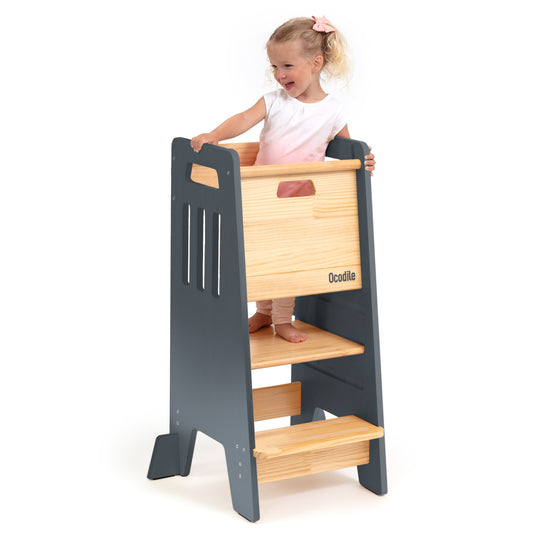
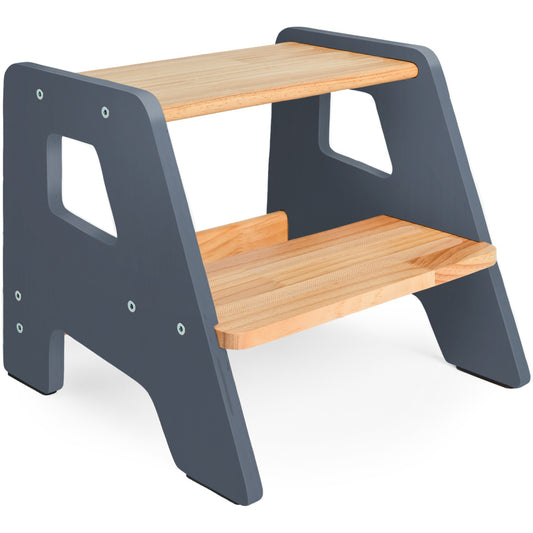
What if I want something more furniture-like than school-like? Then shape, finish, and material become more important. In such cases, wooden options or calmer molded designs often make more sense. Ocodile is one example of a children's furniture brand focused on practical, child-friendly home products rather than institutional-looking pieces.
If you're creating a home that supports independence, safety, and everyday family life, Ocodile offers child-focused furniture designed to help kids participate confidently in daily routines while fitting naturally into modern spaces.