



Child's Toy Chest: Safety, Sizing & Montessori Guide
By the time evening arrives, many homes look the same. Blocks are under the sofa, stuffed animals are on the stairs, toy cars are somehow in the kitchen, and you're stepping around puzzles while trying to make dinner. Most parents don't need more reminders to “declutter.” They need a system that works with family life.
A good child's toy chest can do much more than hide mess. It can help a child understand where things belong, make play choices easier, and turn cleanup into something they can participate in instead of resist. That shift matters. Children do better in spaces that feel predictable, calm, and easy to use.
At Ocodile, we think children's furniture should support real daily routines. It should be safe first, simple to use, and designed at a child's level. That's why a toy chest deserves more thought than people often give it. It isn't just a box. It's part of the environment your child learns from every day.
That need is only growing. In the United States alone, about 3 billion individual toy units are sold each year, and adults 18+ were the fastest-growing toy-buyer cohort in 2025, according to toy industry statistics compiled by Toycycle. More toys in homes means storage stops being optional very quickly.
From Toy Chaos to Tidy Calm
A living room can change fast. In the morning, it's a place for coffee and quiet. By afternoon, it becomes a train station, a doll clinic, and an obstacle course. Parents often buy baskets, shelves, and bins one at a time, hoping the mess will sort itself out. Usually, it doesn't.
What changes things is giving toys a clear home. A child's toy chest creates one visible destination. That sounds simple, but it changes family habits. When cleanup has one obvious endpoint, even young children can start to understand the routine.
Why one container can change the room
Children respond well to order they can see. If a room has too many storage spots, they often dump everything out looking for one favorite item. If there's one easy-to-reach chest for a defined group of toys, choices become simpler. Cleanup also feels more manageable because the task is concrete. Put the toys back in their place.
Montessori thinking offers a useful perspective. The goal isn't to make a room look perfect for adults. The goal is to make the space understandable for the child. A toy chest can support that when it's placed low enough, opens safely, and holds a curated set of toys rather than every toy the family owns.
A tidy room isn't only about appearance. It helps a child know what's available, what belongs to them, and what they can put away independently.
Some families also split storage by type. Building toys may go in the chest, while plush toys stay separate. If your soft toys seem to spread everywhere, these stuffed animal storage solutions offer useful ideas for keeping cuddly items accessible without filling the floor.
Calm is practical, not decorative
Parents sometimes worry that “organized” means rigid. It doesn't. A calm room can still be playful, creative, and lived in. The difference is that the child can reset the space after play.
That's the value of a toy chest. It supports a cycle children can learn. Choose. Play. Return. Repeat. When furniture supports that rhythm, cleanup feels less like parental enforcement and more like part of everyday life.
Your Child's Safety Comes First
Before you think about color, style, or whether the chest matches the rug, check safety. This is the non-negotiable part. A toy chest sits at child height, invites hands-on use, and often includes a moving lid. That combination deserves careful attention.
The U.S. Consumer Product Safety Commission has warned that children have died when toy chest lids fell on their heads or necks, and that children have also died after climbing into storage containers and becoming trapped. The agency recommends safer designs such as open bins, lightweight removable lids, or a lid support that holds the lid open in any position, as described in the CPSC toy chest safety guidance.

The lid matters most
Many parents assume the danger comes from rough play. Often, the bigger issue is the chest itself. A lid is a moving piece with weight behind it. If it falls quickly, it can slam on fingers or worse.
If you're choosing a chest with a hinged lid, look for hardware that holds the lid open in any position. That detail matters more than decorative handles or extra compartments. Some modern designs use soft-close hardware or gas struts to control movement, but the essential principle is the same. The lid shouldn't drop suddenly.
A safer alternative is even simpler. Open-top bins, removable lids, or sliding panels reduce the chance of entrapment and reduce pinch points too. If you don't need a hinged top, don't force one into the design.
Stability and escape are part of safety
A toy chest also needs to stay put. Children lean, climb, sit, and pull. Even a sturdy-looking chest can become unstable if it's placed on an uneven rug or used like a ladder.
Use this quick check when evaluating a piece:
- Test the base: Push gently from different sides. The chest should feel planted, not wobbly.
- Check for trapping risks: Avoid locking mechanisms. A child should never be unable to get out.
- Look for airflow details: Ventilation gaps can add another layer of protection if a child climbs inside.
- Review edges and corners: Rounded corners and smooth surfaces reduce everyday bumps and scrapes.
For homes with active climbers, furniture anchoring is part of the same safety mindset. This guide on how to secure furniture to the wall is a helpful reference when you're planning a safer play area.
Practical rule: If a toy chest needs adult strength, adult speed, or adult judgment to use safely, it isn't yet designed well enough for a child's room.
Materials should feel safe in daily use
Safety isn't only about mechanics. It's also about touch. Run your hand along the rim, inside edge, and lid underside. Rough spots, splinters, exposed fasteners, and sharp corners often show up in the places adults forget to inspect.
Look for finishes that are made for children's furniture, surfaces that wipe clean easily, and construction that feels solid. You don't need technical language to assess a piece. You can feel a lot by opening it, closing it, and imagining your child using it every day.
When parents ask me what matters most, I answer the same way every time. Choose the chest that removes risk before it adds storage.
Finding the Perfect Size and Capacity
Toy chests don't come in one “correct” size. That's good news, because homes and families don't come in one standard layout either. The right chest fits your room first and your toy collection second.
Examples from Lowe's show how varied toy chest dimensions can be, from 20 in × 16 in × 26 in to 47.5 in × 21 in × 22 in, with builds commonly using 1/2-inch to 3/4-inch thick panels for sturdiness, as shown in these toy box building examples from Lowe's. That range tells us something useful. You should size a chest around your space and your child's reach, not around a fixed industry standard.
Start with the floor, not the product listing
Measure the place where the chest will live before you browse. Hallway clearance, door swing, bed placement, and the path your child takes across the room all matter. A chest that technically fits can still make a room feel cramped.
A simple approach works well:
- Mark the footprint: Use painter's tape on the floor to outline the size you're considering.
- Walk around it: Carry laundry, bend down, and sit nearby. Notice whether the space still works.
- Open it in your mind: If it has a lid, imagine the vertical clearance too.
Choose a height your child can actually use
Parents often focus on capacity and forget access. If the chest is too deep, toys at the bottom disappear into a pile. If the front edge is too high, your child can't reach in comfortably or see what's available.
That's why many Montessori-inspired spaces favor lower, simpler storage. Children are more likely to return items when they can retrieve them easily in the first place. If your child needs help every time they want a puzzle or truck, the chest is storing toys, but it isn't supporting independence.
For a broader look at practical wood storage formats, this article on wooden toy storage ideas can help you compare chest-style storage with shelves, bins, and mixed setups.
Match the chest to the kind of toys you own
Not all volume is equally useful. Large dress-up items, road tracks, and chunky wooden blocks need different storage than small figurines or card games.
A quick way to think about capacity is to sort toys into three groups:
| Toy type | What the chest should do |
|---|---|
| Bulky toys | Hold larger pieces without forcing them in sideways |
| Mixed everyday toys | Allow easy drop-in cleanup and quick access |
| Small loose items | Work better with interior baskets or separate containers |
A toy chest works best when it holds a defined category, not every plaything in the house.
A Tool for Independence and Organization
The most useful furniture in a child's room doesn't just store things. It teaches something. A child's toy chest can become one of the first places where a child practices responsibility in a visible, repeatable way.
Montessori spaces are often described as calm and orderly, but the deeper idea is independence. Children do better when the environment helps them act on their own. A toy chest supports that when it's easy to open, easy to understand, and limited enough that the child can succeed with it.
Order helps children make choices
When too many toys are available at once, children often jump rapidly from one thing to another. The room starts to feel loud even when it's quiet. A well-managed toy chest lowers that pressure by reducing visual clutter.
That doesn't mean hiding everything. It means being intentional. If the chest contains a focused set of toys your child can use independently, the room becomes easier to use. They can choose with more confidence and reset the space with less help.

Simple routines work better than perfect systems
Children don't need a complicated organization method. They need a routine they can remember. Start by introducing the chest as the home for a specific set of toys. Then model the cleanup calmly and consistently.
A few practical habits make a big difference:
- Keep the category clear: Use the chest for blocks, pretend play items, or everyday mixed toys. Don't change the purpose every few days.
- Rotate rather than overflow: Store some toys elsewhere and switch them occasionally. Fewer choices often lead to deeper play.
- Use visual cues: Picture labels, color groupings, or one sample toy placed nearby can help pre-readers understand what belongs where.
- Tidy in short bursts: A two-minute reset at the end of play is often more successful than one large cleanup later.
Children are more likely to care for a space when the space is built at their scale and the expectation is clear.
The chest becomes part of the learning environment
Design meets child development. A large, heavy, hard-to-manage chest asks the child to adapt to the furniture. A well-designed chest adapts to the child.
That's also why some families combine a chest with open shelving. For example, a low shelf can display a few current activities while the chest holds larger toys that are less suited to open display. If you're comparing those approaches, this guide to the Montessori play shelf explains how visibility and accessibility shape independent play.
I often tell new parents to watch what happens after a week, not after a day. If your child begins returning one car, one doll, or one set of blocks without prompting, the storage is doing more than organizing. It's teaching.
Styling and Placing Your Toy Chest
A toy chest can be useful and still look good in your home. That matters, especially when the play area shares space with the living room, guest room, or family bedroom. The best placement feels natural, not like you dropped a plastic container into the middle of the house and hoped for the best.

Choose a finish that works with the room
Start by looking at the furniture you already have. Natural wood tends to blend well with calm, child-centered spaces. Painted white feels light and simple. Soft colors can make the chest feel playful without overwhelming the room.
If the chest will live in a shared area, choose a finish that connects to nearby pieces such as a bench, low shelf, or side table. If it's in a child's bedroom, you have more freedom to let it feel cheerful and distinct. In both cases, simple shapes usually age better than highly themed designs.
Place it where the routine already happens
Good placement follows behavior. Put the chest close to where your child plays, not where adults wish the toys would disappear. If cleanup requires carrying toys through several rooms, the system will break down.
These placements tend to work well:
- At the foot of the bed: Useful for bedroom toy storage if there's enough walking space around it.
- In a reading corner: A bench-style chest can support books and soft toys nearby if it's designed for that use.
- Along one wall in the living room: This keeps toys contained without making the room feel dominated by play.
- In a dedicated play nook: Helpful when you want a clear visual boundary around play materials.
A short room tour can help you think through layout and scale before you commit to one spot.
Let the chest support the mood of the space
Styling isn't about making children's furniture disappear. It's about helping it belong. A toy chest beside a rug, floor cushion, or small book display can make a play corner feel intentional and calm.
If you like layered rooms, add warmth with a basket nearby, a framed print above, or a lamp placed out of reach on an adjacent surface. If you prefer minimal spaces, keep the area more open and let the chest itself act as the anchor.
A well-placed toy chest reduces visual noise because it gives the eye, and the child, one clear place to return things.
DIY Project vs Store-Bought Peace of Mind
Some parents see a toy chest and think, “I could build that.” Sometimes they can. A simple box shape isn't hard to sketch, and making your own lets you match the room exactly. But toy chests are one of those pieces where the small details matter more than the basic form.
The hardest part of a safe build usually isn't the box. It's the lid. As Ana White's toy box lid plan shows, modern builds often specify soft-close lid supports, safety cutouts, universal supports, or rubber bumpers because the lid is a moving mass that can slam shut or pinch fingers if it isn't properly controlled.

What DIY gives you
DIY is attractive for understandable reasons. You can choose the exact width, depth, wood tone, and trim details you want. If you have tools and experience, that flexibility is valuable.
A homemade chest may suit you if:
- You need a custom footprint: Alcoves, under-window areas, or unusually narrow rooms often benefit from made-to-measure furniture.
- You already build furniture: If you're comfortable with joinery, sanding, and hardware installation, you're starting from a good place.
- You want material control: Some parents like selecting every board, finish, and interior detail themselves.
The tradeoff is responsibility. You have to source the correct hardware, install it accurately, and test the result like a safety inspector, not like a hobbyist.
What store-bought changes
Buying a ready-made chest usually reduces uncertainty. You can evaluate a finished product, check how the lid moves, feel the edges, and assemble it without designing from scratch. That's often the calmer route for busy families.
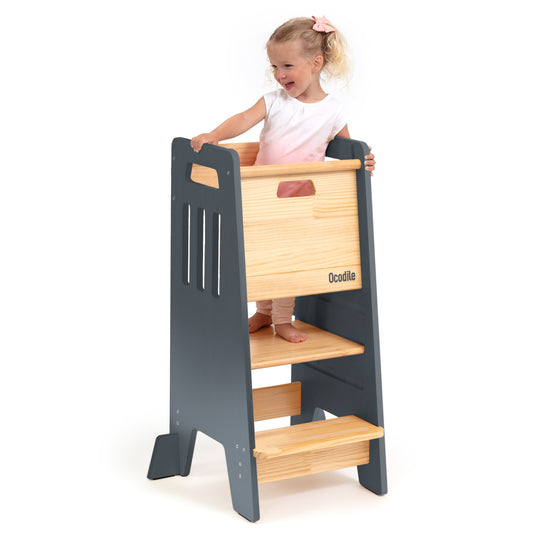
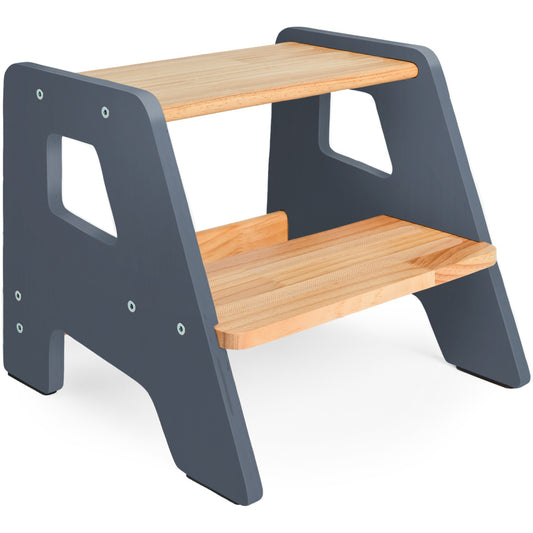
For example, Ocodile offers children's furniture designed around independence and home use, including pieces intended to make child-accessible spaces easier to manage. That doesn't remove your need to assess fit and placement, but it does mean you're starting from a product made for this category rather than adapting a general storage box.
Here's a clear side-by-side view:
| Option | Usually makes sense when | Main caution |
|---|---|---|
| DIY | You need custom dimensions or enjoy building | Safety hardware and execution are fully your job |
| Store-bought | You want speed, predictable use, and simpler setup | You may have fewer design choices |
A realistic decision is usually the right one
Parents sometimes frame this as a creativity question. It's really a capacity question. Do you have the time, tools, and attention to build a chest that works well every single day for a child?
If yes, DIY can be satisfying. If not, store-bought can save time and mental load. Neither choice is more virtuous. The better choice is the one that gives your family a safe, usable piece without lingering doubts.
Your Checklist for the Ideal Toy Chest
By the time you're ready to choose, it helps to stop thinking in terms of “cute” or “big enough” and start asking sharper questions. The right child's toy chest should support your child's body, your room, and your routines all at once.
Use this list when you compare options in a store or online:
- Is the opening safe to use daily? If there's a lid, does it move in a controlled way and avoid sudden closure?
- Can my child reach inside comfortably? A chest should invite use, not require constant adult help.
- Does the size fit the room in real life? Think about walking space, door clearance, and where toys usually end up after play.
- Will this chest hold the right category of toys? Bulky toys, mixed toys, and tiny pieces need different storage strategies.
- Does it reduce clutter visually? The best chest makes the room feel calmer even before cleanup is perfect.
- Can I imagine a simple daily routine with it? Good storage supports habits, not just appearances.
- Does the finish and shape suit the rest of the home? A piece you enjoy looking at is more likely to stay in use.
If you're comparing this purchase with other storage furniture, these Lott's Furniture tips for home furnishing offer a useful general framework for evaluating chests, cabinets, and similar pieces from a broader furniture perspective.
The ideal toy chest isn't the one that holds the most. It's the one your child can use safely, understand easily, and return to every day.
A thoughtful choice does more than tidy the room. It helps your child build order, confidence, and participation into everyday family life.
If you're building a calmer, more child-friendly home, Ocodile offers practical furniture designed to support independence, safe exploration, and everyday family routines.