



Commercial Grade Furniture for Childcare Spaces
A parent is measuring a child-sized chair against a doorway, while a childcare provider is replacing tables worn down by years of meals, markers, climbing, and cleaning. Commercial grade furniture offers a useful answer, but it means more than thick wood or a heavy appearance. It means furniture designed for repeated use, with safety, stability, finish durability, and construction that can be checked.
Table of Contents
- What Commercial Grade Furniture Really Means
- Commercial Grade versus Residential Furniture
- Safety and Durability Standards That Matter
- Materials and Construction in Plain English
- Choosing Pieces for Kids and Childcare Spaces
- Cost, Lifecycle Value, and Montessori-Made Options
- Questions Worth Asking Before You Buy
What Commercial Grade Furniture Really Means
A child carries a chair to the snack table, opens a low shelf, and reaches for materials without waiting for an adult. In a Montessori-inspired room, furniture must support that independence while handling the same movements, spills, and cleaning routines day after day.
Commercial grade furniture describes pieces made for shared, repeated use. The label alone proves little, so check for documented testing, stable construction, rounded edges, anti-tip features, and finishes suited to frequent cleaning. BIFMA standards formalize expectations for safety, load, stability, and endurance rather than judging appearance alone.
For children, suitability also depends on age-appropriate dimensions, smooth surfaces, secure hardware, and clear information about the finish. Strong construction does not make a piece appropriate if it has sharp corners, detachable small parts, or a height that invites unsafe climbing. Ocodile's solid-wood approach provides a concrete example of how warm materials and child-scaled design can work alongside practical performance needs.
The useful test is behavioral: can the furniture handle how children use it? Ask which standard applies, how the item was tested, and how its finish responds to spills and disinfecting. Those answers turn a broad marketing label into a more informed choice for a home, classroom, or childcare space.
Commercial Grade versus Residential Furniture
Think of residential furniture as designed for lighter, more predictable use. Commercial grade furniture assumes more movement, more users, and more cleaning. The difference usually appears in joinery, edge protection, hardware, surface coatings, testing, and warranty language.
| Attribute | Commercial Grade | Residential |
|---|---|---|
| Construction | Reinforced joinery and durable components | Lighter construction for ordinary home use |
| Load and stability | Tested for demanding, repeated use | Usually intended for less intensive use |
| Finish | Designed to resist abrasion and regular cleaning | May wear sooner under harsh cleaning |
| Lifecycle | Planned for extended daily service | Suited to lighter household duty |
| Warranty | Often reflects stricter usage assumptions | Commonly reflects home use |
For a childcare room, the most important differences are stability when a child leans or climbs, resistance to disinfectants, and tolerance for constant moving. A beautiful surface won't help if joints loosen or edges chip after routine care.
Commercial grade doesn't have to look institutional. Child-focused furniture can use warm wood, simple forms, and child-sized proportions while still emphasizing tested performance. A Solid Wood Twin Over Twin Bunk Bed For Kids is one example of a low-to-the-floor, space-saving design intended to keep bedtime comfortable while leaving more room for play.
Safety and Durability Standards That Matter
A child leans against a shelf, climbs onto a stool, or pulls a drawer during ordinary play. Safety standards matter because furniture must handle those real movements, not only an adult using it as intended.
Start with the applicable standard rather than the sales description. BIFMA benchmarks for contract furniture can cover strength and stability, including static-load, cyclic-fatigue, impact, and stability testing. BIFMA's published standards overview is a useful starting point for identifying applicable methods.
Children's furniture needs age-specific review. Ask whether the product has been assessed for tip-over, entrapment, sharp edges, and small detachable parts. A toddler climbing a shelf creates a different risk from an adult sitting in an office chair, so the test should match both the product and its setting.
Durability claims also need context. Upholstery abrasion testing and repeated contract-furniture testing can indicate how a piece may tolerate long service and multiple users, but ask which method was used and what part of the product it evaluates.
Check emissions and chemical safety. Low-emission certifications may matter in enclosed rooms, while U.S. buyers should ask about CPSIA requirements for lead and phthalates. For fire-related questions, this guide to furniture flammability standards explains the relevant considerations.
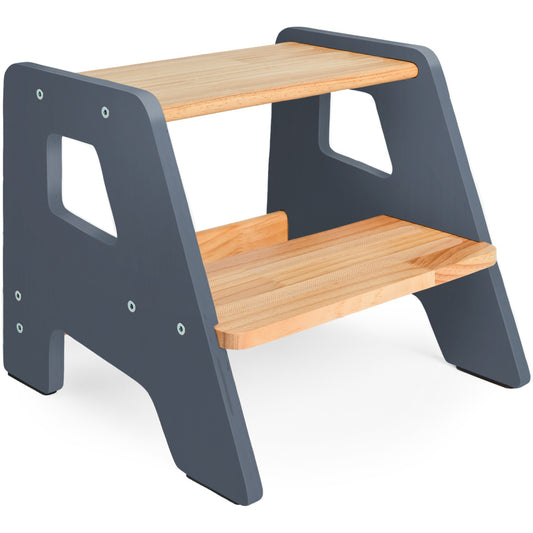
A 2-Step Wooden Stool for Toddlers(Step Stool for Children Ages 2+) supports everyday independence by helping a child reach sinks, toilets, beds, and counters. Its suitability still depends on the stated age range, stability information, and safe-use guidance.
Materials and Construction in Plain English
Solid hardwood, plywood with hardwood veneer, and engineered boards each have a place. Solid wood can be repaired, sanded, and refinished. Plywood offers layered strength with less weight. MDF and particleboard can work for controlled home use, but exposed edges and moisture deserve closer attention.
The joints matter as much as the material. Mortise-and-tenon and well-fitted dowel joints distribute force better than assemblies held mainly by staples or glue. Metal-to-metal hardware, corner reinforcement, cross-bracing, and through-bolted connections help a frame resist racking when children lean, climb, or drag a piece.
| Material | Typical Lifespan | Repairability | Best Fit |
|---|---|---|---|
| Solid hardwood | Extended use when maintained | High | Busy rooms and heirloom-style pieces |
| Plywood with hardwood veneer | Durable with protected edges | Moderate | Tables, storage, and lighter structures |
| MDF or particleboard | More sensitive to moisture and edge damage | Limited | Lower-demand indoor use |
Finishes need equal attention. Water-based and low-VOC claims can be useful, but ask what the claim covers and whether the surface tolerates the cleaning products you use. A wipeable, well-adhered finish should handle juice, marker, and repeated sanitizing without becoming brittle or trapping moisture.
A solid-wood construction can cost more upfront, yet it offers more repair options. Engineered boards may reduce initial spending and weight, but they may be less suitable for a busy classroom expected to use the same piece for many years. This comparison of engineered wood and solid wood explains the trade-offs in more detail.
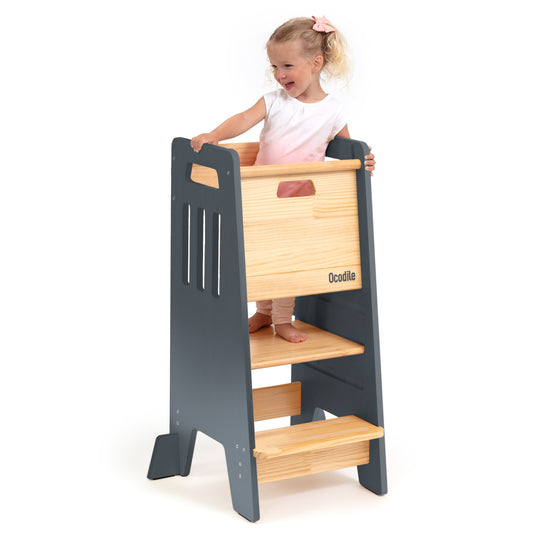
A Standing Toddler Tower with Sliding Safety Door is designed to let children climb up independently and join household activities. As with any climbing furniture, check the product's safety guidance and supervise use appropriately.
Choosing Pieces for Kids and Childcare Spaces
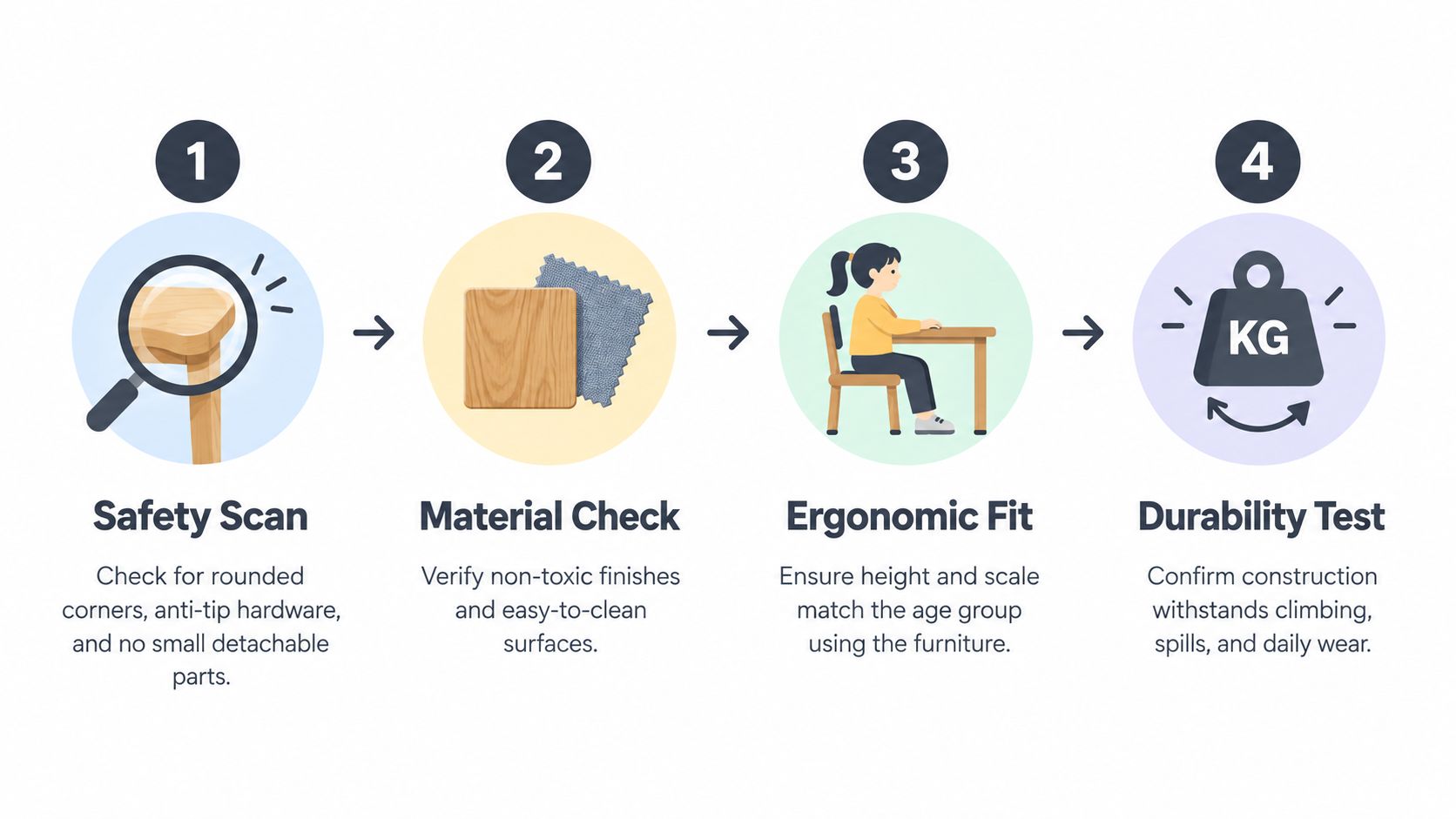
Use a room-by-room check rather than buying by appearance.
- Scan for safety. Look for rounded corners, anti-tip hardware, secure fasteners, and no small detachable parts. Match dimensions to the children using the furniture.
- Check the material. Confirm the finish is suitable for children and frequent cleaning. Feeding tables need wipeable surfaces, while reading areas benefit from soft edges and low profiles.
- Test the fit. Children should reach shelves and sit comfortably without awkward stretching. Keep enough open floor for movement and floor play.
- Consider the room's rhythm. Nap spaces need quiet, low-gloss finishes. Storage should support independence without creating climbing hazards.
Budgeting should include replacement and disruption, not just the checkout total. A cheaper piece that fails sooner can cost more in repairs, time, and room changes. For practical ideas in smaller homes, budget home corner ideas UK offers useful ways to organize children's spaces without losing function.
Cost, Lifecycle Value, and Montessori-Made Options
Price makes more sense when you view it across the years of use. A sturdy table that stays stable, remains cleanable, and can be repaired may serve a family or small childcare setting longer than several inexpensive replacements. The savings aren't only financial. Children also avoid repeated changes to familiar routines.
Montessori design adds a useful lens. Child-sized furniture, open shelving, real materials, and accessible storage let children participate rather than wait for adults. The furniture supports concentration and practical independence when its height, scale, and safety features fit the child.
Ocodile makes Montessori-inspired children's furniture using solid wood, with designs such as learning towers, step stools, floor beds, and children's room furniture. Those categories can suit family homes, in-home daycares, and small childcare spaces that want purposeful pieces without an institutional appearance. This guide to affordable Montessori furniture provides further context on choosing within a household budget.
Look for specific evidence before treating any brand as commercial grade. Ask about rounded edges, hardware, finish care, applicable testing, and whether replacement parts or repair guidance are available. The Montessori label describes an educational approach, not a substitute for safety or durability verification.
The quieter benefit is continuity. A child can keep using a familiar stool, shelf, or bed as routines develop, while adults spend less time replacing furniture and reorganizing the room.
Questions Worth Asking Before You Buy
Treat the purchase as a conversation with the maker or seller. Clear answers are more valuable than a broad claim such as “built for commercial use.”
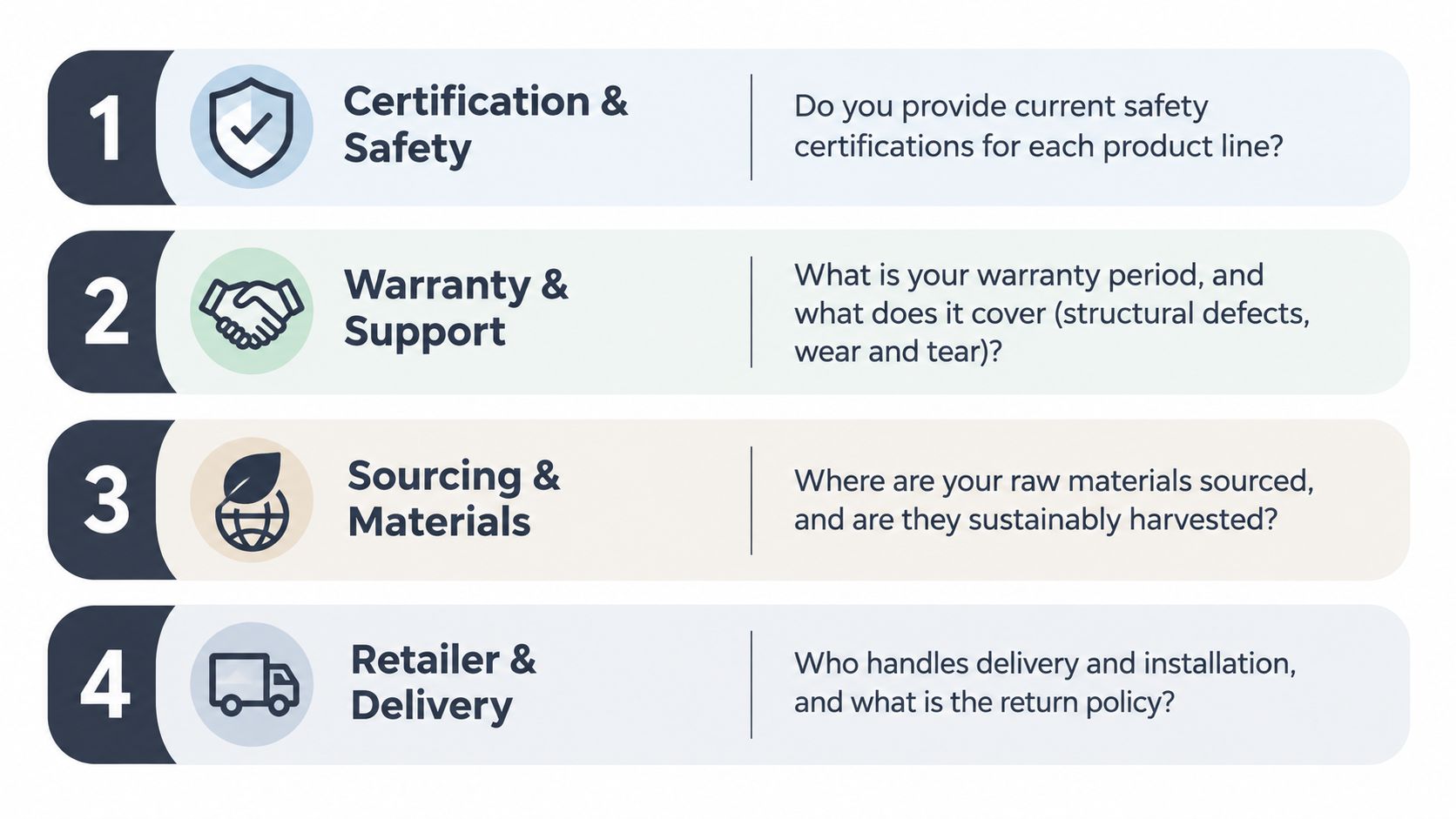
Ask these questions:
- Certification and testing: What standards apply, who performed the testing, and can you review current results?
- Materials and construction: What wood or board is used? How are the joints made? What type of finish protects the surface?
- Use-case fit: What age range and weight limits apply? Is it for indoor use only? Which cleaning products are safe?
- Long-term support: What does the warranty cover? Are replacement parts available? Is care guidance provided for high-traffic settings?
A transparent supplier should answer directly, including where the product was made and how its materials were sourced. If the response avoids the test method or offers only vague reassurance, keep comparing.
For broader room-planning principles, this guide to smarter office design can help you think about flow, flexibility, and how furniture supports the people using a space.
Ocodile offers Montessori-inspired solid-wood furniture designed around children's independence, including learning towers, step stools, floor beds, and room pieces. Visit Ocodile to explore options that bring child-sized function and considered construction into your home or childcare space.