



10 Family Quality Time Ideas: Connect & Create Memories
You're probably reading this between tasks. Dinner needs planning, someone's asking for help, and family time has started to feel like logistics instead of connection. That's common. Many adults say family is very important, but daily life often leaves only scraps of attention for the people they care about most.
That tension is real. In a 2023 Pew Research Center survey, 73% of U.S. adults said spending time with family is one of the most important things in life, and 90% said it is either one of the most important things or very important. The challenge isn't usually caring. It's making connection fit inside work, school, chores, and tired evenings.
That's why the best family quality time ideas aren't always the biggest or most photogenic. They're the ones your family can repeat without stress. A short kitchen routine before dinner. A predictable game night. A bedtime reading habit that happens even on messy days. Small rituals work because they lower friction and give kids something solid to count on.
Research points in the same direction. A peer-reviewed study indexed on PubMed Central found an average parent-child time of 1.0509 hours in its sample and reported that more parent-child time was associated with higher child well-being. Quantity still matters, but quality shapes whether those minutes feel scattered or meaningful.
The ideas below are built for real life. They include short routines, low-prep options, and practical ways to make your home safer and more participation-friendly for young children. If you've been looking for family quality time ideas that work on ordinary weekdays, start here.
1. Cooking and Baking Together
The kitchen is one of the easiest places to turn “I need to get this done” into “we did this together.” Kids usually don't care whether it's a holiday recipe or scrambled eggs. They care that they got to pour, stir, taste, and help.
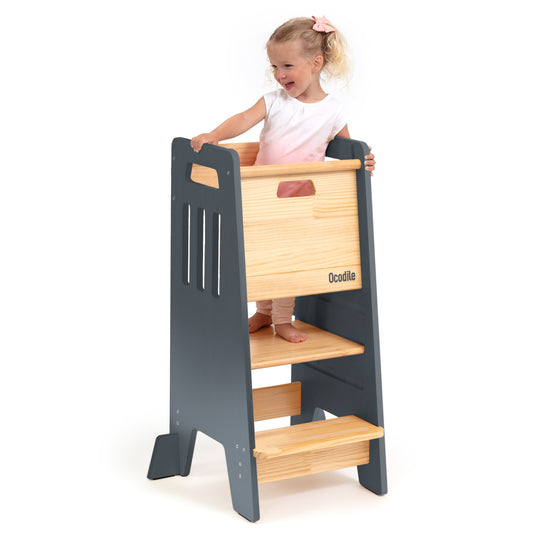
For young children, setup matters as much as the activity. A secure standing tower gives them a stable place at counter height so they can join in without balancing on an unstable chair. That's one reason many parents like child-centered kitchen routines and resources on kiddos in the kitchen, especially when they want participation to feel safer and calmer.
Here's a simple way to make it work:
- Prep before inviting help: Measure ingredients first if your child melts down during waiting.
- Match the task to the child: Toddlers can wash produce and scatter toppings. Older kids can crack eggs, mix batter, or read the recipe.
- Choose build-your-own meals: Pizza, tacos, yogurt bowls, and pancakes reduce conflict because everyone gets some control.
A Saturday pancake routine works well because the pace is slower. On weeknights, smoothie bowls or homemade wraps are often better than baking from scratch.
Practical rule: Pick recipes with one or two kid jobs, not six. Participation beats complexity.
The process teaches patience, sequencing, sensory exploration, and kitchen confidence. It also lowers the pressure on conversation because talking happens naturally while hands are busy. That's often easier for children than sitting face to face and being asked to “tell me about your day.”
If you want inspiration for making food prep more communal, this article on bringing families back to the kitchen captures why shared cooking routines keep pulling families together.
A quick visual can help if you're introducing kitchen participation for the first time:
What works best in real homes
What doesn't work is asking a tired child to help with a long recipe while you're rushing. What does work is giving them one meaningful task and accepting the mess. If the goal is connection, perfection is the wrong metric.
2. Indoor Gardening and Plant Care
Plants slow everyone down in a good way. You water them, check the soil, notice new growth, and talk about what changed. That rhythm gives families a shared project that unfolds over time instead of ending in one evening.

Indoor herbs are a strong place to start because kids can smell them, touch them, and later use them in meals. Basil, mint, and chives keep the feedback loop short. A child who helped water the plant often feels proud when it shows up on pizza or pasta.
Try one family pot per person or one shared windowsill garden. The first option builds ownership. The second builds teamwork. Both work, but mixed-age families often do better with a shared setup so younger kids don't feel they've “failed” if their plant struggles.
Easy formats to repeat
- Jar sprouting: Beans in a clear container let children observe roots and shoots.
- Herb care days: Rotate who waters and who checks for dry leaves.
- Harvest nights: Snip herbs together, then add them to dinner.
This kind of project also opens the door to simple science. You can talk about sunlight, water, roots, and growth without making it feel like a lesson. Kids remember what they've cared for.
One practical note: don't choose delicate plants first. Families enjoy gardening more when the plant survives beginner handling. Hardy options create confidence. Fragile ones often create frustration.
Children stay engaged when they can see change, touch materials, and do the care themselves.
A photo journal helps too. Take a quick picture every few days and let your child compare them. That makes slow change more visible, which keeps interest from fading.
3. Montessori-Inspired Practical Life Activities
Some of the best family quality time ideas don't look like play at all. They look like pouring water, wiping a table, folding washcloths, or sweeping crumbs after lunch. Children usually see these tasks very differently from adults. To them, they're purposeful, grown-up, and satisfying.
That's why Montessori-style practical life activities work so well at home. They channel a child's desire to imitate real work while building concentration and coordination. If you want examples of how these everyday tasks support development, Ocodile's guide to practical life activities in Montessori is a useful starting point.
How to set it up without making it feel like a chore
Use child-sized tools. A small pitcher, a hand broom, a low hook for an apron, and a reachable shelf all signal, “This is for you.” A standing tower can help at the sink or kitchen table when height is the main barrier.
Then slow down your demonstration. Show one action at a time. Pour. Pause. Wipe. Return the cloth. Children learn more from watching a calm sequence than from hearing a lot of instructions.
A few reliable options:
- Pouring practice: Water between two small pitchers, or dry beans between bowls.
- Laundry sorting: Match socks, fold towels, separate lights and darks.
- Table care: Spray lightly, wipe in circles, push crumbs into a tray.
What doesn't work is correcting every mistake. If the towel is folded unevenly or some water spills, that's part of learning. Too much correction turns a meaningful activity into performance.
Worth remembering: Independence grows when the environment does some of the teaching.
Low shelves, reachable tools, and predictable places for materials matter. So do floor beds and child-accessible spaces in the rest of the home. When children can move, reach, and participate safely, they need less constant lifting and directing from adults. That changes the feel of family life. It becomes more collaborative and less supervisory.
4. Family Game Nights and Board Games
Game night works because it gives everyone the same job. Sit down, follow the rules, take turns, and stay in the moment. For families whose conversations often get interrupted by chores, games create a clean boundary around shared attention.

The trick is choosing for the youngest player, not the oldest. If one child can't follow what's happening, the whole evening turns into damage control. Simple matching games, memory games, and beginner board games are usually more successful than jumping straight into strategy-heavy favorites.
Better choices than forcing a long game
- Short rounds: Quick games leave room for retries and reduce the sting of losing.
- Cooperative formats: Games where players solve a problem together often work better with siblings.
- Puzzle races: Two teams working on separate sections can be easier than strict turn-taking for some ages.
Snacks help, but don't build the night around sugar and overstimulation. The strongest routine is usually dinner, one game, maybe one rematch, then cleanup. Predictable length keeps it from dragging.
I've seen families make one mistake over and over with game nights. They treat them like an event that must be special. That usually means they happen rarely. A regular, low-pressure Friday card game beats an elaborate “perfect” game night that never makes it onto the calendar.
For fresh inspiration, this roundup on unforgettable family game nights has helpful theme ideas and variations.
Keep competition in the right place
Teach kids how to win kindly and lose without drama, but don't lecture in the middle of every round. Model it instead. A calm “good game” does more than a speech.
5. Outdoor Nature Exploration and Scavenger Hunts
When children are restless, take the quality time outside. A walk with a purpose usually goes better than a walk for its own sake. That's where scavenger hunts come in. They give children a mission, which turns a slow stroll into an active search.
You don't need a printable sheet unless that helps your child focus. You can keep it verbal. Find something red. Find a smooth rock. Find a leaf bigger than your hand. For pre-readers, picture prompts or spoken clues are enough.
Outdoor time that feels doable
Nature exploration works best when expectations fit the child in front of you. A toddler may be thrilled by ants near the curb. An older child may want to identify birds, compare leaves, or carry a small notebook. Neither version is “better.” The goal is shared attention.
Bring a small bag for treasures, plus water and a snack. That single decision prevents many avoidable meltdowns. A magnifying glass also helps children slow down and inspect what they've found, which stretches the activity without adding complexity.
A few strong formats:
- Color hunt: Search for items in different shades.
- Texture walk: Look for rough, smooth, soft, and prickly.
- Season watch: Notice what's changing week to week in the same place.
This idea works especially well for families with uneven energy levels. One parent can stay on the path with a stroller while another goes off to inspect sticks and stones with an older child. Everyone still shares the outing, just at different intensities.
A good scavenger hunt doesn't require distance. It requires noticing.
That's why a nearby park, apartment courtyard, or quiet block can be enough. Children don't need a dramatic location. They need time to observe and permission to linger.
6. Arts and Crafts Projects
Craft time gives families a way to be together without demanding constant conversation. That makes it especially useful after school or on tired weekends, when everyone wants connection but not a lot of social pressure.

Open-ended projects usually work better than highly specific ones. A paper collage, washable paint session, or box-building project leaves room for different ages to participate at their own level. One child may dab paint. Another may plan a whole scene. That flexibility is what keeps craft time peaceful in mixed-age families.
Set up for independence, not interruption
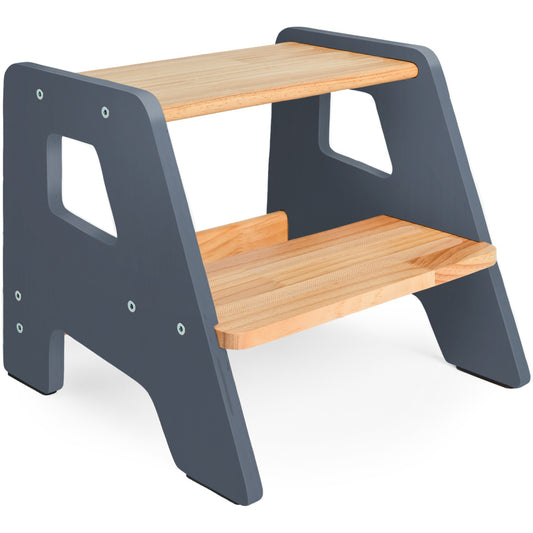
If you want crafts to feel calm, make materials easy to access and easy to put away. A low basket with paper, glue sticks, crayons, child-safe scissors, and tape is often enough. Step stools or a stable child-safe tower can help younger kids reach the work surface comfortably.
Useful choices include:
- Nature collage: Use leaves, twigs, and petals from a walk.
- Family mural: Everyone adds something to one large sheet.
- Seasonal decorations: Create simple paper stars, garlands, or painted signs.
The main trade-off is mess versus control. The more creative freedom you allow, the messier the process will be. But over-managing every brushstroke makes the activity feel like a test.
A practical compromise is to control the environment instead of controlling the child. Cover the table. Offer washable materials. Limit the number of supplies out at once. Then let the project unfold.
Children also care about what happens after the activity. Displaying finished work on a wall, shelf, or rotating art line tells them their effort matters. That recognition often means more than praise during the project itself.
7. Bedtime Stories and Reading Together
Reading together is one of the most durable family rituals because it scales up or down with very little effort. On a rough night, it can be one short book. On a relaxed night, it can be a stack on the couch and a long conversation about the characters.
A University of Wyoming family-time handout cites an A.C. Nielsen report finding that parents spend only 39 minutes per week in meaningful conversation with their children, while also recommending routines like reading aloud and short one-on-one sessions of 15 to 20 minutes without distractions. That's a useful reminder that focused, calm attention often matters more than trying to create huge blocks of perfect time.
Make reading feel like a place, not just a task
A cozy setup helps. Floor cushions, soft lighting, a blanket basket, and a predictable spot signal that the day is slowing down. For younger children, a floor bed can support this routine because it keeps the environment accessible and calm. You can sit together for a story, then transition more gently into sleep.
Try these approaches:
- Let the child choose: Repetition can be boring for adults, but it builds security and language for kids.
- Read with expression: Different voices and pauses hold attention better than speed-reading.
- Ask simple questions: “What do you think happens next?” works better than turning it into a quiz.
This is also one of the easiest ways to create one-on-one time in a busy house. If siblings have different bedtimes, each child gets a natural turn. If they share a room, take turns choosing the book or let one child pick on odd nights and the other on even nights.
For families who want to extend reading beyond story time, these reading comprehension activities for kids offer simple, home-friendly ideas.
8. Music and Dance Activities
Some families connect best by sitting down. Others connect best by moving. If your children are wiggly, loud, or emotionally overloaded, music can reset the mood faster than another quiet activity.
A living room dance break is one of the simplest family quality time ideas because it requires almost no prep. Put on a song everyone knows, clear enough floor space to move safely, and join in without worrying about whether anyone has rhythm. Children remember your willingness much more than your skill.
Different energy levels, same activity
Not every music activity has to be a full dance party. You can clap patterns, sing call-and-response songs, or make simple instruments from containers and dry rice. That makes this a strong option for babies, toddlers, and older siblings at the same time.
A few versions that work well:
- Morning reset: One upbeat song before school.
- Dinner cleanup playlist: Everyone tidies while music plays.
- Karaoke night: Keep it silly and short so shy kids don't feel put on the spot.
What doesn't work is forcing performance. Some children love an audience. Others freeze when they think they're being watched. If a child wants to sway with a stuffed animal instead of doing the full routine, that still counts.
Shared music works because everyone can participate at their own level.
If you want to make it a recurring ritual, create a family playlist with songs chosen by different members. The act of choosing music becomes part of the connection.
9. Meal Planning and Grocery Shopping Together
Grocery shopping gets dismissed as a chore, but it can be useful family time if you give children a real role. The key is participation with boundaries. Wandering the aisles while adults make all decisions isn't connection. It's just waiting in public.
Start before you leave home. Ask your child to help choose one vegetable, one fruit, or one dinner idea for the week. Utah Parent Center recommends practical routines like 20 to 30 minute mini dates, turning errands into quality time, and rotating one-on-one attention among children. That framing is helpful because it treats everyday tasks as usable time, not second-best time.
How to turn errands into connection
Give each child one concrete mission. A preschooler can find bananas or yogurt. An older child can read the list, compare options, or help choose ingredients for a planned meal. Specific jobs reduce aimless grabbing and make the trip feel collaborative.
Try these strategies:
- Offer limited choices: “Should we get carrots or cucumbers?”
- Connect food to a future meal: “These tomatoes are for the pizza you picked.”
- Let them unload at home: Sorting groceries into fridge, pantry, and counter extends the activity.
One trade-off is speed. Shopping with kids is almost never faster. But when families use it intentionally, the extra time often pays off later because children feel more invested in meals they helped choose.
This also works well for one-on-one time. If one child joins the errand while the others stay home, the store trip becomes a quiet pocket of conversation that doesn't require a special outing.
10. Imaginative Play and Pretend Play Spaces
Pretend play is where children process what they've seen, test ideas, and practice social roles. A blanket fort becomes a cave. A cardboard box becomes a bakery. A stuffed animal becomes a patient who urgently needs care. When adults join without taking over, the connection can be surprisingly rich.
If you want to understand why this kind of play matters, Ocodile's guide to open-ended play explains the value of materials and spaces that let children lead the experience.
Build the space so play can continue
Children play more intensely when they don't have to reset everything every ten minutes. A corner with baskets of scarves, blocks, boxes, toy food, tape, and cushions is often enough. The point isn't having more toys. It's having flexible materials.
Floor-level spaces help here. A floor bed, a soft rug, a low shelf, and reachable props create an environment where children can move in and out of play more independently. Parents spend less time lifting, fetching, and rearranging, and more time joining the story.
Good pretend play prompts include:
- Restaurant night: Take turns as cook, customer, and server.
- Vet clinic: Stuffed animals need checkups, bandages, and notes.
- Travel adventure: Chairs become a train, ship, or airplane.
The biggest mistake adults make is directing too much. If your child says the couch is a submarine, it's a submarine. Follow the premise. Ask open questions. “What does the crew need?” usually works better than “Let's do it this way.”
When children lead and adults participate with interest, pretend play becomes one of the warmest forms of family time. It's playful, revealing, and often very funny.
Top 10 Family Quality Time Activities Comparison
| Activity | Implementation Complexity 🔄 | Resource Requirements ⚡ | Expected Outcomes 📊 | Ideal Use Cases 💡 | Key Advantages ⭐ |
|---|---|---|---|---|---|
| Cooking and Baking Together | Medium, requires supervision, safety measures, prep | Medium, ingredients, utensils, cleanup time | Life skills, math, independence; immediate gratification | Weekends, holidays, meal prep lessons | Hands-on skills, bonding, healthier eating ⭐⭐⭐⭐ |
| Indoor Gardening and Plant Care | Low–Medium, initial setup + ongoing care | Low, pots, soil, seeds; recurring watering | Responsibility, patience, environmental awareness | Small spaces, science projects, year‑round learning | Low cost, visible progress, improves air quality ⭐⭐⭐ |
| Montessori-Inspired Practical Life Activities | Medium, needs presentation and routine | Medium, child-sized tools and dedicated setup | Independence, concentration, practical competence | Daily routines, early childhood skill-building | Promotes autonomy; reduces parental workload ⭐⭐⭐⭐ |
| Family Game Nights and Board Games | Low, choose age‑appropriate games and schedule | Low, games, table space, storage | Social skills, turn-taking, strategic thinking | Evenings, screen-free traditions, multi-age groups | Inclusive, predictable family bonding activity ⭐⭐⭐ |
| Outdoor Nature Exploration & Scavenger Hunts | Medium, plan for safety, weather, routes | Low, suitable clothing, snacks, simple tools | Physical fitness, observation, environmental stewardship | Weekends, seasonal outings, energy release | Combines exercise with learning; low cost ⭐⭐⭐ |
| Arts and Crafts Projects | Low, flexible, can be improvised | Low–Medium, art supplies, protective coverings | Creativity, fine motor development, keepsakes | Rainy days, holidays, creative expression time | Open-ended creativity, tangible results ⭐⭐⭐ |
| Bedtime Stories and Reading Together | Low, consistent routine and quiet space | Minimal, books and cozy area | Literacy, imagination, emotional bonding | Daily bedtime, quiet family reading hours | Promotes language and calming ritual ⭐⭐⭐⭐ |
| Music and Dance Activities | Low–Medium, space and tolerance for noise | Minimal, music source; optional instruments | Coordination, mood boost, self-expression | High-energy breaks, celebrations, movement breaks | Physical activity + joyful expression ⭐⭐⭐ |
| Meal Planning & Grocery Shopping Together | Medium, planning, supervision, in-store teaching | Low–Medium, lists, child basket/cart, time | Nutrition knowledge, budgeting, decision-making | Weekly planning, teaching math and choices | Connects shopping to cooking; practical life lessons ⭐⭐⭐ |
| Imaginative Play & Pretend Play Spaces | Low, set up open-ended materials; join in | Low, fabrics, boxes, props, dedicated space | Social-emotional growth, creativity, role‑play skills | Unstructured playtime, emotional processing, story play | Builds imagination, emotional processing, independence ⭐⭐⭐⭐ |
Making Moments Matter, Every Day
Connected family life rarely looks the way parents imagine it will. It doesn't usually arrive as a peaceful afternoon with no interruptions, no whining, and no dishes in the sink. More often, it shows up in ordinary moments that could have stayed routine but became shared instead. A child stirring pancake batter. Siblings arguing over a board game and then laughing five minutes later. A bedtime story that settles everyone, including the adult reading it.
That's worth remembering when you feel like you're not doing enough. Family connection doesn't depend on constant novelty. It depends on repetition, accessibility, and the feeling that everyone belongs in the life of the home. Children build security when they know how family time happens. They know Friday means a game. They know bedtime includes a book. They know they can pull a stool up to the counter and help.
The environment matters more than many parents expect. A child-safe home setup changes participation from something theoretical into something practical. If a child can reach the sink, climb into bed independently, access play materials, and stand safely at the counter, they can join family life with less stress for everyone. You don't have to orchestrate every moment by hand. The room itself starts helping.
That's one reason small routines often work better than big plans. Daily rhythms leave less room for disappointment. They don't require ideal weather, extra money, or a wide-open calendar. They fit into what families are already doing, which means they're more likely to last. And lasting matters. A simple routine repeated over months does more for closeness than a burst of ambitious planning that burns everyone out.
It also helps to think in formats instead of one-off events. You don't need a hundred separate activities. You need a few reliable categories you can rotate through. Something active, like dancing or a scavenger hunt. Something calm, like reading. Something practical, like cooking or plant care. Something playful, like pretend play or crafts. That mix gives you options for different moods, ages, and energy levels.
For busy families, micro-moments count too. Practical family guidance increasingly points toward small, repeatable formats rather than elaborate outings, including mini dates, errand-based connection, and rotating one-on-one attention among children, as reflected in the earlier Utah Parent Center guidance. That's a realistic model. It respects the fact that many parents are working around uneven schedules, multiple children, and limited bandwidth.
Modern family life also includes screens, which means the goal usually isn't total avoidance. It's intentional use. Co-watching, interactive games, and using a device to plan or learn together can support connection better than passive, isolated scrolling. The useful question is whether the screen is replacing interaction or supporting it. If your family is talking, choosing, laughing, or solving something together, the experience is very different from everyone drifting into separate digital corners.
If you want these ideas to stick, start smaller than you think you need to. Choose one activity that fits your week as it is. Not your ideal week. Maybe that's pizza night with toppings set out in bowls. Maybe it's ten minutes of plant care after school. Maybe it's a single book on the floor bed before lights out. Consistency creates momentum. Once one routine feels natural, adding another becomes much easier.
The best family quality time ideas are the ones your family will use again next week. That's the standard. Not impressive. Not expensive. Not perfect. Just repeatable, safe, and meaningful enough that everyone wants to come back to it.
Ocodile helps turn everyday family routines into safer, more independent moments for young children. From standing towers that bring little helpers up to counter height to floor beds and child-friendly furniture that support confident movement and participation, Ocodile is built for families who want connection to fit naturally into daily life.