



A Parent's Guide to the Full Floor Bed Frame
So, what exactly is a full floor bed frame? Think of it as a ground-level bed structure built specifically for a standard full-size mattress. It’s much more than just a piece of furniture; it’s your child’s first real step toward an independent sleep routine. This approach lines up perfectly with the Montessori philosophy, making their sleeping space both accessible and safe.
Understanding Your Child's First Real Bed
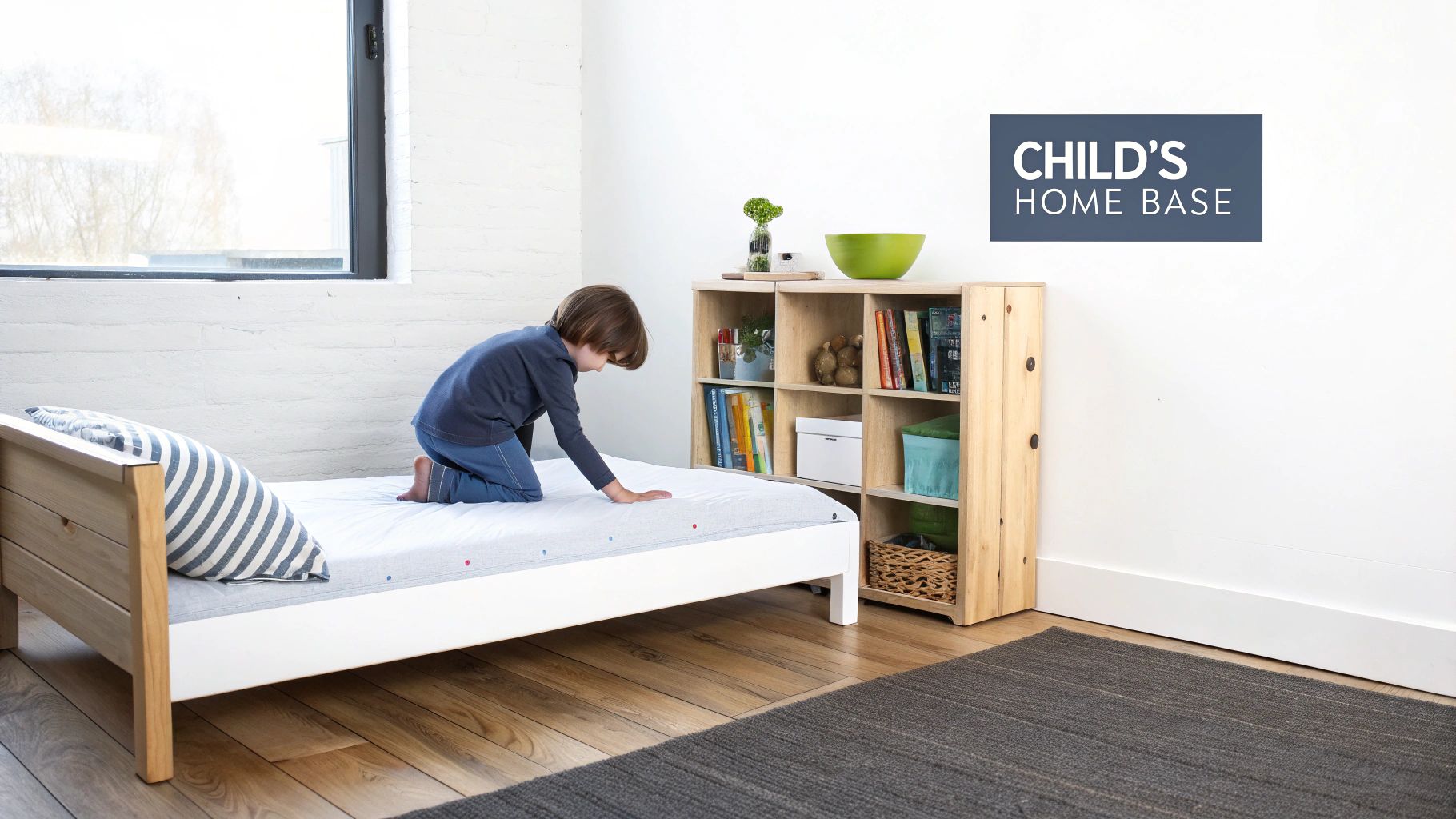
Picture your child's bedroom not just as a place to sleep, but as their own little "home base"—a space where they feel secure, confident, and in control of their world. A full floor bed frame is the foundation for creating exactly that environment.
Unlike traditional cribs with high rails that literally box a child in, a floor bed invites them to explore their room safely and on their own terms. It’s a core concept of the Montessori method, which is all about creating child-led spaces. When a toddler can get in and out of bed without needing help, it fosters a powerful sense of independence.
The Shift from Containment to Freedom
More and more parents are moving away from restrictive cribs and choosing furniture that supports their child's natural development. The full floor bed frame really highlights this change in thinking. It’s not about containing a child, but about trusting them within a safely prepared space. This builds their confidence and can help reduce the anxiety that often comes with big transitions, like moving out of a crib.
This trend is picking up steam, too. Full floor beds, long celebrated in Montessori parenting circles, are part of a children's furniture market that grew from $20,389.9 million in 2021 and is projected to hit $24,361.9 million by 2025. That’s a 19.5% growth fueled by families looking for smarter home upgrades.
By placing the bed at their level, we send a powerful message to our children: "This is your space. You are capable, and we trust you." It transforms the bed from a cage into a safe haven.
To get a clear picture of what we mean by a "full" floor bed, it helps to know the standard full bed size. A full mattress is typically 54 inches by 75 inches, which gives a growing child plenty of room to stretch out—and even leaves space for a parent to snuggle in for story time.
Full Floor Bed Frame Key Benefits at a Glance
Choosing the right bed is a big decision for any parent. The full floor bed frame offers a unique blend of benefits that cater to both your child’s developmental needs and your own peace of mind.
Here’s a quick summary of its key advantages.
| Feature | Benefit for Child | Benefit for Parent |
|---|---|---|
| Ground-Level Design | Fosters independence and freedom of movement. | Eliminates the risk of falls from a high bed. |
| Full-Size Dimensions | Provides ample space to grow, read, and play. | A long-term investment that lasts through childhood. |
| Open Accessibility | Builds confidence and self-reliance. | Simplifies bedtime routines; no lifting required. |
| Montessori Aligned | Encourages a self-directed learning environment. | Supports a consistent and respected parenting philosophy. |
This thoughtful approach to children's furniture, championed by brands like Ocodile, helps set the stage for a safer, more empowering childhood.
The Montessori Philosophy Behind Floor Beds
The idea of a full floor bed frame might feel a bit radical to parents used to traditional cribs, but it's actually rooted in an educational philosophy that's been around for over a century. Dr. Maria Montessori developed her method based on a deep respect for a child's own drive to learn and explore. A core part of her philosophy is the "prepared environment"—basically, setting up a space that is built for a child's independence.
This is exactly where the floor bed fits in. It’s so much more than just a low bed; it’s a tool for empowerment. By putting the mattress on a level a toddler can easily get on and off, you’re knocking down a physical barrier to their freedom. You're giving them a say in a huge part of their daily routine: sleeping and waking up.
Fostering Autonomy and Confidence
Think about a child's experience in a typical crib. When they wake up, they’re stuck behind bars. Their only move is to cry out for a parent to come rescue them. This creates a cycle of dependence, teaching them they have to wait for an adult to start their day.
Now, imagine that same child in a room with a full floor bed frame. When they wake, they can just roll out of bed onto a soft rug. They are free to move, stretch, and check out their safe surroundings. Maybe they'll crawl over to a low bookshelf and grab a favorite story, or pick up a toy.
This simple act of self-directed movement is huge. It sends a powerful message to your child: "You are capable. You have choices. This is your space." This daily dose of autonomy builds a solid foundation of confidence and self-reliance right from the start.
Making the switch from a restrictive crib to an open floor bed respects the child as their own person, with their own rhythms and needs. It’s an acknowledgment that they aren't just passively receiving care, but are active players in their own lives. To get a better feel for this, you can learn more about what the Montessori method of teaching involves and how it can shape the entire home.
The Power of Unrestricted Movement
Dr. Montessori noticed that for young kids, movement and learning are completely intertwined. If you limit a child's ability to move, you're also limiting their potential to explore and discover. The floor bed is a perfect real-world application of this idea.
It obviously supports their physical development—getting in and out of bed strengthens their muscles and coordination. But the real magic goes much deeper.
- Encourages Self-Regulation: A child who can get out of bed when they are genuinely awake learns to listen to their own body's signals for rest and play.
- Reduces Bedtime Battles: When a bed isn't seen as a cage, those negative feelings that can lead to bedtime fights often just melt away.
- Promotes a Love for Their Room: Their bedroom becomes their own little sanctuary, a safe and fun place to be, not just a room they get put into for sleep.
Brands like Ocodile design products with this entire philosophy in mind. Every part of a well-made full floor bed frame is intentional. It helps create a safe, accessible "yes" space where a child's natural curiosity can flourish. By offering this freedom within clear, safe boundaries, we’re not just giving them a place to sleep; we’re giving them a space to thrive.
Your Essential Safety and Sizing Checklist
Choosing the right bed for your child is about so much more than just looks. It’s a decision that hinges on safety, how long it will last, and how it supports their development. When you choose a full floor bed frame, you’re picking a piece of furniture that can literally grow with your child for years. This checklist will walk you through the must-knows for sizing and safety, so you can create a sleep space that’s a truly secure and cozy haven.
Before we jump into the safety checks, let's get the dimensions straight. A standard full-size mattress is 54 inches wide by 75 inches long. This generous size is a huge plus; it gives a growing child plenty of room to stretch out and means you won't have to upgrade their bed every few years. It's a smart long-term investment.
This decision tree can help you visualize if a floor bed is the right next step for your family’s journey toward independence.
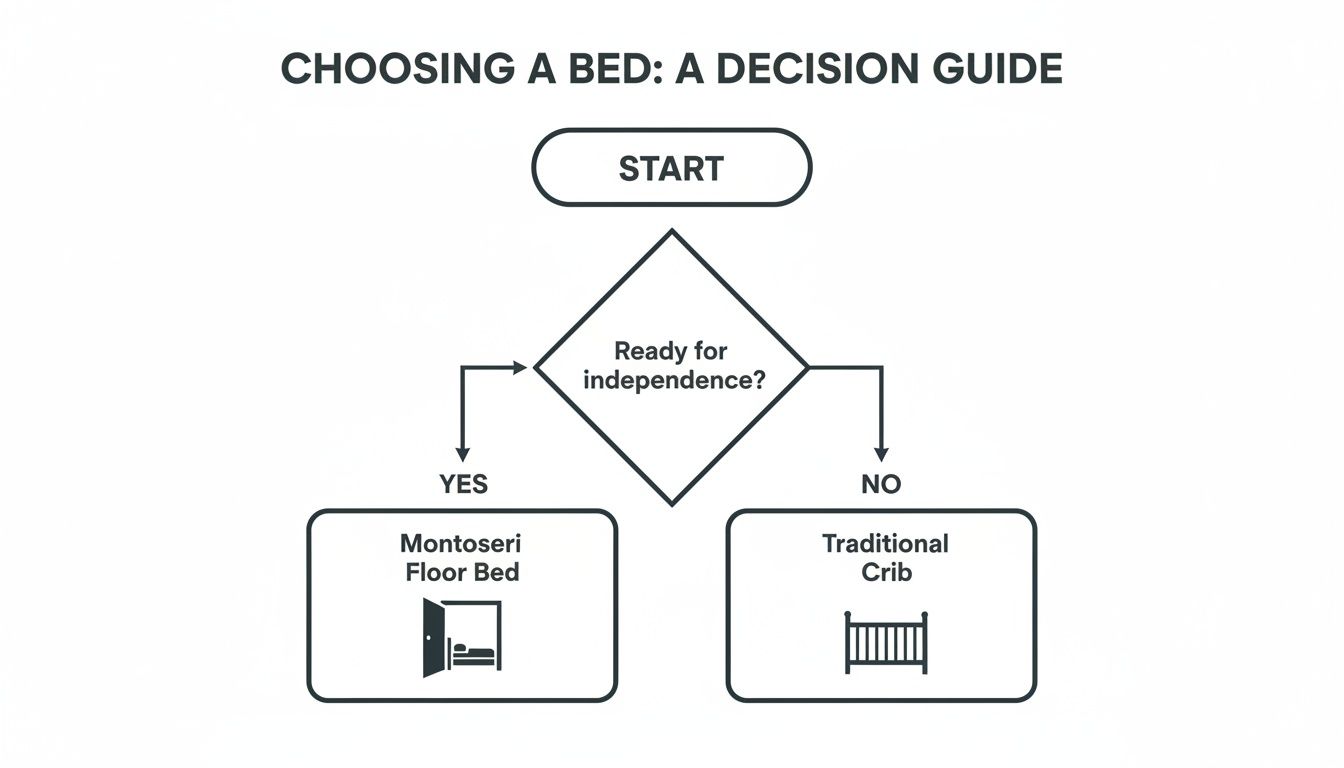
As the flowchart shows, the big question is whether your child is ready for more freedom. Once independence becomes the goal, a Montessori floor bed is often the natural next step.
The Ultimate Safety Checklist
When you introduce a floor bed, the entire room becomes an accessible space. This means your safety audit has to go way beyond the bed itself. You need to start thinking of the room as the new "crib"—a completely safe environment where your little one can move around freely.
- Secure All Furniture: Anchor heavy items like dressers and bookshelves to the walls to prevent them from tipping over.
- Cover Electrical Outlets: Use safety plugs or sliding outlet covers on every single accessible socket.
- Manage Cords and Wires: Make sure there are no dangling blind cords, loose electrical wires, or anything else a child could get tangled in.
- Remove Choking Hazards: Keep all small toys and objects out of the bedroom.
- Check Room Access: If your child can open their bedroom door, you might want to put a baby gate in the hallway to keep them from wandering into other parts of the house unsupervised.
Once the room is prepped, it's time to focus on the full floor bed frame itself. Every little detail matters when you're creating a truly safe sleep setup.
Bed Frame and Mattress Specifics
The way the frame is built and how the mattress fits inside it are absolutely critical. A poorly designed frame or a mattress that doesn't fit right can create unnecessary risks. Here’s what to look for.
1. A Snug and Secure Mattress Fit There should be absolutely no gaps between the mattress and the sides of the bed frame. None. A child could potentially get trapped in even a small space, so the mattress has to fit snugly against all edges. This is a non-negotiable safety point to prevent entrapment.
2. A Firm Sleep Surface For toddlers and young children, a firm mattress is essential for safe sleep. Stay away from overly plush or soft mattresses that could pose a suffocation risk. A firm, flat surface supports their growing bodies and lines up perfectly with safe sleep recommendations.
3. Smooth, Non-Toxic Finishes Kids explore with their hands and mouths. You'll want to double-check that the bed frame has a smooth, splinter-free finish. Also, make sure any paints, stains, or sealants used are certified non-toxic, low-VOC (Volatile Organic Compounds), or VOC-free. This is key for protecting your child's health.
4. Structural Integrity and Quality Materials The bed frame should feel sturdy and be made from high-quality, durable materials like solid wood. Give it a good shake—check that all the joints are secure and that the frame doesn't wobble or creak. You need it to withstand all the jumping and playing that's sure to come.
A well-built floor bed gives you more than just a place for your child to sleep; it offers peace of mind. By making a secure frame and a safe room your top priorities, you’re empowering your child's independence within a protected space. For a deeper look at this topic, you can learn more about key Montessori floor bed safety guidelines.
For parents, this shift towards more independent furniture means more thoughtful options are hitting the market. Anecdotal Montessori data suggests that designs prioritizing autonomy can reduce parental intervention in daily routines by up to 30%. This trend is catching on globally, too. For instance, South America's furniture market share grew 82.32% to $1,486.08 million, showing a worldwide demand for safe, family-focused furniture.
Choosing the Right Materials and Styles
Picking out the perfect full floor bed frame is a balancing act. You're weighing durability against your family’s style and, most importantly, your child's safety. Think of it like choosing the right set of building blocks; the materials you select will dictate how long the bed lasts and whether it contributes to a healthy, happy space for your little one.
The choice usually boils down to two main players: solid wood and engineered wood. Each one has its own personality and perks, suiting different needs from budget to aesthetics. Getting to know them is the first step toward finding a frame that feels just right.
Solid Wood: The Natural and Durable Choice
There’s a good reason solid wood frames—often made from pine, birch, or beech—are considered the gold standard for kids' furniture. Solid wood is the strong, reliable friend you can always count on. It’s naturally tough and built to withstand years of jumping, playing, and general kid chaos without buckling under pressure.
Even better, solid wood is known for being a non-toxic choice. When finished with low-VOC or water-based paints, it helps keep your indoor air quality clean, which is a huge deal for a child's bedroom. You can rest easy knowing they aren’t breathing in anything harmful while they sleep.
A solid wood frame is an investment in both durability and peace of mind. Its natural sturdiness and potential for non-toxic finishes make it a preferred material for parents who prioritize a safe, long-lasting sleep space.
This shift toward safe, sustainable furniture is a growing movement. The global bed frame market is projected to jump from $24,361.9 million in 2025 to $34,777.9 million by 2033, and it's driven by families just like yours looking for multifunctional, child-safe pieces. This trend is especially strong in Europe, where the market share surged by 85.43% to $4,701.85 million, showing a real hunger for quality. You can dive deeper into these bed frame market trends on Accio.com.
Engineered Wood: Affordability Meets Versatility
On the other side, you have engineered wood, which includes materials like MDF (Medium-Density Fiberboard) and particleboard. These are the more budget-friendly options, created by binding wood fibers together with adhesives to create a smooth surface that’s perfect for painting.
The main trade-off here is durability. Engineered wood just isn't as tough as its solid counterpart and can be more easily damaged by moisture or a good knock. It’s also super important to check that any engineered wood product is certified as low-emission (E0 or E1). This ensures the adhesives used don't off-gas harmful chemicals like formaldehyde.
To help you decide, let's break down the pros and cons of each material.
Comparing Common Floor Bed Frame Materials
| Material | Pros | Cons | Best For |
|---|---|---|---|
| Solid Wood | Exceptionally durable, non-toxic potential, timeless aesthetic. | Higher initial cost, can be heavier. | Families seeking a long-term investment in safety and quality. |
| Engineered Wood | More affordable, smooth finish, lightweight. | Less durable, potential for VOCs, susceptible to water damage. | Budget-conscious families or for shorter-term use. |
Ultimately, choosing a material comes down to your priorities. If you're looking for a "buy it once" piece that's as safe as it is sturdy, solid wood is tough to beat. But if your budget is the main driver, engineered wood can be a great choice, as long as you prioritize safety certifications.
From Minimalist Frames to Whimsical Designs
Once you've landed on a material, it’s time for the fun part: picking a style! The right design can turn a simple bed into a magical little world for your child.
-
Simple and Minimalist: A clean-lined, basic frame is a chameleon. It can adapt to any decor, from dinosaurs to princesses, and will never go out of style as your child's interests evolve.
-
House and Teepee Frames: These designs are pure magic. They transform the bed into the centerpiece of the room, creating a cozy fort or a secret hideaway that makes bedtime feel like an adventure.
-
Frames with Guardrails: Want an extra layer of security? Many floor beds come with low-profile guardrails. They offer just enough containment to prevent tumbles without taking away the easy in-and-out access that makes floor beds so great.
The best style is the one that makes your child feel safe, happy, and excited about their own special space. If you want to explore more options, you can learn all about finding the perfect wooden floor bed frame in our detailed guide.
Creating a Safe and Inspiring Montessori Bedroom
A full floor bed frame isn't just furniture; it's the heart of a child-centered world. To really make it shine, the whole room needs to become a safe, cohesive space that encourages your little one's independence. It’s all about seeing the bedroom through their eyes—a place where they're free to explore, learn, and rest on their own terms.
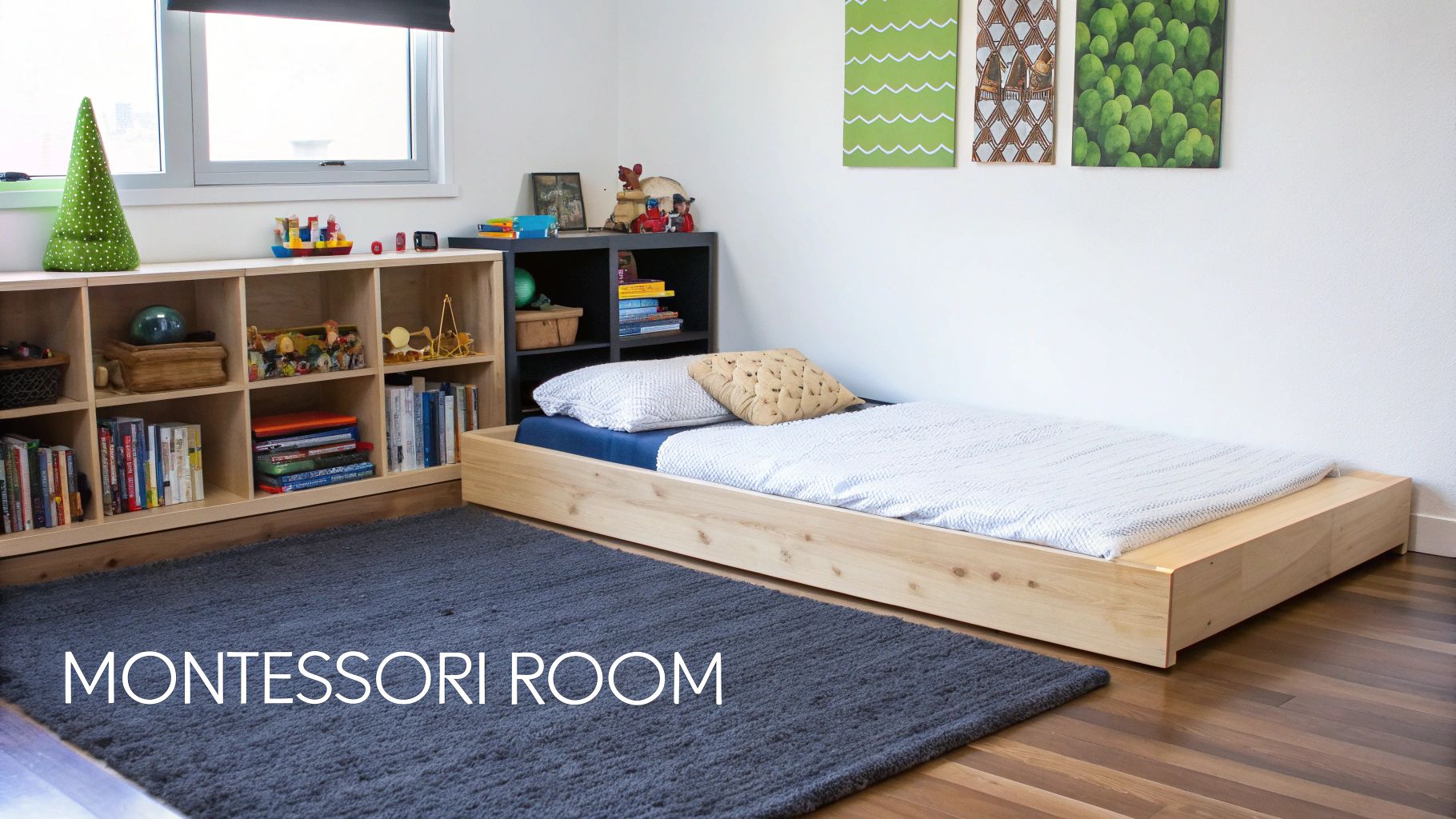
The first, and most critical, step is to child-proof everything. When a child can get out of bed whenever they want, the entire room effectively becomes their crib. That shift in perspective is key. Your goal is to create a "yes" space, where your child can move around freely without hearing "no" or running into hazards.
This means you need to do a full safety audit of every nook and cranny, well beyond just the bed itself.
A Foundation of Safety
Before you get to the fun decorating part, you have to build a secure foundation. This isn't about making the room sterile or empty, but about thoughtfully removing potential dangers so your child’s natural curiosity can flourish safely.
-
Anchor Heavy Furniture: Dressers, bookshelves, and toy chests are climbing magnets for toddlers. Securing them to the wall to prevent tip-overs is an absolute must.
-
Cover All Outlets: Every single unused outlet needs a safety cover. Pay extra attention to the ones near the floor bed, as they can be especially tempting for curious fingers.
-
Manage Cords and Wires: Get rid of any dangling cords from blinds or curtains. Tuck away and secure all electrical wires from lamps or baby monitors so they are completely out of reach.
-
Choose Safe Toys: Make sure every toy in the room is age-appropriate and doesn't have small parts that could be a choking hazard.
Once you've got these safety basics locked down, you can start thinking about the more creative side of designing an engaging space.
By preparing the room as a safe haven, you are communicating trust. You are telling your child, "I trust you to explore this space, and I have made it safe for you to do so." This fosters confidence and a sense of belonging.
Designing for Independence and Calm
With safety handled, the next layer is about creating an environment that’s both accessible and calming. The idea is to empower your child to interact with their room on their own, which builds a real sense of competence and ownership.
A soft, plush rug is a fantastic touch. It gives them a cozy landing spot if they happen to roll off the low bed, and it also helps define a dedicated play area. It creates a subtle visual cue that separates sleep time from play time.
Think about adding low, open shelves for books and toys. When items are at your child’s eye level, it invites them to make their own choices, sparking self-directed play and maybe even a love for reading. Switching out the toys and books every so often keeps things fresh and stimulating.
Finally, consider the room's overall vibe. A calming color palette with soft, natural tones helps create a peaceful feeling that's perfect for rest. For more ideas on how to pull it all together, check out these tips on decorating a nursery for your baby with a focus on safety and accessibility. Even simple decor, like nature-inspired art hung at a child’s height, can make the room feel like their own special sanctuary. This kind of thoughtful design turns a simple bedroom into an inspiring world built just for them.
Common Questions About Full Floor Bed Frames
Making the switch to a full floor bed frame can bring up a lot of questions. Moving away from the traditional crib is a big step, and it's completely normal to have concerns about safety, comfort, and just how it all works. We're going to tackle the most common questions we hear from parents, giving you clear, practical answers to help you feel confident.
Think of this as your quick-reference guide for all those little "what ifs" that pop into your head. Let's dive in.
When Can My Child Start Using a Floor Bed?
There's no magic age, but this transition usually goes smoothest when a child is confidently mobile—typically somewhere between 15 months and 3 years old. The most important thing to watch for isn't a date on the calendar, but your child's own developmental readiness.
If your little one can safely crawl or walk on and off low surfaces, like a small step or cushion, they're probably ready. It’s all about following their individual cues instead of sticking to a strict timeline.
Will My Child Be Too Cold Sleeping Near the Floor?
This is a very common worry, but in most modern homes, it's easily managed. With good insulation and central heating, the air near the floor isn't significantly colder than the rest of the room.
For extra coziness and peace of mind, you can:
- Place a soft, thick area rug under the bed frame.
- Check for any drafts coming from windows or doors.
- Dress them in appropriate bedding and footed pajamas to keep them toasty all night.
How Do I Keep My Child from Rolling Out?
With a very low frame, a gentle tumble onto a soft rug is often just a small part of the learning process. But there are simple ways to create a soft boundary while they get used to it.
A great trick is to place pillows or a rolled-up blanket on the floor right next to the bed to provide a soft landing. Some parents also tuck a pool noodle under the fitted sheet—it creates a gentle, effective bumper that prevents rolling without making them feel boxed in.
Is a Full Size Bed Too Big for a Toddler?
It might look huge at first, but a full-size bed is actually a smart, long-term investment. It gives a growing child plenty of room to stretch out and means you won't have to buy another bed in just a few years.
Plus, all that extra space is perfect for a parent to comfortably lie down for bedtime stories or cuddle after a bad dream. It’s a wonderful choice that grows with your family.
Ready to create a space that fosters independence and safety? Explore the beautiful, child-safe Ocodile floor beds and find the perfect foundation for your little one's room. Visit ocodile.com to see our collection.