



Furniture Durability for Kids: What Parents Should Know
You're watching your toddler climb onto the sofa, pull at a shelf, and test the bed rails, while wondering whether the furniture will still be safe after months of this treatment. For families, furniture durability isn't just about appearance or replacement cost. It also involves stability, repairability, moisture control, joint strength, and how a piece behaves when children climb, pull, jump, move, and grow.
Table of Contents
- Why Furniture Durability Matters More Than You Think
- Understanding What Furniture Durability Means
- The Key Factors That Determine How Long Furniture Lasts
- Safety and Durability Trade-Offs Parents Should Understand
- How Ocodile Designs for Lasting Durability and Child Safety
- Practical Maintenance Tips That Extend Furniture Lifespan
- Your Furniture Durability Buying Checklist
Why Furniture Durability Matters More Than You Think
A piece can look solid in a showroom and still loosen quickly under child-specific use. Adults usually sit, open, close, and lift furniture as intended. Children add climbing, pulling, rocking, dragging, and repeated impact. Those forces expose weak joints and unstable proportions much sooner.

The service-life gap is substantial. Upholstered sofas are commonly placed at about 7–15 years, solid-wood dining tables at 15–40+ years, and solid-wood bookshelves at 20–50+ years, while flat-pack or particleboard furniture is often estimated at 3–10 years (furniture service-life guidance). For parents, that can mean replacing one child's furniture repeatedly, or passing a well-built piece between siblings.
Durability also affects safety. A frame that develops wobble, a rail that loosens, or a fastener that no longer holds can create risks long before the furniture looks visibly broken. That's why a durable children's product needs more than a strong material label. It needs sound construction, suitable finishes, stable geometry, and evidence that it was designed for children's behavior.
Practical rule: Ask not only whether furniture lasts in one room, but whether it remains stable after cleaning, moving, adjustment, and reuse.
Understanding What Furniture Durability Means
Furniture durability has several connected parts. Structural integrity means the frame stays rigid instead of becoming loose or warped. Load resistance covers repeated weight and movement, not one successful test. Joint stability shows whether connections remain tight, while surface resilience covers scratches, moisture, stains, and everyday wear.

Longevity is a construction outcome
A solid-wood item may last 20–50+ years with basic care, while hardwood furniture is often estimated at 30–100+ years. MDF, particleboard, and similar mass-market materials are commonly placed around 3–15 years, depending on thickness, construction, and use. These ranges are guides, not promises. They show why material and construction must be judged together.
A solid board cannot make up for weak joints, and a durable finish cannot correct a frame that shifts from side to side. Check for tight connections, clean alignment, suitable material thickness, and hardware that tolerates ordinary maintenance. Reassembly matters too. If fasteners lose their grip after moving or adjusting the piece, its usable lifespan may be much shorter than its first setup suggests.
Parents should also separate durability from cleanliness. Upholstery needs care suited to children and pets, and this guide to cleaning pet hair off sofas offers practical fabric-care context. For a crib-to-bed transition, the Crib Size Wooden Floor Bed with Safety Rails for Kids Age 1–3 is described as fitting the same crib mattress a child already knows.
The Key Factors That Determine How Long Furniture Lasts
Start with the material, but don't stop there. Solid wood generally offers greater repairability and stronger fastening than fragile board materials, although species, grain direction, thickness, and workmanship still matter. A material label alone can't tell you whether the finished product will remain stable.

Moisture is the quiet variable
Wood expands and contracts as its moisture content changes. The USDA Forest Products Laboratory recommends matching wood to its service environment. For interior products, around 10–12% moisture content is commonly recommended, while independent woodworking guidance describes an indoor manufacturing window of roughly 6–12%, with 6–9% often used for premium casework targets (USDA wood bonding guidance, woodworking moisture guidance).
Poor moisture control can produce swelling, shrinkage, cracks, creaking, visible gaps, and joint failure. Ask whether the manufacturer controls and checks moisture before assembly.
Joints carry the load
Mortise-and-tenon and other substantial joinery can distribute force more effectively than connections that depend mainly on small screw holes or cam locks. This matters when children climb or pull, and when parents disassemble furniture for a move.
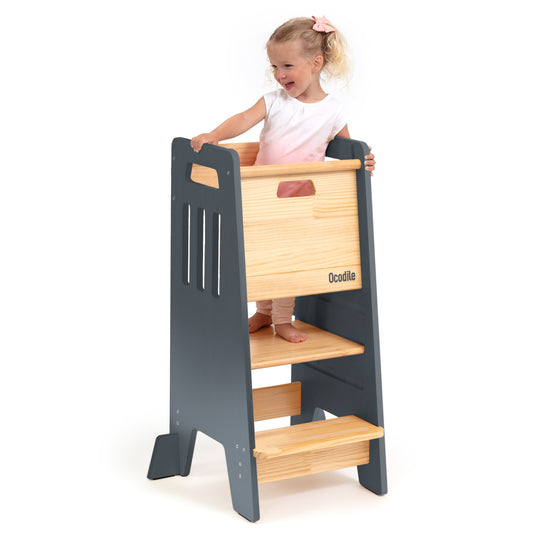
A guide to engineered wood and solid wood can help clarify what material labels mean. A Standing Toddler Tower with Sliding Safety Door is described as supporting children's independence as they climb up and join household activities.
Finally, evaluate finish quality and design. A coating should protect the surface without creating an unsuitable child environment. Proportions, base width, rail placement, and weight distribution determine how a product responds to movement. A durable finish can slow visible wear, but it can't make unstable furniture safe.
Safety and Durability Trade-Offs Parents Should Understand
Parents often ask one question, “Is it safe?” Furniture durability requires a second question, “Will it stay safe after repeated use?” Those answers come from different evidence.
A product may have a sturdy frame but sharp edges, excessive weight, or proportions that don't suit a climbing child. Another may use soft materials and rounded corners but wear quickly, lose shape, or become unstable after repeated movement.

Child use changes the test
Children's furniture standards and testing frameworks vary by product category. Some seating durability standards exclude highchairs and other child-use categories, while separate rules may address warnings, safety markings, stability, or structural requirements (child-use furniture standards overview).
That fragmentation makes careful questions important. Look for stability testing, age guidance, tip resistance, hardware security, and instructions for supervision. Also ask whether the product remains rigid after disassembly and reassembly. Repeated resets can weaken screw holes and cam-lock connections, especially in inexpensive flat-pack furniture.
For families choosing play materials, this discussion of the benefits of wooden toys provides useful context on why parents often value simple, repairable materials. For finishes, review guidance on non-toxic wood finishes, then confirm the manufacturer's actual finish information.
How Ocodile Designs for Lasting Durability and Child Safety
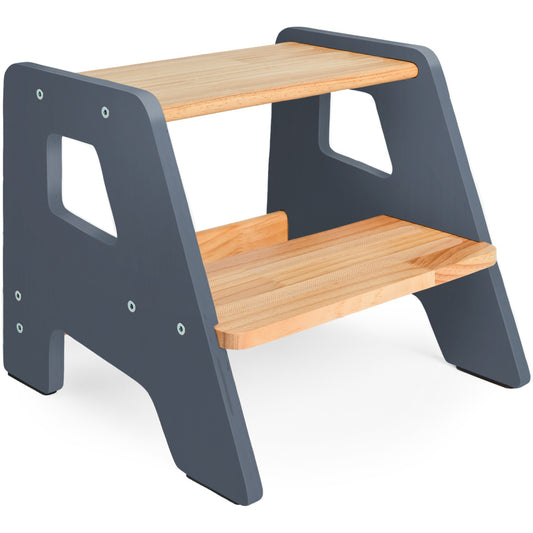
Ocodile offers a useful example of how durability principles can translate into children's furniture. Its products are made from solid wood, offered in multiple finishes, and designed around Montessori-inspired independence. The range includes learning towers, step stools, floor beds, and related children's furniture.

The important comparison isn't “wood versus engineered board.” Parents should compare how brands handle the full chain: material selection, moisture control, joinery, finish, stability, intended age, and compliance. Ocodile states that it conducts ASTM and US and Canada compliance testing, which gives parents a concrete area to verify when comparing products.
The design philosophy also matters. A learning tower supports participation at counter height, while a floor bed supports movement and independence during the transition from crib to bed. These uses create different stress patterns, so the relevant question is whether the construction matches the child's activity.
A durable product should also fit real family life. Parents move homes, clean spills, adjust rooms, and sometimes pass furniture to another child. That makes repairability, accessible hardware, clear instructions, and stable construction just as relevant as the initial visual impression.
Practical Maintenance Tips That Extend Furniture Lifespan
Maintenance doesn't need to become another parenting project. Small checks prevent minor wear from becoming structural damage.
Daily, wipe spills promptly with a soft, slightly damp cloth, then dry the surface. Avoid soaking wood, harsh abrasives, and cleaners that can weaken or dull a finish. For upholstered pieces, remove crumbs and hair before they work into the fabric. If you're comparing protective options, these impactful ways to use sofa covers offer practical ideas.
Monthly, inspect visible joints, rails, legs, and fasteners. Check for wobble, new gaps, cracking, rough edges, or movement where parts should remain fixed. Tighten hardware only according to the manufacturer's instructions, because overtightening can damage wood or strip fittings.
Annually, review the furniture's environment. Keep indoor wood away from persistent moisture and direct conditions that encourage repeated expansion and contraction. Clean according to the finish instructions, and address scratches or worn areas before moisture reaches exposed wood.
Regular care is linked with longer service life, and one maintenance guide reports that routine care can extend furniture lifespan by 30% or more (wood-furniture maintenance guidance). Treat that figure as source-specific guidance, not a guarantee for every product.
Your Furniture Durability Buying Checklist
Before buying, ask:
- Material: Is the piece solid wood, engineered wood, or a combination?
- Moisture: Does the maker control moisture for indoor use?
- Joinery: Are the joints designed to resist loosening, not just assemble quickly?
- Child use: Has the product been assessed for climbing, pulling, tipping, and impact?
- Reassembly: Can it be moved and rebuilt without weakening critical connections?
- Care: Are cleaning, tightening, and repair instructions clear?
- Longevity: Is the expected service life realistic for your family's plans?
- Compliance: Can the manufacturer explain relevant ASTM, US, or Canada requirements?
A practical guide to choosing quality furniture can help you compare these details instead of relying on appearance alone. The strongest choice balances durability, child safety, repairability, and everyday usability.
Ocodile offers Montessori-inspired solid-wood furniture including learning towers, step stools, floor beds, and children's room pieces designed for independence and everyday family use. Visit Ocodile to review the products, finishes, and safety information before choosing furniture intended to grow with your family.