



How to Create Learning Environment: Your Home Guide 2026
Somewhere in your home, there's probably a child pulling utensils out of a drawer, climbing onto a dining chair, or asking to help while you're trying to answer a message and get dinner started. Most parents don't need another reminder to “set up a perfect learning space.” They need a home that works on an ordinary Tuesday.
That's why the best answer to how to create learning environment at home isn't “buy more stuff” or “turn a spare room into a classroom.” Most families are working with shared rooms, mixed-use furniture, and a day that has to keep moving. And that matters, because a lot of guidance about learning environments was written for classrooms, not homes, and often doesn't translate well to practical layouts or furniture choices in small domestic spaces where children learn through everyday routines, as noted by North Star's guidance on positive learning environments.
A home learning environment can be simple, calm, and highly effective. It can live in the kitchen, the hallway, beside the sofa, and at the bathroom sink. If you already believe children learn best through real life, hands-on activity, and repetition, this is very much the same approach. If you want a useful companion read on that idea, this guide on how to boost your child's development through play fits beautifully with the kind of whole-home setup families can maintain.
From Playroom to Whole-Home Learning
A lot of parents start with one question: where do I put the learning space?
In practice, the better question is: where does my child already want to participate?
The toddler underfoot in the kitchen isn't interrupting learning. That child is asking for it. They want to watch water pour, hear new words, sort produce, stir batter, wipe spills, carry socks, stack books, and copy what the adults do. When families treat those moments as clutter around “real learning,” they miss the richest part of early childhood.
The home your child actually lives in
Children don't separate life into neat categories. They don't think, “Now I'm in the educational zone.” They learn in motion and in relationship. A hallway can teach sequencing. A low shoe shelf can teach order. A child-height hook can support independence before you say a word.
That's why I rarely advise parents to begin with decor. Start with flow. Watch where your child pauses, where they struggle, and where they keep asking for help. Those are your design clues.
Home learning works best when the room supports participation, not performance.
A dedicated playroom can be lovely, but it isn't a requirement. In many homes, it isn't even realistic. Shared family spaces often do the job better because children can stay connected to daily life instead of being sent away to “go play” in isolation.
What works better than a perfect setup
What tends to work:
- Accessible materials: A few visible choices beat overflowing toy bins.
- Useful furniture: A stool by the sink or a low shelf often supports more learning than a themed storage wall.
- Daily repetition: Returning books to the same basket and helping set the table create memory, confidence, and routine.
- Calm expectations: Children use the environment better when adults don't overcorrect every move.
What usually doesn't work for long:
- Overdesigned spaces: If everything looks beautiful but your child can't reach it, it's for adults, not for learning.
- Too many options: A packed room often leads to dumping, not concentration.
- Furniture with one purpose: Homes need pieces that support real life across the day.
This shift matters. You're not decorating a playroom. You're shaping a home where a child can belong, contribute, and grow.
The Four Pillars of a Nurturing Home Space
The strongest home learning spaces don't begin with storage bins or wall art. They begin with a view of the child. The OECD's work on learning environments makes that clear: effective environments are not only physical. They're also built through relationships, routines, and instructional structure that shape engagement and motivation, as outlined in the OECD's work on effective teaching and learning environments.
That's why a good room setup feels steady even before you add many materials.
Independence and accessibility
A child who can reach what they need practices decision-making all day long.
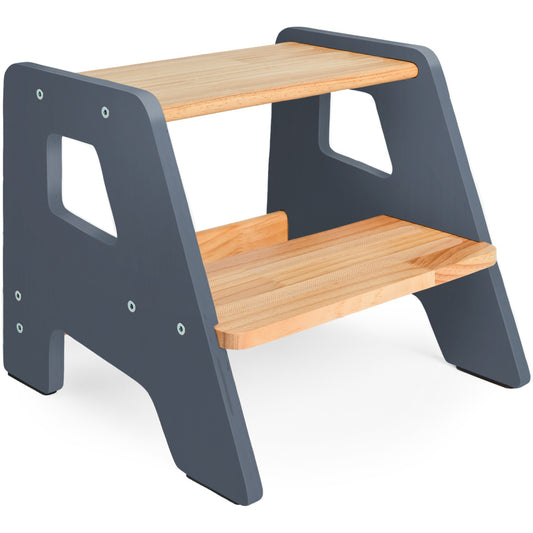
That might mean a low shelf with two puzzles, a cup for toothbrush storage they can access on their own, or a coat hook placed low enough for small hands. In a bedroom, it can look like a floor bed that lets a child get in and out without waiting for an adult. In a bathroom, it might be a sturdy step stool that turns handwashing into something the child can initiate.
This pillar asks one question: what can the child do without me?
Safety and trust
Children explore more freely when the environment says yes more often than it says no.
That doesn't mean removing all limits. It means preparing the space so you don't need to constantly stop them. Secure the shelf. Store breakables elsewhere. Keep one drawer available for safe kitchen tools. Give them one place where touching, moving, and trying are expected.
Practical rule: The safer the setup, the calmer the adult. The calmer the adult, the more confident the child.
Order and predictability
Young children relax into spaces they can read.
Order doesn't require a minimalist house. It requires consistency. Books return to one basket. Blocks live in one tray. Shoes go by the door. Snack tools stay in the same lower drawer. When children can predict where things belong, cleanup becomes part of the environment instead of a battle at day's end.
If you're also thinking about the feel of the room itself, these sustainable living space ideas offer useful inspiration for making home spaces lighter, calmer, and more comfortable without turning them into showrooms.
Connection and engagement
A learning environment should invite shared attention.
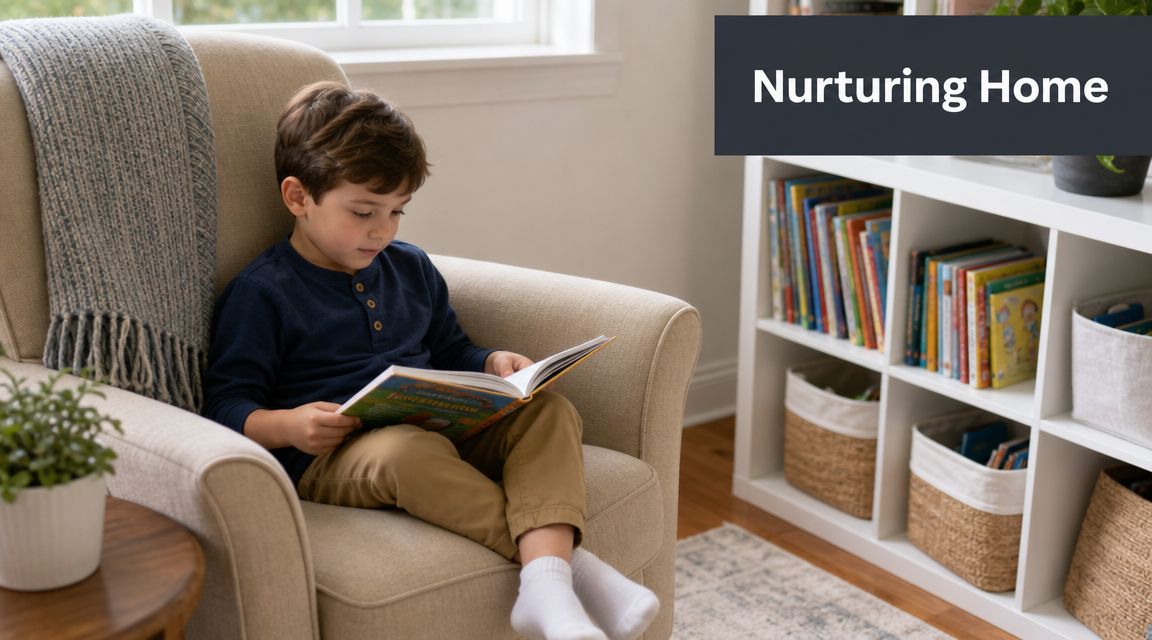
Sometimes that's a reading chair where you naturally sit together. Sometimes it's a kitchen counter setup where your child can watch your hands while you peel, pour, or mix. Sometimes it's leaving enough floor space to build side by side.
Here's the test I use: does this space make it easier for the child to connect with materials, with routines, and with people? If yes, you're on the right track.
| Pillar | What it looks like at home |
|---|---|
| Independence | Low access to clothing, books, cups, and simple tools |
| Safety | Anchored furniture, clear boundaries, child-ready materials |
| Order | Consistent placement, simple routines, visible storage |
| Connection | Spaces for reading together, helping, talking, and observing |
Designing Your Physical Space for Growth
At 8:15 on a weekday morning, the kitchen is doing three jobs at once. Breakfast is still on the table, someone needs a water refill, and a child wants to help wash berries instead of being sent away to wait. A home learning environment has to work in that kind of real family traffic. The setup matters because it shapes whether a child can join daily life with focus and confidence, or spend the morning hearing “not now” and “be careful.”
Research summarized by Edutopia's review of effective learning spaces found that features such as noise, layout, lighting, and temperature affect how well children can learn and pay attention. At home, the goal is simpler. Build spaces that reduce friction, support participation, and feel good to be in.
Start with what your child actually experiences
Crouch down and look across the room from your child's height.
That view usually tells the truth fast. You may see crowded surfaces, tempting cords, too many choices on one shelf, or furniture that forces a child to squeeze, climb awkwardly, or ask for help every few minutes. Children often show environmental stress in their behavior before they have words for it.
A few practical changes go a long way:
- Reduce what competes for attention: Store toys and materials that are not in use this week.
- Keep movement easy: Leave enough open floor space for carrying, turning, climbing down, and walking safely with objects in hand.
- Mark purpose with simple boundaries: A rug under blocks, a table near natural light, or a shelf beside a reading spot helps children understand how to use the space.
For families who want examples they can adapt at home, this guide for an organized preschool environment has useful setup ideas.
Choose furniture that supports participation
The best pieces in a family home are the ones that let a child do real things.
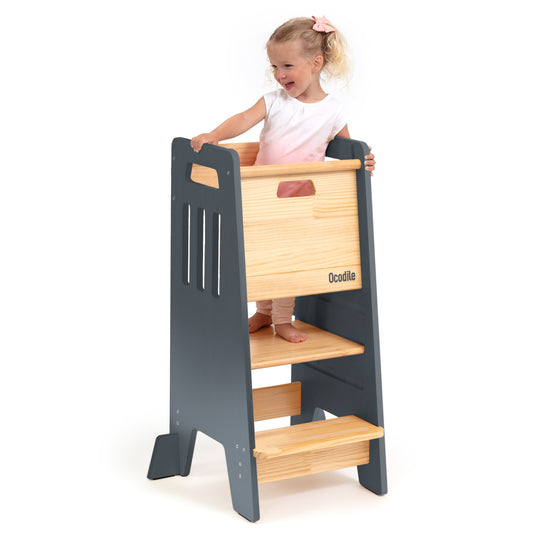
A floor bed can make rest and waking more manageable. A steady stool at the bathroom sink gives a child access to handwashing and toothbrushing without constant lifting. In the kitchen, a standing tower brings a child up to counter height so they can rinse produce, stir batter, peel eggs, or watch your hands closely enough to learn.
That is where whole-home learning becomes practical. The kitchen is not separate from learning. It is one of the richest classrooms in the house because children can build language, coordination, sequencing, patience, and independence while dinner is getting made. Some families choose an Ocodile standing tower for this kind of everyday participation.
I like furniture that earns its footprint. In a smaller home, every piece needs to solve a real problem. If a stool wobbles, a shelf is too high, or a chair only looks cute but never gets used, it adds frustration instead of growth.
Let the activity shape the layout
Different kinds of work need different conditions.
Drawing usually goes better with good light and a wipe-clean surface. Puzzles and books often hold attention longer away from the busiest traffic path. Building needs floor space and a place to leave work intact for a while if possible. Shared tasks, especially in the kitchen, work best when children can see clearly and reach safely instead of stretching from the sidelines.
This is one of the biggest differences between a real home and an idealized playroom. Family spaces have to stay flexible. The same table may hold breakfast, play dough, homework, and vegetable prep in a single day. Portable baskets, lightweight chairs, and furniture that can shift without much effort make that flexibility easier to maintain. If you want ideas for keeping materials accessible without making the room feel overrun, these playroom organization ideas adapt well to living rooms and shared spaces.
Notice the parts children feel before adults name them
Noise carries. Glare bothers them. Air that feels stuffy can turn a calm child restless by midmorning.
These details are easy to miss because they are not toys or furniture, but they change how a room functions. Soft furnishings can lower noise. A lamp often works better than harsh overhead light in a reading corner. A child-sized seat near the action helps connection, while a quieter corner helps recovery after a busy stretch.
Small physical adjustments often do more than buying new materials. Clearer sightlines, a better place to stand and help, and a more comfortable spot to settle with a book can change the tone of the whole day.
Creating Purposeful Activity Zones at Home
A useful home learning environment has places with a clear invitation. Not a rigid map. Not a labeled classroom. Just enough structure that a child can tell what kind of work belongs where.
The strongest setups stay flexible. Published guidance on learning-environment design recommends spaces that are intentionally designed, responsive to learner needs, and restructured when the task or the child changes, as described in this learning environment analysis workflow. That same principle works beautifully at home. A reading nook may become a recovery corner after a hard morning. The kitchen may become a pouring station before lunch.
The cozy corner
This zone is for downshifting.
A floor cushion, a small front-facing book display, one soft blanket, and a warm lamp are often enough. Some families add a basket of board books for toddlers and longer picture books for preschoolers. Keep it quiet, not crowded.
What it supports: language, self-regulation, shared attention, and the habit of returning to books without being prompted every time.
The creation station
This area doesn't need a craft room. A low tray on a table can do the job.
Rotate in crayons, thick paper, stickers, child scissors when appropriate, play dough tools, or a simple sensory bin that can be packed away after use. The key is visibility and containment. If every material needs adult rescue to get started, the zone won't get used well.
What it supports: fine motor strength, planning, experimentation, and sustained focus.
The practical life area
In most homes, this is the kitchen, bathroom, laundry corner, or entryway.
Children pour, wipe, carry, sort, scrub, dress, and prepare. It often looks the least “educational” to adults and does the most developmental work. A child who peels a banana, transfers beans between bowls, or matches socks is practicing coordination, sequence, and patience with a real purpose attached.
If you enjoy Montessori-inspired layouts, these Montessori playroom ideas can help you think beyond toys and toward independence-friendly zones.
The best activity zone is the one your child can enter, use, and leave with a sense of competence.
The movement space
Children need somewhere to be physical without hearing “stop jumping” every five minutes.
That doesn't require a large house. It may be a rug in the living room for rolling and animal walks, a hallway for pushing a basket, or a garden step where a child can practice carrying and balancing. Keep a small number of movement materials available if they help, such as soft balls, a tunnel, or floor markers.
What it supports: body awareness, balance, coordination, and emotional release.
Age-appropriate activities for learning zones
| Learning Zone | Toddler (1-3 Years) | Preschooler (3-5 Years) |
|---|---|---|
| Cozy Corner | Board books, naming pictures, short songs, cuddled reading | Picture books, story retelling, quiet independent browsing |
| Creation Station | Chunky crayons, sticker peeling, play dough pressing, sensory scooping | Drawing people, cutting paper, simple collage, tracing and stamping |
| Practical Life | Carrying fruit, wiping spills, spoon transfer, handwashing | Spreading, pouring drinks, sorting laundry, helping prepare snacks |
| Movement Space | Climbing cushions, ball rolling, pushing baskets, animal crawls | Obstacle paths, beanbag toss, balancing games, dance and freeze play |
A zone is working when your child knows what to do there, can begin with little help, and leaves feeling settled or satisfied. If a space creates more conflict than engagement, shrink it, simplify it, or move it.
Weaving Learning into Your Daily Rhythm
A well-designed room still needs a rhythm. Without one, materials drift, transitions get rough, and adults feel like they're always starting from zero.
Young children don't need a packed schedule. They need a predictable pattern they can trust. When the day has shape, the environment starts doing its job. The child knows when they can help, when they can rest, when books usually come out, and what happens after snack or outdoor time.
Let routines carry the learning
Morning is often the most overlooked learning block in the home.
A child chooses between two weather-appropriate outfits, climbs onto a stool to brush teeth, carries pajamas to a basket, and places dirty clothes in the hamper. None of that looks like a lesson. All of it builds sequencing, independence, body awareness, and follow-through.
The same thing happens at meals. A child in a standing tower can rinse fruit, tear lettuce, stir batter, or wipe the counter. Cleanup teaches categories and responsibility when toys, books, and art tools return to their usual places.
Build cues your child can read
The more a child can predict, the less you need to manage with repeated verbal reminders.
A simple visual rhythm helps. You might use a small card strip with breakfast, get dressed, outside, lunch, rest, and books. Or you might use objects instead of pictures for younger toddlers. A spoon on the table means snack prep is next. A basket by the sofa means reading time is near.
Here are a few easy home-made supports that work well:
- Visual routine strip: Keep it low enough for the child to touch and move.
- Mystery bag: Place one or two objects inside for naming, describing, and sensory exploration.
- Cleanup song or phrase: Use the same one every day so the cue becomes familiar.
- Ready tray: Put out one invitation the night before, such as threading, crayons, or a puzzle.
Observe before you rearrange
Some families keep changing the room when the issue is timing.
If your child melts down every afternoon, the answer may not be more toys or fewer toys. It may be hunger, noise, or a routine that runs too long without movement. Treat your home setup like something that can evolve. Watch what your child uses. Notice what gets ignored. If a zone never works at the hour you offer it, change the timing before you replace the materials.
Rhythm is what turns a prepared space into a living learning environment.
When parents ask how to create learning environment without making home feel like school, this is usually the missing piece. The learning lives inside the repeated moments. The room provides support for them.
Your Home Safety and Comfort Checklist
Safety is not the opposite of independence. It's what makes independence possible.
Children explore more confidently when the space is physically secure and emotionally calm. A positive learning space also needs to handle comfort well. Guidance on positive learning environments highlights the importance of controlling light, noise, air quality, and temperature, along with maintaining uncluttered sight lines and layouts that support both movement and concentration, as explained in this overview of creating a positive learning environment.
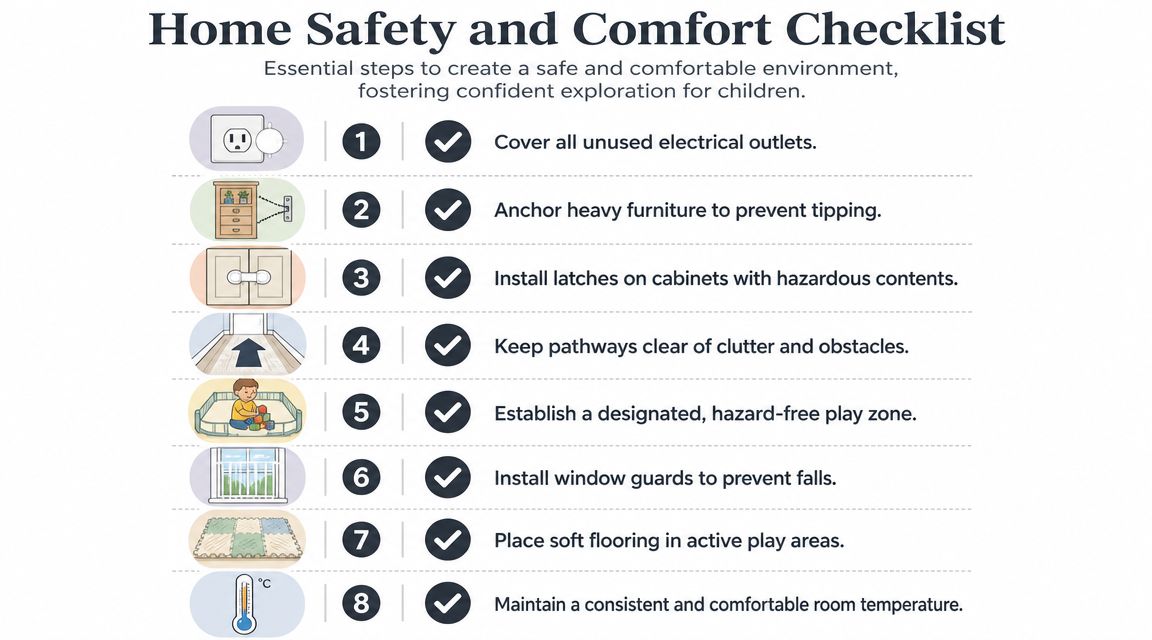
What to check in every room
Use this as a working checklist, not a one-time task.
- Anchor heavy furniture: Shelves, dressers, and storage units should stay stable if a child pulls up or climbs.
- Keep pathways clear: Remove baskets, cords, and small clutter from walking routes children use often.
- Create a yes-space: Give your child at least one area where exploration is expected and hazards are already minimized.
- Check child-height access: If children can reach a shelf, make sure what's on it is safe to handle.
- Choose comfortable light: Reading corners do best with soft, glare-free light rather than harsh overhead brightness.
- Support air and temperature comfort: Rooms that feel stuffy, overly warm, or distracting make focus harder.
- Use soft landings where needed: Rugs or mats help in active areas and around climbing or floor play.
- Review hidden risks regularly: Cleaning products, unstable stools, and damaged furniture often become “background” to adults until a child notices them first.
Comfort is part of the safety plan
A room can be technically childproof and still be hard to use.
If the chair wobbles, the child won't feel steady. If the shelf is overloaded, they can't choose calmly. If the reading corner has glare or constant household traffic, the child may avoid it even if the books are lovely.
Families often do well with a seasonal reset. Look at the room with fresh eyes. Is your child taller now? Reaching further? Dragging stools from room to room because the setup no longer fits? Those are signs the environment needs updating.
For a more room-by-room approach, this guide on how to childproof your home is a useful practical companion.
A good home learning environment should feel safe enough for curiosity and comfortable enough for concentration. When both are in place, children don't just behave better. They participate more.
If you're building a home where children can safely join daily life, Ocodile offers child-focused furniture such as standing towers, floor beds, and step stools designed to support independence in real family spaces. The right piece won't create the whole environment by itself, but it can remove friction and make everyday learning easier to invite.