



Montessori Infant Furniture: Create an Empowering Space
You're probably standing in the middle of a nursery that's half-finished, comparing cribs, shelves, rugs, and baskets, while also trying to answer a bigger question. What kind of room will help your baby grow well?
That's where Montessori infant furniture becomes helpful. Not as a trend, and not as a rulebook, but as a way to make the room fit the child instead of expecting the child to fit the room. For a baby, that changes everything. A reachable shelf invites choice. A clear floor invites movement. A calm layout helps the child focus instead of constantly reacting to clutter.
As an educator and Montessori parent, I think of the nursery as a child's first environment for learning. Not academic learning. Real-life learning. How to move. How to notice. How to reach. How to rest. How to trust that the world is understandable and safe.
Creating a World Built for Your Child
Most parents begin by asking, “What furniture do I need?” A better starting point is, “What will my child be able to do in this room?”
That small shift changes the whole nursery. Instead of designing a space that looks complete to adults, you begin designing one that feels usable to a baby. The room becomes less about display and more about participation. Your infant won't care whether the nursery matches a color palette. They'll care whether they can move, see, reach, and eventually act with growing independence.
Montessori infant furniture comes from a long educational tradition. Maria Montessori began designing child-sized furniture in the early 1900s so children could do more for themselves, and that idea later spread into features like small tables, chairs, washstands, lowered hooks, and shelves built for child access. In today's market, that philosophy has grown far beyond schools. One estimate places the Montessori furniture market at about $1.5 billion in 2024 with a projected 6% CAGR through 2030, according to Pacific Oaks on Montessori furniture history and market growth.
A nursery can support independence from the start
Independence in infancy doesn't mean leaving a baby to manage alone. It means removing unnecessary barriers. If a toy is always out of sight, the adult must present it. If everything is too high, the adult must retrieve it. If the space is crowded, the baby can't move freely.
A Montessori-inspired room asks a simpler question: what can the child do with the least adult interference and the greatest safety?
Practical rule: Choose furniture that lets your child participate safely in daily life, even in very small ways.
That might mean one low shelf instead of a tall storage unit. It might mean a soft mat on open floor space instead of filling every corner. It might mean buying less furniture, not more.
What this approach looks like in real life
Parents sometimes worry they have to build a “perfect Montessori room.” You don't. You need a room that is:
- Calm: Not overloaded with toys, colors, or bulky furniture
- Reachable: Built around what your child can access
- Safe: Set up so exploration doesn't create avoidable hazards
- Flexible: Easy to adjust as your baby grows
That's what makes Montessori infant furniture useful. It helps you create a room your child can live in.
Understanding the Core Montessori Furniture Principles
An easy way to understand Montessori furniture is to imagine living in a giant's house. The chairs are too tall. The sink is at your forehead. Your clothes hang where you can't reach them. You'd need help all day, even for simple things.
That's how standard spaces often feel to children.
Montessori infant furniture tries to correct that mismatch. It isn't about buying pieces with a certain label. It's about choosing furniture that respects the child's body, movement, and need for meaningful access. If you want a broader grounding in the philosophy itself, this overview of the Montessori method of teaching is a helpful companion.

Child-sized means child-usable
A piece can be beautiful and still be wrong for the child. If a shelf is technically “for kids” but your baby can't see or reach the materials on it, it isn't serving the purpose.
In Montessori design, scale matters because ability matters. Furniture should fit the child's current stage, not some future version of the child. That's why low shelves, low beds, and small seating matter so much. They turn passive surroundings into active tools.
Accessibility changes behavior
When children can reach something, they can begin making choices. That's a core Montessori idea. The room teaches, “You belong here. You can do something here.”
Accessibility includes more than height. It also includes:
- Open visibility: Children can see what's available
- Simple arrangement: Fewer items are easier to understand
- Predictable placement: Materials return to the same spot
When parents skip this step, the room often becomes adult-managed storage. When they get it right, the child starts participating naturally.
A short visual example can make these principles easier to picture:
Freedom of movement is not a decorative concept
Babies learn with their whole bodies first. Before language becomes strong, movement is doing a great deal of the work. Rolling, scooting, crawling, pulling up, cruising, and sitting all depend on having space and surfaces that support practice.
That's one reason Montessori furniture often looks spare. Less furniture can create more opportunity.
A well-prepared infant room says, “Move safely, explore slowly, and return often.”
Natural materials support clarity
Wood is common in Montessori spaces for practical reasons. It tends to feel stable, readable, and grounded. Natural materials also usually avoid the visual noise that comes with heavily patterned plastic pieces or loud electronics.
This doesn't mean every item must be wood. It means the materials should feel durable, simple, and appropriate for daily use. Montessori is a design philosophy in service of development, not a shopping category.
Key Features to Look for in Safe Montessori Furniture
Parents often get pulled toward the nicest-looking piece or the one with the strongest marketing language. I'd do the opposite. Start by assuming the label tells you very little.
In a growing furniture category, product claims can sound reassuring without telling you what you need to know. One Montessori-focused roundup points out that products in this space range from $29 to $1,845, which makes careful evaluation even more important. The same source highlights practical safety checks such as rounded edges, stable low bases, and no small detachable parts. You can review that discussion in Wood and Hearts on evaluating Montessori room furniture safety.

What to inspect before you buy
If I'm helping a family choose Montessori infant furniture, I look for physical evidence first.
- Rounded edges: Run your hand along corners and exposed edges. Infants lean, wobble, and fall sideways. Softened edges reduce the risk of hard impacts.
- Stable base: Push lightly from different angles. Furniture shouldn't rock, shift, or feel top-heavy.
- Solid hardware: Check that screws, pegs, knobs, or decorative pieces can't loosen easily.
- Low profile: Lower furniture generally supports safer access and reduces climbing risk.
- Smooth finish: Surfaces should feel sealed and splinter-free, especially on shelves, rails, and handles.
Materials matter more than style
A nursery is one place where material shortcuts can become a daily issue. Babies touch everything, mouth many things, and spend long stretches close to the floor and furniture surfaces.
That means I'd prioritize:
| Feature | Better question to ask |
|---|---|
| Finish | Can the company clearly describe the finish and intended child use? |
| Construction | Does it feel sturdy enough for repeated pulling, leaning, and daily contact? |
| Components | Are there tiny parts, caps, or trim pieces that could detach? |
| Height | Can the child use it safely now, not just later? |
If you're trying to think beyond appearance and toward long-term build quality, it can help to read about premium custom furniture durability. It isn't about nursery furniture specifically, but it's a useful reminder that construction methods affect how furniture performs over time.
Marketing words to treat carefully
Words like “non-toxic,” “eco-friendly,” and “child-safe” can be useful starting points. They shouldn't be the end of your decision.
Look for concrete design choices instead:
- No small detachable parts
- No sharp corners
- No tippy silhouette
- No rough unfinished edges
- No confusing access points that invite unsafe climbing
Buyer's filter: If a product sounds reassuring but you still can't tell how it handles tipping, edges, or detachable parts, keep looking.
A simple decision framework
Use three questions before any purchase:
- Can my child use this with less adult lifting or repositioning?
- Can my child interact with it safely at their current developmental stage?
- Would I still choose it if the marketing label disappeared?
That third question clears a lot of mental fog. Good Montessori infant furniture should still make sense even if nobody called it Montessori.
Essential Furniture for a Montessori Infant Room
The easiest mistake in a Montessori nursery is buying every item associated with the style. Most infants need fewer pieces than adults expect. The important thing is that each piece does a clear job.
Start with safe sleep, not aesthetics
The floor bed gets a lot of attention, so it's worth slowing down here. A Montessori-style floor bed is not recommended for newborns or babies under 12 months, and the safest sleep surface for that age group remains a bassinet or crib with a firm mattress, according to Sleepopolis on Montessori beds and infant sleep guidance.
That often surprises parents because floor beds are treated as the signature Montessori choice. In practice, safe sleep comes first. Later, when a child can sit up and hold their body independently, some families consider the transition based on readiness, room safety, and supervision patterns. If you want a closer look at setup ideas, this Montessori infant floor bed guide can help you think through the room as a whole.
The right furniture at the wrong stage is still the wrong furniture.
Low open shelving
For infants, low shelving does two jobs. It makes a few materials visible, and it helps the room stay orderly. That second part matters more than many parents expect. When too many toys are out, babies often move from item to item without settling.
A low open shelf encourages slower engagement. One basket. One grasping toy. One board book. One object to examine.
Montessori thinking reveals its practical application. You're not trying to entertain constantly. You're setting up the room so the child can notice, choose, and return.
A movement area
This may not be sold as “furniture,” but it belongs in the plan. An uncluttered floor space with a soft mat or rug gives the infant a place to stretch, roll, pivot, crawl, and practice balance.
Keep this area visually calm. If the movement zone is crowded with bins, oversized plush toys, or decorative furniture, the child loses the chance to practice whole-body coordination comfortably.
A place for books and a few daily objects
A front-facing book display or a very low shelf for books can work well once the child is ready to handle books gently with support. You don't need a large library in the room. A small rotating selection is usually enough.
Some families also add a low basket for care items used during waking routines. The point isn't for the infant to manage personal care alone. It's to make care routines visible and predictable.
A small table and chair can wait
Many parents buy a weaning table and chair too early because it looks appealing in photos. If your baby isn't yet ready to use it meaningfully, it can become furniture that clutters the room rather than serving development.
Choose timing based on use, not on nursery styling. Furniture should arrive when it can support real participation.
If you're reusing an existing piece instead of buying new, this guide to revitalizing home furniture may give you ideas for adapting surfaces thoughtfully, though with infant furniture I'd still be careful to keep safety, finish quality, and durability at the center of the decision.
How to Arrange Your Montessori Nursery for Safe Exploration
A good Montessori nursery doesn't feel empty. It feels readable. The child can sense where to move, where to rest, and where materials belong.
That clarity comes from layout more than shopping. You can have excellent furniture and still end up with a frustrating room if everything competes for the same space.
Create clear zones
Think in terms of activity, not furniture categories. Most infant rooms work best when they have three simple zones:
- Sleep zone: Calm, visually quiet, with as few distractions as possible
- Movement and play zone: Open floor space with a mat or rug
- Care zone: A consistent place for dressing, diapering, and daily routines
This arrangement helps the child build expectations. Rest happens here. Movement happens there. Care happens in another spot. That kind of consistency supports calm behavior.

Keep infant shelving very low
For babies, low shelving isn't just a style preference. A Montessori training resource recommends shelving at about 16 inches (40 cm), with only top and bottom shelves plus a slight front lip so babies can grasp the edge and toys don't slide off. That guidance appears in Montessori Training on infant and toddler furniture tips.
That design solves several problems at once. It improves access, reduces visual overload, and gives pre-walking babies a stable point of reference as they pull up and move around the room.
Make the room safe for real movement
Once a baby begins moving independently, the room needs to be prepared for what the baby will do, not what you hope they won't do.
That means:
- Anchor heavier furniture: Anything that could tip should be bolted or otherwise secured.
- Latch or secure accessible elements: Drawers, doors, and components shouldn't create avoidable hazards.
- Protect pathways: Keep cords, unstable baskets, and breakables out of the movement route.
- Use soft landing surfaces: A firm rug or appropriate floor mat can make exploration safer.
If you're choosing mats for the movement area, this infant foam floor mat guide can help you think through comfort, placement, and everyday use.
When the room is prepared well, you won't need to say “no” every few seconds.
Don't forget sleep safety in the whole room
Even families focused on Montessori principles still need strong infant sleep habits. If you want a broader refresher on sleep setup, this guide on tips to reduce SIDS risk is worth reading alongside your nursery planning.
One practical example of a child-centered product in this category is Ocodile's floating nursery bookcase, which is designed to keep books within reach while maintaining a simple profile. Whether you use that or another option, the larger point is the same. Choose pieces that support access without crowding the room.
From Infant to Toddler Evolving Your Montessori Space
The nicest part of a Montessori-inspired nursery is that it doesn't expire the moment your baby starts walking. The room can mature with the child.
Low shelves still work. Open floor space still matters. A calm, orderly layout still helps. What changes is the child's level of participation. The baby who once reached for one basket now wants to carry, climb, wash, pour, and help.
Keep the principle, change the tools
As children grow, the environment should answer their new abilities. That often means adding practical pieces elsewhere in the home, not just changing the bedroom.
A toddler may benefit from:
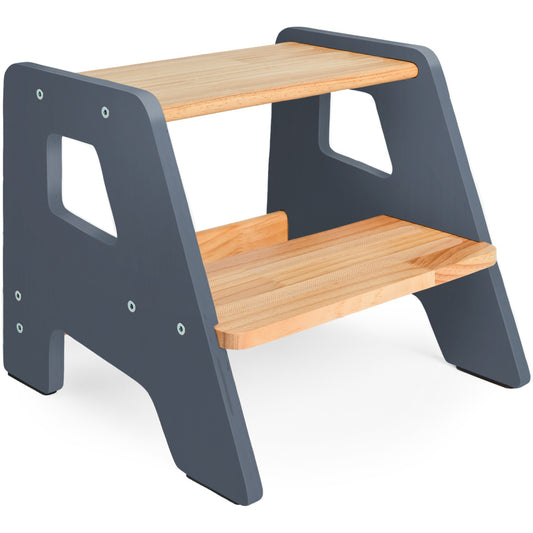
- A step stool in the bathroom for hand washing
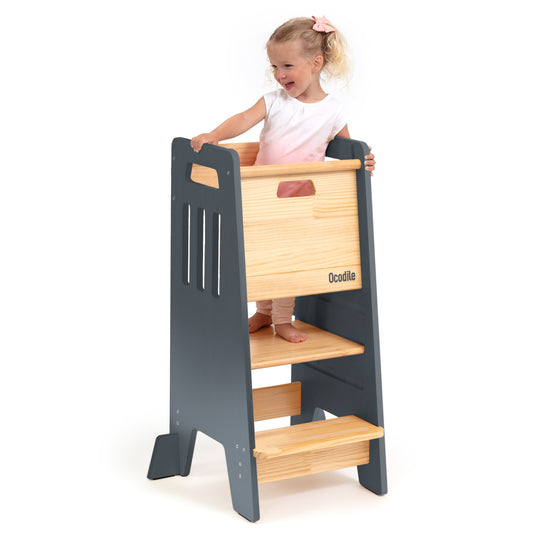
- A standing tower in the kitchen for food prep observation and participation
- A small table and chair for snacks, art, or simple practical life work
- Accessible hooks or low storage for clothing and daily routines
The pattern is consistent. Independence grows when the environment meets the child at the right height, with the right support, at the right time.
Avoid rebuilding the whole room
You don't need to start over every few months. Most families do better with gradual changes based on observation.
Ask yourself:
| If your child is doing this | The room may need this |
|---|---|
| Pulling up often | More stable surfaces and clearer pathways |
| Carrying objects around | Fewer floor obstacles and simpler storage |
| Showing interest in routines | Low-access tools for dressing or washing |
| Climbing everything | A closer review of furniture stability and layout |
That's the lasting value of Montessori infant furniture. It teaches you to think in terms of function, readiness, and independence, not just products. Once you learn that lens, you can apply it to the whole home.
If you're building a child-centered home and want furniture that supports independence in everyday family life, Ocodile offers child-focused options such as floor beds, step stools, and standing towers designed for safe exploration and practical use.