



Organic Infant Toys: A Parent's Guide
“Organic” is one of the most popular recommendations for baby toys, but it isn't a complete safety test. A toy can use certified organic cotton and still contain detachable parts, unsafe finishes, or construction problems. For organic infant toys, check the finished product's compliance, not only the material label.
Table of Contents
- Why Organic Does Not Always Mean Safe
- Decoding the Most Important Certifications
- Choosing the Right Material for Your Baby
- Age-Appropriate Options and Montessori Play
- How to Clean and Maintain Organic Toys
- The Parent's Sustainable Shopping Checklist
Why Organic Does Not Always Mean Safe
Organic describes how a material was produced. It doesn't automatically tell you whether a rattle can break, whether a button can detach, or whether a coating can migrate into your baby's mouth. Pediatric guidance also warns that “organic” and “natural” shouldn't be treated as shortcuts for chemical or choking safety, as explained by Seattle Children's guidance on choosing safe toys.
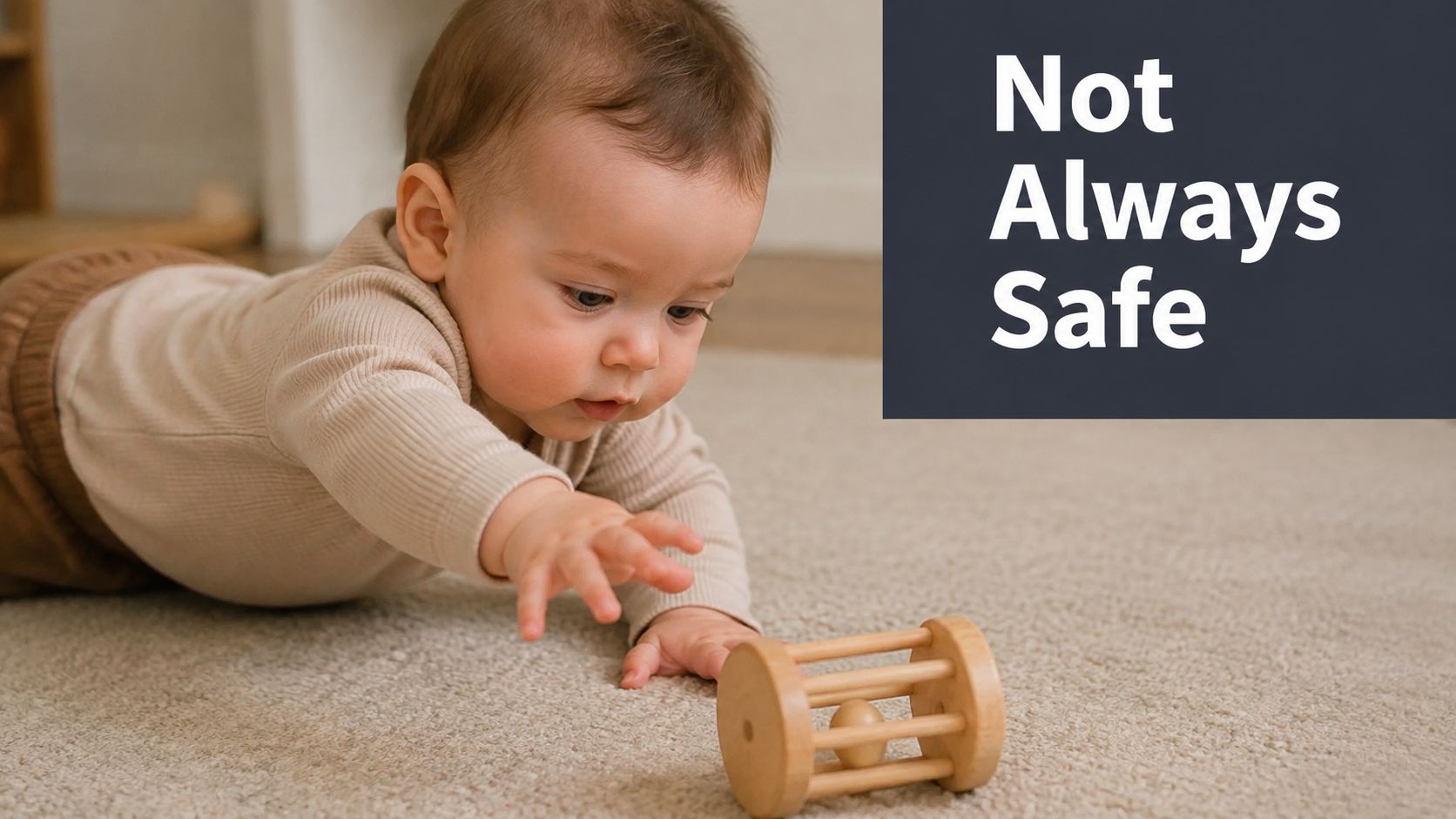
A GOTS-certified cotton plush may reduce concern about the textile's origin, yet the finished toy still needs appropriate toy-safety testing. In the United States, children's products must meet CPSIA requirements, including limits on lead and specific phthalates. ASTM F963 provides the broader toy-safety framework, while European toys commonly rely on EN 71 testing for mechanical safety and chemical migration.
Practical rule: Treat “organic” as a material claim, not a complete safety verdict.
What organic certification can and can't prove
GOTS certification requires at least 95% certified organic fibers and restricts substances including PFAS, heavy metals, and formaldehyde across the supply chain, according to this GOTS-focused explanation of organic baby toys. That's useful information, especially for fabric toys that babies mouth regularly.
It doesn't replace checks for seams, cords, bells, eyes, snaps, wooden joints, or other components. Before buying, look for the toy's age guidance, manufacturer identity, testing information, and a clear statement covering the finished article.
Parents who want a broader explanation of material claims can also consult this guide to non toxic baby toys. The central question remains simple: what proves this particular toy is safe?
Decoding the Most Important Certifications
A green material label is only one piece of the safety picture. GOTS evaluates organic textile fibers and processing, OEKO-TEX addresses harmful substances and textile limit values, and FSC concerns responsibly sourced wood. None of these labels alone confirms that a finished toy has safe seams, secure attachments, or suitable mechanical testing.
GOTS requires at least 95% organic fibers and restricts substances such as PFAS, heavy metals, and formaldehyde throughout the supply chain, according to this organic baby-toy certification guide. OEKO-TEX Product Class I is intended for babies and small children up to age 3, with strict requirements for products that touch them. These certifications describe materials and processing. The toy's own compliance record answers whether the completed product was assessed.
Certification Quick-Reference Guide
| Certification | What it Covers | What it Misses |
|---|---|---|
| GOTS | Organic textile fibers and responsible chemical processing | Complete toy construction and choking hazards |
| OEKO-TEX® ORGANIC COTTON | Organic cotton content and textile substance limits | Overall toy design and structural integrity |
| FSC | Responsible wood sourcing | Chemical migration, breakage, and detachable parts |
| ASTM F963 | U.S. toy-safety requirements for toys intended for children under 14 | Organic sourcing |
| EN 71 | European mechanical, physical, and chemical toy testing | Whether textile fibers are organic |
For U.S. toys intended for children under 14, look for evidence of compliance with ASTM F963, described in this ASTM F963 reference. For European products, ask whether the finished toy meets relevant EN 71 requirements, including EN 71-3 migration testing. Request documentation that identifies the actual toy, not only a fabric or wood certificate.
For nursery shopping inspiration, a natural Swiss distributor offering may help you compare product descriptions, but verify each toy's compliance documents. The same separation applies to products babies mouth. This guide to non-toxic pacifiers explains why a material claim and finished-product testing answer different safety questions.
Choosing the Right Material for Your Baby
The right material depends on how your baby will use the toy. A soft cloth book, a teether, and a stacking toy face different pressures from drool, washing, chewing, and dropping.
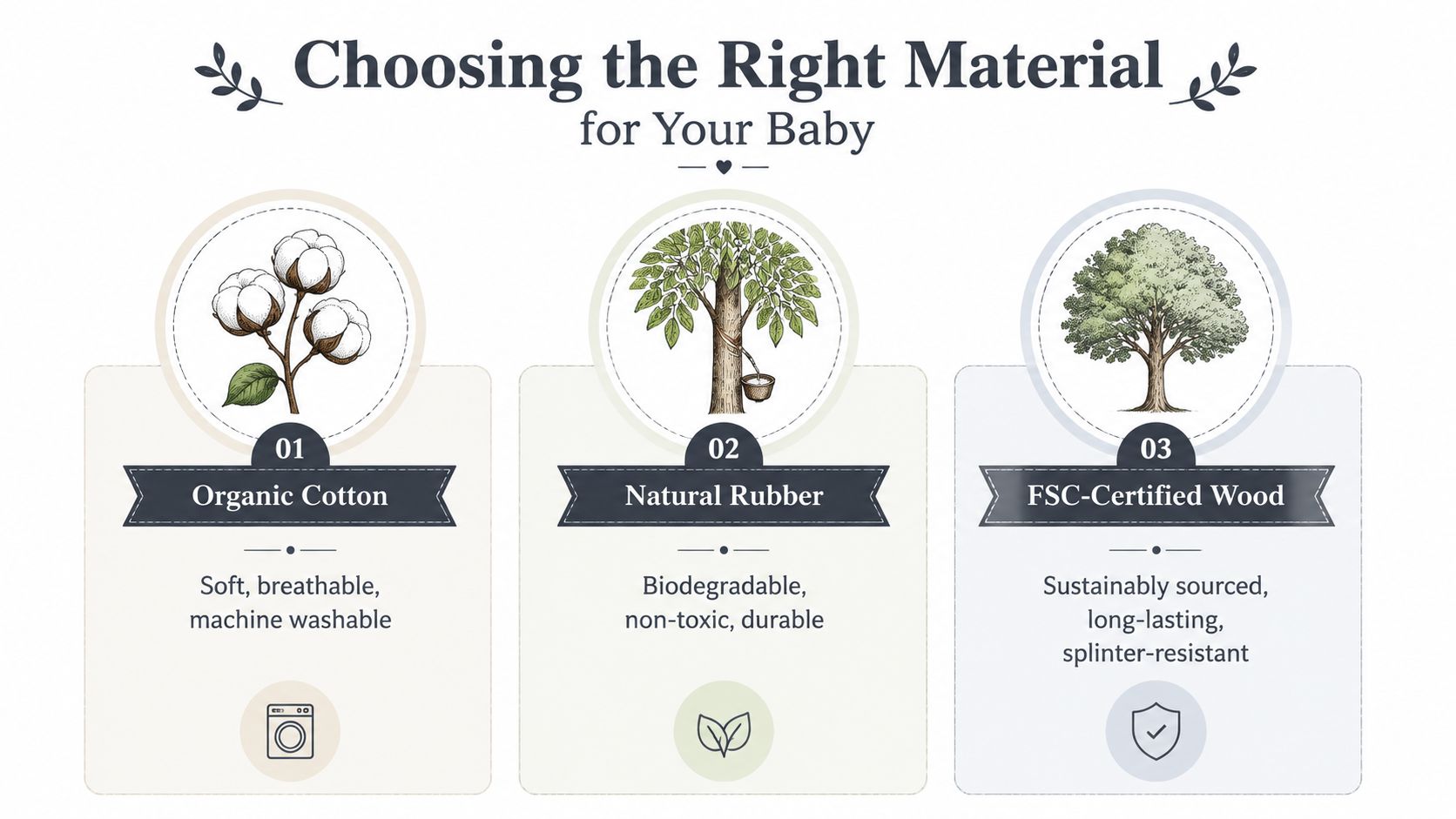
Organic cotton works well for soft books, comforters, sensory cloths, and lightweight plush toys. It's gentle and washable, but repeated laundering can affect shape, stitching, and shrinkage. Choose tightly sewn items without loose threads, and follow the care label rather than assuming every cotton toy can tolerate high heat.
OEKO-TEX® ORGANIC COTTON includes a 100% organic cotton threshold and a blended version requiring at least 70% organic cotton. Both use product classes, including Product Class I for babies and small children up to age 3, as detailed in the OEKO-TEX® ORGANIC COTTON factsheet.
Natural rubber feels flexible and is often suited to teethers. Inspect it frequently for tackiness, cracks, odor changes, or softening, especially after exposure to heat, sunlight, and saliva. A sealed design is preferable for bath toys because openings can allow water to collect inside.
FSC-certified wood suits grasping, tapping, and early problem-solving play. Smooth, well-finished wood can last, but painted or sealed surfaces still need appropriate toy compliance testing. Retire any piece with splinters, cracking, peeling finish, or a loose component.
For a washable play surface, compare construction and care details in this guide to an organic cotton play mat. The most sustainable choice is usually the one that remains intact, cleanable, and developmentally useful.
Age-Appropriate Options and Montessori Play
Organic fabric or wood does not determine whether a toy is safe. For each age, match the toy's design to the child's abilities, then look for evidence that the finished product meets applicable toy-safety requirements.
A newborn may use high-contrast soft books, crinkle cloths, and simple fabric shapes for visual attention and early reaching. As grasping develops, offer easy-to-hold rattles, single-piece teethers, and soft objects that can move between hands. Inspect seams, handles, and attachments. Babies who mouth toys should not have access to small detachable parts, long cords, loose beads, or decorative eyes that are not securely integrated.
Match play to the child, not the trend
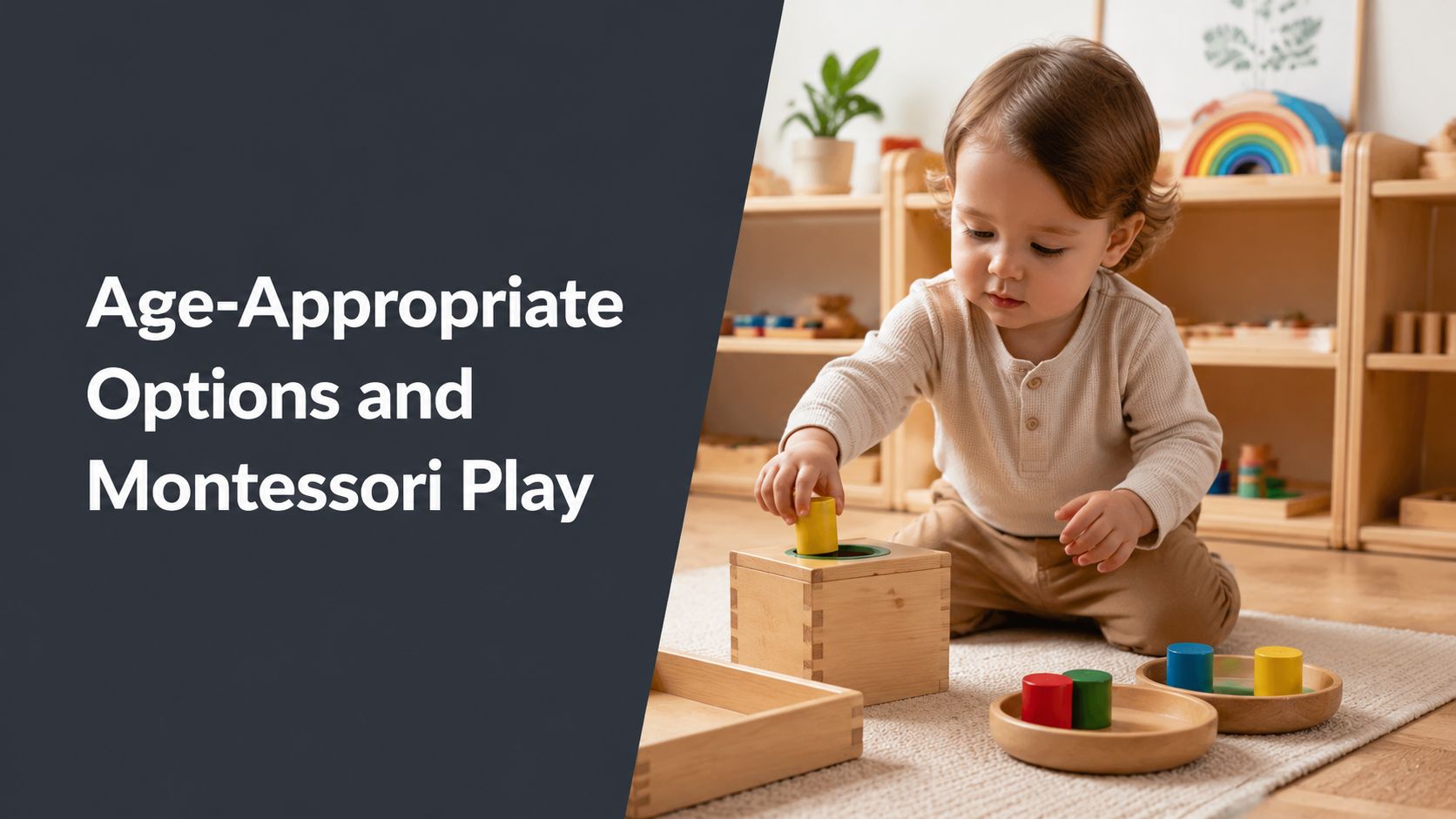
Montessori-style play uses simple, screen-free materials that invite repetition, such as placing an object into a container or exploring a shape. The label matters less than the design and the safety documentation. Choose toys that are stable, easy to inspect, and suited to the child's current abilities.
In the United States, ask whether the finished toy was tested against the applicable requirements for its age range, rather than assuming an organic or eco-label answers that question. For older toddlers, parents comparing developmental ideas may find this 18 month boy toys guide helpful. This resource on educational wooden toys offers examples of simple, active play.
Use this video as a visual example of Montessori-inspired exploration:
Rotate a few suitable toys instead of filling the play space. A smaller selection makes wear easier to spot, supports orderly play, and helps you observe what your child is practicing.
How to Clean and Maintain Organic Toys
Cleaning should protect the material as well as remove dirt. Start by reading the manufacturer's instructions, because cotton, rubber, and wood react differently to water, heat, and sunlight.
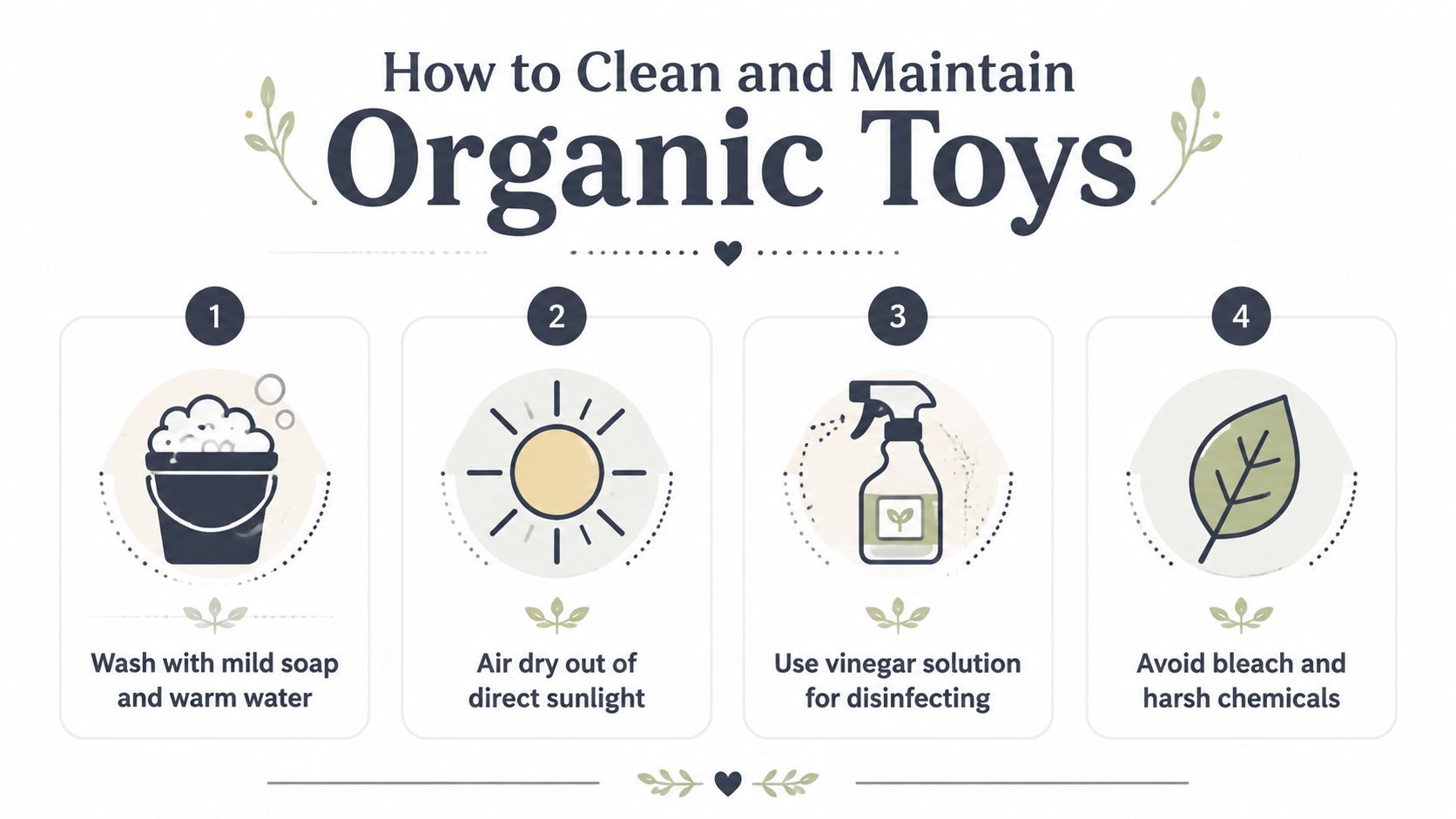
For washable cotton toys, use mild soap and warm water when the care label permits. Rinse thoroughly and air dry completely before returning the toy to your baby. Avoid harsh bleach and high-heat drying unless the manufacturer explicitly allows them, since they can weaken fibers, fade finishes, or change the toy's shape.
Wipe natural rubber with a damp cloth and mild soap, then dry it away from direct sunlight and heat. Don't soak rubber toys unless the maker says you can. Retire rubber that becomes sticky, cracked, swollen, or visibly degraded.
Clean wooden toys with a lightly damp cloth, then dry them promptly. Don't leave wood submerged or sitting wet, and inspect painted surfaces for peeling. A gentle vinegar solution may be suitable for some surfaces, but always check the manufacturer's guidance first.
Retirement check: If a toy has a split seam, exposed filling, splinter, peeling finish, mold, or detachable part, stop using it.
The Parent's Sustainable Shopping Checklist
A thoughtful purchase starts with the product page, not the greenest-looking photograph. Look for the material composition, age recommendation, care instructions, manufacturer details, and evidence that the finished toy meets the relevant safety requirements.
Before you buy
- Challenge vague language: “Natural,” “eco-friendly,” and “non-toxic” need supporting details.
- Check the right marks: Look for GOTS or OEKO-TEX for textiles, FSC for wood, and ASTM F963 or EN 71 compliance for toy safety.
- Inspect the design: Avoid loose parts, accessible stuffing, sharp edges, peeling coatings, and water-trapping holes.
- Think about care: Choose toys you can clean thoroughly and dry fully.
- Consider second-hand items carefully: Keep them only when labels, construction, condition, and safety history are clear.
The broader eco-friendly baby-toy segment is projected to reach USD 30,000 million by 2025, with an estimated 8.5% CAGR for 2025 to 2033, according to industry market tracking. More choices can help, but they also make careful label reading essential.
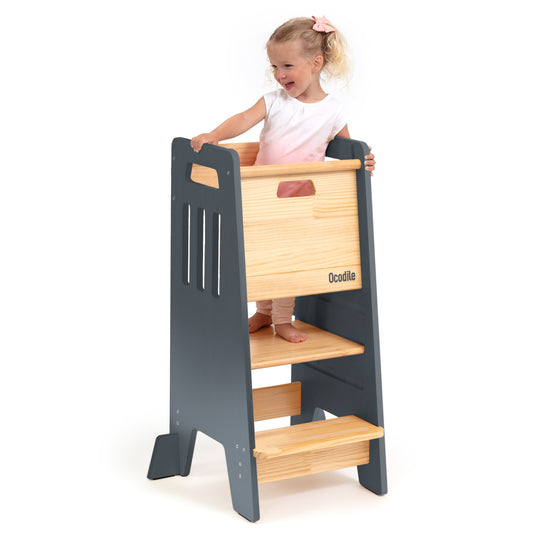
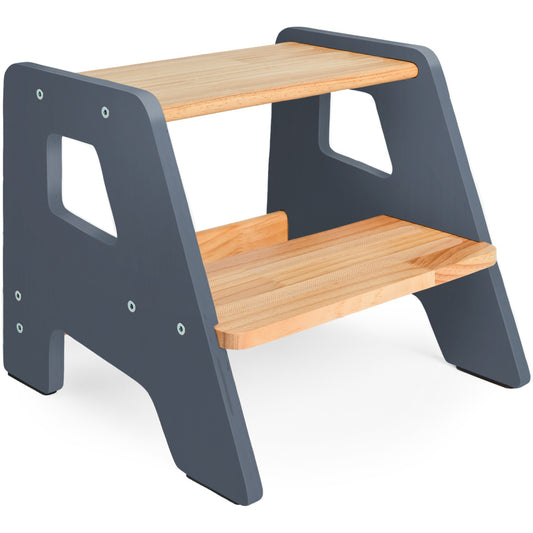
Ocodile offers child-focused furniture and practical products designed around safe exploration, including items made with non-toxic paint and varnish. For families building a calm, accessible play environment, visit Ocodile and compare its child-sized solutions with your toy-safety priorities.
Visit Ocodile to explore practical furniture for children, including solutions that support independence and safe everyday participation. Use the same verification mindset here as with organic infant toys, checking materials, finishes, construction, and intended use before choosing what belongs in your home.