



Reggio Emilia and Montessori: Which Fits Your Family?
You're probably here because you've been researching preschools, playrooms, floor beds, toy shelves, or toddler furniture, and two names keep showing up: Reggio Emilia and Montessori. They sound important. They also sound a little intimidating.
Most parents don't need another abstract philosophy lesson. They need help answering practical questions. Should the room be neat and consistent, or flexible and creative? Should toys stay the same for mastery, or rotate with a child's interests? Should your child work mostly on their own, or with you and siblings in shared projects?
Those are real home decisions. They affect what furniture you buy, how you arrange a bedroom, where art supplies live, and how much independence your child can practice in daily life.
Choosing Your Path in Early Childhood Education
If the phrase Reggio Emilia and Montessori makes you feel like you're choosing between two complete lifestyles, take a breath. You're not failing because the difference feels blurry. These are both respected, child-centered approaches, and both start from the same hopeful belief: children are capable.
Reggio Emilia has especially deep civic roots. It emerged in northern Italy after World War II through collaboration among parents, teachers, and municipal leaders. The approach has since spread widely. North American Reggio Emilia Alliance materials note that it had been evolving for more than 60 years, and NAREA data indicated 2,800 schools for young children using Reggio-inspired practices worldwide, as explained in the North American Reggio Emilia Alliance FAQ.
That history matters because Reggio wasn't built as a private-brand method. It grew from a community asking how children should learn in a better society. Montessori comes from a different lineage, but it also centers dignity, respect, and carefully supported development.
If you want a wider look at how these ideas fit into the bigger field of early learning, Ocodile's overview of philosophies of early childhood education is a helpful starting point.
Practical rule: You don't have to pick an identity first. Start by noticing what kind of home life you want to make easier for your child.
For many families, the question isn't “Which philosophy is correct?” It's “Which parts of each approach help my child live, play, and participate better at home?”
Understanding The Core Philosophies
Parents often get confused because both approaches value hands-on learning, respect for the child, and thoughtful environments. The difference sits underneath those shared ideas. They answer different questions about how learning should unfold.
Montessori looks for purposeful independence
Montessori starts from the idea that children want to do meaningful work. In practice, that means the adult prepares an environment where a child can act with as little unnecessary help as possible. A low shelf, a reachable cup, a child-sized table, a stool at the sink. These aren't decorative choices. They are invitations to competence.
The curriculum also reflects that structure. Montessori uses a sequenced curriculum organized into areas such as practical life, sensorial, language, and math. Children typically move through materials in order, building skill by skill. Reggio Emilia works differently. It uses an emergent curriculum with no pre-set plan, driven by children's interests and collaborative projects, as outlined in this comparison of Reggio Emilia vs. Montessori differences.
A simple way to picture Montessori is this: the room says, “You can do this yourself.”
Reggio Emilia looks for meaning through expression
Reggio Emilia treats children as active thinkers who make sense of the world through relationships, exploration, and many forms of expression. Parents often hear the phrase “the hundred languages of children.” In plain language, that means a child might show an idea through drawing, building, movement, clay, conversation, shadow play, or pretend play, not only through words.
If Montessori often asks, “What skill is the child ready to practice?” Reggio often asks, “What idea is the child trying to investigate?”
That's why open-ended materials fit so naturally here. A basket of fabric, cardboard tubes, loose parts, paint, tape, stones, and wire can become a bridge, a nest, a city, or a theory about how things connect. If you want examples of materials that support this kind of exploration, this guide to open-ended play gives a useful home-based lens.
Children don't always need more toys. Sometimes they need materials that can become more than one thing.
Where parents usually get stuck
The confusion usually comes from trying to compare them as if they're making the same promise. They aren't.
- Montessori tends to organize learning for independence, repetition, and mastery.
- Reggio Emilia tends to organize learning for collaboration, investigation, and expression.
- Both respect the child and take the environment seriously.
That's why one family may feel calmer with a more ordered setup, while another family may feel more at home with a project table covered in works-in-progress.
A Side-by-Side Comparison of Key Differences
The easiest way to understand Reggio Emilia and Montessori is to put them next to each other in everyday terms. Not theory first. What you would notice in the room, in the materials, and in the adult's behavior.
| Attribute | Montessori | Reggio Emilia |
|---|---|---|
| Curriculum | Sequenced and organized into defined learning areas | Emergent and shaped by children's interests |
| Environment | Prepared, orderly, consistent, and accessible | Flexible, aesthetic, studio-like, and responsive |
| Materials | Specific learning materials with clear purpose | Open-ended materials for multiple forms of use |
| Adult role | Guide who presents and then steps back | Co-learner who observes, documents, and extends ideas |
| Child's typical work style | Independent, self-directed practice | Collaborative exploration and project work |
| Home design emphasis | Independence in daily routines | Creativity, expression, and shared inquiry |
Here's the visual version many parents find easier to remember.

The room itself teaches differently
One of the clearest differences is environmental design. Reggio classrooms are often described as a flexible “third teacher” with studio or atelier-like spaces, open-ended materials, and documented learning displays. Montessori classrooms use a carefully prepared environment with consistent layout, ordered materials, and space for self-directed work and control of error, as described in this overview of Reggio Emilia approach vs. Montessori.
At home, that distinction becomes practical very fast.
A Montessori-inspired play area might include:
- Low shelves with a small number of clearly arranged choices
- Child-sized seating for snack, drawing, or puzzles
- Consistent placement so your child can find and return things independently
A Reggio-inspired space might include:
- An art or project surface that can stay active over time
- Loose parts such as paper scraps, natural items, clay, or recycled materials
- Visible documentation like taped-up drawings, photos, or a child's words written down
Materials ask different things from the child
Montessori materials often have a precise learning purpose. They usually invite repetition, concentration, and self-correction. The child can see when something fits, matches, balances, or sequences correctly.
Reggio materials usually don't tell the child what to do. They leave room for hypothesis, storytelling, and invention. The same objects may be used differently every day.
That's why parents sometimes buy a beautiful shelf and still feel unsure. The shelf isn't the philosophy. What matters is what the shelf is asking the child to do.
A good home setup doesn't copy a classroom. It supports the habits you want your child to practice every day.
Daily rhythm also feels different
Montessori often suits families who like predictability. The room stays relatively stable. The routine supports calm repetition. Children know where things go and how to use them.
Reggio often suits families who don't mind a space evolving. The room may change with a child's current interests. If your child becomes absorbed in birds, ramps, maps, or mixing colors, the environment can follow that thread.
Neither is automatically better. They organize childhood differently.
The Differing Roles of the Adult
When parents compare Reggio Emilia and Montessori, they often focus on shelves, toys, or art supplies. But the biggest difference may be you.
In Montessori, the adult prepares and then steps back
A Montessori-style adult pays close attention to access, order, and timing. You set up the room so your child can succeed without constant help. Then you show how to do something clearly and calmly, and you let the child take over.
At home, that can sound like this:
“The cups are on the lower shelf. You can choose one and pour your water.”
Or this:
“Watch how I fold the cloth. Now it's your turn.”
The adult isn't absent. The adult is intentional. You're reducing confusion, not reducing connection. Many families find this approach especially helpful during dressing, snack preparation, cleanup, and bathroom routines because the child can repeat useful actions until they feel natural.
In Reggio, the adult joins the investigation
A Reggio-inspired adult stays curious with the child. Instead of mainly presenting a task, you notice what the child is wondering about and help deepen that inquiry. You might offer materials, ask open questions, or record what the child says so their thinking becomes visible.
At home, that can sound very different:
- “You used three different lines in that drawing. What do they show?”
- “You think the tower keeps falling because the bottom is narrow?”
- “Should we try cardboard, blocks, or tape for your bridge idea?”
This style often feels natural to parents who enjoy conversation, project work, and making meaning together.
How this changes family life
The Montessori adult often asks, “How can I make this task reachable?”
The Reggio adult often asks, “How can I help this idea grow?”
Both questions are valuable. In real homes, they show up in different moments.
A morning routine may benefit from the Montessori question. If your child can reach their clothes, sit to put on shoes, and wash hands at a child-height station, the whole household becomes smoother.
An afternoon with sticks, boxes, and markers may benefit from the Reggio question. If your child starts building an “animal hospital,” you can support that idea with clipboards, bandages, fabric, and conversation rather than redirecting it into a fixed activity.
Which adult role feels more natural to you
Some parents are very comfortable with order and demonstration. Others naturally talk, brainstorm, and co-create. Most families do both, depending on the moment.
If you're trying to decide what fits, don't only study your child. Study your own rhythms too.
- If you like calm routines, Montessori structures may feel easier to maintain.
- If you enjoy collaborative projects, Reggio habits may feel more intuitive.
- If your home needs both, you don't have to choose one full-time identity.
Deciding Which Approach Suits Your Child
The honest answer is that there isn't one universally “best” model. A major longitudinal evaluation found that Reggio attendance was associated with statistically significant long-term gains compared with no formal care, including employment, socio-emotional skills, high school graduation, election participation, and lower obesity later in life. But when Reggio attendees were compared with children in other center-based preschool programs, benefits were generally small and often not statistically significant. The study used non-experimental data from individuals in Reggio Emilia, Parma, and Padova, and it found stronger positive effects for the earliest cohorts than later ones, which suggests context matters a great deal, as detailed in this longitudinal evaluation of the Reggio approach.
That's a useful reminder for parents. The right question isn't “Which label wins?” It's “What kind of environment helps my child participate, regulate, and grow right now?”

Signs your child may enjoy more Montessori structure
Some children visibly relax when the world is orderly. They like putting things back in the same place. They repeat the same task many times. They enjoy seeing a beginning, middle, and end.
You may want more Montessori elements if your child:
- Returns to routines happily and dislikes too much unpredictability
- Enjoys mastery such as pouring, sorting, matching, buttoning, or building the same way again
- Prefers solo concentration over constant collaboration
Signs your child may thrive with more Reggio openness
Other children come alive through dialogue, storytelling, pretend worlds, and evolving projects. They want to combine materials, ask unusual questions, and involve other people in their ideas.
A more Reggio-inspired setup may fit if your child:
- Turns everything into a project rather than using materials one fixed way
- Loves collaboration with siblings, adults, or friends
- Expresses ideas through many mediums, from drawing and movement to block structures and dramatic play
Watch for energy, not just skill. The best fit is often where your child becomes more engaged, not where they look more impressive.
Questions worth asking yourself
Try these in ordinary moments, not only when shopping for furniture or touring schools:
- Does my child seek order or possibility first?
- Do they return to the same activity for mastery, or transform it into something new each time?
- Does our family need more independence support, more creative space, or both?
Your answers may change over time. That's normal. Toddlers especially can need more structure in one part of the day and more open-ended expression in another.
Creating a Supportive Home Environment
The comparison becomes useful for families. Most families aren't building a school. They're arranging a bedroom corner, a living room shelf, a kitchen helper setup, or a shared family space.
A key gap in many discussions is home translation. For parents, the choice often comes down to prioritizing self-directed independence or collaborative, open-ended creativity, and that directly shapes furniture choices and layout, as discussed in this piece on choosing the best educational approach for your child.

A Montessori-inspired home setup
In a Montessori-style home, the room helps the child act independently with real life tasks.
Focus on accessibility:
- Low shelves keep choices visible and reachable
- Child-sized table and chair support snack, art, and practical tasks
- Floor beds allow independent movement in and out of sleep spaces
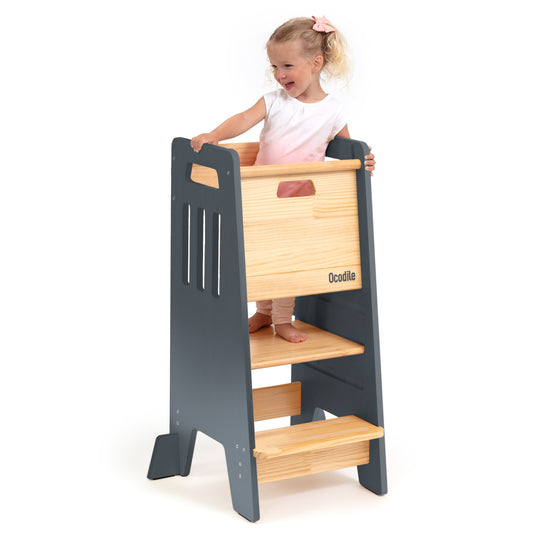
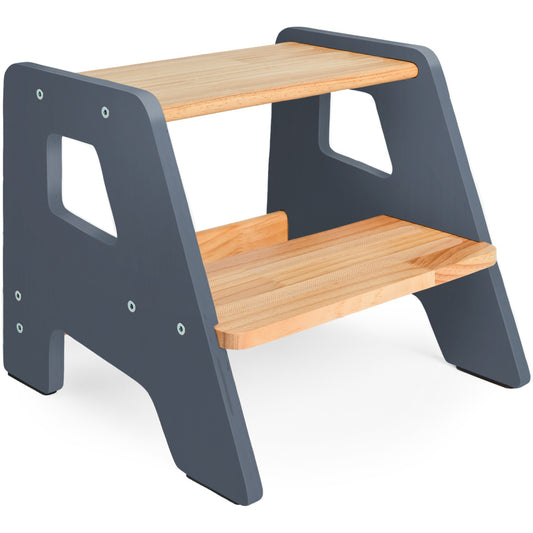
- Step stools or learning towers let children join kitchen and bathroom routines safely
The key is clarity. Fewer items. Consistent placement. Tools your child can use.
A toddler entry area, for example, might include a low hook for a jacket, a small bench for shoes, and a basket for hat and mittens. That setup teaches more than repeated reminders ever will.
If you want more room-by-room ideas, Ocodile's guide to Montessori education at home gives a practical overview of how furniture and layout support daily independence.
A Reggio-inspired home setup
A Reggio-style home doesn't need to look messy or overloaded. It needs to invite exploration, expression, and revisiting ideas.
You might create:
- A small atelier area with paper, crayons, clay, scissors, tape, and found materials
- A project shelf where current interests stay visible for several days
- Display space for children's drawings, constructions, and dictated words
- Loose parts baskets with stones, fabric, cardboard tubes, lids, sticks, or natural items
Lighting, mirrors, transparency, and beauty often matter here. A tray of watercolor paper near a window feels different from a plastic bin shoved into a closet. Reggio-inspired spaces treat the environment as part of the learning conversation.
What this looks like in daily life
A Montessori morning may involve your child getting out of bed, dressing with reachable clothing, helping at breakfast from a learning tower, and putting dishes in a familiar place.
A Reggio afternoon may involve the same child turning shipping boxes into a bus, drawing route maps, collecting tickets, and asking you to help write signs.
Those moments aren't in conflict. They support different kinds of growth.
If you're in the thick of building independence with routines, bathroom habits are another area where environment matters. A calm setup with accessible clothing, predictable steps, and child-friendly tools can make a big difference. For families working through that stage, this ultimate guide to potty training offers practical support.
Furniture that supports both philosophies
Some pieces work well in either approach because they increase participation.
Examples include:
- Floor beds for self-directed movement and bedtime routines
- Open shelving for visible choices
- Small tables and chairs for work, meals, and art
- Step stools and standing towers for real involvement in family tasks
One option in this category is Ocodile, which makes child-focused furniture such as standing towers, floor beds, and step stools designed to support safe participation in everyday home routines.
How to Blend Reggio Emilia and Montessori at Home
For most families, the pressure to choose one pure method isn't helpful. Home life is mixed by nature. Breakfast, laundry, block play, painting, bedtime, and sibling dynamics all ask for different things from the environment.
That's why a blended approach often works so well.
A realistic hybrid for family life
You might use Montessori principles for daily living:
- Reachable clothing
- A floor bed
- A stool at the sink
- Orderly shelves with limited choices
Then use Reggio principles for play and inquiry:
- An art area with open-ended materials
- Project work based on current interests
- Photos, drawings, and notes that document what your child is exploring
This combination makes sense because the two approaches aren't opposites. They overlap on respect for the child, careful observation, and the importance of environment. They differ most in structure versus emergence, which means many homes benefit from using each where it fits best.
Keep these five habits in mind
- Observe before changing the room. Your child's actual behavior is more useful than any label.
- Design for participation. If your child can't reach it, carry it, or return it, the setup won't do much teaching.
- Leave room for imagination. Not every material needs one correct use.
- Let current interests shape some spaces. A temporary bug table or drawing station can be more valuable than a fully themed playroom.
- Adjust as your child grows. The right setup for a young toddler won't look the same a year later.
The strongest home environments aren't the most branded. They are the ones that help a real child live well in a real family.
If you're shaping a home that supports both independence and creativity, Ocodile offers child-focused furniture designed for everyday family life, including floor beds, standing towers, and step stools that help young children participate more safely and confidently in their own spaces.