


Step Stool Wooden Buying and Safety Guide for Families
Your toddler is stretching toward the bathroom sink. Your preschooler wants to help crack eggs. The wooden step stool you choose can make those everyday moments easier, but wood itself doesn't make a stool safe. Tip resistance, stable geometry, anti-slip surfaces, pinch-point protection, and credible testing matter more than material.
Table of Contents
- Why Families Start Looking for a Wooden Step Stool
- What Makes a Wooden Step Stool Different From Other Materials
- The Three Safety Features That Actually Matter on a Step Stool
- Choosing the Right Size and Height for Your Child and Home
- How a Step Stool Fits Into a Montessori-Inspired Home
- Certifications and Safety Standards Worth Verifying
- Wooden Step Stools Compared With Plastic and Folding Designs
- Care, Inspection, and the Final Buying Checklist
Why Families Start Looking for a Wooden Step Stool
A child asks for help reaching the counter, then asks again five minutes later. A step stool can turn that repeated frustration into a small routine, whether your child is washing hands, helping in the kitchen, or reaching a low switch.
Wood keeps appearing in parents' searches because it feels like furniture, not temporary equipment. It has a warm finish, suits a living space, and can remain useful as a child grows. The category also has clear demand, with one retail-intelligence source estimating 173,000 U.S. searches in the last 12 months, an average selling price of $36.43, and 72 tracked products. The source reported that searches in the last 90 days were up 13.0% compared with the prior period.
But don't let an attractive finish decide the purchase. Check the base, tread, joints, edges, age guidance, and test documentation first. A stool can look beautifully made and still tip when a child leans sideways.
What Makes a Wooden Step Stool Different From Other Materials
Wood is not automatically safer than plastic. Material affects durability, weight, feel, repairability, and appearance. Design controls most of the immediate safety risk.
Dense hardwoods such as beech, birch, and maple generally resist splitting around well-made joints. Engineered wood can also perform well when its layers, fasteners, and edges are properly constructed. Softwood may be lighter, but parents should inspect joints and surfaces carefully. A smooth, water-based finish can make cleaning easier, while a chipped corner may be sanded and repaired instead of discarded.
Wood also tends to feel substantial underfoot. That can help a stool stay planted, but weight alone won't prevent a tip-over if the footprint is narrow. Plastic may be easier to wipe clean and often costs less, while folding designs save storage space but introduce hinges and moving parts.
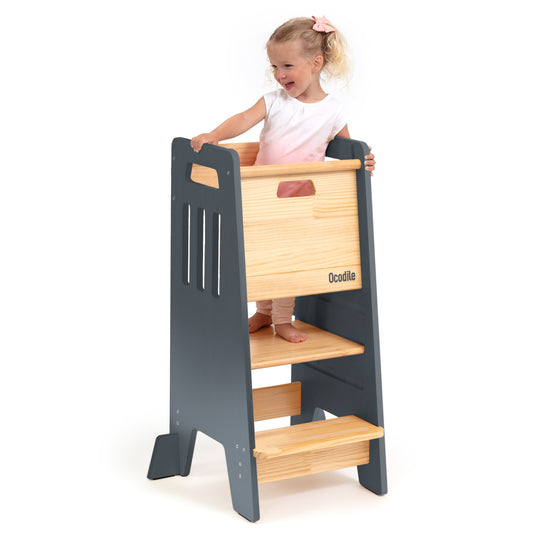
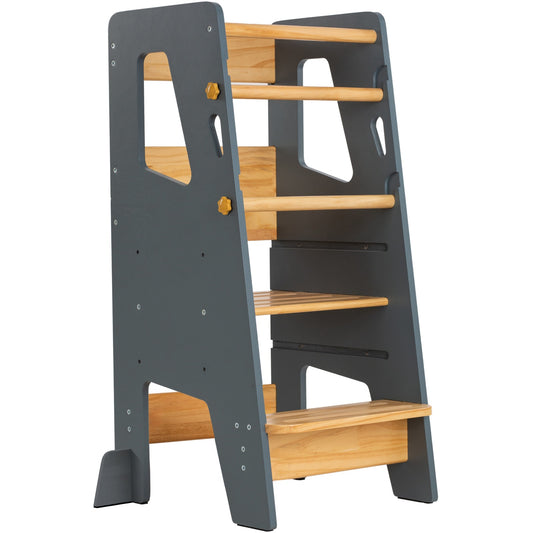
For a child who needs access to sinks, toilets, beds, and kitchen counters, the 2-Step Wooden Stool for Toddlers (Step Stool for Children Ages 2+) is described as supporting everyday independence for children aged 2 and above.
Parent rule: Choose wood for longevity and visual fit. Judge safety by geometry and construction, not by the word “wooden” on the label.
If finish safety matters in your home, review guidance on non-toxic wood finishes. A good finish supports maintenance, but it can't compensate for loose joints or poor proportions.
The Three Safety Features That Actually Matter on a Step Stool
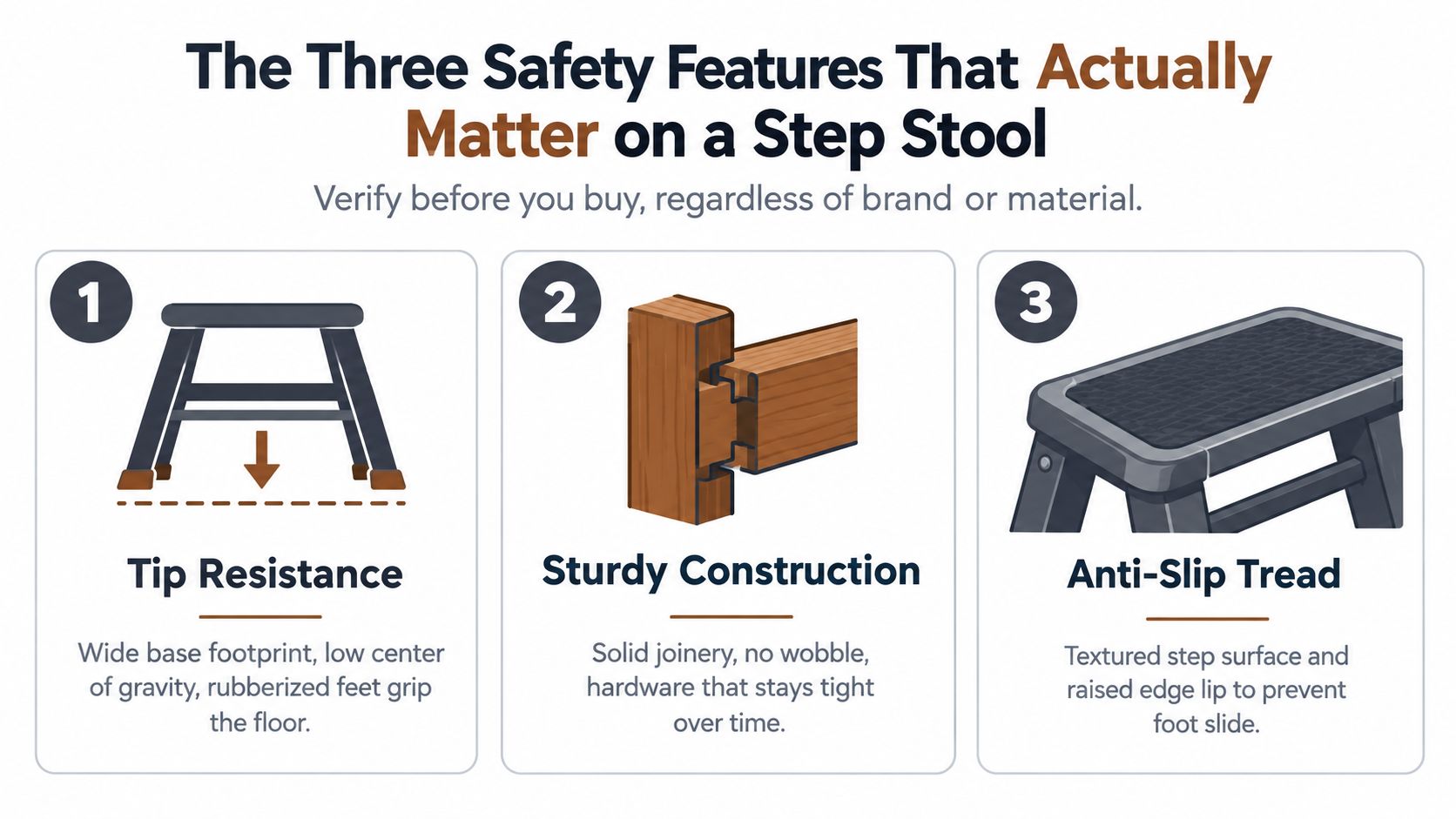
Check these features before you buy, regardless of brand or material.
- Tip resistance. Look for a wide footprint, a low center of gravity, and feet that grip the floor. Push gently from the front and side. The stool shouldn't rock, slide, or lift a foot. Children create dynamic side loads when they turn or reach, so static weight capacity isn't enough. ASTM work on children's step stools addresses durability, falls, finger entrapment, and tip-over hazards through structural and labeling requirements. Review the ASTM work item before treating a safety claim as meaningful.
- Stable geometry. The platform needs enough depth for a child to place the whole foot securely, with a top surface large enough for both feet when standing. A low step can improve balance, while a wider base resists overturning when a child reaches toward a sink or counter.
- No pinch or catch points. Run a finger around the edges and inspect every gap. Avoid sharp corners, exposed fasteners, V-shaped openings, and folding hinges that can trap fingers. Rounded edges and countersunk hardware are better choices.
A low piece of furniture, such as a Low-Profile Toddler Nightstand for Floor Beds, serves a different purpose, but its child-height access illustrates the same principle: design the environment around safe, reachable actions.
Choosing the Right Size and Height for Your Child and Home
A stool that fits beneath a bathroom sink can leave a child too low at the kitchen counter. Measure the child, the target surface, and the floor before choosing a size. Age is only a rough guide. Children of the same age can need different heights because their inseams and reach differ.
Compact single-step designs commonly measure around 14 to 18 inches wide and 6 to 11 inches high. Multi-step children's stools can reach roughly 27 to 35 inches overall, depending on the intended age and use. These dimensional ranges show why one height cannot suit every room.
| Child Height | Inseam (approx.) | Target Surface | Recommended Stool Height |
|---|---|---|---|
| Short toddler | Measure directly | Low sink or toilet | Low platform that allows a full-foot stance |
| Taller toddler | Measure directly | Bathroom counter | Height that closes the reach gap without over-elevating |
| Preschool child | Measure directly | Kitchen counter | Stable platform matched to the actual counter height |
| Growing child | Recheck regularly | Mixed household surfaces | Adjustable or appropriately sized fixed stool |
Measure from the floor to the point your child needs to reach. Then account for standing height and arm reach. Both feet should rest flat on the stool, with enough room to stand without crowding the edge. Recheck the fit as your child grows and as the stool moves between rooms. Use this step stool height guide to match the stool to each surface.
How a Step Stool Fits Into a Montessori-Inspired Home
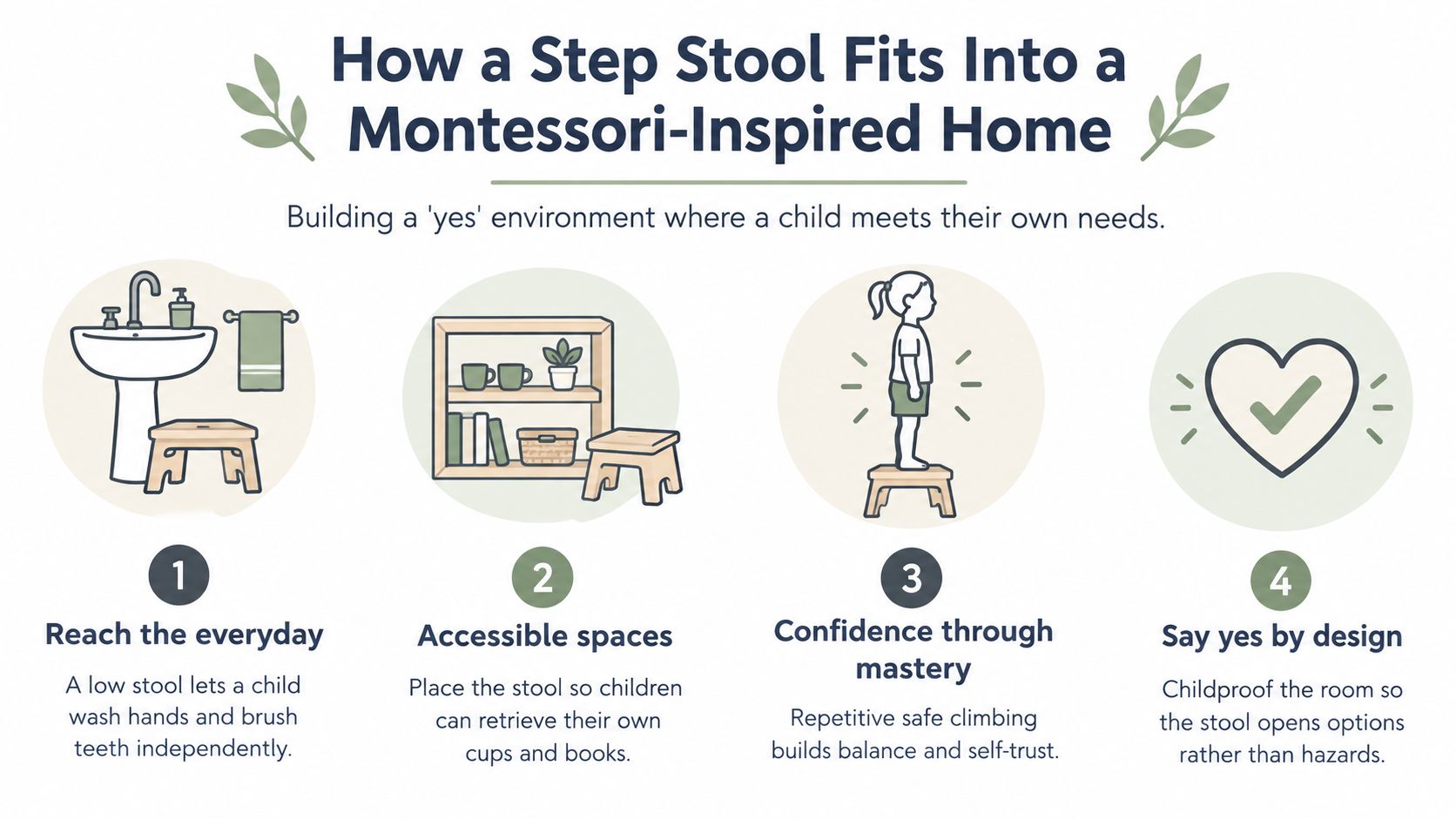
A wooden stool can support a “yes” environment, where children participate in ordinary tasks instead of waiting for an adult. Place it at the bathroom sink for handwashing, beside the kitchen work area for supervised food preparation, or near a low hook for dressing.
Independence doesn't mean unsupervised access to hazards. Keep hot surfaces, knives, cords, and cleaning products out of reach, and supervise new routines until your child can step up, stand, turn, and step down without rushing.
The stool should be stable enough to drag carefully, not so awkward that a toddler tries to carry it. A non-slip base and a tread that fits the child's stride matter more than decorative details. For practical kitchen placement ideas, see this guide to a wooden step stool for the kitchen.
Certifications and Safety Standards Worth Verifying
A vague statement such as “meets safety standards” isn't enough. Ask which standard applies, what was tested, and whether the seller can provide a certificate or recent test report.
Useful checks include:
- Named mechanical testing: Look for documentation covering static load, racking, stability, and tip resistance. The ASTM work item for children's step stools specifically addresses structural integrity, performance, and labeling.
- Clear warnings: The product should identify age guidance, weight limits, assembly requirements, and foreseeable hazards.
- Finish documentation: Ask whether paints, stains, and sealants have been evaluated for child use.
- Traceable paperwork: A seller should identify the testing body and product version, not just display a generic badge.

Safety guidance distinguishes between a strong stool and a stable stool. Independent evaluations commonly include front and rear stability tests because children shift their weight while climbing, turning, and reaching.
Wooden Step Stools Compared With Plastic and Folding Designs
Wood is usually the better fit for a permanent bathroom or kitchen station because it offers a furniture-like appearance, repairable surfaces, and a substantial feel. Plastic is convenient to clean, but parents should inspect stress areas, slick treads, and any cracking. Folding models solve a storage problem, yet hinges create possible pinch points and add another failure area.
| Feature | Wooden Step Stool | Plastic Step Stool | Folding Step Stool |
|---|---|---|---|
| Daily placement | Strong fit for kitchens and bathrooms | Convenient but may look temporary | Useful when storage is limited |
| Main safety concern | Joint quality and tip resistance | Cracks, sliding, and slick surfaces | Hinges, gaps, and accidental folding |
| Maintenance | Inspect joints, edges, and finish | Wipe and inspect for damage | Inspect hinges, locks, and moving parts |
| Best reason to choose it | Durability and repairability | Light cleaning and easy handling | Portability and compact storage |
A Japanese consumer safety notice advises families with infants to choose stools without moving parts or fittings and warns about finger entrapment in folding designs. Read the safety notice. The practical answer is simple: choose fixed wood for daily independence, folding only when portability is the priority, and never assume a lightweight design is safer because it's easier to move.
Care, Inspection, and the Final Buying Checklist
Treat this stool as safety equipment, not décor. Each season, tighten the hardware and inspect joints where the tread meets the legs. Check for splinters, cracks, wobble, peeling finish, and enlarged gaps. A structural crack calls for replacement, not cosmetic repair.
Clean wood with a soft cloth and maintain a child-appropriate finish. Keep the surface dry and remove buildup that could reduce grip. Independent guidance for children's stools emphasizes a wide base, anti-slip feet, slip-resistant treads, and regular checks for loose screws or cracks.
Before buying, verify:
- Stable base: Every contact point sits flat and resists a gentle side push.
- Secure tread: The surface grips shoes and allows a full-foot stance.
- Smooth construction: Rounded edges, recessed fasteners, and gaps too narrow for fingers reduce injury risks.
- Suitable dimensions: Height and width fit the child and the intended sink or counter.
- Documented testing: The seller names the applicable standard and explains the supporting test evidence.
Wood improves durability and appearance, but it does not decide safety. Geometry, anti-slip performance, pinch-point control, and credible testing matter more than material alone.
Ocodile offers Montessori-inspired children's furniture, including wooden step stools for everyday access and independence. For a step stool wooden option in a bathroom or kitchen, visit Ocodile and compare its product details with this checklist.