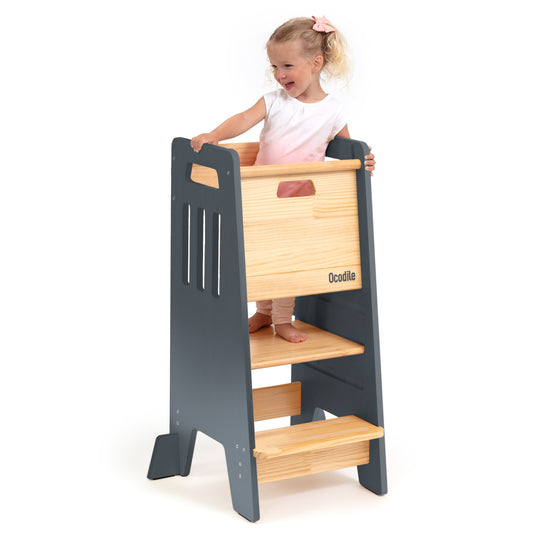


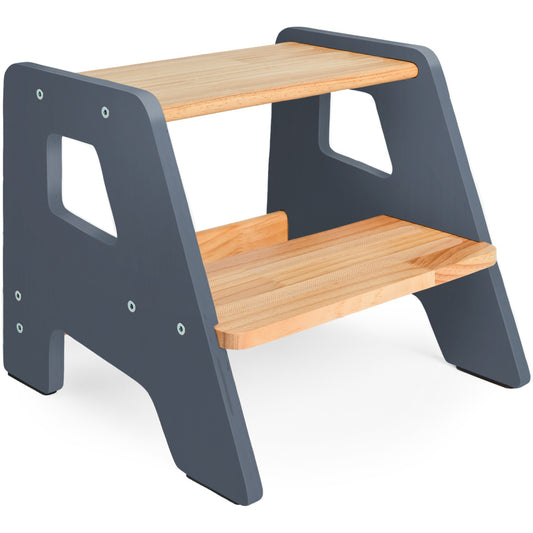


Toddler Chef Hat: A Guide to Safety, Sizing, and Fun
Your toddler is standing on tiptoes, reaching for the mixing bowl, and insisting, “I help.” You want to say yes because that eagerness is exactly what makes family kitchen time so sweet. You also know that cooking with a very young child can get messy fast. Hair falls forward, sleeves drag through batter, and a simple snack turns into a full cleanup.
That's where a toddler chef hat starts to make more sense.
Not as a costume. Not as a prop for photos. As a small, useful tool that helps a child step into kitchen work with a little more structure, comfort, and pride. When a toddler puts on a hat before washing strawberries or stirring muffin batter, the moment changes. The activity feels real. The routine becomes clearer. Your child gets a visible cue that this is a special kind of participation with rules, jobs, and care.
Your Guide to the Perfect Toddler Chef Hat
A toddler chef hat often enters the picture because a child wants to copy what the grown-ups are doing. They see you cook, bake, stir, wash produce, or crack eggs, and they want in. Maybe your child already has a wooden spoon they carry around like treasure. Maybe they pull a chair to the counter every time you start dinner.
The hat can help turn that interest into a safer routine.
Instead of treating kitchen play as random dress-up, you can use a toddler chef hat as part of a practical setup. Hat on. Hands washed. Hair tucked back. Small job assigned. That sequence helps many toddlers understand what comes next and what their role is.
A simple shift: when a child dresses for a task, they often take the task more seriously.
That's why parents who care about Montessori-style independence often like this little accessory more than they expected. It supports real participation. It also gives you one more gentle way to set boundaries. If the hat is on, we're cooking carefully. If we're done, the hat comes off and goes in its spot.
A good hat should do three things well. It should help contain hair, fit comfortably, and hold up to repeat use. Once you look at it through that lens, choosing one becomes much easier.
More Than a Costume: The Functional Purpose of a Toddler Chef Hat
Your toddler climbs onto the helper stool, reaches for the mixing bowl, and tips their head forward to watch closely. If loose hair falls into batter or across their eyes, that small distraction can turn a simple kitchen job into a messy and less safe one.
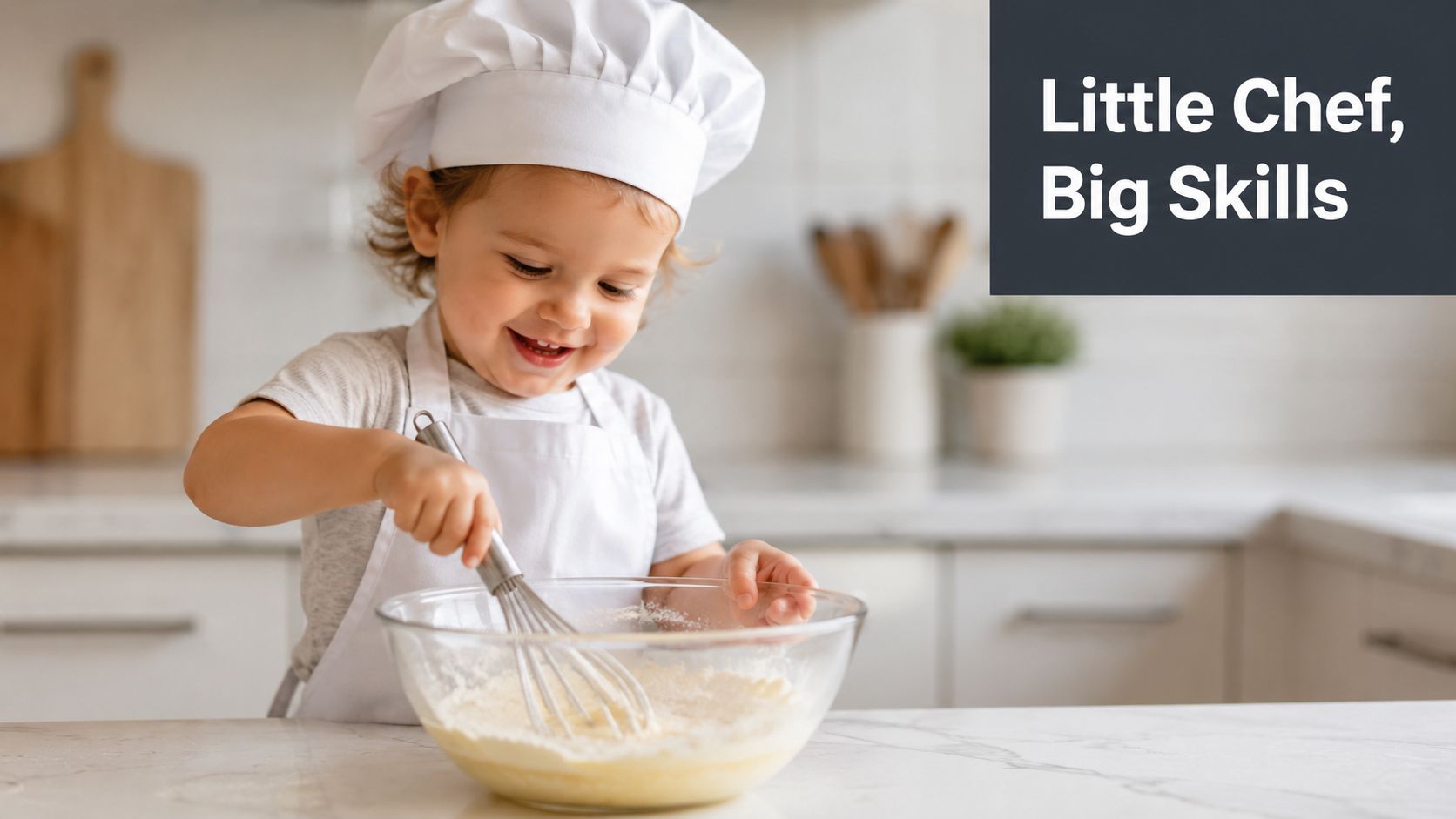
A toddler chef hat helps solve that problem. It keeps hair back, reduces fidgeting, and gives a young child a clear signal that kitchen time has started.
Hair control supports safer kitchen work
Toddlers learn with their whole bodies. They look down into bowls, turn quickly toward your voice, and often touch their face without noticing. A hat helps keep hair from dropping into food or brushing into their eyes while they work.
That matters for hygiene, but it also matters for focus.
If a child keeps stopping to push hair away, their attention leaves the task in front of them. A well-fitted hat removes one more small obstacle. It works like tying back shoelaces before a run. The goal is not style first. The goal is fewer interruptions and safer movement.
For families building good habits, pairing the hat with handwashing and close supervision makes sense. This guide to kitchen safety for toddlers fits well with that routine.
The hat gives toddlers a job they can understand
Toddlers do well with concrete signals. A chef hat is one of those signals.
When your child puts it on, the message is simple. We are here to do kitchen work carefully. That can help a child shift from random play into purposeful participation, which is a big part of Montessori-style independence. The clothing matches the responsibility.
You may notice that your child listens differently once there is a clear routine attached to the hat. Put it on. Wash hands. Take one small job. Finish and clean up. That order helps because toddlers are still building their internal sense of sequence. External cues do some of that work for them.
A hat will not make a child safer on its own. It supports the habits that do.
It introduces respect for kitchen standards
Children often enjoy tools more when they understand that the tools have a purpose. A chef hat is a simple way to show that cooks prepare themselves before they prepare food. That idea can grow into other useful lessons, like using a child-safe knife properly, keeping sleeves away from spills, and standing still while stirring.
If you are unsure how hat sizing relates to comfort, accurate hat measurements can help you compare general head-size references before you buy or sew.
The nice part is that none of this has to feel strict. For a toddler, the hat can still feel playful. For you, it can serve as a practical tool that supports hygiene, visibility, and a calmer kitchen routine. That is what makes it more than a costume.
Finding the Perfect Fit A Guide to Safe Sizing and Materials
A cute hat that slides over your child's eyes or pinches their forehead won't get used for long. Fit matters more than style.
Start with fit, not color
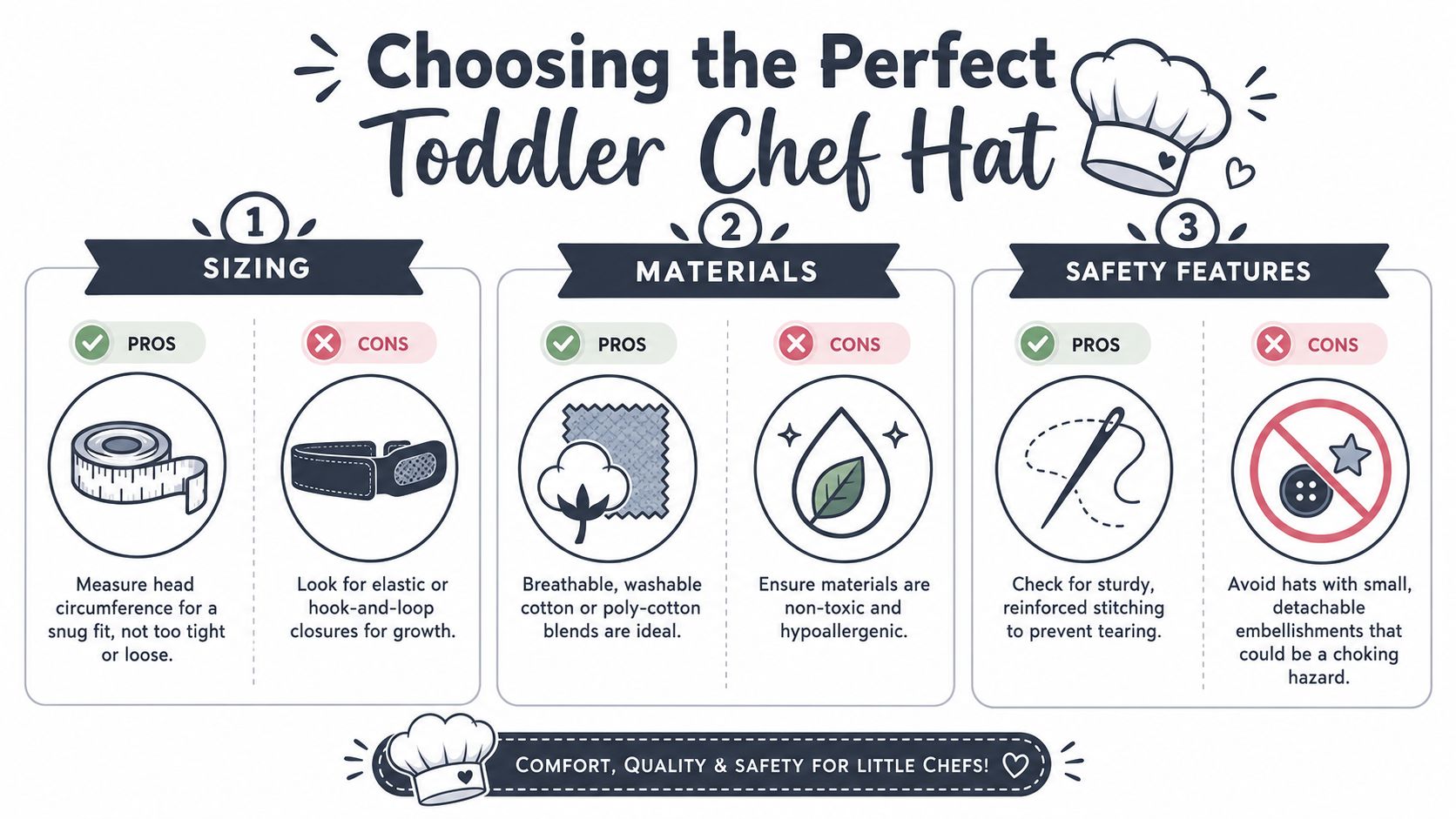
For ages 1 to 3, a safe toddler chef hat should have adjustable fastenings like Velcro or ties to fit typical head circumferences from 46 cm to 50 cm, and that adjustability helps prevent slipping or discomfort during active play, based on this adjustable chef hat tutorial.
That's the detail many product listings skip.
A toddler moves constantly. They squat, look up, turn quickly, and lean over bowls. If the hat can't adjust, it may fall off, twist sideways, or feel so snug that your child yanks it off within minutes. If you want a general measuring reference before buying or sewing, these accurate hat measurements can help you compare your child's head measurement to standard hat sizing language.
A quick fit check should answer three questions:
| What to check | What you want |
|---|---|
| Forehead feel | Snug, but no deep marks after wear |
| Movement | Hat stays in place when your child turns and bends |
| Coverage | Hairline and loose strands are contained |
Choose materials with everyday use in mind
Parents usually focus on appearance first. I'd flip that.
Look for materials that feel breathable, washable, and sturdy enough for repeated use. In practice, many families prefer cotton or a cotton blend because it tends to feel softer against the skin and is easier to toss in the wash after flour, yogurt, or frosting gets involved. Some hats use stiffer fabric to help the crown keep its shape, while others lean floppy and lightweight.
When comparing materials, think through the actual setting where your child will wear it:
- Warm kitchen means breathability matters.
- Frequent spills mean washability matters.
- Busy toddler movement means seams and closures matter.
- Sensitive skin means texture matters.
Practical rule: if a hat feels scratchy in your hand, your toddler probably won't tolerate it for long.
The same goes for decorations. Skip hats with small detachable embellishments. In photos they may look charming. In real life they can create unnecessary worry.
Safety details parents often overlook
A good toddler chef hat should also be easy for a child to accept. That means no heavy trim, no stiff inner edge rubbing the forehead, and no closure that catches hair every time you remove it.
If you're pairing the hat with an apron, it helps to think of the two items as a set. A lightweight hat works best when the rest of the outfit is simple and comfortable. If you're choosing both at once, these ideas for kids aprons for cooking can help you build a practical setup instead of a dress-up one.
Parents often ask whether one hat can last through a whole stage. It can, if the closure adjusts easily and the fabric holds its shape after washing. That's usually a better choice than a rigid one-size hat that only fits well for a short season.
Create Your Own A Simple DIY Toddler Chef Hat Pattern
Your toddler pulls a stool to the counter, washes hands, and reaches for their kitchen gear. A chef hat that fits can help that moment feel real. It keeps hair back, stays comfortable through movement, and gives a young helper one more piece of the routine they can manage on their own.
Keep the project simple
A good DIY toddler chef hat has two jobs. It should keep hair contained, and it should feel easy enough that your child forgets they are wearing it.
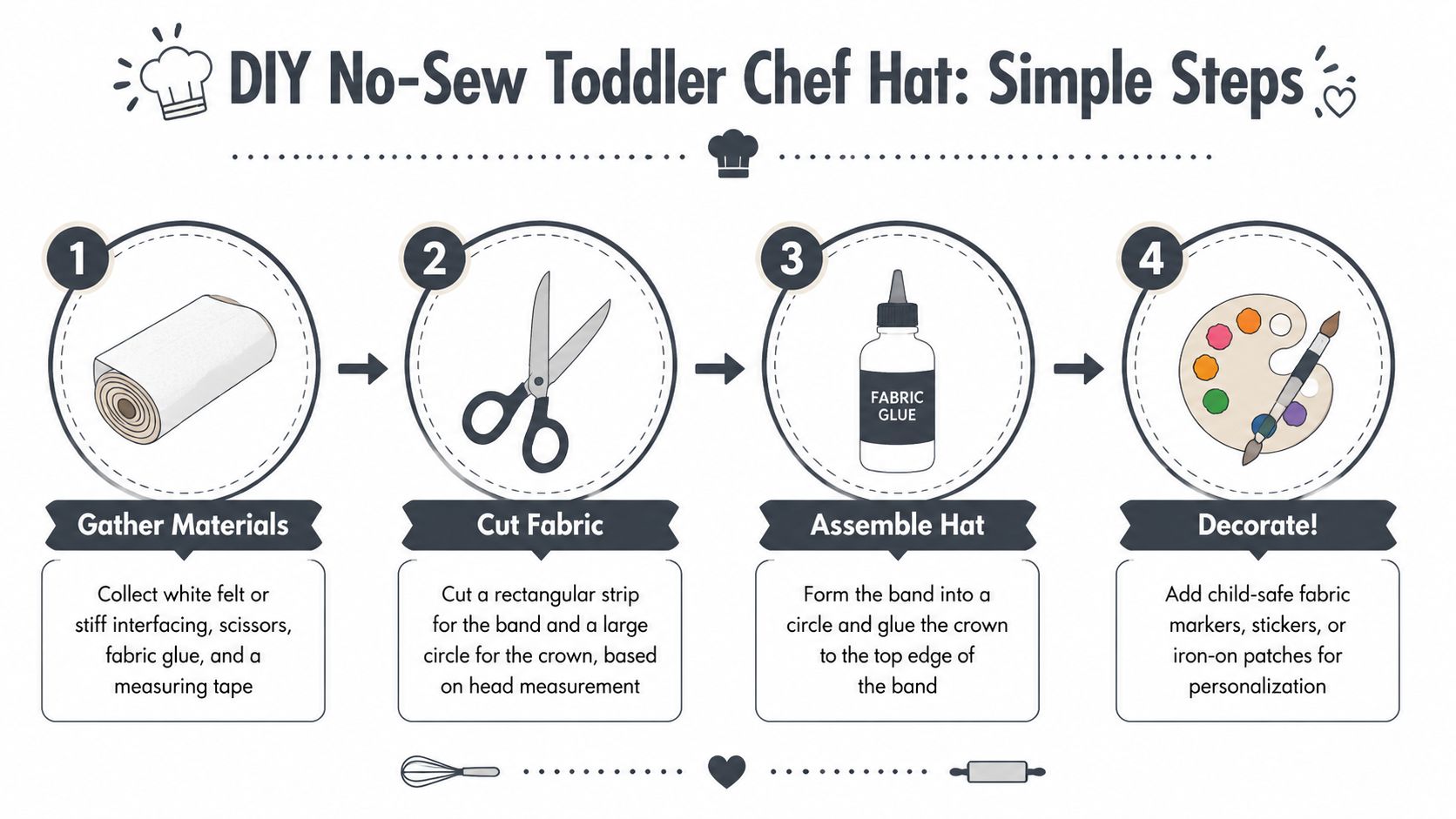
The easiest pattern uses two main parts:
- The band, which sits around the head
- The crown, which gathers into the soft puff at the top
That structure works a lot like an apron waistband and skirt. One part needs a steady fit. The other part needs room to move. If you are building a full child-friendly cooking setup, this guide to getting kiddos involved in the kitchen can help you connect the hat to real kitchen participation instead of dress-up play.
If you want a broader overview of how fabric pieces come together in apparel projects, Banger's guide to cut and sew is a useful background read.
A beginner-friendly approach
Start with your child's head measurement where the band will rest, usually just above the eyebrows and ears. Then add a little overlap so the hat can adjust as your toddler grows or if their hairstyle changes from one day to the next.
For the crown, cut a larger piece than the band so you have enough fabric to gather. You do not need exact professional proportions for a home version. You do need enough fullness for hair coverage and enough softness that the hat does not sit like a stiff cylinder on a small head.
Here is a simple build order:
- Measure the head and write it down before cutting anything.
- Cut the band long enough for a soft closure or adjustable overlap.
- Cut the crown larger than the band so it can gather comfortably.
- Attach the crown to the band with stitching or a secure fabric-safe method.
- Try it on before decorating to check that it stays in place without pressing on the forehead.
What matters most while making it
Toddlers are honest testers. If a seam scratches, they will tug at it. If the band slips into their eyes, they will pull the whole hat off.
That is why the small practical details matter more than fancy finishing.
- Choose breathable fabric such as lightweight cotton, especially for warm kitchens.
- Use an adjustable closure so the hat lasts longer and feels easier to put on.
- Keep the inner edge soft because the forehead is often the first place toddlers notice irritation.
- Skip bulky decorations that add weight, catch on things, or make washing harder.
- Make cleanup easy since flour, batter, and fruit stains are part of the job.
A plain hat often works best. If your child wants to make it their own, a stitched name or simple fabric marker design adds personality without creating extra fuss.
Perfection is not the goal here. A safe, washable, comfortable hat gives your toddler something better than a photo prop. It gives them a clear signal that they have a real role in the kitchen.
Inspiring Your Little Cook Fun and Safe Kitchen Activities
Once the hat becomes part of your routine, it can mark the start of real participation. That's where the fun begins.
Small kitchen jobs feel big to a toddler
A toddler doesn't need a complicated recipe to feel involved. They need a manageable task that has a clear beginning and end.
One child might wear their toddler chef hat to wash cucumbers in a bowl of water. Another might stand at the counter and tear lettuce for salad while you handle the knife work. A very eager helper might stir dry muffin ingredients while you steady the bowl.
These jobs may seem tiny to an adult. To a toddler, they're meaningful.
Here are a few strong starter activities:
- Washing produce with a colander and cool water
- Tearing herbs or lettuce into a large bowl
- Stirring cold ingredients like yogurt, oats, or pancake mix
- Sprinkling toppings such as cheese or cinnamon
- Transferring ingredients from one bowl to another with a spoon
Use the hat as part of the routine
The hat works best when it isn't random. Keep it in the same place. Bring it out at the same point in the process. Let your child help put it away when the task ends.
That routine can sound very simple:
“First we put on your chef hat. Then we wash hands. Then you get your kitchen job.”
Toddlers thrive on those repeated patterns. They learn what kitchen participation looks like, and they begin to anticipate each step with confidence.
If you want more ideas for making everyday cooking feel collaborative, this collection on kiddos in the kitchen offers helpful inspiration.
Match the task to the child, not the other way around
Some toddlers love sensory jobs like mixing and rinsing. Others prefer neat, repetitive tasks like placing muffin liners or moving cut fruit into a serving bowl. Pay attention to what your child enjoys and build from there.
A useful way to choose tasks is to think in categories:
| Type of task | Good fit for toddlers who like |
|---|---|
| Water tasks | Splashing, rinsing, washing |
| Mixing tasks | Stirring, scooping, combining |
| Assembly tasks | Sprinkling, placing, arranging |
The chef hat helps tie all of these together. It tells your child, “This isn't just playtime. This is kitchen work you can do.”
That sense of purpose is often what keeps toddlers engaged longer than you'd expect.
Easy Care for a Well-Loved Kitchen Accessory
A toddler chef hat will collect flour, applesauce, frosting, and probably a few mystery smudges. Easy care matters because kitchen accessories only stay useful if you can clean them without much fuss.
Daily cleanup habits
If the hat is fabric, shake out crumbs as soon as you're done cooking. Let wet spots dry rather than tossing the hat into a pile where food residue can set. If there's batter or sauce on the band, a quick rinse or spot clean right away usually saves more work later.
Keep one small rule in place at home. Kitchen gear goes back to one basket, hook, or drawer after it's clean. That makes the hat easy to find next time and helps toddlers take part in cleanup.
Washing without ruining the shape
Always check the care label first if you bought the hat ready-made. If you made it yourself, think about the fabric and closure before washing.
A simple routine often works well:
- For washable fabric hats use a gentle wash approach and reshape the crown while it's damp.
- For light surface messes wipe the band and spot clean instead of washing the whole hat.
- For hats with stiffer structure avoid rough handling that can crush the crown.
Food stains are easier to remove when you treat them the same day.
If the hat starts looking limp, smoothing the band by hand and letting it air dry flat or over a rounded form can help it look neat again. A toddler won't mind a slightly rumpled chef hat, but a comfortable, clean one is much more likely to become part of your regular kitchen rhythm.
The Perfect Gift for Budding Chefs
Your toddler pulls a stool to the counter, waits for your cue, and wants a real job. A chef hat can turn that moment into a clear routine. It tells a young child, “Now I'm getting ready to cook,” much like tying an apron or washing hands before starting.
That is why this gift often lasts longer than a novelty toy. It supports participation, signals kitchen time, and helps toddlers step into a role with more focus and pride. For families who follow Montessori-style habits, that kind of role marker can be surprisingly useful. It gives a child one more concrete clue about what comes next and how to join in safely.
Interest in chef hats has grown well beyond costume use. The global chef hat market was valued at $430 million in 2024 and is projected to reach $690 million by 2033, according to Market Intelo's chef hat market report. Analysts in that report also note parental interest in Montessori-style kitchen activities as one factor shaping the category.
Why it works so well as a gift
A good toddler chef hat gift says, “You belong here, with supervision, and with a real task.”
That message matters to little kids. Toddlers learn through repetition and visible routines. A hat can work like a uniform for a very small job. It does not make the kitchen safer by itself, of course, but it can support safer habits when it is part of a consistent setup: handwashing first, hat on, simple task, close adult supervision.
This kind of gift fits especially well for:
- Birthdays when you want something useful that invites interaction
- Holidays when families appreciate gifts tied to shared activities
- Grandparent giving when the goal is time together, not more clutter
- Childcare or preschool settings where routine and role play often overlap with practical life skills
Build a little chef basket
A chef hat becomes even more useful when the rest of the gift supports real participation. Keep the basket simple. The best add-ons help a toddler do one or two safe jobs well instead of surrounding them with tools they cannot use yet.
| Item | Why it pairs well |
|---|---|
| Child-size apron | Helps contain mess and reinforces the cooking routine |
| Small mixing bowl | Gives the child a dedicated workspace that feels manageable |
| Wooden spoon or silicone spatula | Easy to grip and suitable for supervised stirring |
| Picture recipe cards | Helps toddlers follow steps in a concrete, visual way |
If you want a personalized look, some families like to browse embroidered hats for name ideas and simple design inspiration.
The best version of this gift gets used on an ordinary weekday. Your child rinses berries, tears lettuce, or stirs muffin batter while you stay close and guide each step. That is when a toddler chef hat stops being a cute accessory and starts becoming part of a safe, happy kitchen routine.
If you're building a safer, more welcoming kitchen setup for a young helper, Ocodile offers child-focused products designed to support independence in everyday family routines. Their approach fits beautifully with the kind of practical, supervised kitchen participation that helps toddlers feel capable, included, and secure.