



Kids Aprons for Cooking: A Complete Guide for Parents
Your child is already at the counter. One hand is reaching for the flour, the other is pointing at the whisk, and you're doing fast mental math about cleanup, spills, and whether this is a sweet family moment or a shirt-ruining mistake.
That's where a good apron changes the mood.
As a Montessori-minded parent, I've come to see kids aprons for cooking as more than cute accessories. They help a child step into a real role. They signal, “I belong here. I have a job to do.” And when the apron fits, feels comfortable, and goes on without a struggle, it supports the kind of independence parents want in the kitchen: capable help, not chaotic “help.”
Why an Apron Is More Than Just a Mess Shield
A child who wants to cook usually wants more than a task. They want inclusion. They want to stand beside you, stir the batter, carry the towel, and feel trusted.
An apron helps mark that transition. The moment it goes on, the kitchen activity becomes a job with a beginning and an end. That simple ritual matters. It often helps children settle into a focused, cooperative frame of mind.
Consumer survey figures shared in a retail-facing article found that 85% of parents reported greater cooking excitement when aprons were used, and 92% said aprons with pockets helped keep kids focused on the task at hand in kitchen activities, according to this discussion of kids' aprons and kitchen confidence. Those numbers aren't from a primary academic study, but they match what many parents notice at home.
The apron as a work uniform
In Montessori homes, “work” doesn't mean pressure. It means purposeful activity. An apron gives that feeling shape.
A toddler who resists getting dressed may happily put on a cooking apron because it feels different from ordinary clothes. A preschooler who usually drifts away may stay close when they have a pocket for a spoon or small towel. An older child often takes the whole activity more seriously when they feel properly equipped.
A well-chosen apron tells a child, “You're not watching. You're participating.”
The practical side matters too. Aprons exist to protect the front of the body and clothing from dirt, spills, and splashes. That basic purpose makes them a natural fit for flour, frosting, sauce, and all the kitchen messes children seem magnetically drawn to.
Why parents relax when the child is prepared
Many parents don't mind baking with children. They mind the friction around it. Wet sleeves. Shirt changes. Searching for a towel. Pulling a child back from the counter because fabric is catching or bunching.
An apron lowers some of that stress before cooking even starts. It won't make every kitchen moment tidy, but it gives structure. And structure makes it easier to say yes.
If you're building better routines around shared cooking time, this broader look at kitchen safety for toddlers is a useful companion. Safety and independence work best together, not separately.
Choosing the Right Apron Material
Most parents first notice color or print. I look at fabric first.
That's because the material decides how the apron feels after ten minutes at the counter, how it behaves after tomato sauce splashes on it, and whether your child will want to wear it again tomorrow.
Apron-making guidance for children's garments often favors natural fibers such as cotton-linen blends, along with construction details like bias tape edging to reduce fraying and improve durability, as described in this apron fabric and construction guide.

Cotton for everyday family cooking
Cotton is the easiest place to start. It's soft, breathable, familiar on the skin, and usually easy to wash. For children who are sensitive to scratchy textures or stiff seams, cotton is often the least complicated option.
Its downside is simple. Cotton absorbs spills. If your child is helping with watery mixtures, fruit juice, or lots of hand wiping, the apron may feel damp sooner than you'd like.
Cotton works especially well for:
- Short kitchen sessions like stirring muffin batter or tearing herbs
- Sensory-sensitive children who dislike stiff fabrics
- Families who wash aprons often and want a no-fuss fabric
Linen blends for durability and comfort
Linen blends, especially cotton-linen blends, often strike the best balance. They feel breathable like other natural fibers, but usually hold their shape nicely and stand up well to repeated wear. Many parents also like the way they drape without feeling heavy.
They can wrinkle more easily, and they may feel a little less soft right out of the package than brushed cotton. But for a hard-working kitchen apron, that isn't usually a dealbreaker.
If you want a deeper fabric primer before buying or sewing one, this guide to linen and cotton blends gives helpful context on how these materials behave in real use.
Practical rule: If you want one apron for frequent home use, a breathable cotton-rich woven fabric is usually the safest choice.
Waterproof fabrics for very messy jobs
Some parents love wipe-clean aprons. I understand why. If your child is mixing yogurt, washing berries, or pouring with great confidence and mixed accuracy, a waterproof layer can feel like a gift.
Still, waterproof fabrics come with tradeoffs:
- Less breathability can make them uncomfortable during longer baking sessions
- Stiffer structure may restrict natural movement
- A different hand-feel may bother children who prefer soft clothing
For occasional high-mess tasks, they're useful. For regular hands-on cooking, many children prefer something lighter and more breathable.
Construction details that matter more than prints
Fabric choice is only part of the story. Look closely at how the apron is finished.
A strong kids cooking apron should have:
- Smooth edge finishing so necklines and arm areas don't irritate skin
- Reinforced pocket stitching because pockets get tugged constantly
- Wash-friendly seams that won't twist or fray after repeated laundering
Decorative extras can be charming, but they shouldn't add bulk across the chest or waist. Children lean against counters, twist to reach bowls, and wipe sticky fingers in impulsive little movements. The apron has to move with them.
The Perfect Fit Your Child's Cooking Apron
Fit is the part most families underestimate.
Parents often ask whether an apron is suitable for a certain age. That's a useful starting point, but it's not enough. Kids aprons for cooking should fit the child's body and the task, not just the birthday range on a product page.
A retail example for older children shows how age-based sizing usually works: one common apron size for ages 8 to 12 measures about 24.75 inches long by 22 inches wide and uses 100% cotton, as noted in this overview of apron sizing and use. That gives us a real anchor point. But younger children vary so much in torso length and shoulder width that broad labels like “ages 3 to 12” often create more confusion than clarity.
Why fit changes safety
An oversized apron doesn't just look baggy. It can interfere with movement.
If the bib hangs too low, the child may have to tilt their head awkwardly to see the bowl. If the skirt reaches too far down the legs, it can bunch when they climb onto a stool or stand in a kitchen helper. If the apron wraps too far around the sides, extra fabric may catch on drawer pulls or edge against the counter.
Shorter and neater is often safer than bigger and “room to grow.”
A good fit supports three things at once:
- Clear visibility of hands and bowl
- Free arm movement for mixing, pouring, and wiping
- Stable footing when stepping up, turning, or climbing down
How to measure before you buy
You don't need tailoring skills. A tape measure and two minutes will do it.
Measure these three areas:
- Top chest to just above the knee for apron length
- Across the widest part of the torso for apron width
- Neck comfort area so the bib sits high enough without pulling
When checking the length, have your child stand naturally. If they'll use the apron while standing on a kitchen helper or step stool, test it in that position too. The apron should cover clothing without draping into the legs.
Kids Apron Sizing Guide
Use this chart as a practical starting point. It's a fit framework, not a rigid rule.
| Age Range | Child's Height (in) | Ideal Apron Length (in) | Ideal Apron Width (in) |
|---|---|---|---|
| 2 to 3 years | 33 to 38 | 16 to 18 | 12 to 14 |
| 3 to 5 years | 39 to 44 | 18 to 20 | 14 to 16 |
| 5 to 7 years | 45 to 50 | 20 to 22 | 16 to 18 |
| 7 to 9 years | 51 to 55 | 22 to 24 | 18 to 20 |
| 9 to 12 years | 56 to 60 | 24 to 24.75 | 20 to 22 |
This chart is built to reflect typical age-based apron marketing and the verified 8 to 12 size reference above. In practice, height and body shape matter more than age alone.
What “good fit” looks like in real life
A properly fitted apron should:
- End above the lower leg swing zone so the child can step up and down freely
- Cover the front of the shirt well without wrapping too far behind the sides
- Sit flat at the chest instead of sagging away from the body
- Allow front tying or easy adjustment so you're not constantly retying the back
One detail I especially like is a neck strap that can shorten as the child grows. That gives you more useful wear than a fixed bib height.
Fit checks parents often skip
Try these quick checks once the apron is on:
-
Reach test
Ask your child to reach forward as if stirring. The apron shouldn't pull at the neck. -
Turn test
Have them turn side to side. The waist shouldn't twist into a bunch. -
Step-up test
If they use a tower or stool, let them step up and down. The apron shouldn't catch at the knees or under the feet. -
Pocket test
If there's a pocket, place a small spoon or cloth inside. It shouldn't drag the whole apron downward.
The best apron doesn't just “fit for now.” It lets a child move confidently enough to forget they're wearing it.
Essential Fastenings and Safety Features
The small hardware on an apron often decides whether a child can use it independently or needs help every single time.
That matters more than many parents expect. If the fastening is fussy, the apron becomes adult-managed gear. If it's simple and secure, it becomes part of the child's routine.

Which fastening suits which child
Toddlers and young preschoolers usually do best with the least complicated options. Older children can manage more adjustability if it gives a better fit.
Here's how I think about common choices:
-
Velcro closures
Easy for small hands. Quick to put on and remove. Best for short, supervised use if the closure is soft and well-placed. -
Plastic side clips
Useful when a child likes doing things alone and can manage a simple snap motion. They can be practical, though some children find them fiddly. -
Traditional waist ties
Flexible and familiar. Better for children who can stand still long enough to be tied or who can learn a front tie over time. -
D-ring neck adjustment
Great for dialing in bib height. Better suited to older children or parent-adjust-once use.
Safety details worth checking
Some apron features look minor on a product page but matter every day in the kitchen.
Look for:
- No excessively long ties that swing, drag, or wrap awkwardly
- A neck opening that sits comfortably without slipping off the shoulders
- Low-bulk seams and trims so nothing rubs while the child leans at the counter
- Pockets stitched securely if the apron has them
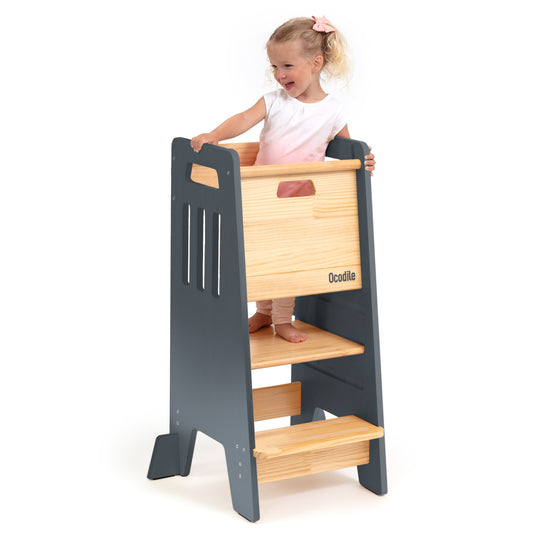
If your child cooks while standing at counter height, these details become even more important. Movement is different when children are climbing in, turning, and shifting weight, especially on a helper platform. This practical look at a kitchen helper learning tower helps show why clothing and equipment need to work together.
If you have to keep adjusting the apron, it isn't really supporting independence.
Pockets are functional, not just cute
Pockets often get marketed as a charming extra, but they can support focus. A child can tuck in a small towel, keep a recipe card, or carry a measuring spoon from table to counter.
The key is proportion. A giant pocket across the entire front can add bulk and sag. A modest, well-stitched pocket is usually more useful.
For younger children, I like pockets best when they hold soft, light items. For older children, a pocket can help organize the flow of a task.
Fostering True Kitchen Independence
An apron works best when it's part of a prepared environment.
In a Montessori-style kitchen routine, the goal isn't to entertain a child with cooking. It's to let them participate in real family life with tools that fit their body, abilities, and current stage of coordination.

Expert guidance on children's cooking development maps 32 cooking skills across five age bands and places higher-risk tools such as peelers and can openers in the 9+ range because of safety considerations, according to this research article on age-appropriate cooking skills. That's a helpful reminder that an apron isn't protective gear for dangerous kitchen work. It's support for safe participation in age-appropriate tasks.
What younger children can do comfortably
Children don't need sharp tools to be meaningfully involved. They need reachable work, steady footing, and clothing that doesn't get in the way.
For younger helpers, useful kitchen jobs often include:
- Washing produce at a low basin or with close supervision
- Carrying ingredients from table to counter
- Tearing lettuce or herbs for a salad
- Stirring dry ingredients in a stable bowl
- Brushing dough or pastry with a soft brush
These tasks ask for short bursts of attention and lots of body movement. A lightweight apron with easy on-off access works better than anything stiff or overly long.
How the apron and environment work together
A child standing on secure footing at counter height can do much more than a child stretching from floor level. That's why clothing fit and workspace design belong in the same conversation.
An apron should let the child:
- Reach the bowl without the bib bunching
- Turn for a towel without catching side fabric
- Lean slightly forward to pour or stir
- Step down safely when the task is finished
For families building this kind of setup, this collection of ideas about kiddos in the kitchen offers practical ways to make participation feel normal, not special-occasion only.
A simple recipe also helps. If you want an easy project that children can observe, assemble parts of, or help plate with supervision, these learn air fryer bagel methods ideas can work well because the steps are familiar and the results are motivating.
Match the task to the body
The research above places some measuring and grating-type activities in older age bands. That matters because these tasks require more precision and more stable shoulder and wrist control.
Older children often do well with:
- measuring flour or oats
- brushing oil or egg wash
- mixing batters with more resistance
- organizing ingredients before cooking starts
You can see the rhythm of child participation more clearly in action here:
Give the child a real task, a stable place to stand, and an apron that doesn't fight their movement. Independence grows from that combination.
A child who can move well usually behaves more calmly. They don't need constant repositioning. They can focus on the spoon, the bowl, the sequence, and the pleasure of contributing.
That's the deeper value of kids aprons for cooking. Not the print. Not the photo. The feeling of “I can do this.”
Apron Care Gifting and Sustainable Choices
A children's apron has a hard life. It catches berry juice, flour dust, chocolate smears, damp hands, and the occasional mysterious streak that nobody can identify. Good care keeps it usable and pleasant instead of permanently crusty by the sink.
Care that keeps the apron wearable
Start with simple habits:
- Shake out dry mess first so flour and crumbs don't turn gummy in the wash.
- Treat stains early by rinsing or pre-treating before they set.
- Close fastenings before washing so hooks, loops, and straps don't twist or snag.
- Air dry when possible if you want to preserve shape and reduce wear on seams.
Natural-fiber aprons usually become more comfortable over time if they're washed gently and not overheated. If the apron has pockets, check them before washing. Children store all sorts of kitchen treasures in them.
Gift it as an experience, not just an item
An apron makes a lovely gift, but it becomes much more memorable when paired with a use for it.
Consider pairing it with:
- A child-sized whisk or pastry brush for immediate hands-on use
- A handwritten recipe card with one simple family favorite
- A baking date coupon for one-on-one time in the kitchen
- A tea towel or small bowl that the child can claim as their own
The best apron gifts invite participation. They say, “You're part of what happens here.”
Sustainable choices that age well
If you want the apron to last beyond a short growth stage, choose quality over novelty. Breathable natural fabrics, reinforced seams, and adjustable closures tend to give better long-term value than overly themed designs that look tired after a few washes.
Sustainability also lives in the wider kitchen routine. If you're trying to make everyday family habits less wasteful, this guide on how to reduce single-use plastic in your kitchen pairs nicely with durable fabric choices and reusable cooking tools.
A well-made apron can be handed down, repurposed for art, or kept for messy sensory work long after the baking stage changes. That's a better outcome than disposable, flimsy gear that never feels good to wear in the first place.
If you're creating a safer, more independent kitchen setup for your child, Ocodile offers thoughtfully designed family products that help children participate in everyday routines with confidence. Their child-friendly furniture supports the kind of practical, hands-on home life that makes aprons, cooking, and shared family work feel natural.