


Toddler Time Out Chair: Safe Guide for Parents
Your toddler is standing in the kitchen, red-faced, throwing a toy after you said no. You're tired, your voice is getting sharper, and you can feel the moment tipping into a bigger battle than the original problem. That's usually when parents start searching for a toddler time out chair, not because they want to be harsh, but because they need a simple way to stop the spiral and get everyone calm again.
A good chair-based time-out is not a shame seat. Used well, it functions like a boring reset, a predictable place where a child can cool down without extra stimulation, lectures, or a power struggle. The furniture matters less than the way you use it, and for toddlers, especially the youngest ones, developmental fit matters just as much as discipline consistency.
When the Meltdown Hits and You Need a Reset
The meltdown often starts small. A block tower falls, a cup gets taken away, or you ask your child to leave the playground, and suddenly the whole room knows about it. Parents usually don't need a lecture in that moment, they need a plan that helps them stay steady when their child is already flooded with feeling.
A toddler time out chair works best when you treat it like a reset station, not a punishment corner. The chair gives the child a clear place to pause, and it gives you a clear script to follow when emotions are running high. That matters, because toddlers borrow calm from the adults around them more than they absorb explanations during the meltdown itself.
Practical rule: the calmer and more predictable the reset feels, the less likely it is to turn into a contest.
The point is not to “win” against your toddler. It's to interrupt the behavior, lower the stimulation, and create enough space for the next right move. That is why brief, calm separation is so often discussed in pediatric guidance, and why a chair can work when it stays simple, visible, and boring. The chair is one tool in a larger discipline routine, not a cure for every tantrum.
Defining the Toddler Time Out Chair
A toddler time out chair is a highly boring, low-stimulation seat placed in a safe, supervised spot. It functions as a reset chair, with the goal of lowering attention and excitement so the child's body has time to settle before the next step. Pediatric guidance keeps time-outs brief, calm, and low-stimulation rather than turning them into a long lecture or a dramatic event. The CDC frames time-out as a short removal from reinforcement, and evidence-based guidance commonly points to 1 minute per year of age for young children, with empirically based time-outs usually kept around 2 to 3 minutes for ages 2 to 8. For a 3-year-old, that typically means about 3 minutes (UWM guidance on time-out duration).

The chair works because it stays plain. No toys, no screens, no bargaining, no speeches. A child-development source also recommends requiring 30 continuous seconds of quiet before release, which helps the child finish cooling down instead of popping up the second the timer ends (KidsBrain on how time-out is supposed to work).
Why boring works better than cozy
If the spot feels exciting, interactive, or theatrical, the child may treat it like part of the game. If it feels frightening or isolating, the child may escalate. The chair sits in the middle, plain enough to interrupt the behavior, but safe enough not to add fear.
A time-out chair works best when the room does the work, not the furniture.
That is why consistency matters. A child learns the pattern, not the upholstery.
The design also matters more than many parents expect. For some toddlers, a small, steady seat in a quiet corner helps the body shift out of the “fight the limit” mode, the way a clear lane helps a child stop zigzagging at the edge of a pool. If the chair is too soft, too exciting, or placed near busy traffic, it starts pulling attention instead of reducing it. If it is stable, plain, and easy to supervise, it supports the reset instead of competing with it.
For children under 2, the bigger question is whether a chair is developmentally the right tool at all. A toddler who is still very early in language and self-regulation may experience the move to a special seat as a struggle for control rather than a calming pause. The child-development stages overview from Ocodile's age-by-age guide helps explain why the same setup can feel manageable for one child and confusing for another.
A good chair is simple to read at a glance. The child should know where it is, what it is for, and when it ends. That clarity is what keeps the chair from becoming a power struggle, especially when the goal is a calm reset rather than a stand-off.
Age Thresholds and Safety Considerations
The biggest mistake parents make is assuming a chair-based time-out fits every toddler the same way. For children under 2, the setup can backfire, because moving them to a special chair may turn the moment into a power struggle or an attention game. Pediatric guidance is more nuanced here, the CDC describes time-out for toddlers as a 2 to 5 minute brief reset in a safe location with no attention, while BabyCenter notes that for 12- to 24-month-olds, it's often better to keep the child where they are and use a brief calm-down period in place rather than moving them to a special chair (CDC time-out steps). That age gap is the content gap many parents feel in real life, because they are asking not just “does time-out work?” but “is a chair even the right tool yet?”
Understanding child development by age helps make the choice more realistic, because temperament and language level matter as much as chronological age. A child who can follow a simple routine may handle a chair-based reset more smoothly than a younger toddler who only experiences the move as a fight.

Safety comes first
The reset spot should be well lit, well ventilated, and free of sharp objects, chemicals, and anything climbable. It also needs to be close enough for an adult to monitor without hovering or lecturing. That combination keeps the intervention calm instead of confining.
If you wouldn't call the spot safe for quiet supervision, it isn't the right time-out location.
Many homemade setups go wrong. A chair tucked into a dark laundry room or isolated hallway may feel punitive, and a child can read that as rejection rather than a pause. A visible corner in a family room often works better than a hidden space.
Psychological and Behavioral Pros and Cons
The fear many parents carry is simple. They worry that time-out will damage attachment or create long-term emotional harm. The available evidence doesn't support that fear when time-out is used as part of a broader parenting approach. In a 2019 longitudinal study published in the Journal of Developmental & Behavioral Pediatrics, parental time-out use was not associated with long-term negative outcomes in children's emotional or behavioral functioning. A separate nonrandomized clinical trial of 205 families found that children with higher adversity exposure showed equivalent, if not greater, improvements after a parenting program that included time-out, with the reported comparisons showing a baseline mean difference of 3.46 and a post-treatment mean difference of 1.49 in SDQ scores (PMC summary of the research).

The upside is structure
A well-used chair gives a toddler a clear boundary. It also gives the adult a moment to stop reacting emotionally and return to the situation with a calmer voice. That's important, because children learn from the pattern of response, not from the lecture that comes after the timer.
The downside is misuse
If the chair becomes unpredictable, overly long, or tied to anger, it can create more stress than benefit. Some children will turn it into a challenge, especially if the adult keeps talking, threatening, or restarting the timer every time the child moves. Temperament matters here, and some toddlers need a different setup.
How to Use the Chair Humanely and Effectively
A chair works best when the adult stays calm from start to finish. First, introduce the chair in a non-crisis moment so your child knows what it is for. Then give one clear warning, move your child to the chair if needed, and keep your language minimal once the reset starts. If your child gets up, return them without a debate, because the goal is consistency, not a stand-off.
The duration matters. Evidence-based guidance points to 1 minute per year of age, and a child-development source recommends waiting for 30 continuous seconds of quiet before release (1-minute sand timer guidance). That quiet-before-release rule keeps the reset from ending while the child is still revved up.
Don't explain the rule repeatedly during the time-out. Repetition often fuels the power struggle instead of calming it.
Afterward, reconnect briefly and calmly. A plain reminder about the behavior is enough, followed by praise for the next good choice when it comes. If you're looking for a broader parent-support framework, understanding what is PCIT can help you see how structured coaching supports consistent behavior change in real families.
What to do when your child keeps leaving the chair
Bring them back without turning it into a chase. The moment becomes a game when the adult chases, pleads, or negotiates. Calm repetition works better than bigger energy.
If the reset is set up well, your child eventually learns that the chair is a brief pause, not an escape from boundaries. That consistency is the key discipline tool.
Alternatives to the Traditional Time Out Chair
A chair is not the only option, and sometimes it isn't the right one. A time-in keeps the adult close and uses co-regulation, which can help children who settle better with presence than separation. A quiet corner or calm-down space can work well too, especially when the goal is to make the area feel restful rather than corrective.
For some children, especially the youngest toddlers, keeping them in place and helping them calm where the behavior happened is more practical than moving them. That approach avoids the extra step that can trigger resistance, and it fits children who become more upset when physically relocated. For others, a dedicated chair helps because it creates a visible boundary they can learn over time.
A useful way to choose is to look at three things. The child's temperament, the behavior itself, and the family's discipline style. If the child responds to proximity, a quiet time-in may be enough. If the child escalates with more talking or touch, a boring chair in a supervised spot may work better.
Calm-down space versus chair
A calm-down space is usually softer and more flexible, while a chair is more definite and more structured. That makes the chair useful when you need a clear reset, but less useful if the child needs sensory comfort instead of distance.
The right tool is the one that helps your child settle without feeding the conflict. If the chair turns into a fight, the setup needs adjusting, not more force.
Choosing or Designing a Safe and Stable Chair
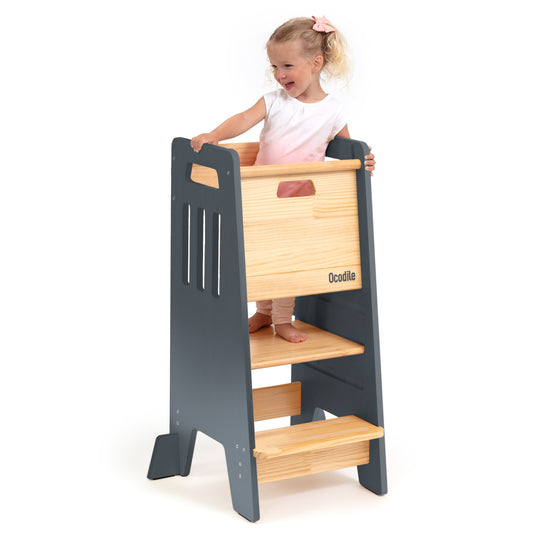
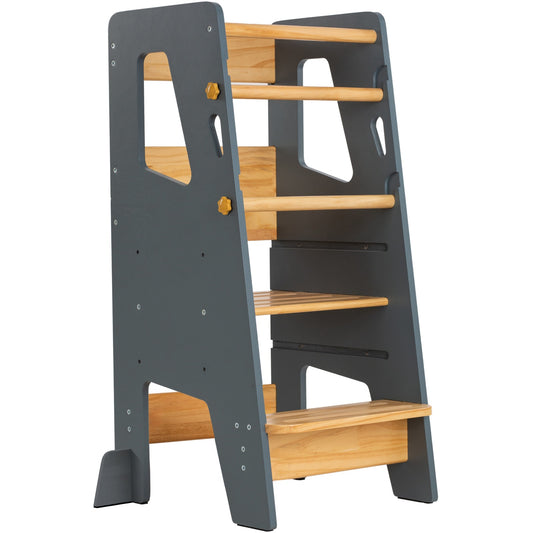
A safe toddler time out chair should match toddler proportions, not adult furniture scaled down in name only. Market examples show seats around 11.3 to 11.75 inches high and overall sizes near 21 inches tall by 11 to 12 inches wide/deep. Some wooden models use a 30 x 30 cm seat with adjustable leg heights of 26 cm for ages 2 to 4 and 30 cm for ages 4 to 7, which helps the chair fit across growth stages and keeps feet closer to the floor for stability (example market listing).
The safety logic is simple. Lower seats reduce climbing risk, and a stable footprint reduces tipping risk. That is why a chair designed for a toddler should feel grounded, not lofty.
The material matters too. Wood is often easier to keep visually distinct from regular family chairs, and a plain shape helps the child recognize it as part of the reset routine. If you're comparing options or checking whether a design is sturdy enough, stability testing methods are worth reviewing before you buy or build.
| Toddler Time Out Chair Dimensions by Age | Seat Height | Overall Height | Seat Width/Depth |
|---|---|---|---|
| Younger toddler range | around 11.3 to 11.75 inches | around 21 inches | around 11 to 12 inches |
| Adjustable wooden model, ages 2 to 4 | 26 cm | varies by build | 30 x 30 cm seat |
| Adjustable wooden model, ages 4 to 7 | 30 cm | varies by build | 30 x 30 cm seat |
Placement matters as much as size
A small apartment can still hold a good reset spot if the chair sits in a visible corner with enough open floor space around it. Keep it away from shelves, climbing furniture, and anything the child might use to turn the moment into an escape route. If you use a chair that looks too much like the dining set, your child may keep treating it like ordinary seating instead of a reset boundary.
A chair can be practical, but only when it's stable, plain, and easy for you to supervise.
Building a Positive Discipline Toolkit
The strongest approach uses the chair as one part of a larger pattern. That means you keep expectations age-appropriate, use the reset consistently, and still spend most of your parenting energy on prevention, connection, and praise for the behaviors you want more often. If your current routine leaves everyone calmer, that's a good sign. If the chair keeps turning into a daily war, it's time to adjust the setup or switch tools.
A helpful check is simple. Is your child settling faster over time? Are you using fewer words during the reset? Are you able to reconnect without a second explosion? If the answer is yes, the system is probably doing what it should.
For parents who need help holding boundaries without turning every limit into a battle, ways to reclaim your peace can be a useful reminder that calm structure helps both adults and children.
The goal is not a perfect chair. It's a predictable, humane routine that helps your child learn limits without fear and helps you stay steady enough to enforce them.
If you're looking for child-sized furniture and practical setup ideas that fit real family life, visit Ocodile. Ocodile focuses on safe, functional children's furniture that supports independence in everyday routines, including the kind of calm, predictable spaces that make discipline feel less chaotic and more manageable.