



A Parent's Guide to the Perfect Toy Storage Wall
Imagine a playroom floor you can actually see. A world where every toy has its home, and—get this—your child can actually find what they're looking for and (mostly) put it away themselves. This isn't a fantasy. It's what a toy storage wall can do. Think of it as a system of shelves, bins, and hooks that goes vertical, getting all that clutter off the floor and into a tidy, organized space. It's the secret to transforming chaos into a calm, usable, and honestly, beautiful play area.
Why a Toy Storage Wall Is a Family Game-Changer
If you feel like you're playing a daily game of hopscotch over a minefield of plastic bricks and abandoned dolls, you're definitely not alone. Moving away from the classic, bottomless toy box and toward a smart storage wall isn't just about tidying up. It's a real shift in how your family lives in your home. For parents drowning in clutter, it’s a brilliant way to solve the problem of how to organize kids toys for a clutter-free home.
And it's not just us saying it. The demand for better storage is huge. The global market for plastic toy storage hit USD 6.02 billion in 2024 and is projected to climb to USD 9.18 billion by 2030. This is all being driven by families in smaller, more urban homes looking for smart ways to manage the stuff of life.
Get Your Floor—and Your Sanity—Back
The first thing you'll notice is the floor space. Oh, the glorious floor space! In smaller homes or apartments where every inch is prime real estate, taking storage vertical is a total revelation. All of a sudden, you have room for that reading corner you’ve been dreaming of, a bigger play mat, or just some open space for kids to actually run around.
Going vertical doesn't just store toys; it brings a sense of calm. When the clutter is contained and everything has a place, the whole room feels more peaceful. It's less overwhelming for you and for them.

Help Them Become More Independent
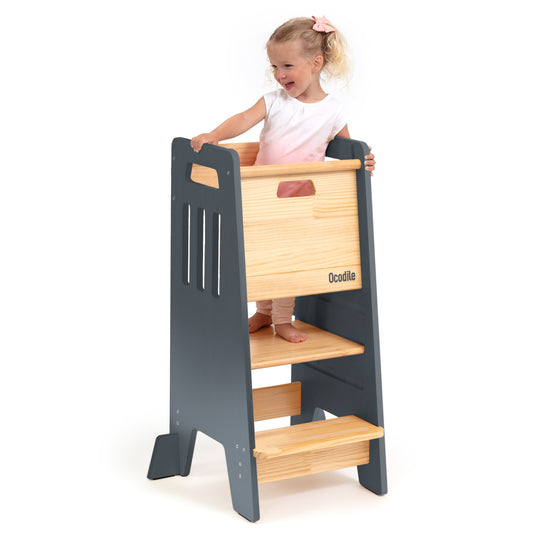
A well-designed toy storage wall is also a fantastic teaching tool. When you put bins and shelves at a height your child can actually reach, you’re giving them control over their own little world. It’s a core idea in Montessori, which is all about fostering independence.
Here’s what you’ll see happen:
- They'll become more self-sufficient. Kids can grab the toys they want without needing to ask for help every five minutes.
- Cleanup becomes a habit, not a fight. Tidying up is way less intimidating when every toy has an obvious and easy-to-reach home.
- Their confidence will grow. Being able to manage their own space gives little ones a huge sense of competence and ownership.
It turns cleanup from a dreaded chore into just another part of playing, building a good habit that will stick with them.
Designing a Toy Storage Wall That Grows with Your Child
Before you even think about picking up a drill, the most important work happens with a tape measure and a piece of paper. A good plan is what turns a blank wall into an organized, fun-filled zone for your kids. This is your chance to create something that works right now and adapts as your child gets older.
First things first, get to know your wall. Grab a tape measure and get the exact height and width. But don't stop there. You need to map out every little obstacle. Jot down where all the electrical outlets, light switches, heating vents, and windows are. Don't forget to check how far any nearby doors swing open—you don't want your perfect shelf to block a doorway.

Getting these details right from the start saves you a ton of frustration later. Thinking about how to maximize built-in spaces can also offer some great ideas. For example, learning how to turn a closet into a mudroom shows how you can transform an existing nook with smart, efficient storage—a similar principle applies here.
Take a Toy Inventory
Alright, now for the fun part: the toy audit. Pull out everything. The big stuff, the tiny pieces, the awkwardly shaped things. Sorting through it all isn't just about decluttering; it's about gathering the data you need to design the perfect system.
- Sort by Type: Make piles for similar toys. Think building blocks in one, action figures in another, then dolls, art supplies, puzzles, and books.
- Check Size and Shape: You’ll quickly see that some categories, like DUPLOs, need deep bins, while finished LEGO models look much better on shallow shelves.
- Factor in Weight: Heavy items, like those beautiful wooden block sets, need to be stored on sturdy, low shelves. Lighter things like stuffed animals can easily go in fabric bins higher up.
This inventory will tell you exactly what kind of storage components you’ll need. A wall for a toddler with chunky puzzles will look completely different from one built for a school-aged kid with detailed craft sets and board games.
Plan for Growth and Flexibility
The key to a toy storage wall that lasts is to design for the kid you'll have in a few years, not just the one you have today. This is where a modular and adjustable system becomes your best friend. Look for systems that have movable shelves and bins you can swap out as their toys (and they) change.
A great design empowers a child at their current stage while leaving room for future growth. Think about placing their most-used toys at their eye level now, but use a system where you can easily raise those shelves in a year or two.
Think about creating specific "play zones" within the wall itself. This is a great way to organize the space and encourage different types of play.
- A quiet corner with forward-facing book ledges is perfect for encouraging a love of reading.
- An art station could have low hooks for smocks and small, easy-to-grab bins for crayons and paper.
- A building zone might feature large, open bins on the floor, giving them easy access to blocks.
By planning with these ideas in mind, you're not just building storage. You’re designing a smart, supportive, and dynamic environment that will grow right alongside your family.
Selecting Child-Safe Materials and Hardware
When you’re dreaming up a toy storage wall, the design is exciting, but the materials you choose are what truly matter. The absolute top priority is your child's safety. This means we need to look for components that are tough, non-toxic, and secure from the ground up.
Let's walk through what to look for, so you can be confident that your new storage solution is a worry-free part of your home.
The best choice for a sturdy, long-lasting toy storage wall is almost always solid wood. Woods like pine, maple, and birch are incredibly durable. They can be sanded and repaired if they get dinged up, and they don't have the chemical adhesives you find in cheaper engineered woods.
If you're using plastic bins or containers, always check for the BPA-free label. It’s a simple way to avoid bringing potential hormone-disrupting chemicals into your child’s space.
The finish on the furniture is just as important. Look for paints and finishes specifically labeled as low-VOC or zero-VOC (Volatile Organic Compounds). These nasty compounds can be released into the air, impacting your home's air quality—a big concern, especially in a playroom or bedroom.
Understanding Material Durability and Safety
It's tempting to save a few dollars with manufactured wood, but it's not all the same. I've learned from experience that particleboard is usually a bad investment for kids' furniture. It swells up at the first sign of a spilled drink, and it can easily sag or break under the weight of something as simple as a full set of wooden blocks.
Worse, its lack of durability can become a real safety issue if a shelf fails or hardware gets ripped out of the board. A unit made from solid wood or a high-quality plywood will give you a much more stable and reliable structure that can handle the reality of daily play.
A core principle for any kid-safe furniture is choosing materials that are strong enough for real life. A storage unit that can’t handle a little bit of leaning or climbing is an accident waiting to happen. Always prioritize strength and stability from the very beginning.
Another massive safety point is the design itself. This is where open-shelf systems are so much better than older solutions. We've all seen those old-school toy chests with the heavy, latching lids, but they have a tragic history. The U.S. Consumer Product Safety Commission has issued repeated warnings about them due to the risk of suffocation and entrapment, leading to numerous recalls over the years. You can review the CPSC's official safety warnings for more details.
A modern, open toy storage wall completely avoids these dangers. There are no heavy lids to slam on little fingers or heads, and the open design means there's zero risk of a child getting trapped inside. This is one of the strongest arguments for choosing wall storage over traditional boxes. For more ideas on putting together safe and effective storage, you might want to explore our detailed guide on shelves for kids.
Choosing Safe Hardware and Fasteners
The tiny bits of metal—the screws, bolts, and brackets—are what hold everything together. This is absolutely not the place to try and save money.
- Screws and Bolts: Always go for high-quality, corrosion-resistant screws. For any joint that will hold serious weight, use through-bolts with nuts and washers. They’re far more secure than wood screws alone.
- Shelf Brackets: Make sure the brackets are rated for way more weight than you think you’ll need. Look for designs with a deep "L" shape to give the shelf full support and stop it from tipping forward.
- Bin Sliders: If your system has sliding bins, check for a "stop" mechanism. It's a small detail, but it's what prevents your child from accidentally pulling a heavy, full bin out and down onto themselves.
- Anti-Tip Kits: This is completely non-negotiable. Any piece of furniture that's taller than it is deep needs to be anchored to the wall. Most new furniture comes with these kits, but you can also buy them for a few dollars. They are essential.
By being picky about your materials and hardware, you’re building more than just a pretty place for toys. You're creating a storage system that's functional, beautiful, and, most importantly, fundamentally safe for the people who matter most.
Secure Installation for a Wobble-Free Wall
You’ve designed a stunning toy storage wall, and it's easy to get excited about filling all those beautiful bins and shelves. But before you get to the fun part, let's talk about the single most important step: installation. A wobbly unit is a major hazard, so making sure it's securely attached to the wall isn't just a final detail—it's everything.
Don't worry, you don’t need to be a professional contractor to get this right. With a few basic tools and a little patience, you can mount your system so it's completely wobble-free, giving you total peace of mind.
Your Essential Installation Toolkit
Gathering your tools beforehand will make the whole process go much more smoothly. You don't need a full workshop, just a handful of reliable items.
- Stud Finder: This is a non-negotiable safety tool. It's the only sure way to find the solid wood studs behind your drywall.
- Tape Measure: For double-checking everything one last time and ensuring your placement is spot on.
- Level (24-inch or longer): Using a long level is the secret to perfectly horizontal shelves. A crooked shelf looks off and, more importantly, it means weight isn't distributed evenly.
- Drill with Multiple Bits: You'll need this for pilot holes and for driving in all your screws.
- Pencil: For marking stud locations and drill points right on the wall.
Having these ready means you won’t have to pause mid-installation, which is when mistakes tend to happen.
Anchoring: Wall Studs Are the Gold Standard
The absolute best and safest way to hang anything heavy is to anchor it directly into your wall studs. These vertical wooden beams are the skeleton of your walls, and driving a screw into one gives you a grip that drywall alone can't even come close to matching.
Grab your stud finder and scan the wall where your storage unit will live. In most homes, studs are spaced either 16 or 24 inches apart from center to center. Mark the center of each stud with your pencil. Whenever you can, plan your mounting points to line up with these marks.
Please don’t guess where your studs are. Tapping the wall and listening for a "solid" sound is an old trick that’s notoriously unreliable. A decent electronic stud finder costs very little and is an essential tool for any parent doing DIY projects.
What to Do When Studs Just Don't Line Up
So what happens when your perfect design doesn't align with the wall studs? It’s a common problem, but it doesn’t mean you have to sacrifice safety. The solution is to use the right kind of heavy-duty drywall anchor.
The small, flimsy plastic anchors that come with picture frames are not what you need here. They will fail under the weight of a storage unit filled with books and toys. Instead, you need anchors specifically designed to handle a serious load.
- Toggle Bolts: These have spring-loaded "wings" that pop open behind the drywall, spreading the weight over a much larger area. They're a great choice for heavy items like cube organizers.
- Snap Toggles: Think of these as a modern, easier-to-use version of the toggle bolt. They hold a significant amount of weight and are a favorite among parents taking on DIY projects.
Always check the weight rating on the anchor’s packaging and choose one that can handle far more weight than you think you'll need. When it comes to your child's safety, over-engineering is always the smart move. For a deep dive into this crucial step, check out our guide on how to secure furniture to the wall.
Ultimately, a properly installed toy storage wall is an amazing way to reclaim your space. Going vertical can increase your usable storage by up to 50-70% compared to just using floor bins—a game-changer in homes under 1,200 square feet, where many families live. Closet America has some great insights on this.
Finally, and this is critical, every single storage unit tall enough for a child to climb must be secured with an anti-tip kit. These simple straps or brackets are your best defense against a dangerous tip-over accident. It’s a tiny, inexpensive step that truly makes all the difference.
Styling and Maintaining Your Organized Playroom
Okay, the hard part is over. Your toy storage wall is built, anchored, and officially wobble-free. Now comes the really fun part: making it look great and setting up a simple system to keep it that way. This isn't just about stashing toys out of sight; it's about creating a space that feels calm, looks intentional, and invites your kids to actually play.
A few simple styling choices can make all the difference. Think about your color palette. You can go for a serene look with bins and baskets that blend in with your room's decor, or you can make the wall a cheerful focal point with a few pops of bright, playful colors. The easiest trick I've found for a polished look is using the same style of bin throughout—it instantly makes everything feel less chaotic.
Making It Intuitive for Kids
The real secret to a toy storage wall that stays tidy? Making it ridiculously easy for your kids to use. This is where good, clear labels are everything. For little ones who can't read yet, visual labels are a must. My favorite trick is to take a quick picture of the toys that go in each bin, print it out, and tape it to the front. This lets even the youngest toddlers find their cars or blocks and—crucially—know exactly where they go when it’s time to clean up.
Getting your kids involved in this step is key because it gives them a sense of ownership. Let them help you sort the LEGOs from the dolls and stick the picture labels on the bins. When they feel like it’s their system, they’re so much more likely to take pride in it and help keep things organized. It turns a chore you have to enforce into a routine they’re a part of.
This visual guide walks through the essential installation steps, which is the foundation for any safe and stylish toy storage wall.

Following a clear process like this makes sure your beautifully styled wall is also completely safe for daily play.
A Practical Maintenance Plan for Long-Term Success
Even the best system needs a little upkeep to prevent clutter from slowly taking over again. This isn't about perfection; it’s about creating sustainable habits.
Your goal isn't a showroom-perfect playroom 24/7. It's an organized, functional space that supports play and makes the end-of-day reset take five minutes instead of thirty.
Here’s a simple, three-part routine that has worked wonders in our house:
- Teach the "One In, One Out" Rule: When a new toy arrives for a birthday or holiday, an old one has to find a new home, whether that's donation or storage. This is probably the single best way to prevent your bins from overflowing.
- Perform Routine Safety Checks: Every couple of months, give the unit a quick check. Gently pull on the shelves to make sure the wall mounts are still rock solid. A quick scan for any cracked bins or worn-out hardware can prevent a bigger problem later.
- Conduct a Seasonal Toy Audit: A few times a year, sit down with your kids and go through the toys. It's the perfect time to toss anything that's broken, pack away toys they've outgrown, and do a toy rotation. Hiding some toys away and bringing them back out a few months later makes them feel brand new again.
By mixing smart styling with these simple routines, your toy storage wall will stay a hardworking and happy part of your home for years. If you need a little more inspiration, we have a ton of great ideas in our guide to toys storage organizers.
Your Toy Storage Wall Questions Answered
Even with the best plan, questions always pop up once you get started. When you're in the middle of a project, it's easy to hit a snag. We've gathered some of the most common hurdles parents face when building a toy storage wall to give you quick, practical answers.
At What Height Should I Install Shelves For My Toddler?
For toddlers and young preschoolers, independence is everything. This means keeping shelves low to the ground. The bottom shelf or the lowest row of bins should sit just a few inches off the floor, making it simple for them to sit right there and play.
The sweet spot for a child between two and four is generally between 12 and 36 inches from the floor. This is their prime “reach zone.” Put their most-used toys and favorite books here. This not only lets them pick their own activities but, more importantly, helps them learn to put things back themselves.
So what do you do with shelves above 40 inches? They have a few great uses:
- Supervised Materials: This is the perfect spot for paint, glitter, or craft supplies with tiny pieces that need an adult's help.
- Toy Rotation: Use these higher shelves to store toys that are currently out of rotation. It keeps them out of sight and out of mind until you're ready to swap.
- Decorative Items: This is a great place for anything you want to add personality to the room but don't want little hands grabbing every day.
My best advice is to get your child involved. Have them stand next to the wall and see where their arms comfortably reach without straining. Let that be your guide. An adjustable system like the IKEA Trofast is a fantastic choice because you can easily move shelves and bins up as they grow.
What Is The Safest Way To Anchor Shelves Into Drywall?
Anchoring directly into wall studs is always the most secure option. Use a stud finder, mark the centers of the studs, and drive your mounting screws straight into that solid wood. You really can't get a stronger hold.
Of course, your perfect design doesn't always line up with the studs. It's a common problem, but it doesn't mean your wall will be unsafe—it just means you need the right hardware. Please don't use the small plastic plugs that often come with furniture kits; they simply aren't strong enough for a toy storage wall that will see a lot of use.
For heavy units like cube organizers or long shelves packed with books, you need something much more robust.
- Toggle Bolts: These are a classic for a reason. You drill a hole, fold the spring-loaded "wings" to push them through, and they snap open on the other side of the drywall. This spreads the weight over a much bigger area, making them incredibly strong.
- Snap Toggles: These are a more modern, user-friendly version of toggle bolts. They offer amazing holding power and are often much easier to install. I highly recommend them for any parent tackling a DIY project like this.
If you're only hanging lighter, individual shelves, you might be fine with high-quality threaded drywall anchors. Just be sure to check the weight rating on the package and choose an anchor that can handle much more weight than you plan to put on it. When it comes to safety, overestimating is always the best strategy.
How Do I Keep The Toy Storage Wall From Looking Messy?
Keeping a toy wall looking great comes down to three things: containment, curation, and consistency. It’s a system where all the parts work together to prevent that feeling of visual chaos.
First, contain the clutter. The fastest way to make a space feel calmer is to use matching bins or baskets. Grouping all those small, "loud" items like LEGOs, action figures, or craft supplies into uniform containers gives the wall a clean, cohesive look. I've found that opaque bins work better than clear ones for hiding the messiest toy collections.
Second, curate what's on display. You don't need to have every single toy out at once. This is where a toy rotation system becomes your secret weapon. Store at least a third of their toys away, out of sight. Every few weeks, swap a few bins. This does two amazing things: the storage wall stays neater, and your kids get that "new toy" excitement all over again.
One of the best tricks I've seen is using picture labels on the bins. For a four-year-old who can't read yet, a photo of cars on the front of the car bin is a game-changer. It turns finding toys and cleaning up into a simple matching game they can actually do on their own.
Finally, build a consistent routine. The goal isn't a perfectly spotless playroom 24/7. It's about creating a simple reset habit. A quick, 5-minute family tidy-up before bed, where everyone helps put a few things back in their proper bins, can work wonders. It stops the mess from becoming a huge project and teaches kids that keeping the space nice is a shared job.
By focusing on child-safe materials, secure installation, and thoughtful organization, you can create a toy storage wall that is not only beautiful but also a powerful tool for fostering independence. For furniture that embodies these principles, check out the child-focused designs from Ocodile at https://ocodile.com.