



Wooden Sensory Table Guide: Safe Play for Kids
You're loading dishes, answering a question, and trying to keep a toddler busy without handing over a screen. Then you glance over and see them happily scooping, pouring, and lining up little treasures at a wooden sensory table, totally absorbed for ten calm minutes that felt impossible a minute earlier.
That's why this piece of furniture gets so much attention from parents and childcare providers. It's not just a cute play station, it's a child-sized setup that can hold sand, water, beans, foam, or loose parts in one contained place, so a child can explore without scattering everything across the room. The best versions feel intentional, sturdy, and inviting, which matters more than most product pages admit.

What a Wooden Sensory Table Actually Is
A child settles into a wooden sensory table differently than into a bin on the floor. The surface is at their level, the materials stay contained, and the whole setup signals, “this is yours to work with.” That simple shift changes how a toddler moves through the activity, because they can approach it independently instead of waiting for an adult to keep resetting the space.
More than a bin with legs
The table is usually a child-sized workstation with one or two removable bins, plus a frame that keeps the materials in place. It can hold water, sand, rice, beans, shaving foam, scoops, funnels, toy animals, or small sorting pieces, depending on what kind of play you want that day. The point isn't the material itself, it's the containment and access.
That's why the wooden frame matters. Wood feels warm and natural in a way plastic usually doesn't, and that tactile difference fits the kind of hands-on learning parents are often aiming for. The format also has a real educational lineage, from early wooden toys to later sensorial materials, which is part of why it feels so at home in Montessori spaces and other early-childhood settings. Primo Toys notes that Richard Lovell Edgeworth called wood blocks “rational toys” in 1811, Froebel introduced the first kindergarten in 1837, and Montessori later expanded sensorial work with colorful wooden materials in different shapes and finishes. Primo Toys educational toy history
Practical rule: If the child can reach the bins without help, the table is doing its job. If they need to stretch, climb, or wait for an adult to make it usable, the setup is working against independence.
Why containment changes the play
A loose pile of sensory material on the floor can still be fun, but it usually turns into cleanup fast. A table with built-in boundaries keeps the child focused on scooping, pouring, sorting, and comparing instead of chasing runaway materials across the room. That structure is what makes the table feel like a workstation rather than just another toy.
The long history of sand play also helps explain the format's appeal. An account of early childhood play says the modern sandbox began in Germany in the mid-19th century, after Froebel adapted a wooden box of sand for educational use following an 1847 suggestion from a former student. By 1850, public parks in Berlin were introducing sand heaps, and the idea reached the United States in 1885 through Marie Elizabeth Zakrzewska. Historical account of early sandbox play
That lineage matters because the table is not a novelty. It's a modern, indoor-friendly version of a format that has been helping young children explore with their hands for more than 170 years. As the earlier educational history shows, wood keeps reappearing because it matches the way small children learn.
How Sensory Play Builds Real Skills
Children don't need a lecture to learn from a sensory table. They need repetition, a reachable surface, and materials that respond in obvious ways. A scoop fills. A cup tips. Water moves. Sand collapses. Those small discoveries are where the learning happens.
Fine motor control grows through ordinary motions
Pouring from one container to another takes more control than it looks like it does. A child has to grasp a scoop, lift it steadily, aim it, and release at the right moment. That same hand control later supports pencil grip, buttoning, zipping, and other everyday tasks that depend on precise finger movement.
The table helps because it keeps the task at a comfortable height. When a child isn't straining upward or leaning too far down, they can focus on the motion itself instead of fighting the furniture. That's one reason a wooden sensory table often works better than a random low bin or a tabletop that's too high for small arms.
Cause and effect becomes visible
Sensory play is one of the clearest ways for a young child to test what happens when they act on the world. Fill the cup too quickly and it spills. Move the ladle sideways and the beans slide off. Push harder and the whole surface shifts. The lesson is built into the action, so the child doesn't need adult correction every second.
That kind of self-directed discovery is especially strong with water and sand because the materials change shape so readily. A child can repeat the same movement again and again, making small adjustments each time. That repetition is what helps the learning stick.
Regulation often shows up before parents expect it
There's a reason many kids drift toward stirring, sifting, and transferring when they're overstimulated. The rhythm is soothing. The task is clear. The outcome is visible. A sensory table can become a calm corner of the day, especially during transitions when a child needs to settle before meals, naps, or errands.
Repetitive hand work often looks like play from the outside and regulation from the inside.
A useful way to think about the table is as a bridge between play and daily life. The child is doing real physical work in a format that still feels playful, and that combination is what makes it so sticky. The more often they use it, the more natural those motions become.
Materials, Safety, and Construction Quality

The difference between wooden tables becomes clear after the first few weeks of use. Some hold up well for dry scooping and light sorting, while others are built to tolerate repeated water play, heavier handling, and the daily wear that comes with children using them.
The material choice changes the lifespan
A pine frame with an MDF tabletop can be a reasonable choice when weight and cost matter more than long-term exposure to moisture. One verified example uses that combination and is rated for up to 66 lbs (30 kg), which gives a clear sense of the intended use. It can suit dry activities well, but it is not the same as solid wood once spills and damp bins become part of the routine. Vevor sensory table specifications
Solid birch sits in a different category. A solid birch model with a water-resistant coating is a better fit if sand-and-water play will happen often, since moisture resistance and edge durability are usually where children's activity furniture starts to fail first. The same verified example gives a size of 32" W x 25" D x 43.8" H, which helps you judge how much floor space and reach it will require. Vevor sensory table specifications
What to check before you buy
A good table should feel steady when a child leans on it, and the edges should be smooth enough that small hands do not catch on splinters. Finishes matter as well, because water shows weak points fast. Child-safe oils or water-based seals are a safer direction than finishes that are not meant for repeated contact.
Buying shortcut: If the product description does not explain how it handles moisture, assume it is better suited to dry materials than to water play.
For practical setup thinking, the build your own bed guide from Quote My Wall is a useful reminder that children's furniture works best when structure, height, and use case all match. The same logic applies here. A table can look lovely and still be awkward if the materials, finish, and load rating do not fit how your family will use it.
If you are comparing options for wet play, the question is simple, will this table still look and function well after repeated spills, wiping, and drying? If the answer feels uncertain, choose the more moisture-ready construction and save the lighter build for dry bins. For a related example of wet-play setup, see this water sensory table setup.
Choosing the Right Size and Height
A wooden sensory table only works well when the height matches the child who is using it. If the surface sits too high, children reach and shrug their shoulders. If it sits too low, they curl forward and lose the relaxed posture that keeps play comfortable for longer stretches.
Start with the child's body, not the room
One wooden sensory table offers 3-level height adjustment at 15" (38 cm), 17.5" (45 cm), and 20" (50 cm). Another product line gives age-linked options of 18" for ages 1.5–3, 21" for ages 2–4, and 24" for ages 5+. Those stepped heights matter because the same table can keep serving as a child grows, without forcing the child to adapt to furniture that no longer fits. Funlio wooden sensory table height options
The practical goal is neutral shoulders and elbows. The child should be able to stand or sit at the table without lifting the shoulders, bending the wrists awkwardly, or leaning so far in that the back rounds. If the hands have to reach up to the surface, the table is too high. If the chest collapses toward the edge, the table is too low.
A design article recommends 18–22 inches for toddlers and 22–26 inches for preschoolers, with a 36-inch circulation zone around a dual-bin table. That circulation space matters in real homes, where a sibling, a storage shelf, or a wall can make a table feel tighter than it looks on paper. For a more detailed reference, see a guide to children's table height. Designing the ultimate sensory table
Use the layout as part of the measurement
Height alone does not decide whether the setup feels right. A table can match the numbers and still be inconvenient if it is pushed into a corner or boxed in by other furniture. Low stools or step stools help when a child wants to sit for drawing, sorting, or quieter tabletop play, and adjustable height becomes especially helpful in mixed-age homes where one piece has to work for more than one child.
I'd use this quick check before buying:
- Toddler fit: Aim for a surface near the lower end of the recommended range if the child is still short and mostly stands while playing.
- Preschool fit: Choose the higher end if the child is taller, uses tools like scoops or tongs, or will also draw and sort at the table.
- Room fit: Leave enough open floor around the table so a second child can approach without crowding the first.
- Seated use: Add a low stool only if the child can still keep their arms relaxed at the surface.
That kind of fit is what keeps the table in regular use. When the height works, the child does not have to think about the furniture, only the play.

Maintenance, Cleaning, and Seasonal Activities
A sensory table that's annoying to clean won't stay part of your routine for long. Parents don't need a perfect system, they need a setup that can survive real life, including sticky hands, spilled water, and the occasional forgotten bin left out overnight.
Make cleaning part of the design decision
Wet materials like water or shaving foam demand a water-resistant finish and bins that can be emptied and dried quickly. Dry materials like rice or beans ask for a smooth surface and edges that don't trap stray bits in corners. If a table has lots of crevices, those tiny leftovers will become the reason you stop using it.
Routine care can stay simple. A damp cloth with mild soap handles most everyday messes, and thorough drying matters in humid spaces because moisture left behind becomes the thing that shortens the table's life. When the table won't be used for a while, covering the bins keeps dust and pet hair out of the materials.
Cleanability isn't a bonus feature. It's what decides whether the table stays in the room or gets moved to storage.
For a practical preschool-friendly example of a layout that keeps cleanup manageable, this sensory table preschool guide is worth a look alongside your own space planning.
Rotate the contents before the child gets bored
The table doesn't need a new frame every season. It just needs a different set of materials. That's where the setup becomes economical, because the same surface can support a huge range of play without new furniture.
- Spring: Water, floating cups, and small plastic frogs create simple scooping and pouring play.
- Summer: Sand, shovels, and buried treasures keep the activity tactile and open-ended.
- Autumn: Dried corn kernels, pinecones, and small gourds add texture and natural objects.
- Winter: Ice cubes, salt, and a bit of food coloring turn the table into a low-key science setup.
I like this seasonal rotation because it gives parents a built-in reset without turning the table into a project. The child sees something familiar, but the materials feel new. That keeps the table in use instead of fading into the background.
Integrating the Table into Family Routines
The table becomes most useful when it lives in the rhythm of the house. If it only comes out for special occasions, it stays a novelty. If it shows up as part of ordinary life, kids start using it with more confidence and less prompting.
Pair it with moments that already happen
Morning works well for many families because children are rested and less likely to fall apart over small frustrations. Afternoon can work too, especially if the child needs a calmer transition before dinner or nap. The key is consistency, not perfection, because repeated access teaches the child what to expect.
A parent can set up the bins while making lunch, which gives the child independent play nearby without demanding constant attention. A sibling can sort buttons or small loose parts while an older child reads at the table. That kind of mixed-age use makes the furniture feel more like part of the home than a separate toy zone.
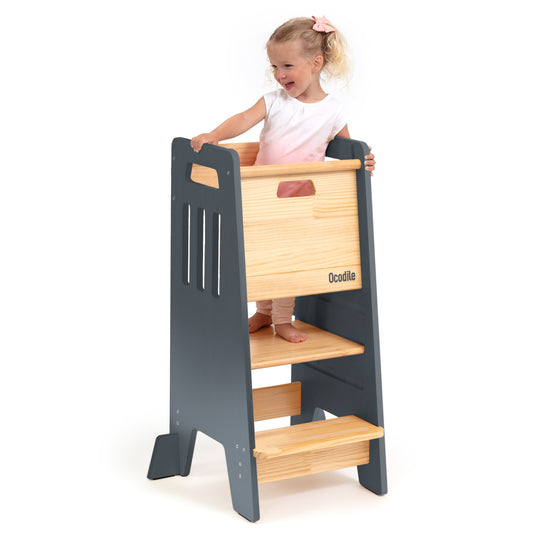
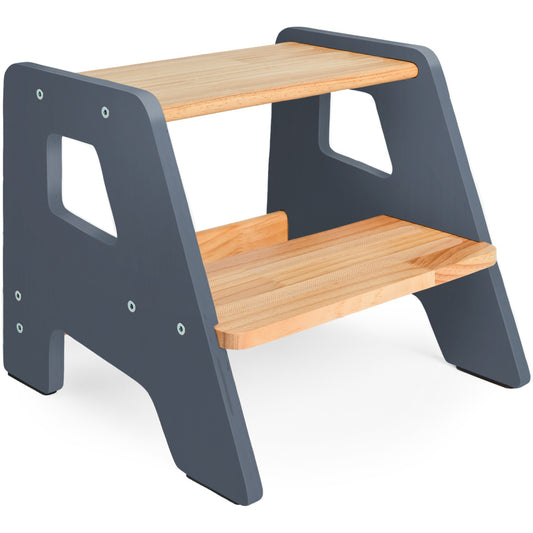
The most useful tables also support practical independence. A child practicing pouring water, transferring beans, or moving objects from one bin to another is rehearsing motions they'll later use at the kitchen sink, during cleanup, or while helping with simple tasks around the house. That's why child-sized furniture matters so much in Montessori-style homes, and it's part of the thinking behind Ocodile's child-focused pieces, including standing towers and step stools designed to help children participate safely in everyday routines.
The table works best when it supports ordinary life, not when it waits for a perfect play setup.
That's the larger point. A wooden sensory table isn't only about keeping a child busy. It's about giving them a place where they can do real work in a form that still feels like play, right next to the people they love.
Key Takeaways for Parents
A wooden sensory table is more than a charming play piece, it's a practical form of early childhood furniture with deep roots in child-centered learning. The history matters because it shows why wood, child-sized access, and open-ended play have stayed relevant for so long. The table earns its place when it supports hands-on exploration, not when it just looks nice.
Choose materials with care, especially if wet play is part of your plan. Solid wood with a water-resistant finish is the safer long-term choice for frequent water or sand use, while MDF-based tables can make sense for lighter, drier play. Get the height right, keep the cleaning simple, and leave enough room around the table so children can use it comfortably.
The biggest payoff comes from routine. Rotate the contents, put the table where children pass through the day, and let it serve more than one kind of play. When the setup is easy to use, easy to clean, and sized for real children, it stops being another object in the room and starts becoming part of family life.
If you're looking for child-sized furniture that supports safe independence at home, take a look at Ocodile. Their child-focused designs fit naturally with the same practical thinking behind a good sensory setup, furniture that helps kids explore, participate, and grow without making everyday routines harder.